REVIEW · HISTORICAL TOURS
Split: Walking tour of Split with a ‘Magister’ of History
Book on GetYourGuide →Operated by HISTORY TOURS SPLIT, vl. Toni Šare · Bookable on GetYourGuide
Split has a way of making history feel personal. One good walk can turn stone walls into a story you can follow. This walking tour of Split’s Old Town focuses on the Diocletian’s Palace complex—the city’s real starting point—then fast-forwards through the layers that followed.
What I like most is the guide. Toni Šare is a local who has lived in Split his whole life, with a Master’s degree in history and an ex-teacher background, so you get clear explanations plus room for questions. I also like how the past is made visible with 3D reconstructions of major spaces, so you aren’t just guessing what you’re looking at.
One thing to consider: this tour is rain or shine and it’s not built for wheelchair use. You’ll be walking around ancient stone and passing by key stops without museum-style breaks, so wear proper shoes and plan for some steady strolling.
In This Review
- Key highlights that make this tour worth your time
- Meet the guide: Toni Šare’s Split, explained like a teacher
- Finding the Bronze Gate (Brass Gate) and getting your bearings fast
- Diocletian’s Cellars: the Roman layers you can feel
- Through Diocletian’s Palace: the core walk inside the palace walls
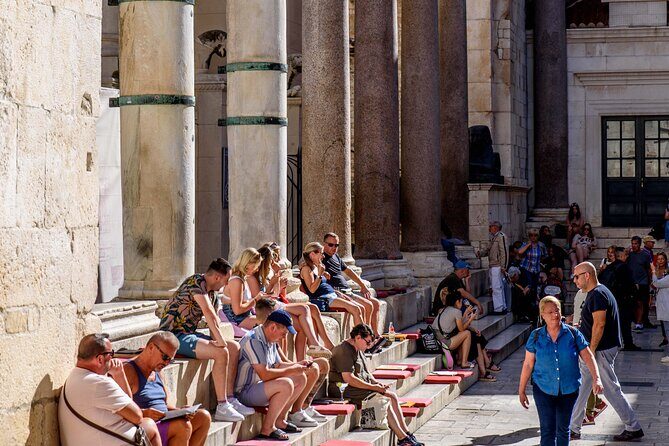
- Peristil and the palace’s famous square: where the big landmarks line up
- Vestibul and Triklinij: the palace spaces that feel surprisingly human
- Cathedral of Saint Domnius and Jupiter’s Temple: Roman-to-present continuity
- Silver Gate to Golden Gate: medieval and Venetian layers at street level
- What’s included (and what isn’t) so you can plan expectations
- Price and value: why $33 can make sense for this specific kind of tour
- Who this tour is best for (and who should skip it)
- Should you book this Split history walk?
- FAQ
- How long is the Split walking tour?
- Where does the tour meet?
- Is the tour in English?
- Do we need to pay to enter Diocletian’s Palace or any museums?
- What’s included in the price?
- What should I bring?
- Is the tour wheelchair accessible?
Key highlights that make this tour worth your time
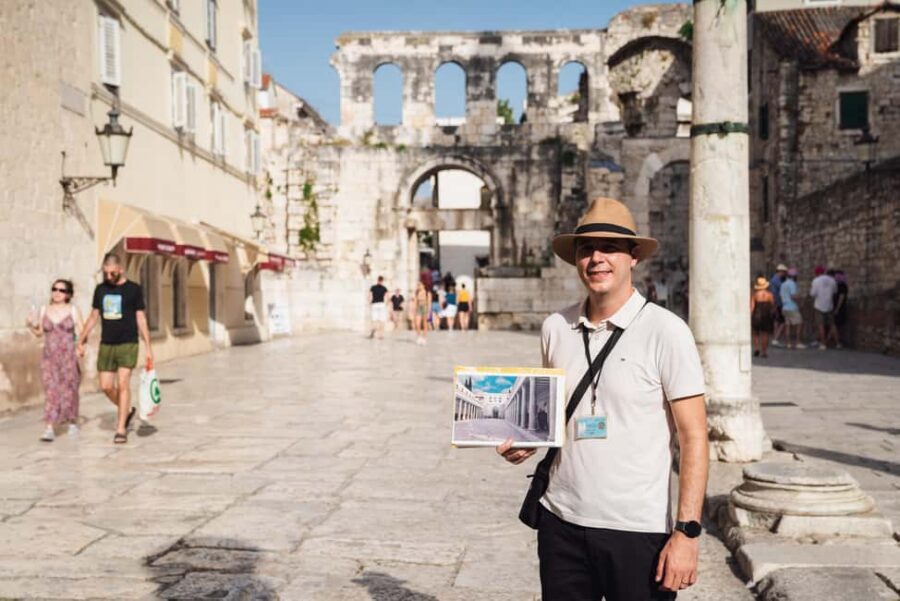
- 3D reconstructions used on-site to show what iconic palace structures looked like when they were whole
- Toni Šare’s teaching style: questions are encouraged, and answers stay grounded and clear
- A route that moves from Roman Split → medieval/Venetian layers → modern-day context
- Close focus on the palace core: Bronze Gate, Peristil, Vestibul, Triklinij, and the street-level landmarks around them
- Practical pacing that aims for shaded spots and smart timing around the busiest areas
Meet the guide: Toni Šare’s Split, explained like a teacher
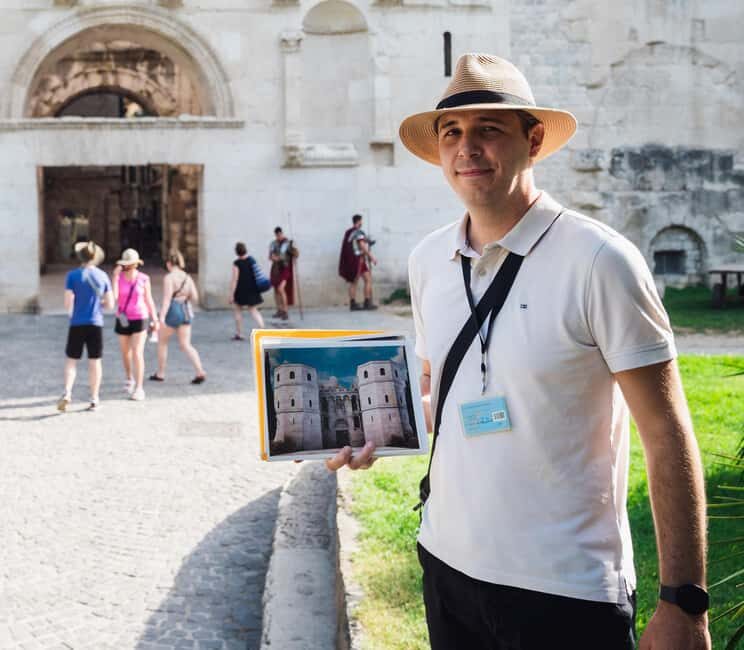
This tour works because the guide treats Split like a classroom with good storytelling. Toni Šare, who’s a lifelong Split resident, brings a history Master’s background and a former teaching role to the walk, so the explanations come out organized—not just a string of dates.
If you like history you can follow, this fits. You start in the oldest core of town and then watch how later centuries built on the Roman footprint. And because questions are welcome, you can steer the conversation toward what you’re curious about—architecture, daily life, or how later eras reused the same spaces.
You can also read our reviews of more walking tours in Split


Finding the Bronze Gate (Brass Gate) and getting your bearings fast
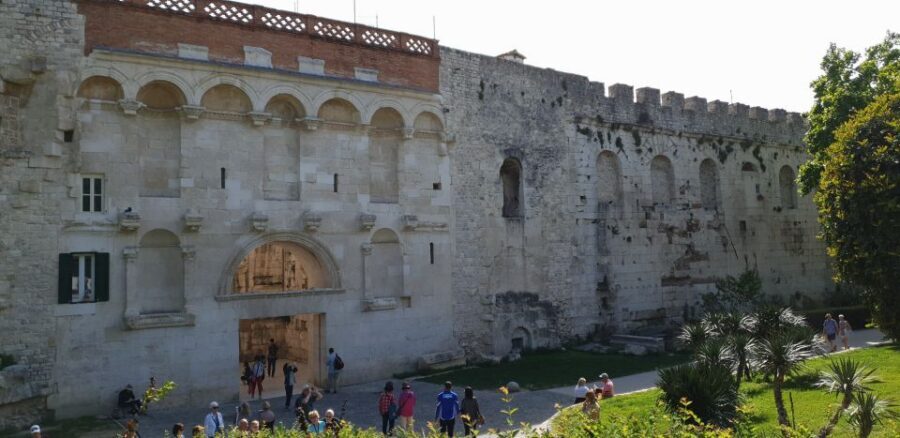
Your walk begins at Obala hrvatskog narodnog preporoda 22, right by the seafront. The meeting spot is the Bronze Gate of Diocletian’s Palace, the southern seaside entrance from the Riva promenade.
I like this approach because you start with orientation. You’re placed at a real gateway—so when the tour starts moving inside, it feels logical, not random. From there, you move through the gate and into the palace complex, with just enough initial context to keep the rest of the walk understandable.
Tip: If you’re choosing a time slot, consider an earlier one. The route can be calmer at first, and that makes it easier to hear the guide and take photos without getting squeezed.
Diocletian’s Cellars: the Roman layers you can feel
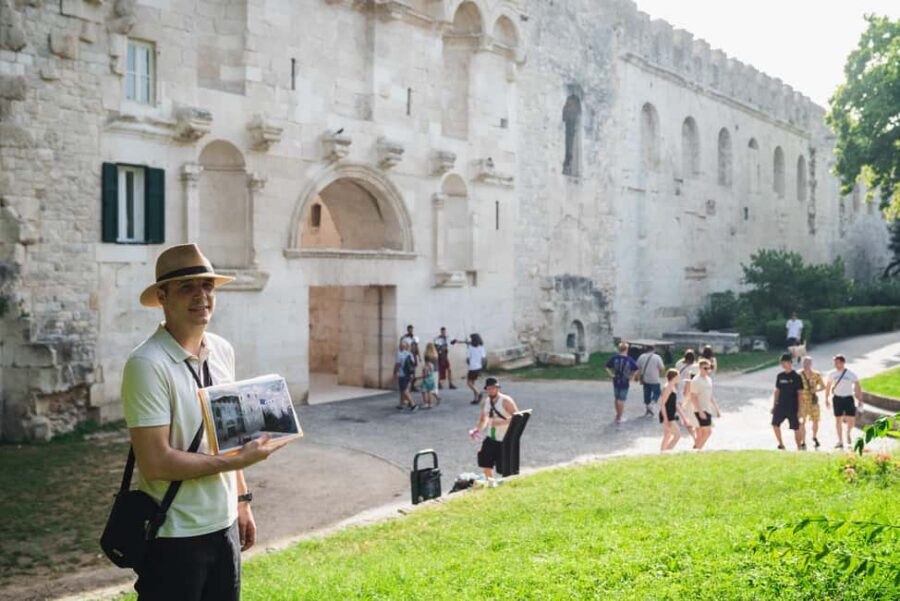
One of the smartest early stops is the Diocletian’s Cellars area. You’ll pass by it for about ten minutes, and it sets up the theme of the tour: the palace wasn’t just ceremonial stone—it was also functional, with spaces that later generations found uses for.
Even when you’re not entering a museum, this kind of stop matters. Cellars and service areas help you understand how a palace complex worked as an engine, not only as a monument. That context makes everything you see later—courtyards, corridors, and religious buildings—feel less disconnected.
Through Diocletian’s Palace: the core walk inside the palace walls

The heart of the tour is the palace itself, with a guided focus of around an hour. You’re walking through the remains of Diocletian’s private residence area and then toward the parts of the palace that relate to later settlement patterns.
This is where the tour earns its name as a structured history walk. The guide doesn’t treat the palace as a single moment in time. Instead, you watch how the Roman layout became the skeleton for medieval houses and later Venetian-era influence around and over it.
And because the tour includes 3D reconstructions, you’re not stuck doing mental archaeology. The guide uses those visual reconstructions to show what key spaces likely looked like when they were intact, which makes the layout click faster.
Peristil and the palace’s famous square: where the big landmarks line up
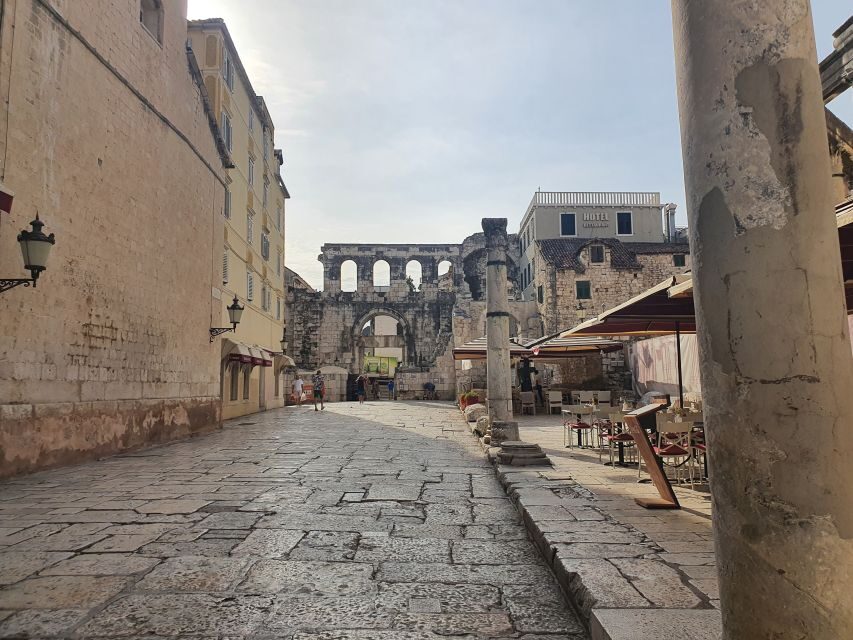
Next comes the Peristil (Peristyle) area. This is the palace’s open central space, and it’s about ten minutes of guided time focused on how the square worked and what you can still recognize.
Here’s what’s especially useful for your visit: the guide connects the landmarks you can see from the right angles to the way the palace was meant to function. In this area, you’ll encounter the Mausoleum of Diocletian vicinity and the settings tied to The Temple of Jupiter.
You’ll also get orientation so that when you later wander on your own, you can name what you’re looking at and understand why it’s placed where it is. A lot of people see Diocletian’s Palace as a maze. This tour helps you turn that maze into a map.
You can also read our reviews of more historical tours in Split





Vestibul and Triklinij: the palace spaces that feel surprisingly human
From the Peristil square, the tour moves into smaller, more specific spaces: the Vestibul (about five minutes) and the Triklinij (about five minutes).
These stops matter because they’re the “in-between” rooms and halls that connect grand exteriors to everyday palace behavior. Even if you don’t know the exact purpose at first glance, the guide explains the function so you understand why these areas are placed the way they are.
This is also where the question-and-answer style pays off. If you ask what a space was used for, the guide can tie it back to Roman life and then mention how later residents interacted with the same bones of the building.
Cathedral of Saint Domnius and Jupiter’s Temple: Roman-to-present continuity

You’ll pass by the Cathedral of Saint Domnius for around five minutes and then also encounter Jupiter’s Temple from the street level for a short stop. These are quick, but they’re not filler.
Why? Because this is the “still standing” part of Split’s story. The tour helps you see the continuity: Roman structures and later religious identity share the same urban stage. You’re not just viewing ruins; you’re looking at how the city kept using the palace zone and reshaping its meaning over time.
This makes your next solo walk much easier. You’ll know what to look for, and you’ll understand why some corners feel Roman even when the details look newer.
Silver Gate to Golden Gate: medieval and Venetian layers at street level
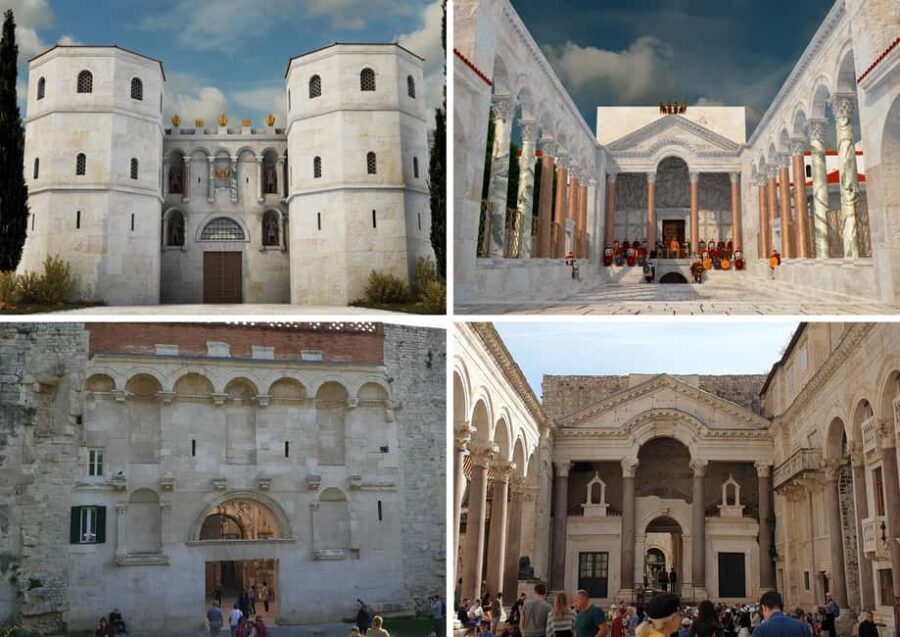
After the core palace spaces, you’ll head out through the gates that mark the next phase of the walk. There’s a stop for the Silver Gate (about three minutes, guided) and then the Golden Gate (about five minutes, guided). The tour finishes at the Golden Gate.
Crossing gates is a simple trick, but it works. Each gate helps you feel the transition from the Roman palace center outward into the areas shaped by later centuries. And with the guided explanation, you understand that the palace didn’t stop being important—it just changed role as Split changed.
One extra landmark to watch for: there’s an iconic statue of Bishop Gregory of Nin along the north wall of the palace area, visible during the route near the Piazza space. It’s a perfect example of how Split’s layers overlap in small, everyday views.
What’s included (and what isn’t) so you can plan expectations

Included is the guide and 3D reconstructions of the most iconic palace structures. You also won’t enter any paid sites or museums. The Diocletian’s Palace area itself doesn’t require admission for this tour.
That means the value is in the interpretation, not in ticketed add-ons. You’re getting a guided architecture and history experience in a walking format, with visuals to help you understand what you’re seeing without needing extra museum time.
You’ll also want to bring water or drinks, since you’re out for about 110 minutes and it happens rain or shine.
Price and value: why $33 can make sense for this specific kind of tour
At $33 per person for a 110-minute guided history walk, this isn’t a throwaway quick tour. The main reason I’d consider it good value is the combination of three things: a local guide who’s trained in history, a teaching style built for clarity, and the use of 3D reconstructions to make palace spaces readable.
If your goal is to leave Split with a better mental map of Diocletian’s Palace—and not just a pile of photos—this kind of structured storytelling helps you understand the city after the walk. Many self-guided visits turn into looking and guessing. Here, you get guided structure first, so your later wandering feels smarter.
Who this tour is best for (and who should skip it)
This fits best if you:
- want the Roman origin story of Split, centered on Diocletian’s Palace
- enjoy architecture plus clear explanations, especially when you can ask questions
- like having visuals that reconstruct what’s missing
It’s not suitable for wheelchair users and it isn’t meant for people over 95 years. Also, because the tour is outdoors and runs in rain, it’s best if you’re okay with steady walking rather than a sit-down, museum-heavy pace.
Should you book this Split history walk?
I’d book it if you want to understand Split quickly and accurately—especially the palace complex, from Bronze Gate through the key palace spaces and out to the Golden Gate finish. The guide background (Master’s in history plus teaching experience), plus the on-site 3D reconstructions, is a strong match for people who like history with visuals and context.
Skip it if you’re looking for a relaxed food-and-stroll tour, or if you need lots of indoor breaks. For a focused, structured history walk through the Diocletian’s Palace core, this is one of the more “useful” ways to spend your time in Split.
FAQ
How long is the Split walking tour?
It lasts about 110 minutes.
Where does the tour meet?
The meeting point is the Bronze Gate (Brass Gate) of Diocletian’s Palace, at Obala hrvatskog narodnog preporoda 22.
Is the tour in English?
Yes, the tour is offered in English.
Do we need to pay to enter Diocletian’s Palace or any museums?
No. The tour does not include entry to paid sites or museums, and entering Diocletian’s Palace does not require admission.
What’s included in the price?
The guide and 3D reconstructions of the sites are included.
What should I bring?
Bring drinks. The tour runs rain or shine.
Is the tour wheelchair accessible?
No, it is not suitable for wheelchair users.