REVIEW · HISTORICAL TOURS
SPLIT-PREMIUM Emperor’s Walking Tour for History Lovers + Museum
Book on Viator →Operated by Walking Tour of SPLIT · Bookable on Viator
Split turns into a history lesson fast. This small, English-speaking walking tour walks you through UNESCO Diocletian’s Palace and the medieval Old Town with a resident licensed guide. I especially love how the guide ties the stone details to real city life, and I like the smaller group size, which makes it feel personal instead of rushed. The main thing to consider: the standard group tour is adults only, so if you’re traveling with teens or kids, you’ll want the private option.
You’ll spend about 2 hours on foot, starting near the waterfront and weaving through Split’s most important Roman and medieval stops, with most sights viewed from the outside and a couple of paid/optional entries if you want to go further.
In This Review
- Key things you’ll notice on the walk
- Why Diocletian’s Palace is the real star in Split
- The walk from Palazzo di Diocleziano to Old Split (and how the pace helps)
- The waterfront start at Riva Harbor and why it sets the tone
- Peristyle, Golden Gate, and the Roman sights explained from the right angle
- Old Town squares: the stories behind Fruit’s Square and People’s Square
- Grgur Ninski and the city clock: small stops with big meaning
- Cathedral of Saint Domnius and Jupiter Temple: outside views done right
- Diocletian’s Cellars and other potential add-ons (what costs extra)
- Group size, adults-only rules, and what to expect from the guide
- Practical advice for your feet (and your brain)
- Who should book this Emperor’s walking tour?
- Should you book this tour?
- FAQ
- How long is the Split Emperor’s Walking Tour?
- What language is the tour offered in?
- Where does the tour start and end?
- How big is the group?
- Is this tour suitable for kids?
- What’s included in the price?
- What admission or extra costs should I expect?
- Do I need good weather?
- What is the cancellation policy?
Key things you’ll notice on the walk
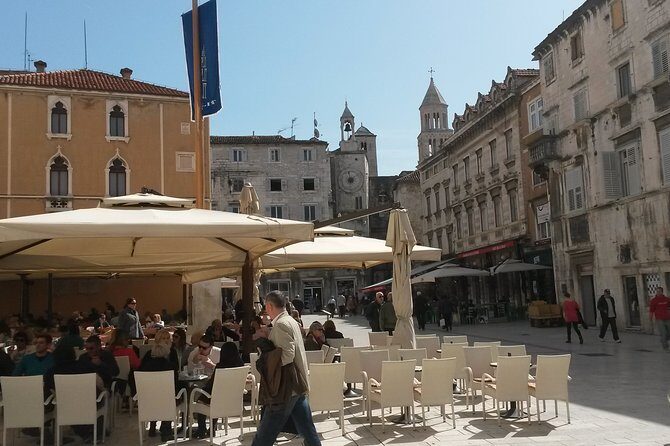
- Diocletian’s Palace as a living neighborhood: you’re not just looking at ruins; you’re walking through the bones of a city
- Outside views done well: Golden Gate, Jupiter Temple, and more are explained so they make sense fast
- Emperor’s Square (the Peristyle) explained from street level: it helps you read the space like a Roman would
- Old Town squares with specific stories: Fruit Square’s literary link and People’s Square’s local pulse
- A guide who can answer real questions: the best part is how the explanations connect across centuries
Why Diocletian’s Palace is the real star in Split
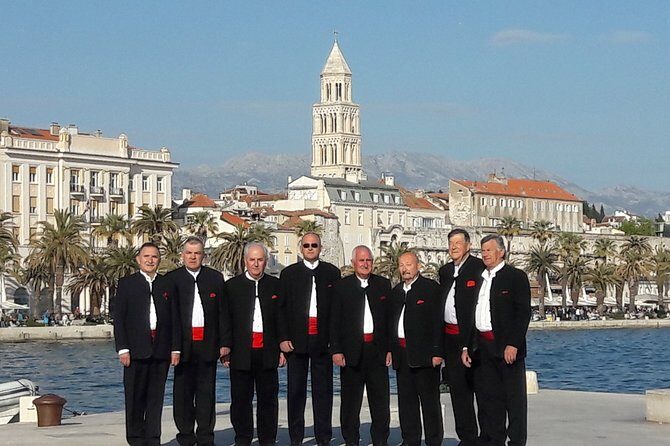
Split’s whole layout makes more sense once someone explains Diocletian’s Palace properly. This tour keeps you focused on that. You start where the palace begins—then move outward into the medieval town that grew around it.
The palace matters because it wasn’t built as a museum backdrop. It was a retirement complex for an emperor in the late Roman world, and the layout still shapes everyday life in Split. That’s why the “what you’re looking at” feeling is so different here. You’re not standing in front of a monument and hoping it clicks. The guide points out the logic: entrances, ceremonial spaces, defensive structure, and how people used these areas once the empire era ended.
I also like that you get a quick but complete orientation to the palace before you go chasing smaller details later. By the time you hit the main squares and gates, the city stops feeling like random stone and starts feeling like a plan.
You can also read our reviews of more walking tours in Split

The walk from Palazzo di Diocleziano to Old Split (and how the pace helps)
The tour begins at the Palazzo di Diocleziano area—your first real look at Diocletian’s Palace as a UNESCO site. The time at this first stop is short (about 25 minutes), but it’s enough to get the big picture: what the palace was, why it was built where it was, and what you’ll keep seeing again and again as you walk.
Next you head toward Old Split, where the medieval town sits on top of, and around, the Roman shell. This transition is one of the most useful parts of the whole experience. Many first-time Split tours either stay purely Roman or purely medieval. Here, you get both, and you start noticing how centuries layered on top of each other without wiping the earlier city away.
From a practical standpoint, this structure works because you’re constantly “resetting” your context. You’ll look at a Roman feature, then quickly shift to a medieval street or church area, then come back to palace spaces. That rhythm prevents history from turning into a blur of dates.
The waterfront start at Riva Harbor and why it sets the tone
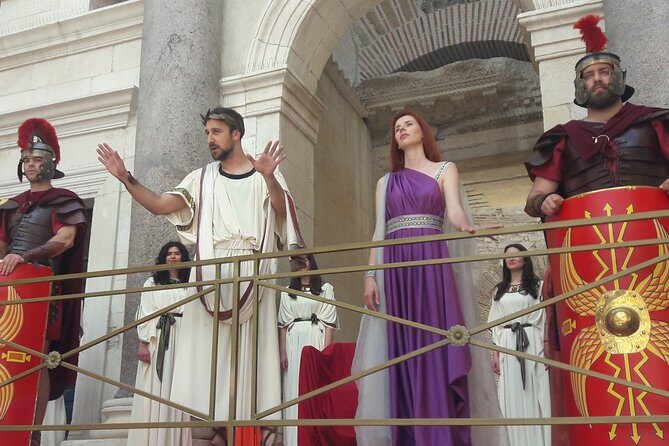
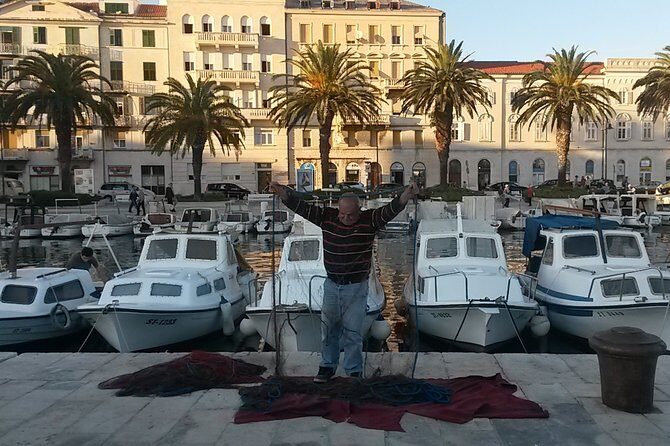
You’ll also spend a small but important moment near the Riva promenade area—specifically around the Main Stage where the tour starts and finishes. Even if you’re not a waterfront person, this stop helps you anchor Split’s center of gravity.
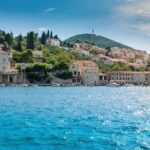
Riva is where the city shows its modern face: promenade life, boat energy, and the easy flow of people. That matters because it keeps the tour grounded. You’re learning Roman history, sure, but you’re doing it while standing in the place where locals still move daily. It makes the whole walking route feel less like a lecture and more like reading a city with your feet.
If the weather is hot, the waterfront can be a relief too, since the pace is controlled and the guide knows when to pause and explain.
Peristyle, Golden Gate, and the Roman sights explained from the right angle
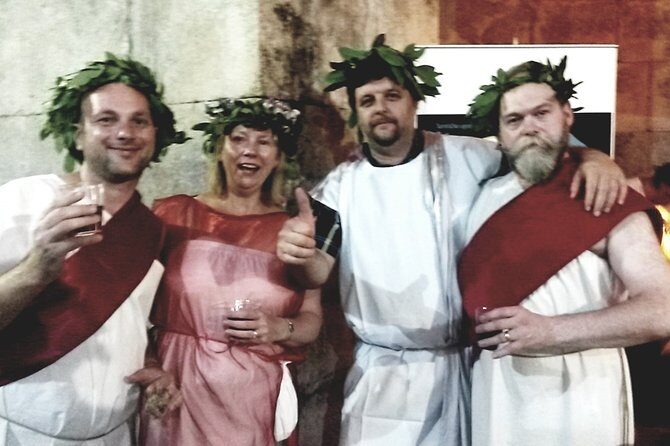
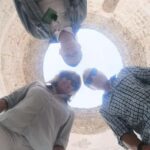
After you get oriented, you’re ready for the “wow” moments. The tour takes you through the Peristyle area, which is essentially the emperor’s ceremonial heart. This stop is brief (around 5 minutes), but it’s set up so you understand what you’re seeing. The guide helps you connect the space to how power was displayed and how people moved through it.
Then comes the Golden Gate—the main, most striking entrance through the palace. You don’t have to be a architecture expert. The value is in learning what the gate would have meant: an arrival point, a statement of control, and a clear boundary between spaces.
You’ll also see the Temple of Jupiter from the outside, with an optional inside visit. One caution: if you’re hoping for long museum-style time, this is a walking tour. You’ll get the key Roman markers quickly, and optional entrances depend on what’s available and whether you want to add time and cost.
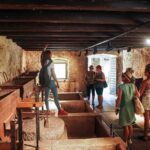
And at the end of this palace-heavy stretch, you’ll reach the Diocletian Palace substructures area, described as the best preserved part. This is another stop where the “outside/inside” question matters for your expectations. Some admission is not included, so if you want the maximum indoor experience, budget extra.
Old Town squares: the stories behind Fruit’s Square and People’s Square
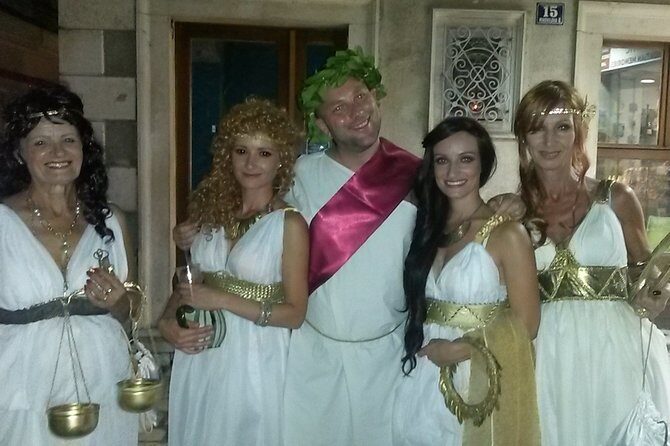
Split’s Old Town isn’t just pretty streets. It’s a set of specific public spaces with specific identities. This tour treats the squares like history in miniature.
Fruit’s Square (Trg Brace Radic) is where you’ll stop to see a statue tied to Marul, often referenced as a key figure in Croatian literature. This is a smart inclusion for history lovers because it pushes beyond empire-era Roman details into local cultural identity. You get reminded that a city’s story isn’t only who ruled it, but also who shaped its language, writing, and ideas.
Then you’ll visit Narodni Trg—People’s Square. It’s presented as the biggest and liveliest piazza in the Old Town. In practice, this stop works because it’s a breathing space. After palace corridors and gates, you get to stand in a public square and feel how civic life fits into the same city that held imperial power.
If you like tours where the guide explains why a place is called what it’s called, these square stops are where you’ll feel it.
You can also read our reviews of more historical tours in Split

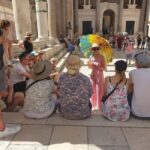

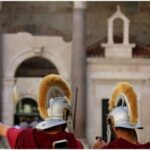
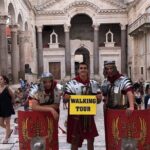
Grgur Ninski and the city clock: small stops with big meaning
Two quick stops can make a tour feel richer: a statue with a strong story, and a landmark that forces you to think about time.
You’ll see the Grgur Ninski statue, with the guide explaining why he’s one of the important historical figures in Croatia. This works as a “history reminder” during the walk. You’re not stuck in Roman chronology the whole time. You’re reminded that Split’s relevance didn’t end with Diocletian.
Then you’ll reach the city clock—described as about 500 years old and known as a 24-hour clock. Even if you only spend about 5 minutes there, it’s the kind of detail that lingers after the tour. It’s also a good example of the tour’s style: not long stays in museums, but short stops that trigger real interest.
If you like photos, these two spots give you strong visuals without needing to sprint through the day.
Cathedral of Saint Domnius and Jupiter Temple: outside views done right
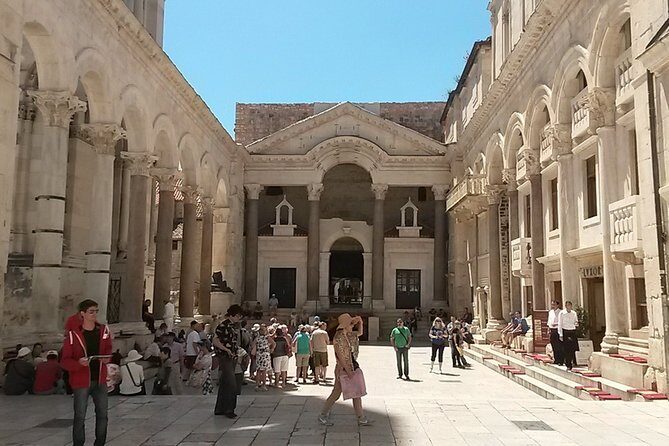
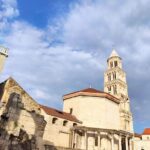
You’ll see Cathedral of Saint Domnius from the outside, which means you should adjust expectations. This isn’t a “go inside every major church” tour. Still, there’s value in the outside approach. You can place the cathedral in your mental map of Old Split and connect it to the later phases of the city.
Same idea with Jupiter Temple. The temple is optional inside. The outside view helps you locate it and understand the Roman plan, while the inside choice lets you decide if you want to spend extra time and money there.
If you’re the type who likes to choose your own intensity level, this structure is a good fit.
Diocletian’s Cellars and other potential add-ons (what costs extra)

The tour doesn’t include the admission fee to the Museum of Diocletian’s Cellars, listed as €10 per person. It also notes that certain parts (like the Diocletian Palace substructures and the Temple of Jupiter interior) are not included in admission costs.
Here’s how I’d think about it before you go:
- If you want a straightforward orientation to the palace and Old Town, you can treat the tour as mostly included and keep extra spending minimal.
- If you’re a history nut who likes hands-on museum-style context, plan on adding the cellar museum or the optional temple interior if it fits your time and budget.
Either way, the tour still gives you the context you need to appreciate what you choose to see beyond the free stops.
Group size, adults-only rules, and what to expect from the guide
This is a small-group tour with a maximum of 15 travelers. That alone changes the feel. You won’t be constantly waiting for a herd to catch up, and the guide can actually pace explanations around the questions people ask.
Also, the group tour is adults only. If you’re bringing kids or teenagers, the private tour is listed as all ages. That matters because it changes what you should expect from the vibe: more adult history focus, fewer interruptions, and likely more tolerance for a “real history” approach.
English is available for the group tour, and the tour uses a mobile ticket. You’ll start and end at the same meeting point, and the meeting location is described as near public transportation.
One more note that’s worth your attention: this is a history-focused walk. It’s not designed as a show with performances, costume theatrics, or similar appearances.
Practical advice for your feet (and your brain)
This is a walking tour through uneven historic streets and palace areas. The main “gotchas” are simple: comfortable shoes and water. In warmer months, earlier hours tend to make the walk feel easier, and you’ll enjoy the explanations more when you’re not sweltering.
Another practical tip: bring your curiosity. The guide’s strength is connecting places across time, from late Roman planning to medieval civic life. If you ask questions in plain language—What happened here after the Romans? Why did Split grow this way?—you’ll likely get better answers than you would from a guide trying to cover a script with no stops for thinking.
Finally, consider how you like tours:
- If you want an organized overview that makes you feel confident walking Split afterward, this tour is a great base.
- If you want hours and hours of indoor museum time, this might feel short, but it sets you up to return on your own for deeper visits.
Who should book this Emperor’s walking tour?
Book it if you’re the kind of traveler who likes to understand why a city looks the way it does. This route is ideal for first-timers who want the Diocletian’s Palace story in plain language, plus enough Old Town context to start exploring independently afterward.
I’d also say it fits well for:
- history lovers who like architecture and public spaces
- people who prefer smaller groups over big buses
- visitors who don’t mind short, frequent stops as long as the guide makes the connections
Skip it (or choose private) if you’re traveling with minors, want a mostly-inside museum day, or prefer light entertainment over real historical explanation.
Should you book this tour?
For $30 per person, you’re paying for a resident licensed guide, an efficient route through Split’s most important Roman and medieval spaces, and a small-group experience that keeps the walk interactive. The fact that many stops are free to view helps value, and the extra costs (like the Diocletian’s Cellars museum at €10) stay optional.
If you want a fast, focused orientation to Split’s most famous layers—and you like your history explained in a way that makes you look around with confidence—this is an easy yes.
Just make sure you’re okay with the format: mostly outdoor views, adults-only for the group version, and a tour that prioritizes context over long museum time.
FAQ
How long is the Split Emperor’s Walking Tour?
It runs about 2 hours (approx.).
What language is the tour offered in?
The group tour is offered in English.
Where does the tour start and end?
It starts at Obala Hrvatskog narodnog preporoda 22, 21000 Split, Croatia, and ends back at the same meeting point.
How big is the group?
The tour has a maximum of 15 travelers.
Is this tour suitable for kids?
The group tour is adults only. The private tour is listed as all ages.
What’s included in the price?
You get a licensed resident guide, plus custom itinerary and tour organization for the walking route.
What admission or extra costs should I expect?
Admission to the Museum of Diocletian’s Cellars is not included and costs €10 per person. Some other entries are also listed as not included (like Diocletian Palace substructures and the Temple of Jupiter interior, if you choose to go inside).
Do I need good weather?
Yes. The experience requires good weather, and if it’s canceled due to poor weather, you’ll be offered a different date or a full refund.
What is the cancellation policy?
You can cancel for a full refund up to 24 hours in advance of the experience’s start time. If you cancel less than 24 hours before, the amount paid is not refunded.