REVIEW · DIOCLETIAN'S PALACE
Split: Old Town and Diocletian Palace Walking Tour
Book on GetYourGuide →Operated by www.splitwalkingtour.com · Bookable on GetYourGuide
Split feels different with a guide.
This walking tour turns the ruins of Diocletian Palace into a clear, 1,700-year story you can actually walk through, starting at the Golden Gate. I like that the route mixes Roman remains with living landmarks, so the streets don’t feel like a random maze.
I especially love two stops: the Peristyle area with its open colonnades, and Saint Domnius Cathedral, which is thought to be the oldest Catholic cathedral still in use in its original form. The Gregory of Nin story lands in Giardin Park, and the guide connects it to what you’re seeing around you instead of treating it like a lecture.
One consideration: the tour is not suitable for wheelchair users, and you should expect a fair amount of walking (with routes running anywhere from 90 minutes up to 6 hours depending on the option you pick).
In This Review
- Key things to look forward to
- Golden Gate start: getting your bearings in Split’s Old Town
- Diocletian Palace ruins: the Peristyle square and Roman geometry
- Saint Domnius Cathedral: why it’s a stop you don’t skip
- Gregory of Nin at Giardin Park: religion, identity, and a statue moment
- Riva promenade: sea views and a calmer ending
- Duration reality check: 90 minutes to 6 hours and what that means for you
- Price and value: why $17 can work for a first day in Split
- Groups, languages, and the kind of guide you want
- Practical tips so you enjoy every stop
- Who should book this Split Old Town and Diocletian Palace tour
- Should you book this tour?
- FAQ
- Where does the Split Old Town and Diocletian Palace walking tour start?
- How long is the walking tour?
- Is the tour wheelchair accessible?
- What languages are the live guides available in?
- Is wine or food tasting included in the price?
- Do they pick you up from your hotel?
- What should I bring?
- Can I cancel for a refund?
- Is payment flexible if plans change?
Key things to look forward to
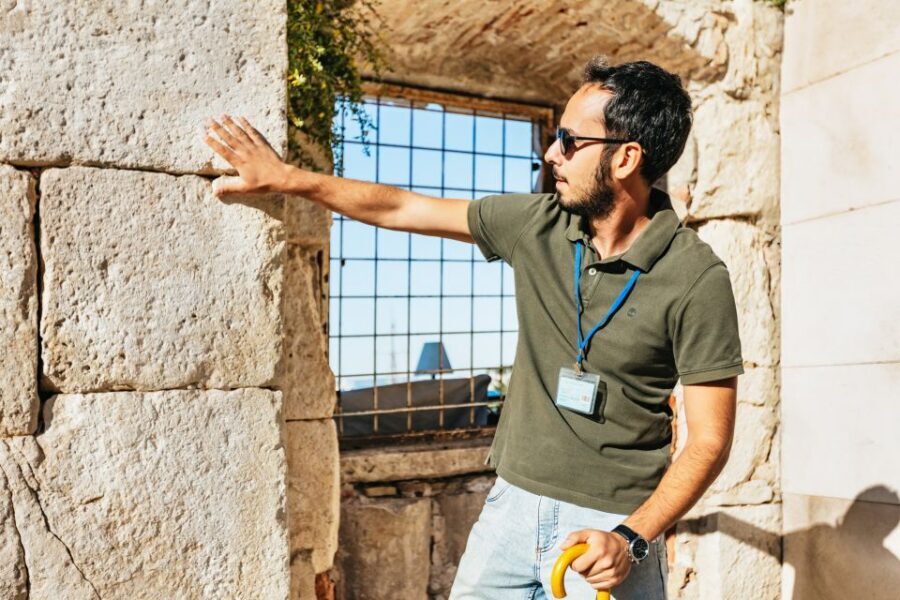
- Golden Gate start and finish: you end where you began, which makes it easier to regroup for the rest of your day
- Diocletian Palace ruins that shape Old Town: the palace footprint now forms about half of Split’s historic center
- Peristyle square and open colonnades: a great way to understand the palace layout by sight
- Saint Domnius Cathedral stop: a living monument on a route that keeps moving
- Giardin Park and Gregory of Nin: the story comes from the statue, not just from a description
- Riva promenade views: Marjan Hill and the Adriatic give you a breather from stone and stories
Golden Gate start: getting your bearings in Split’s Old Town
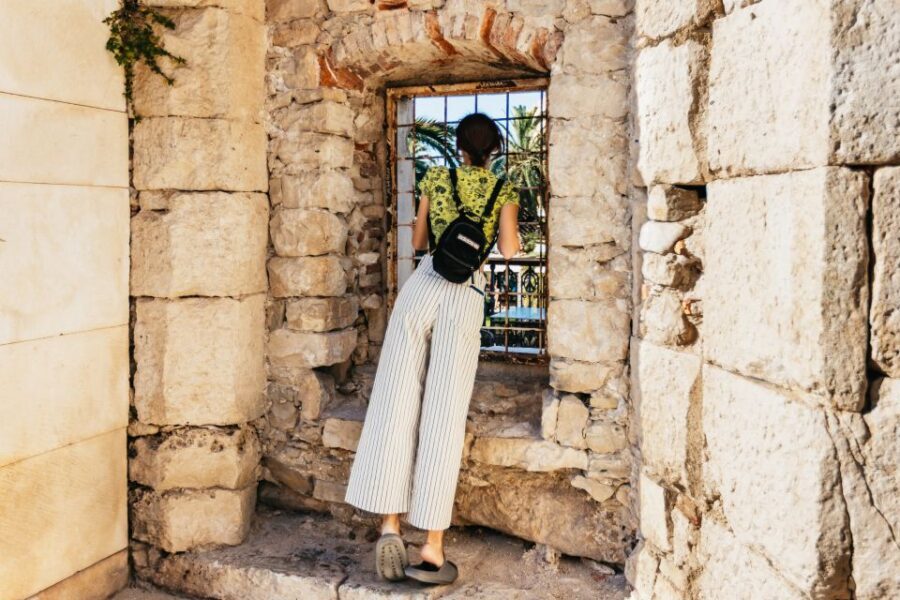
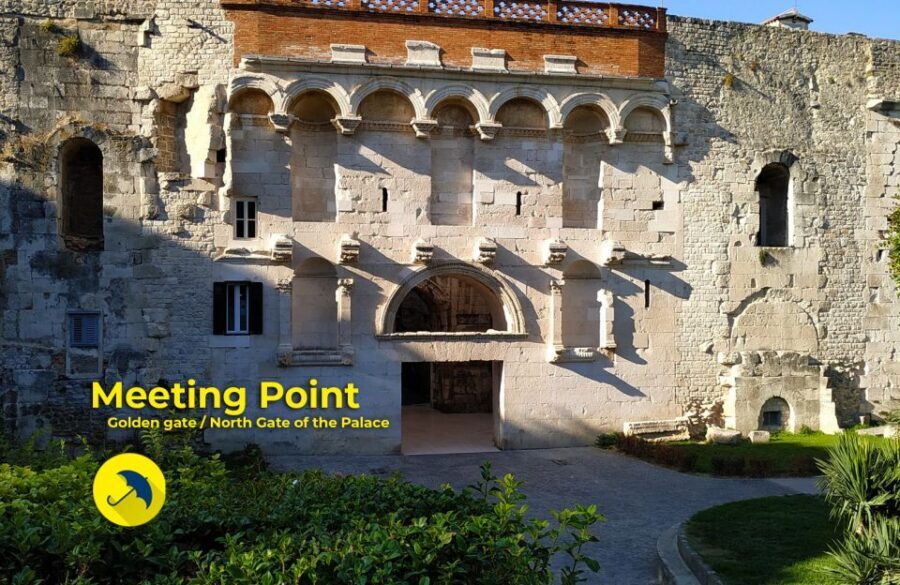
If you arrive in Split and feel like you’re wandering inside someone else’s postcard, this is a smart antidote. The tour begins at the Golden Gate of Diocletian Palace, the kind of landmark that gives you instant orientation. Once you have that anchor, the streets inside the palace walls (and the streets that grew out of them) make much more sense.
You’re also given a time-and-place framework right away: the palace was built in 305 CE, and you’ll follow the thread forward to Split’s role as Croatia’s second largest city. That matters because Split’s best views and most famous buildings aren’t “isolated sights.” They’re connected by the Roman footprint, later religious life, and the way people kept building on top of what was already there.
The meeting point can vary by booked option, but the tour itself is designed to loop back to the Golden Gate at the end. That’s practical. After 90 minutes to several hours, you’ll want a simple place to meet up, head to dinner, or continue exploring without playing map-chase.
You can also read our reviews of more walking tours in Split


Diocletian Palace ruins: the Peristyle square and Roman geometry
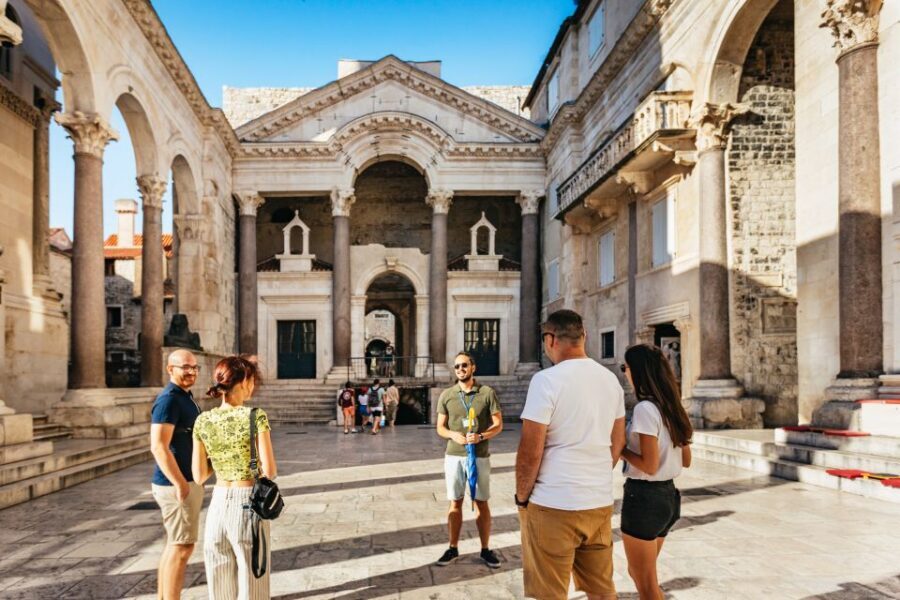
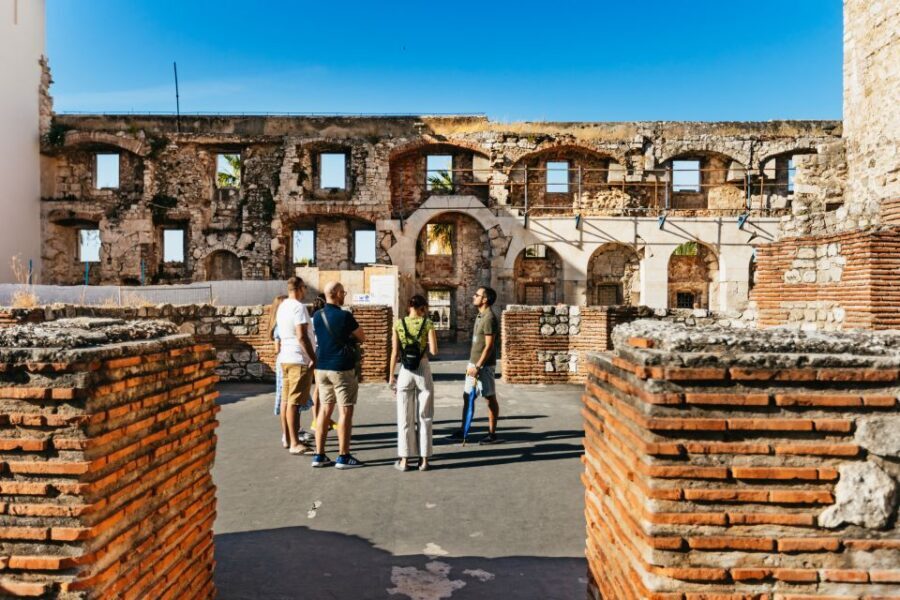
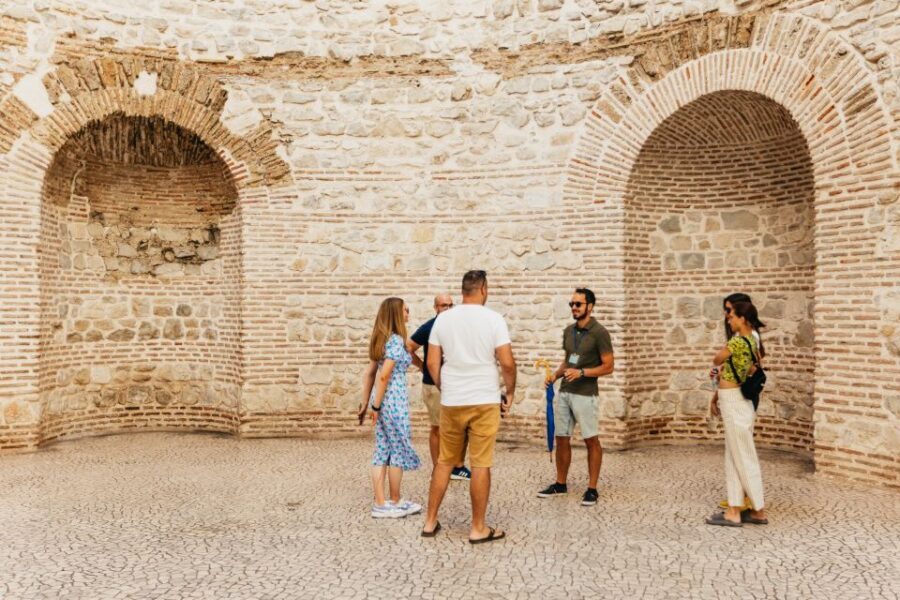
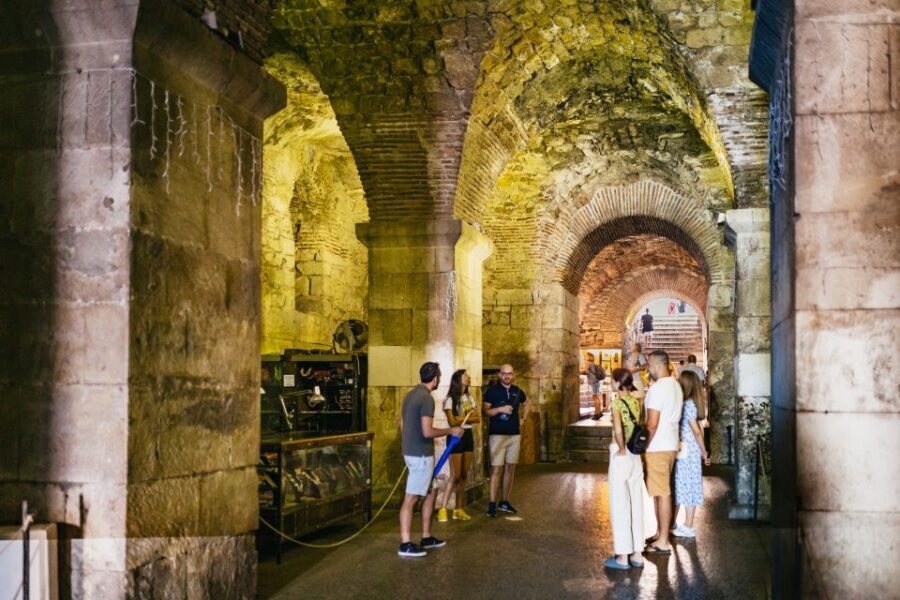
The heart of the experience is the Diocletian Palace remains, which now account for about half of Old Town Split. Seeing it with a guide changes what you notice. Instead of only noticing old stone, you start picking up how spaces relate to each other: where the major open area sits, how the palace reads as a single complex, and why the old city still feels shaped by Roman planning.
One highlight is the Peristyle square, including the open colonnades you can view there. Even if you don’t know architecture terms, the guide’s explanation gives your eyes a job. You learn what to look for while you’re still standing there, so the palace doesn’t turn into a blur of ruins by the end.
I also like that you hear more than “date + fact.” Guides on this tour often add Dalmatian and Croatian context alongside the palace details. You may even get lighter moments and story-like explanations, the kind that make the palace feel like a place where real people lived—not just a “tour stop.”
As for guide names: Slavoako and Mia show up often in English-language bookings, and Antonia, Ante, Ivana, Martha, and Tino are also listed as guides on departures. Different personalities, same core idea: get the meaning of what you’re seeing, fast.
Saint Domnius Cathedral: why it’s a stop you don’t skip
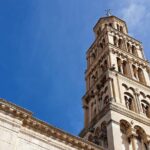
Next comes Saint Domnius Cathedral, one of the tour’s most impressive anchors for understanding why Split is more than ruins. The cathedral is thought to be the oldest Catholic cathedral in the world still in use in its original form, which is the kind of claim that could sound abstract. On this tour, it’s made practical because you experience it as a living landmark in the flow of the walking route.
This is a good moment to slow down without losing momentum. The guide’s role is key here: you’ll hear how the cathedral connects to Split’s longer timeline and why it matters that it stayed in active use rather than becoming only a museum shell.
If you enjoy travel moments where history feels current, you’ll appreciate this stop. It’s not only about what the building used to be; it’s about what it still is, while you’re standing there with the rest of the Old Town moving around you.
Gregory of Nin at Giardin Park: religion, identity, and a statue moment
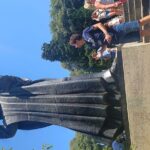
After the palace and cathedral, the tour turns toward a more personal kind of history. You’ll learn about the Bishopric of Gregory of Nin through his story and by visiting his statue in Giardin Park.
This part works well because it’s easy to remember. A statue gives you a clear visual reference, and the guide ties the figure to the broader religious and cultural story behind the city. Instead of piling more dates onto the day, you get a human connection: someone whose role mattered enough to be memorialized in a public space.
Giardin Park also breaks up the more stone-heavy segments of the route. You get a short change of pace and a chance to regroup your feet and your head before the final stroll.
Riva promenade: sea views and a calmer ending
The finish isn’t only about returning to the Golden Gate. You also get a walk along the Riva promenade, with views of Marjan Hill and the Adriatic Sea.
This section is your reward for staying with the story. After centuries of buildings and sacred spaces, the sea air makes the city feel larger than the palace walls. You can also use this stretch to think about your next move in Split: where you want to wander after the tour, and which directions make sense for dinner.
A guide’s local tips often land well during moments like this, because you’re already outside the strict “sight-seeing mode.” On this tour, guides frequently share recommendations for where to eat and what to focus on next in Split, plus practical advice on how to navigate so you don’t waste time.
If you like casual pop-culture nods, some guides may point out Game of Thrones filming locations while you’re out in the Old Town. It’s not the core of the tour, but it’s a fun add-on if you’re into that world.




Duration reality check: 90 minutes to 6 hours and what that means for you
The schedule range is wide: 90 minutes to 6 hours, depending on the starting times and option you book. That’s not a problem by itself. It just changes how much time the guide has to slow down, answer questions, and linger at key viewpoints.
Here’s how I’d think about it:
- If you only have a short window, pick the tighter option so you still get the palace-and-cathedral core.
- If you want more conversation and fewer rushed stops, pick the longer time slot so the guide can explain the connections between sites without sprinting.
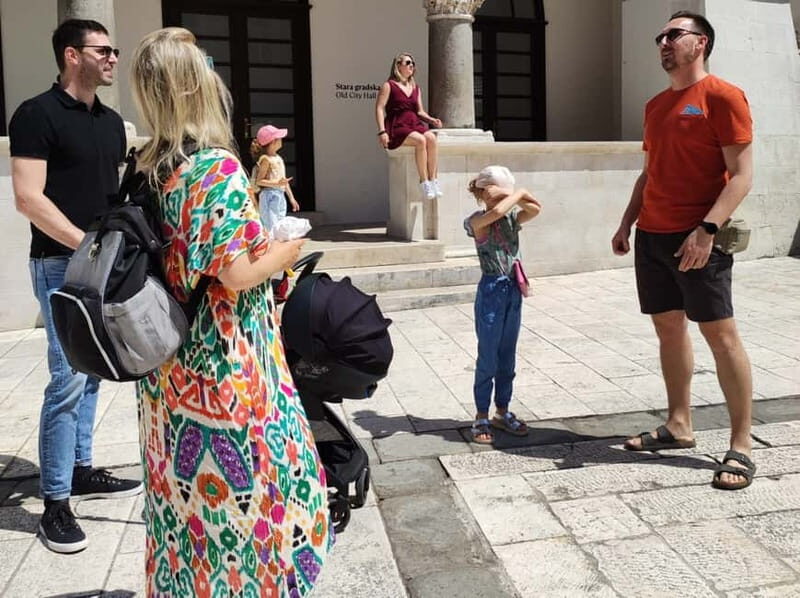
This is a walking tour, so comfort matters. The activity is appropriate for all ages, but it still requires energy. If you’re traveling with kids, the pacing needs to match their attention span. If you’re an adult who loves stories, the longer option is often worth it.
Weather can also affect the experience. Some guides are noted for adjusting plans when conditions are rough and finding ways to keep the group comfortable, like using shaded spots when possible.
Price and value: why $17 can work for a first day in Split

At $17 per person, this tour is positioned as a value-friendly way to get oriented quickly. What makes it feel fair isn’t only the price tag. It’s what you get for it: a local guide, a walking tour, and the big “meaning transfer” that you don’t get when you explore solo.
You’re also not stuck with just one format. If you select options, you can add wine tasting and/or food tasting. Since tastings are optional, you can match the experience to your day and your budget without losing the core walking tour.
Two small things to note for planning:
- Hotel pick-up isn’t included, so you’ll want to get yourself to the meeting point.
- You’ll need comfortable clothes (and, in practice, comfortable shoes). This is Croatia, and even short walks add up.
If you’re the type of traveler who likes to understand a place before you roam, this is the kind of booking that can pay off for the rest of your trip. You’ll leave with context that makes independent wandering more enjoyable.
Groups, languages, and the kind of guide you want
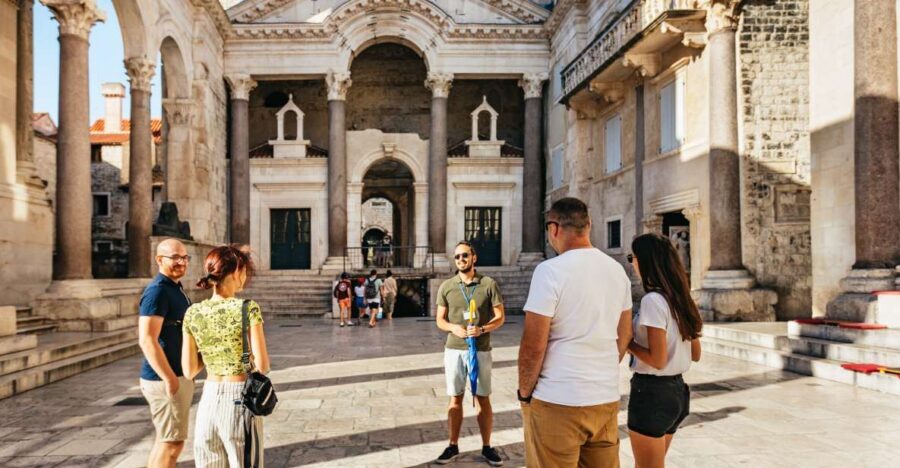
The tour offers a live guide in multiple languages: English, Italian, Spanish, German, and French. That matters in Split because details can get lost fast if the explanation isn’t clear.
Based on how guides are described, this is also a tour where personality plays a big role. Mia and Slavko are often singled out for a mix of clear explanations and a good sense of humor. Antonia shows up as another guide known for storytelling energy, and Mia is described as friendly and easy to understand.
This matters because you’ll have time for questions, and you’ll likely get practical suggestions beyond the stone monuments. People repeatedly mention that their guides helped them with where to go next and what to avoid, which turns the walking tour into a planning tool.
There’s also a private group available option if you want a more flexible pace or you’re traveling with friends or family who prefer fewer people.
Practical tips so you enjoy every stop
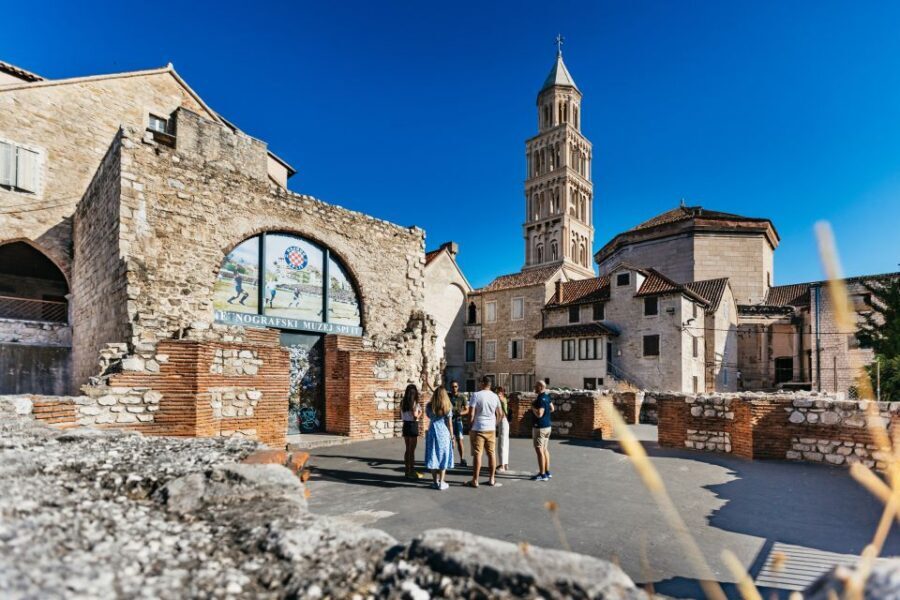
A few things help you make the day smoother:
- Wear comfortable clothes and plan for walking.
- Bring your curiosity. The tour is built around explanation at specific points like the Peristyle, Saint Domnius Cathedral, and Giardin Park.
- If you’re doing Split for the first time, aim for an early-day slot. Ending back at the Golden Gate makes it easy to switch to self-guided strolling right after.
- If you’re sensitive to long walks, double-check the time slot you choose since the tour can run up to 6 hours.
The tour is appropriate for all ages, but it isn’t designed for wheelchair users. If mobility is a concern, consider alternative ways to see the highlights.
Who should book this Split Old Town and Diocletian Palace tour
Book it if:
- You want a first-day orientation that makes Old Town easier to navigate afterward.
- You care about how a single site (the palace) influences so many later parts of the city.
- You like guides who explain details with humor and answer questions clearly.
You might skip it if:
- You can’t do extended walking or need wheelchair accessibility.
- You prefer to explore entirely on your own with no structured route or guided context.
Should you book this tour?
Yes, if you want Split to click. For $17, you’re paying for one thing that’s hard to replicate alone: a guide who can connect what you see in Diocletian Palace to what you notice in the cathedral and the Giardin Park statue, then send you out toward the sea views on the Riva.
If you’re unsure, use the simple test: do you want history that’s explained at street level, not read from a sign? If that sounds like your style, this tour is a strong way to start a Split trip and leave with a better plan for the rest of your day.
FAQ
Where does the Split Old Town and Diocletian Palace walking tour start?
The meeting point may vary depending on the option booked, but the tour begins at the Golden Gate of the Diocletian Palace.
How long is the walking tour?
The duration ranges from 90 minutes to 6 hours, depending on the starting time you choose.
Is the tour wheelchair accessible?
No. The tour is listed as not suitable for wheelchair users.
What languages are the live guides available in?
Live guides are available in English, Italian, Spanish, German, and French.
Is wine or food tasting included in the price?
A wine tasting and food tasting are included only if you select the corresponding option. The base inclusions list a local guide and walking tour.
Do they pick you up from your hotel?
No. Hotel pick-up is not included.
What should I bring?
Wear comfortable clothes. That’s the main item listed, since it’s a walking tour.
Can I cancel for a refund?
Yes. The tour offers free cancellation up to 24 hours in advance for a full refund.
Is payment flexible if plans change?
Yes. The booking includes Reserve now & pay later, so you can book a spot without paying immediately.