REVIEW · PRIVATE
Semi-Private Balkans Tour; Split to Athens or Corfu in 14 Days
Book on Viator →Operated by Choose Balkans · Bookable on Viator
Most days feel like a new postcard. This 14-day semi-private Balkan route strings together Bosnia, Montenegro, Kosovo, Albania, North Macedonia, and Greece with real-world logistics handled for you. I love how the pace mixes big UNESCO moments with local neighborhoods, markets, and family-run food stops. I also like that you get hotel pickup in Split and a guide for the key walking days, so you spend less time decoding and more time seeing. The main tradeoff: it is a lot of moving days, so you need stamina and comfortable shoes.
A good trip like this is not about ticking boxes. It is about reducing the friction: you wake up, breakfast is taken care of, and a plan is waiting—Mostar to Sarajevo to Kotor, then the Albania highlights, then Ohrid and Meteora, and finally the ferry to Corfu. The route is also designed for “see it, then stroll it,” with built-in free time in places like Mostar and Sarajevo where wandering matters. One possible drawback to plan for is the schedule can shift with weather or site closures, since it runs across multiple countries and borders.
This is the kind of tour that fits best when you want guided context, but you still like choosing your own pace for an hour or two at a time. With a maximum of 10 travelers, the group stays small enough to ask questions and stay flexible. If you’re the type who likes relaxing between stops, build in extra downtime at night and pack smart for long driving days.
In This Review
- Key Things That Make This Tour Worth Your Time
- Starting In Split: Set Your Own Tone, Then Let the Tour Lead
- Mostar and Herzegovina: UNESCO Stones, Ottoman Flair, and a River-Side Moment
- Sarajevo: Uneven Streets, War Reminders, and the WWI Trigger at Latin Bridge
- Kotor: A UNESCO Old Town That Confuses Intruders (In a Good Way)
- Budva, Sveti Stefan, Rozafa, and Shkodër: Coast Views, Castle Drama, and River Landscapes
- Slow Food and Family Farms in Albania: Mrizi i Zanave Gives the Trip a Heartbeat
- Prizren and Gjakova: Kosovo’s Mosques, Fort Views, and Bazaar Resilience
- Decan Monastery and Rahovec Wine Country: UNESCO Frescoes and Ongoing Life
- Krujë and the Castle of Resistance: Medieval Bazaar Strolls and Secret-Path Stories
- Tirana Food Walk With a Local Companion: Markets, Coffee Culture, and BUNK’ART 2
- Ohrid and Lake Life: UNESCO Old Town Views and a Monastery at the Source
- Berat: 1001 Windows, Castle Views, Museums, and Living Inside the Walls
- Gjirokaster: The Stone City Where Every House Feels Built for Defense
- Ioannina and Meteora: Greek Old Town Charm and a Sunset That Makes the Trip Stick
- The Finish: Athens Transfer and Ferry to Corfu
- Price and Logistics: What You’re Actually Paying For
- Who This Tour Is Best For
- Should You Book This Balkan Adventure?
- FAQ
- What time is the pickup in Split?
- How long is the tour?
- How many travelers are on the tour?
- Where does the tour start and end?
- Are breakfasts included?
- What’s included in the price?
- Are lunch and dinner included?
Key Things That Make This Tour Worth Your Time
- Pickup and drop-off reduce stress: starting with a Split hotel pickup at 7:30 am, then finishing via Athens and ferry to Corfu.
- Guide-led walking where it counts: from Mostar’s old stone lanes to Sarajevo’s uneven streets and Kotor’s maze-like streets.
- Local stays with breakfast: included accommodation and breakfast throughout the trip, in 3-star hotels.
- A strong UNESCO lineup: Mostar area, Kotor, Ohrid, Berat, Gjirokaster, Meteora—plus several major heritage sites beyond the big names.
- Real food stops, not just photo stops: slow-food farm visit, Albanian coffee culture, Byrek breakfast, and local lunch tastes in Tirana.
- Ferry included in the finish: you transfer to Igoumenitsa and take the included ferry to Corfu.
Starting In Split: Set Your Own Tone, Then Let the Tour Lead
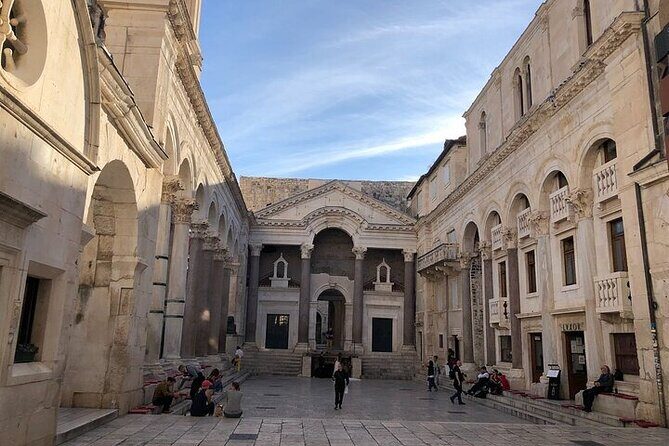
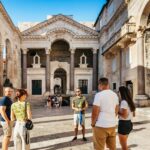
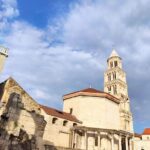
You start in Split on your own, then the tour takes over with a 7:30 am hotel pickup. The transfer shuttles you to the border area where you meet the tour leader. This is a smart setup if you want a first taste of Croatia without rushing your whole day.
Split is also a good warm-up because it sets your expectation for the rest of the trip: old stones, layered cultures, and a coastline that keeps pulling your eyes outward. Once you roll out, you shift from tourist-friendly lanes to border crossings and road travel that feels more like a journey than a checklist.
The earlier start also matters for value. You cover real distance while cooler morning light is still on your side, and you waste less of your limited vacation hours.
You can also read our reviews of more private tours in Split

Mostar and Herzegovina: UNESCO Stones, Ottoman Flair, and a River-Side Moment
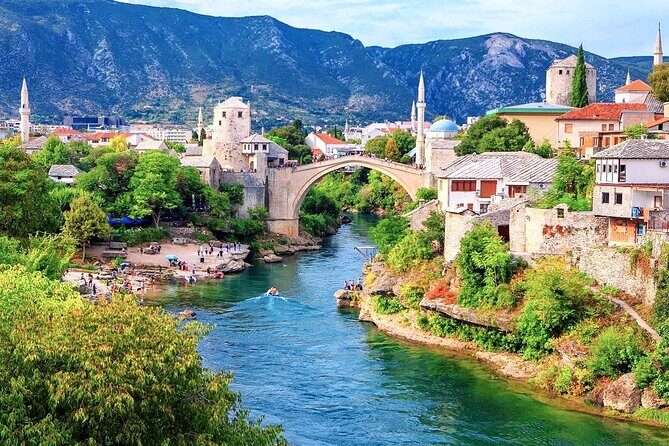
Day 1 begins with the iconic Mostar Old Bridge (Stari Most), part of UNESCO and built in a classic Islamic architectural style in the 1500s. The bridge is both a landmark and a meeting point, and seeing it with the guide’s framing helps you notice what makes it visually distinctive instead of just famous.
Next comes time in the Old Bazaar area—cobbled lanes, lively streets, and old mosques next to everyday life. I like that you are not forced to rush; you get a focused walk with space to wander. You will also notice memorial elements marked with Don’t Forget stones, a detail that adds weight to the sightseeing.
Then you get a quiet nature break at Blagaj tekija, tucked by a cliff with blue waters in front of it. This stop gives you a change of pace after cities—more air, more stillness, and a sense of the countryside.
One practical note: Mostar and Blagaj can feel busy in the day. If you want the best photos, keep your camera ready for early angles and don’t assume the view will be exactly the same in every light.
Sarajevo: Uneven Streets, War Reminders, and the WWI Trigger at Latin Bridge
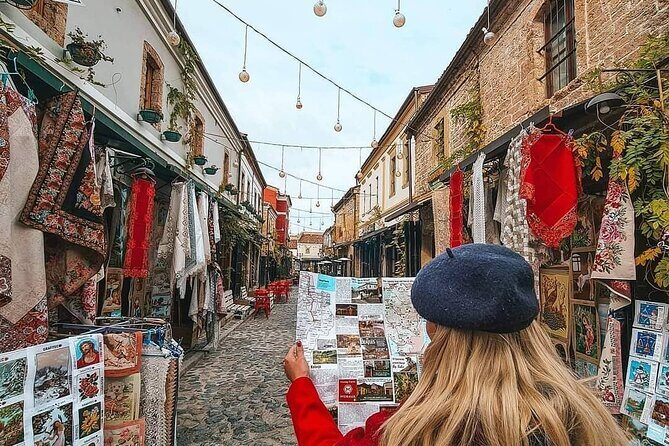
Sarajevo is where the tour’s “context” side really shows up. After breakfast, you drive in and join a guided walk that includes uneven terrain and visible reminders of the Yugoslav War like bullet holes and cannon marks. That kind of detail is heavy, but it makes the city’s story feel grounded rather than abstract.
You also rotate through Ottoman and Austria-Hungarian parts of town, with bazaars, markets, mosques, churches, and synagogues. The effect is that Sarajevo starts to look like the city it truly is: a junction of faiths and empires rather than a single-style postcard.
The stop at Latin Bridge is a key one. You learn how WWI was triggered there, and the bridge’s name connects it to the Catholic quarter (Latinluk). It is history you can actually point to with your feet, not just read later on a screen.
Finally, you get free time in the old town. This is where you make the trip yours—try Sarajevo’s meat dishes and desserts, then use your hour to pick a viewpoint or simply sit and watch street life.
Wear shoes that handle rough pavement. Sarajevo’s streets can turn a “simple walk” into a leg workout if you’re not prepared.
Kotor: A UNESCO Old Town That Confuses Intruders (In a Good Way)
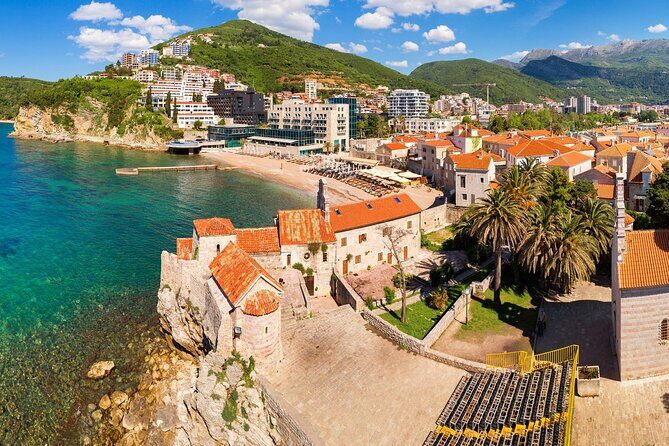
Kotor is UNESCO, but it also feels like something more than a museum. The old town’s streets are narrow and winding, and the guide’s explanation is practical: the chaos was intentional, designed to confuse intruders. Today, it just makes exploring more fun, because every turn changes what you see.
You also visit Saint Luke’s church, important to locals as a symbol of unity. That stop adds meaning beyond architecture—again, the trip’s strength is pairing landmarks with why they matter to people.
You spend the afternoon exploring the area on your own, which is exactly how Kotor should be done. The best moments tend to happen when you get lost for 20 minutes and then suddenly spot a view you didn’t know was there.
You overnight near the Montenegrin Riviera. That matters because it gives you a coastal-feeling night after a day in stone lanes.
Budva, Sveti Stefan, Rozafa, and Shkodër: Coast Views, Castle Drama, and River Landscapes
Day 4 moves you into Montenegro again, but in a different mood. You start in Budva, split between Old Budva and New Budva. Old Budva is for medieval flavor—churches like St. Ivan and St. Mary, plus the old town streets where you can still feel the older layer.
Sveti Stefan is more of a viewpoint moment than a “stay and wander” moment. You stop near it on the way to Albania for photos, but the island itself is not reachable as it has become an exclusive resort. Even so, it is a powerful sight with instantly recognizable coastal shape.
Then you shift to Albania’s north with Rozafa Castle and the scenery over lake and rivers merging toward the Adriatic. The castle location makes it easier to see why this area has always been strategic—views give you the logic of the walls.
Shkodër rounds out the day with an overview of a city that has walls dating back to the first millennium BCE, plus Venetian influence you can often feel in the way the city looks and functions. If you travel at the right time (the itinerary notes February), there is even a chance to experience a carnival festival.
The common thread here is elevation and views. If you get motion sensitive, keep it slow when changing from coach to walking, because castle approaches often involve stairs and uphill segments.
Slow Food and Family Farms in Albania: Mrizi i Zanave Gives the Trip a Heartbeat
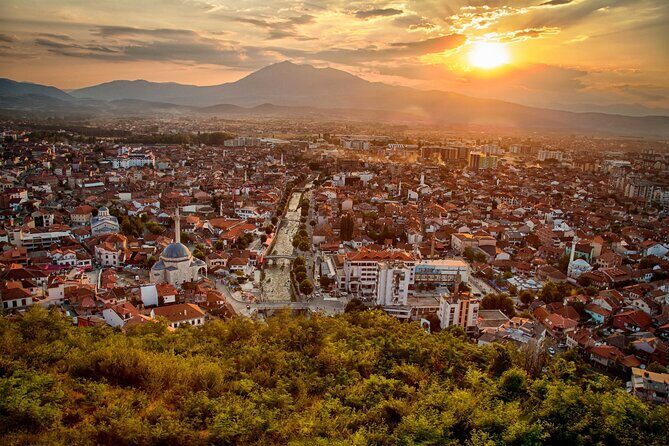
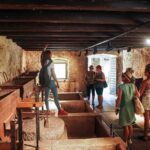
One of the most memorable day changes is when you stop being “history-tour focused” and move into food culture. At Mrizi i Zanave, you tour a slow-food agro-tourism farm known for regional bio fresh local products. You learn how the family business created jobs for hundreds of people in the surrounding area, and how older communist buildings were adapted for storage and production.
This stop is valuable because it turns Albania from a list of places into a living system. You also get free time to enjoy a traditional lunch or buy fresh produce.
If you like tasting what you’re learning, this is a great place to slow down. Bring cash for purchases, and don’t overpack your bag—some farms encourage buying local goods.
Prizren and Gjakova: Kosovo’s Mosques, Fort Views, and Bazaar Resilience
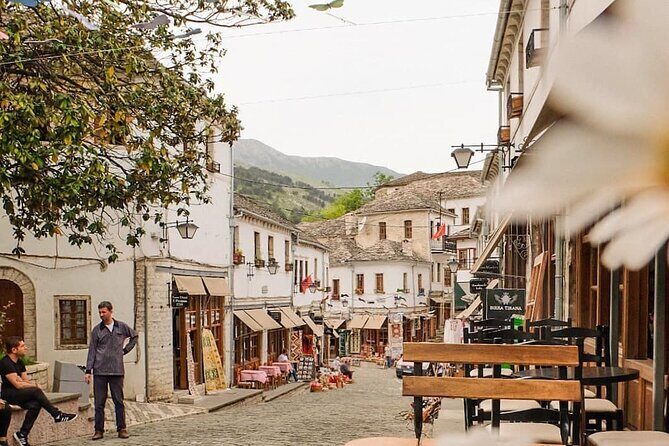
Prizren is framed as Kosovo’s cultural capital, and the walk reflects that. The river runs through the old town, with bridges crossing below—so you’re always seeing the city’s layers from different angles. This is one of those places where you can spot religious tolerance in daily life simply by watching how the streets function.
You stop at Sinan Pasha Mosque, known for rich arabesque color and pattern. Even if you are not a museum person, the design details help you appreciate how local craftsmanship carries meaning.
There’s also time from a fortress viewpoint above the town, where you get a panorama. That view is the payoff for the day’s street walking—suddenly everything makes sense from above.
Then you continue to Gjakova, built around the oldest and largest bazaar in Kosovo. Even though it was destroyed during multiple wars, the bazaar was rebuilt to its older shape. It gives your shopping time a deeper feeling: you’re not just buying souvenirs, you’re watching recovery and continuity.
If you love handmade crafts, this is where you’ll enjoy taking time. If you prefer minimal shopping, you can still enjoy the bazaar as a street scene.
Decan Monastery and Rahovec Wine Country: UNESCO Frescoes and Ongoing Life
The Monastery of Decan is a UNESCO site, and the guide notes why: frescoes that portray 14th-century life and a Palaeologan renaissance shift in Byzantine painting. What makes it feel alive in the itinerary is that Orthodox monks still inhabit the monastery and make fresh organic food like cheeses.
This isn’t just “look at art.” You feel the continuity of daily religious practice and work. It makes the visit more respectful and less rushed.
Then Rahovec brings in another side of the region: viticulture. Grapes were cultivated here since Illyrian times, and the vineyards sit on hillocks at altitude, shaping wine quality. The itinerary notes a September wine festival, which can add extra energy if your dates align.
This day works well as a balance. You go from sacred art to food production and then end with a landscape built for growing grapes.
Krujë and the Castle of Resistance: Medieval Bazaar Strolls and Secret-Path Stories
Krujë is presented as an Albanian symbol of resistance against Ottoman expansion in the 1400s, and the setting fits the story. The old town sits in mountainous terrain, so you get that feeling of strength and defensibility right away.
You tour the medieval Old Bazaar, known as one of the biggest and oldest in the Balkans. It is one of the easier shopping days because the streets are naturally compact and walkable, and the stalls focus on souvenirs like carpets, jewelers items, and more handmade goods.
Then you climb to Krujë Castle, with the guide pointing out hidden paths used by locals to leave without being noticed when enemies surrounded the castle. Even if you already enjoy history, that detail turns the castle from a static ruin into a place with tactical thinking.
Go slow on the climbs. Castle days reward patience because the best views often come after a few minutes of steady uphill walking.
Tirana Food Walk With a Local Companion: Markets, Coffee Culture, and BUNK’ART 2
Tirana is not treated as a single monument day. Instead, you meet a local companion and shift into a food and neighborhood format.
You start with a stop for Byrek and a breakfast that feels like what locals do. Then you visit Çam bazaar, founded by the Albanian Çam community, with goods ranging from clothing to kitchen equipment—and yes, there’s bargaining.
The itinerary also includes choices meant to avoid tourist traps, with dessert in an authentic pastry spot and an introduction to coffee culture. You even join locals at a cozy café to taste traditional Albanian coffee. This part is a real value add because coffee culture is one of those small things you never quite recreate on your own afterward.
You then visit the Bicycle bazaar (second-hand items of various kinds) and the New Bazaar, where you try lunch items like grilled Qofte and Albanian bread. Vegetarians get baked bread with Albanian Gjize, and the day can also include a taste of Albanian Raki.
To end with contrast, you visit BUNK’ART 2—a nuclear bunker turned museum, originally designed for Enver Hoxha and party leadership during the Cold War. The bunker was hidden to the general public until 2014. The museum uses video to tell stories of the communist army and daily life under the regime.
If you like history but get bored by dry exhibits, this is a good compromise. It mixes human-scale stories with a physical place you can picture.
Ohrid and Lake Life: UNESCO Old Town Views and a Monastery at the Source
North Macedonia enters with Struga, where you stop briefly by the source of the Drini River. It’s a short moment, but it helps reset your brain between long driving segments.
Then you reach Ohrid, UNESCO World Heritage since 1980. You focus on views and key sacred sites: the viewpoint of the church of St. John, St. Nicolas, and the mosque Halveti Hayati Tekke. Ohrid also connects to Orthodox history through Byzantine times, which your guide helps you understand through the route and stops.
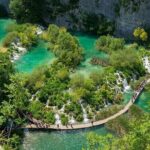
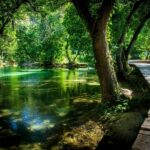
Day 10 shifts to St Naum, a monastery right at the source of River Crni Drim. The setting is a protected area within Galicica National Park, and the imagery is described as crystal-clear spring water reflecting greenery and mountain peaks. This is one of those “quiet reset” stops where photos help, but stillness is the real point.
You also stop in Tushemisht as a border-crossing break, described as warm and welcoming, then head to Driloni National Park, where springs form a small lake surrounded by greenery and weeping willows.
If you feel like this itinerary can get intense (and it can), these nature breaks are what keep the trip from turning into pure transit.
Berat: 1001 Windows, Castle Views, Museums, and Living Inside the Walls
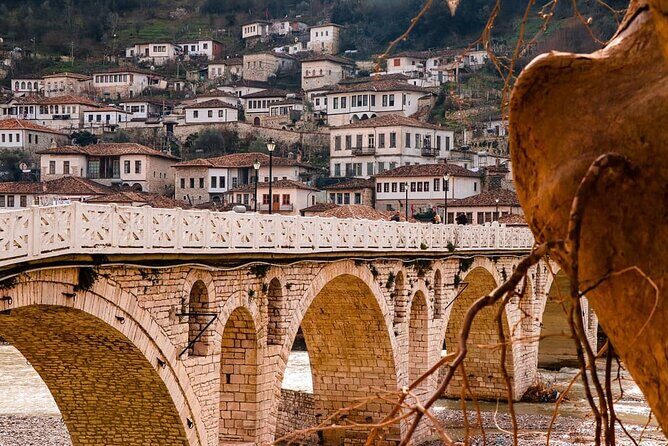
Berat is famous as the town of 1001 windows, and the visit is designed for slow visual scanning. You walk narrow stone streets for views of medieval houses stacked into hillsides, with windows appearing one above another.
You also visit Berat Castle, plus churches and mosques, the lower town, an old stone bridge, museums, and remains from the communist era. That combination matters because Berat is not just architecture—it’s layers of time you can still walk through.
The National Iconographic Museum Onufri is included. Onufri is tied to a specific reddish church-painting color, and that detail gives you a more specific reason to care about icons beyond general religious art.
A quick stop at Gorica Bridge adds one more angle. By now you’ve seen several cities from above and street level, and bridges often act like visual connectors for how the towns grew.
Wear a light jacket if you travel shoulder season; stone towns can cool down quickly in the evenings.
Gjirokaster: The Stone City Where Every House Feels Built for Defense
Gjirokaster is called the Stone City and is UNESCO-listed, with houses described as small fortresses. You start with a quick entry into the town’s feel, then climb to Gjirokaster Castle, built in the 4th century A.D. The itinerary highlights the castle as one of the best-preserved medieval towns in the Balkans.
The tour also notes cultural timing: every five years, Gjirokastra becomes the capital of Albanian folklore and traditional music, with ensembles performing and showing costumes. Even if your travel dates don’t match that festival, the way the town is described helps you understand why music and identity matter here.
Then you stroll the Gjirokastra Bazaar and visit a best-preserved house where everything is original and authentic. This is where the trip turns from broad landmarks into “how did real people live” detail.
This day is best if you like towns with texture. If you prefer beach downtime, you might feel Gjirokaster is more “walk and look” than “sit and relax.”
Ioannina and Meteora: Greek Old Town Charm and a Sunset That Makes the Trip Stick
On the Greece side, Ioannina brings cobbled old-town streets with visible Byzantine and Ottoman-era remains in the architecture. You tour the Ioannina Castle, then walk through the labyrinthine street network within its walls, where cafes and Greek cuisine become part of the experience.
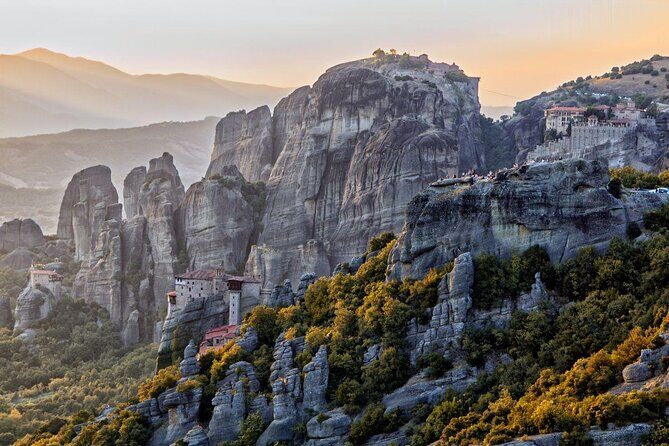
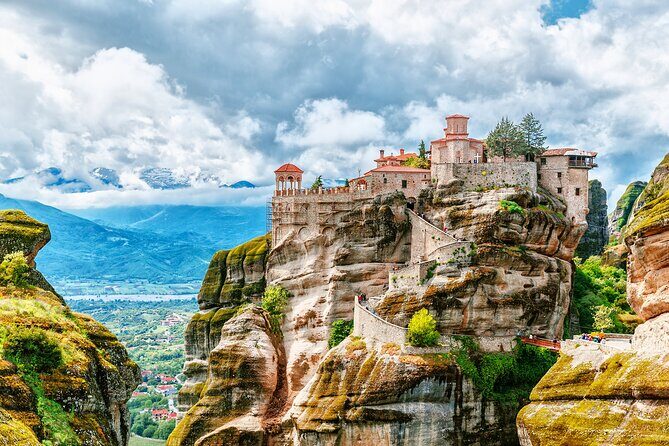
Then comes the iconic Meteora day. The monasteries sit on spectacular rock formations and are UNESCO-listed from the 14th–15th centuries. The itinerary specifically highlights sunset. Meteora sunsets often steal the show because light hits stone cliffs in a way that feels cinematic, but your best experience here will come from being ready to stand, wait, and watch as colors change.
Bring patience and a warm layer. Sunset waits can be longer than you expect.
The Finish: Athens Transfer and Ferry to Corfu
Day 14 is the wrap-up with two possible endings depending on your plan: you get transferred toward Athens, and/or you continue to Igoumenitsa Port for the included ferry ticket to Corfu. The key point is that you’re not left to scramble transport on your last day.
This ending helps you treat the trip as a complete arc. You move from the inland heritage towns back toward the sea, and you end with the kind of simple reward that feels earned: a ferry crossing and an island arrival.
Price and Logistics: What You’re Actually Paying For
At $5,153.85 per person (double/twin/triple/quad occupancy in 3-star hotels), the price can look high until you break down what’s included. You get private transportation, a professional tour leader, hotel pickup in Split, hotel drop-off in Athens or at the port (plus ferry tickets to Corfu), and entry tickets for sites that are visited. Breakfast is included on 13 mornings.
The part to watch is what’s not included: lunches, dinners, drinks, and snacks. That means you’ll want a daily budget for food and a plan for how you’ll spend free time. If you prefer full board with all meals covered, you may need to shop around elsewhere.
The good news is the inclusions cover the expensive friction points—cars, guides, site fees, and the final ferry. That is why this tour can feel like a smooth ride even though the itinerary is active.
Also, since it’s limited to up to 10 travelers, the logistics tend to stay more controlled than larger group tours.
Who This Tour Is Best For
This is a strong match if you want guided walking through historic centers, plus local food culture that isn’t only about restaurants. You’ll likely enjoy it if you like a mix of UNESCO sites and everyday markets, and if you don’t mind long drives between chapters.
It is less ideal if you want a very slow pace, lots of hotel downtime, or a purely beach-first vacation. Castle days and old-town streets require footwork and patience.
If you’re traveling as a couple or a solo traveler who likes meeting others but still wants semi-private comfort, this format fits well. The small size also helps you get quick answers from the guide instead of shouting over a big crowd.
Should You Book This Balkan Adventure?
I’d book this tour if you want major heritage sites plus real local texture, and you prefer not to fight logistics across multiple borders and countries. The combination of guided context, included breakfasts, and the included ferry to Corfu is a practical win.
Skip it if you hate driving days, have limited walking tolerance, or you want every meal included. This trip rewards people who pack for movement and treat travel days as part of the story, not as wasted time.
If that sounds like you, you’re in the right place.
FAQ
What time is the pickup in Split?
The tour starts with a hotel pickup in Split at 7:30 am.
How long is the tour?
It runs for about 14 days.
How many travelers are on the tour?
The tour has a maximum of 10 travelers.
Where does the tour start and end?
It starts in Split, Croatia, and ends in a different location depending on the route: either Athens or at the port in Igoumenitsa with the ferry to Corfu.
Are breakfasts included?
Yes. Breakfast is included on 13 mornings, with accommodation and breakfast provided on overnights.
What’s included in the price?
Included items are private transportation, a professional tour leader, hotel pickup in Split, hotel drop-off in Athens or port drop-off in Igoumenitsa (including ferry tickets to Corfu), entry tickets for visited sites, and tourist taxes plus road and fuel costs.
Are lunch and dinner included?
No. Lunches, dinners, drinks, and snacks are not included.