REVIEW · HISTORICAL TOURS
Split: History and Heritage Walking Tour
Book on GetYourGuide →Operated by Ancient Tours Split · Bookable on GetYourGuide
History in Split is a street-level walk. This UNESCO Roman palace tour takes you through the core of Diocletian’s world, then moves on to Romanesque, medieval, and Gothic layers, with bonus Game of Thrones locations tucked into the route.
I like the way the guides turn dates and names into a story you can actually picture, especially the Diocletian arc from nobody to the most powerful man around. I also like the compact route: you see surprisingly well-preserved Roman architecture right next to medieval churches, fortification walls, and everyday shops in a small area you can re-walk later.
One thing to plan for: even though it’s marketed as small-group, the tour can end up with bigger crowds, and that can slow the pace when you’re moving through busy old-town streets and waiting for everyone.
In This Review
- Key highlights to look forward to
- Why Diocletian’s Palace is the real reason you’re here
- Finding your group at Peristil Square (the easy way)
- The walk inside the palace: 1700 years of living architecture
- Romanesque churches: when new faith joins old stone
- Medieval fortifications and Gothic palaces: the middle ages in motion
- Game of Thrones context without losing the plot
- How the guides make it not boring
- Price and value: why $18 can be a smart first move
- Timing, weather, and what to bring so you stay comfortable
- Who should book (and who should think twice)
- Best way to use this tour: your Split foundation
- Final verdict: should you book the History and Heritage walking tour?
- FAQ
- Where is the meeting point?
- How do I find the guide?
- Does the tour include admission tickets?
- Is hotel pickup or drop-off provided?
- What does the $18 price cover?
- What should I bring?
- What if it rains?
- What languages are available?
- Is the tour suitable for all ages?
- What is the cancellation policy?
Key highlights to look forward to
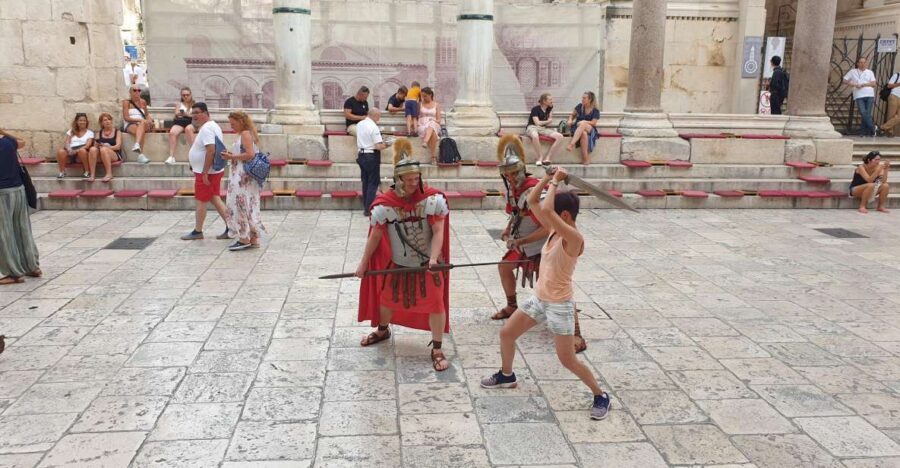
- UNESCO-protected Diocletian’s Palace: 1700 years of stone, layout, and daily life
- Layer-by-layer Split: Roman, then Romanesque churches, medieval fortifications, and Gothic palaces
- Fun facts with structure: stories about how Diocletian rose to power and why the city looks the way it does
- Game of Thrones bonus info: added context for fans without derailing the history
- Licensed, educated guides: clear explanations and lots of Q&A energy (with standout guides like Antonella and Nikolas)
Why Diocletian’s Palace is the real reason you’re here
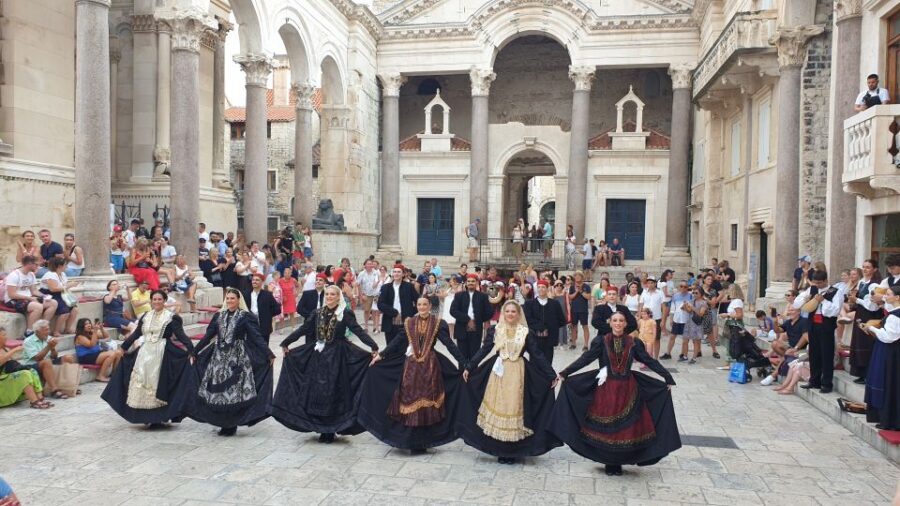
Split is one of those rare cities where you don’t need a museum ticket to feel like you stepped into the past. The centerpiece is Diocletian’s Palace, a Roman complex that’s about as old as modern cities get in Europe. On this walk, you focus on what remains of that palace—and more importantly, what it meant when it was new.
The tour’s value is that it doesn’t treat the palace as a pile of ruins. You’ll learn how Diocletian went from being, essentially, a powerful outsider figure to the top of the world, and why his palace became such a strong anchor for the city’s future. That context matters because Split’s streets make sense only when you understand the layout that came first.
You’ll also see the palace not as something fenced off, but as part of the living city. Roman stone still sits under your feet while modern life carries on—shops, foot traffic, and the everyday rhythm of a coastal town. It’s a neat reminder that history isn’t only behind glass. It’s in the ground plan.
You can also read our reviews of more walking tours in Split


Finding your group at Peristil Square (the easy way)
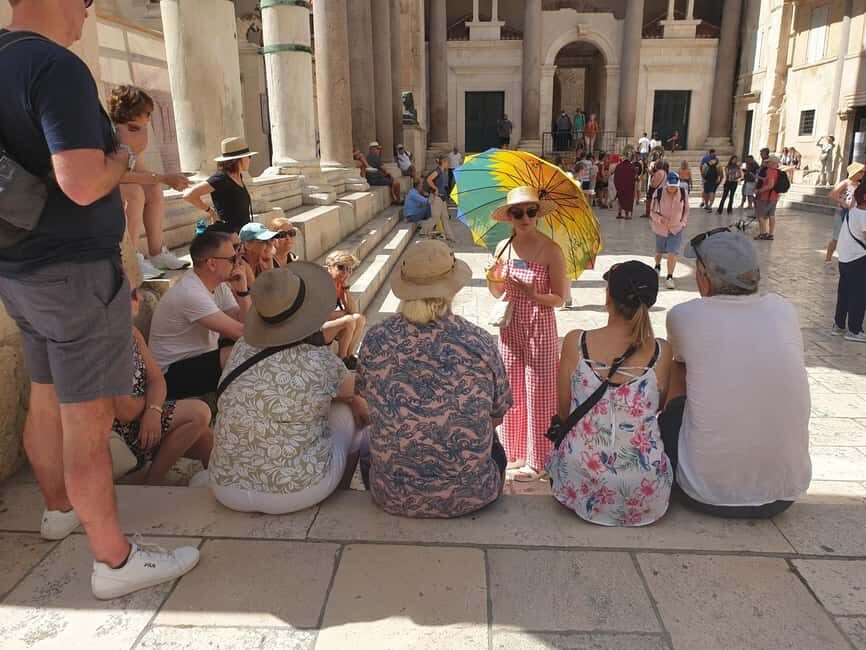
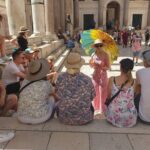
You meet at Peristil Square, under the old Roman arch on the north side next to the Tourist Information Office. The group is easy to spot: look for a yellow T-shirt or a yellow umbrella.
This is a practical detail, but it really affects your start. Old-town meeting points can feel vague if you arrive late or confused. Here, the guide’s color cues help you zero in fast, then get moving while the area is still manageable.
The tour ends right back at the meeting point, so you’re not left playing navigation games after the walk. That matters if you’re trying to squeeze in lunch or a museum stop later.
The walk inside the palace: 1700 years of living architecture
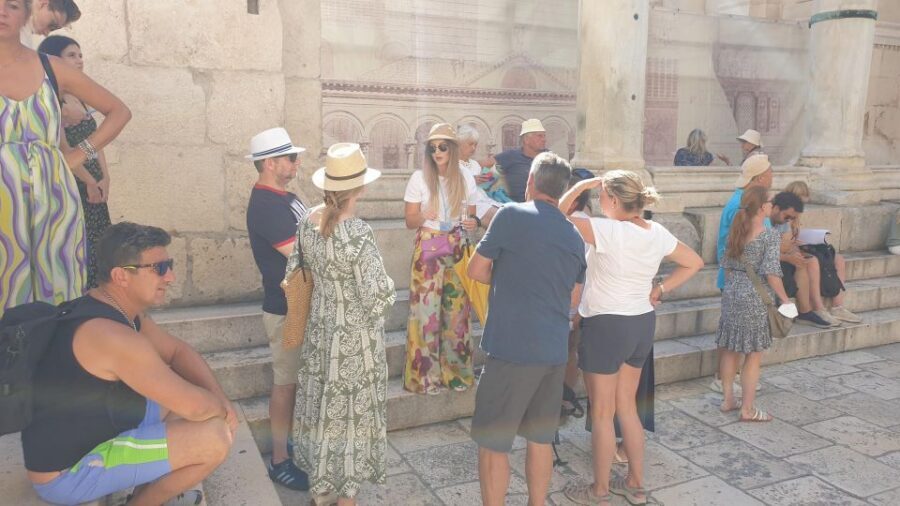
Once you’re oriented, the tour concentrates on the ancient palace complex and its Roman structure. Even if you’ve never studied Rome, you’ll get a clear picture of how the space used to function and what you can still recognize today.
Here’s what I think makes this segment work for most people:
- You get the palace story in a way that connects power to buildings. Diocletian wasn’t building for tourists. He built because rulers needed control, privacy, and a visible symbol.
- You get concrete explanations about what remains—so you’re not just looking at old stones wondering what they were for.
- You’re in a small core area, which means the “big picture” stays with you instead of getting lost across the whole city.
The palace isn’t presented as a single stop, either. It’s more like you’re walking through a timeline. Roman spaces give you one layer of understanding, then you’ll keep moving and realize how later eras adapted the same urban fabric.
Romanesque churches: when new faith joins old stone
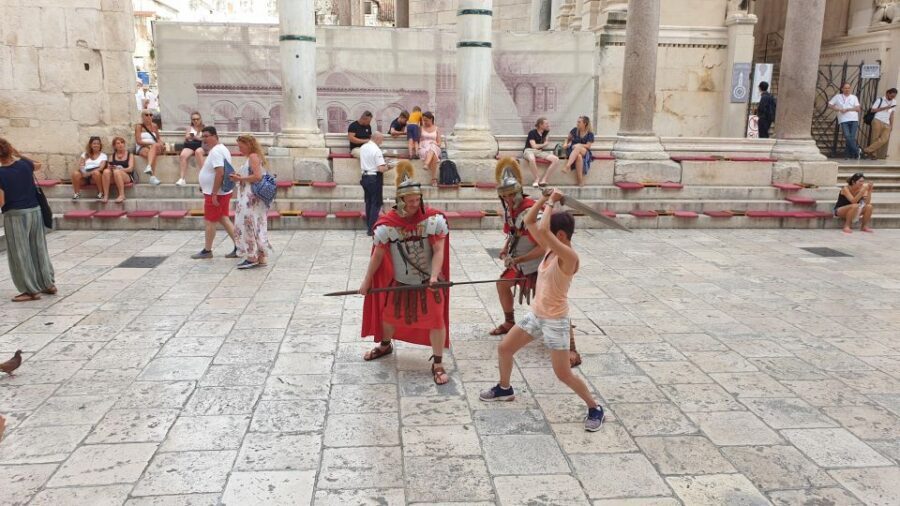
After the Roman core, the tour shifts into the next major layer: Romanesque churches. This is where the city starts feeling less like a Roman stage set and more like a place that kept evolving after the empire.
Romanesque architecture is all about solidity—thick walls, heavy forms, and designs that look meant to last. On the tour, the benefit isn’t just the style word. It’s the reason those churches took shape where they did, and how the city kept reorganizing itself around the palace area.
If you’re traveling with someone who thinks history tours are boring, this is one of the segments that can win them over. Churches add a different pace to the story, and you’ll usually be close enough to ask questions when something looks confusing. The guides are set up for that kind of back-and-forth.
Medieval fortifications and Gothic palaces: the middle ages in motion
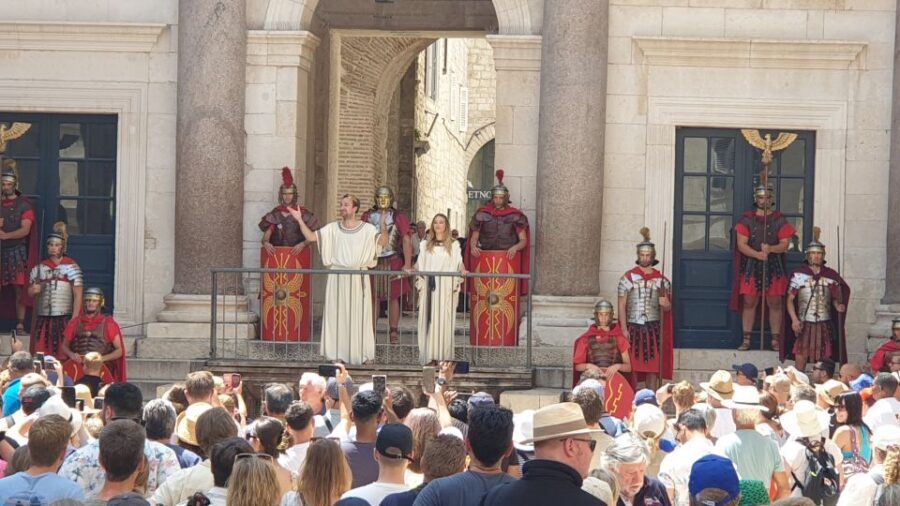
Next comes medieval fortifications, which helps explain why Split looks defensible in a way you don’t always notice from a modern street-level glance. Fortifications tell you what mattered to the people living there—safety, control of movement, and the ability to hold ground.
Then you’ll move toward Gothic palaces, another style shift that changes the mood. Gothic buildings tend to feel more vertical and patterned, which creates a visual contrast against the Roman and Romanesque massing you’ve already seen.
What I like about this part is that the tour treats these styles like evidence. You don’t just memorize names. You learn to look at shapes and layouts and infer why the city changed. That’s a real skill you can use after the tour, when you’re walking on your own.
You can also read our reviews of more historical tours in Split





Game of Thrones context without losing the plot
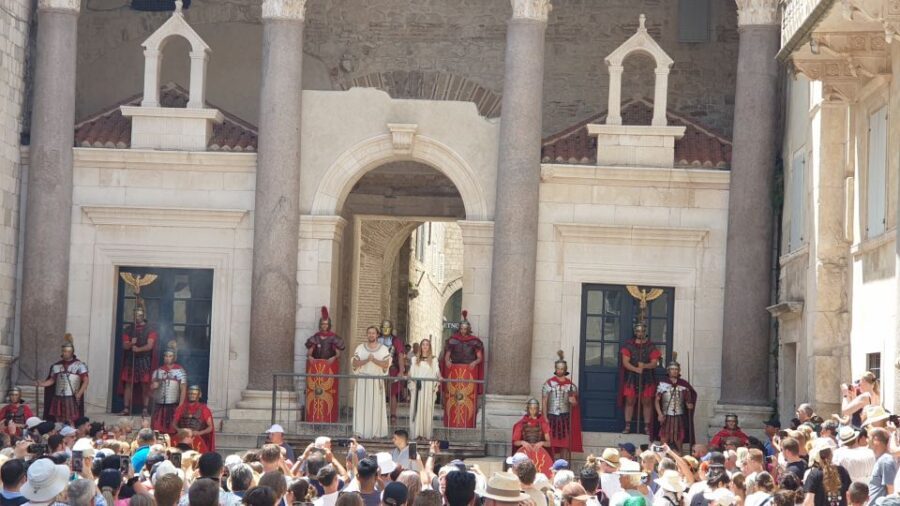
For Game of Thrones fans, the bonus segment is the best kind: story-related context instead of a random scavenger hunt.
You’ll get locations and references tied to the show while still keeping the focus on Split’s history and architecture. That balance is important. If the tour leaned too hard on fandom, it could feel like the buildings were only props. Here, the show adds a fun lens, not a replacement for meaning.
If you’re not a fan, don’t worry. The tour is built around heritage landmarks and city evolution. The show pieces are extras, not the core. I’d still recommend it to everyone because the show references push you to look closer at details you might skip otherwise.
How the guides make it not boring
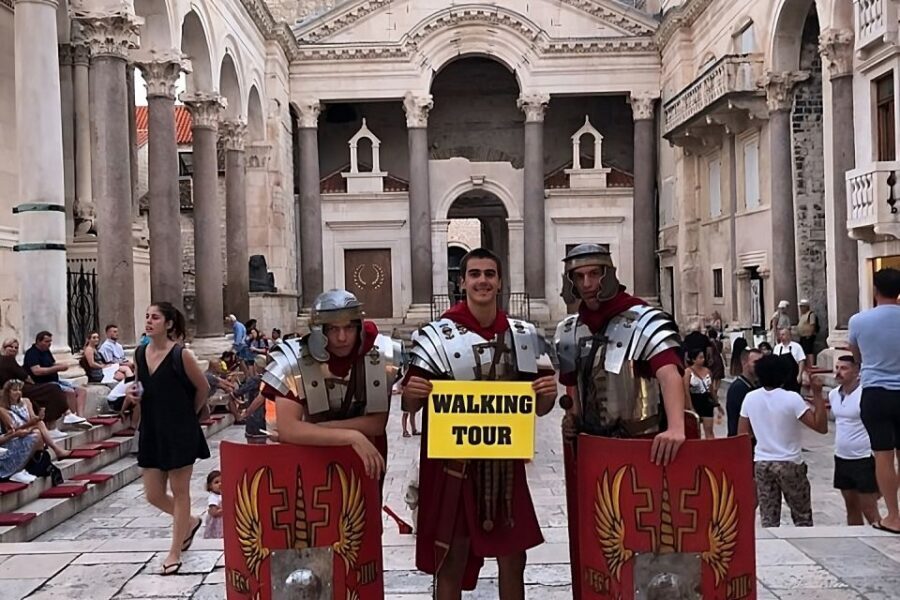
This tour earns its high marks because of the guide delivery. The operation uses licensed and educated guides, and you can feel that in the way the explanations land.
From the guide names you might encounter—like Nikolas and Antonella/Antonela—the pattern is similar: clear storytelling, fun facts that have a point, and a pace that tries to keep you engaged. Several people also noted that the guide answers questions and does it in an easy, human way, not a lecture voice.
One practical thing I’d watch for is audio comfort. Some guides do a great job making sure everyone can hear, which is huge in crowded squares. If you’re sensitive to noise, arrive a few minutes early so you can get a spot near the front of the group.
Also, a nice travel bonus: in at least one instance, the route included traditional singing along the way. Even if it’s not guaranteed at every departure, it’s a reminder that Split’s culture isn’t only in monuments. It pops into the street experience.
Price and value: why $18 can be a smart first move
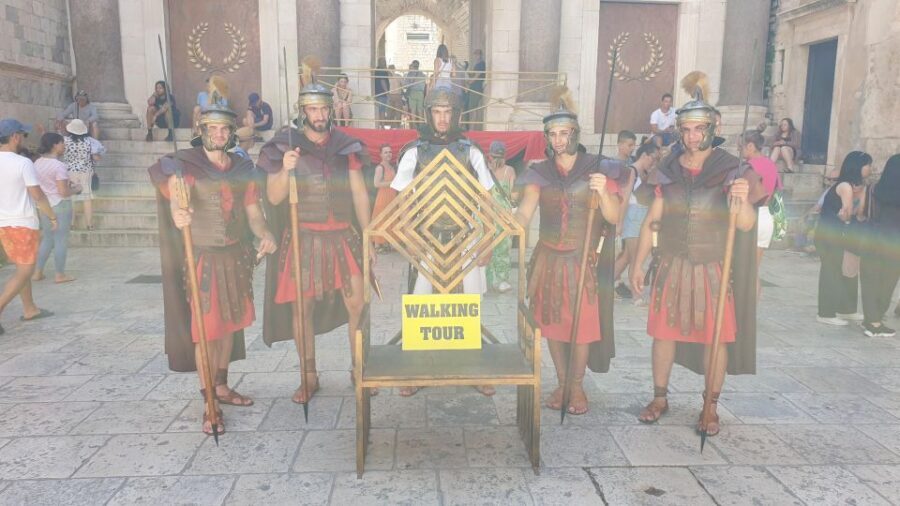
At $18 per person, this walking tour is priced like an easy add-on—yet it covers a lot of ground in a compact area: palace architecture, Romanesque churches, medieval fortifications, and Gothic palaces.
What you’re really paying for is not entry fees. You’re paying for someone to translate the city into something coherent. That matters in Split because the layers are close together. If you visit solo without context, you might see beautiful buildings but miss why they’re there and how they connect.
What’s included:
- Small-group walking tour
- Tour guide
What’s not included:
- Hotel pickup and drop-off
- Admission tickets
- Food and drinks
So I’d treat this like a structured history orientation. You’ll likely save time later because you’ll understand what you’re seeing when you return to the area independently.
Timing, weather, and what to bring so you stay comfortable

This tour runs in all weather—rain or sun—so plan like it will get messy at least once. Bring comfortable shoes because you’re on foot through uneven old-town streets. Add a hat if the sun is strong, and wear comfortable clothes you can move in.
Also, note the small rule: costumes aren’t allowed. It’s a heritage site experience with walking logistics, so keep it normal.
If you’re the type who hates wet umbrellas and slippery stones, pack something you actually like carrying. A hood or compact umbrella can make the difference between you enjoying the walk and you rushing through it.
Who should book (and who should think twice)
This tour is appropriate for all ages, which makes it a strong family choice. History tours can be tough with kids, but the mix of visual architecture and story-led guide work usually helps keep attention.
That said, it’s not for everyone. It’s marked as not suitable for people with high blood pressure and not suitable for hearing-impaired people. The reasons aren’t spelled out, but you should respect those limits. Walking tours often involve sustained time on your feet and group movement in places where audio support may be limited.
If you’re traveling with someone who isn’t a history buff, this is still a good option. The tour structure tends to keep non-experts engaged by turning power politics and city change into a narrative.
Best way to use this tour: your Split foundation
I recommend taking this tour early in your time in Split—ideally on a day when you want orientation. Once you’ve walked the palace complex and learned the layering story, you’ll see the city differently on your next stroll.
Here’s how to get the most out of it:
- Pay attention to the parts that explain why the city is arranged the way it is. That helps you navigate faster later.
- Ask questions when something looks like Roman stone but sits inside a later-era street scene. That’s the fun contrast the tour is built around.
- After the tour, pick one area you liked most—Roman palace spaces, a Romanesque church detail, or a Gothic frontage—and re-walk it slowly. You’ll catch details you missed the first time.
Even if you’re only in Split for a short stop, this “core city” approach is efficient. You get the big story plus enough visuals to guide your self-led exploring afterward.
Final verdict: should you book the History and Heritage walking tour?
If you want a high-energy, story-focused way to understand Split, I’d book this. The combination of UNESCO Diocletian’s Palace, architecture from multiple eras, and a guide-led narrative makes it more than a checklist walk. It’s also well priced for what you gain in context—especially if you plan to explore the old town afterward.
Skip it if you’re sensitive to crowds and long group movement. Even with the small-group label, the route can get busy, and you may have to wait at times while the group stays together. And if you fall into the tour’s stated limitations—high blood pressure or hearing constraints—choose a different format that fits your needs better.
For most people, though, this is a strong first stop in Split. It helps you understand what you’re seeing, not just look at it.
FAQ
Where is the meeting point?
The tour meets on Peristil Square, under the old Roman arch on the north part of Peristyle square next to the Tourist Information Office.
How do I find the guide?
Look for a yellow T-shirt or a yellow umbrella at the meeting point.
Does the tour include admission tickets?
No. Admission tickets are not included.
Is hotel pickup or drop-off provided?
No. Hotel pickup and drop-off are not included.
What does the $18 price cover?
It covers a small-group walking tour with a tour guide.
What should I bring?
Bring comfortable shoes, a hat, and comfortable clothes.
What if it rains?
The tour runs in all weather, including rain and sun.
What languages are available?
The tour is offered in Russian, English, German, and French.
Is the tour suitable for all ages?
Yes, it is appropriate for all ages.
What is the cancellation policy?
You can cancel up to 24 hours in advance for a full refund.