REVIEW · HISTORICAL TOURS
Walking Tour of Split with a ‘Magister’ of History
Book on Viator →Operated by DiocleSpot Tours · Bookable on Viator
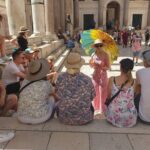
Your feet do the explaining in Split. This walking tour led by Toni Šare (DiocleSpot Tours) connects the dots between Roman power and later Croatian life, with 3D reconstructions that show you what you’re seeing and what has vanished. I especially liked the small group size (max 18), because it keeps the pace human and makes it easier to ask questions as you stop at the big monuments.
One possible downside: you’ll be mostly outside. The tour doesn’t include museum stops, and you won’t go inside places like the Cathedral of Saint Domnius or the Temple of Jupiter, so it’s best if you want street-level history, not indoor exhibits.
In This Review
- Key highlights to look for
- Start at the Brass Gate (Porta Aenea): where the story begins
- Riva Harbor: the southern wall view that makes Diocletian click
- Peristyle of Diocletian’s Palace: the central square and the missing pieces
- Saint Domnius Cathedral: the Roman mausoleum-to-church transformation
- Temple of Jupiter: exterior clues and the strange construction errors
- Silver Gate and Golden Gate: best views plus defense logic
- Grgur Ninski statue: where language history shows up in stone
- Vestibulum of Diocletian’s Palace: the private entrance that explains control
- Old Town Hall ending at Narodni trg (Pjaca): the easiest place to orient
- What the 3D reconstructions change for your understanding
- Price and value: $34.83 for a high-impact walking format
- Timing, weather, and how to get the most out of the walk
- Who should book this Split history walk
- Should you book DiocleSpot Tours with Toni Šare?
- FAQ
- How long is the Walking Tour of Split with a Magister of History?
- Where does the tour start and end?
- Is the tour offered in English?
- Who is the guide?
- Is this tour a museum or includes paid entrances?
- Are there 3D reconstructions included?
- How large is the group?
- Is there a mobile ticket?
- What should I know about weather and cancellation?
Key highlights to look for
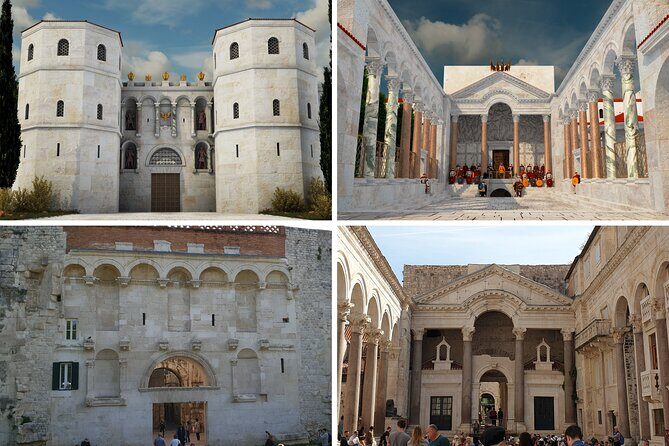
- 3D reconstructions at key points that help you picture the palace in its original glory
- Roman structures explained through later layers, including medieval, Renaissance, and early modern changes
- Exterior-only stops that keep time moving (and avoid museum crowds and ticket hassles)
- Golden Gate and Silver Gate viewpoints for seeing the palace and defensive walls in context
- Game of Thrones filming locations and a fan shop pass if your group is interested
Start at the Brass Gate (Porta Aenea): where the story begins
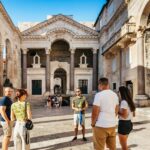
You meet at the Brass Gate, known as Porta Aenea, right by the harborfront. The location is useful because it gives you a quick mental map: Split’s old city isn’t on top of a blank page—it’s wrapped around the remains of a Roman palace complex.
From the start, the guide sets expectations for what you’ll be doing for the next hour-plus: walking a line through Diocletian’s Palace and then out into the surrounding medieval city fabric. If you like your history in real-world chunks—gate, square, wall, street—this format works well. It also means you spend less time hunting for answers and more time looking closely.
You can also read our reviews of more walking tours in Split

Riva Harbor: the southern wall view that makes Diocletian click
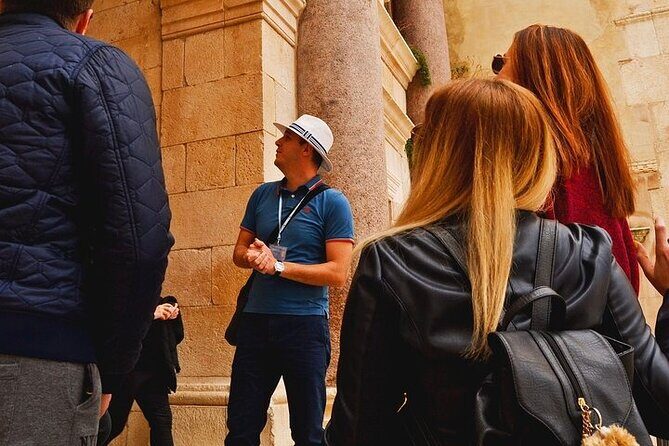
The first stop is Riva Harbor, Split’s waterfront that locals treat as a daily anchor. This is a smart kickoff. From here, you get the big-picture sightline toward the southern wall of Diocletian’s Palace, which you can’t fully appreciate until you’re actually in the right place.
You’ll also get a short introduction using graphic and model representations. It’s not just trivia. It’s a way to prepare your eyes for the next stops, where the guide points out details you’d likely miss if you were just wandering.
In practical terms: arrive ready to look up and look sideways. A lot of the meaning is in the angles—how the palace fronts the city, how later streets and buildings grew alongside it.
Peristyle of Diocletian’s Palace: the central square and the missing pieces
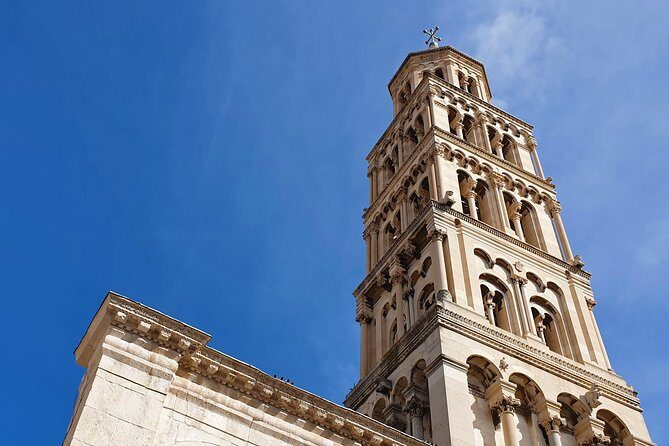
Next comes the Peristyle, the central square inside the palace complex and one of the most important squares in Split today. This stop is a good example of why this tour works: it’s a place you’ll recognize, but the guide shows you the structure underneath.
You’ll see preserved Roman elements, and the tour uses 3D reconstructions to help you understand what you’re looking at versus what used to be there. That “what’s original vs. what’s later” idea is the thread that ties the whole walk together.
A note on pacing: the stop is short (around 10 minutes), so you won’t get stuck in a long lecture. Instead, it’s designed to give you a mental model you can keep using as you move on.
Saint Domnius Cathedral: the Roman mausoleum-to-church transformation
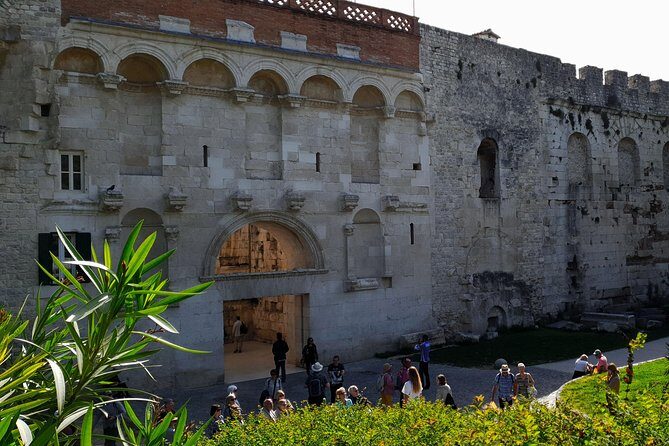
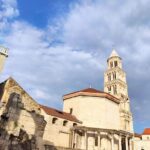
At Cathedral of Saint Domnius, the focus is Diocletian’s grave area—the mausoleum that became a cathedral later on. The guide explains what you need to know about the monument, including the bell tower and the conversion from a Roman tomb setting to a Christian cathedral.
You won’t enter the building, but you’ll still get the key story. That’s a benefit if you’re traveling in warm weather or you’re trying to keep the day moving without queue time. It also matches the tour’s overall style: exterior viewing with interpretive storytelling, not museum-style pacing.
If you’re the type who enjoys architecture as history (how function changes over centuries), this stop usually lands well. You’ll start noticing how buildings can be reused without losing their core identity.
Temple of Jupiter: exterior clues and the strange construction errors
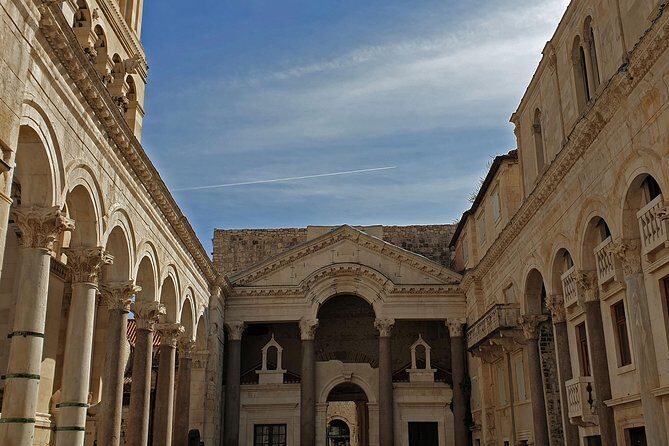
Next is the Temple of Jupiter, described as one of the best-preserved late-Roman temples in the world. The tour keeps you outside, but the guide uses the view to point out anomalies and what are essentially construction mistakes the Romans made.
That’s a fun angle. Most tours talk about what Romans built like it was perfect. Here, the message is more human: even great builders worked with limits, and you can see that in the details.
You’ll get time to look, then a focused explanation that tells you what to pay attention to. If you’ve ever stood in front of a monument and thought, I wish someone would tell me what I’m supposed to notice, this tour answers that.
You can also read our reviews of more historical tours in Split

Silver Gate and Golden Gate: best views plus defense logic
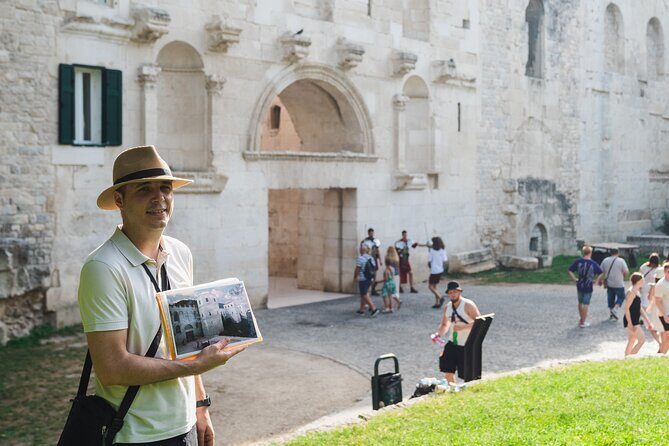
Two gates do most of the heavy lifting for your understanding of the palace: the Eastern (Silver) Gate and the Golden Gate.
At the Eastern (Silver) Gate, you get a strong view that includes the cathedral (mausoleum) on one side, the Silver Gate on the other, and beneath you the only preserved section of the original road. It’s a “big view with a small detail underneath” kind of stop—good for photography, but also good for comprehension.
Then you reach the Golden Gate, the main entrance to the palace. It’s described as the most preserved of the four entrances and also the most decorated. From there, you can see the entire northern wall, and you’ll understand how the medieval city used Roman-made defenses—and what it removed when those parts no longer fit.
This is one of the moments where the walking tour feels worth paying for. Anyone can point to gates. Not everyone helps you connect the gates to how a city actually protected itself and adapted over time.
Grgur Ninski statue: where language history shows up in stone
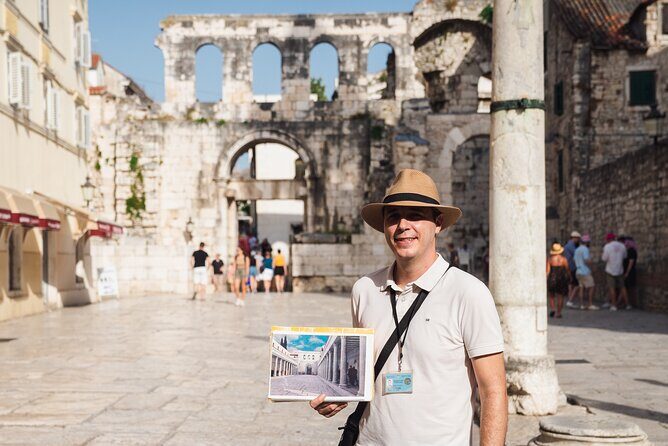
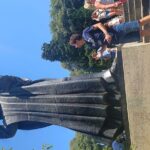
A short stop, but a meaningful one: the Grgur Ninski Statue. This landmark is impossible to miss on foot, and the guide explains what it represents and why it matters for Croatian language and early medieval culture.
I like this kind of stop because it stops the tour from becoming only Roman architecture. It’s a reminder that a city’s identity isn’t just stone and dates. It’s also language, meaning, and politics—shown here through a public monument.
Even if you only have five minutes here, it can give you a new lens for the rest of the walk.
Vestibulum of Diocletian’s Palace: the private entrance that explains control
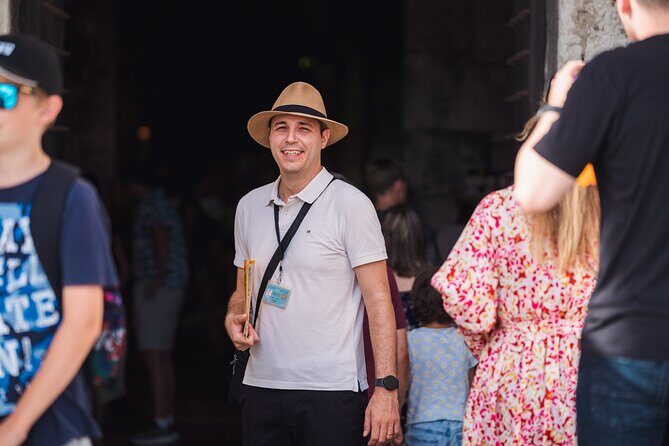
Then you’re at the Vestibulum of Diocletian’s Palace, described as the ancient entrance to his private residence. The guide takes you around the remains of Emperor Diocletian’s private space and explains what you’re seeing.
This is where the tour starts to feel less like a checklist and more like a story about power. You see the public-facing parts of the palace, then the more controlled, private side. It’s a good way to understand that the Roman palace wasn’t just an attraction—it was a designed system.
As you continue, you’ll pass various palaces of noble families. The guide uses these as transitions to explain how Split’s character shifts across eras—Roman foundations, then medieval, Renaissance, and early modern influences showing up in what people built and used.
If your group is interested, the guide can also point out Game of Thrones filming locations around Split and you’ll pass a fan shop. It’s optional, so it doesn’t derail the main history thread. It’s just a fun extra when the interest is there.
Old Town Hall ending at Narodni trg (Pjaca): the easiest place to orient
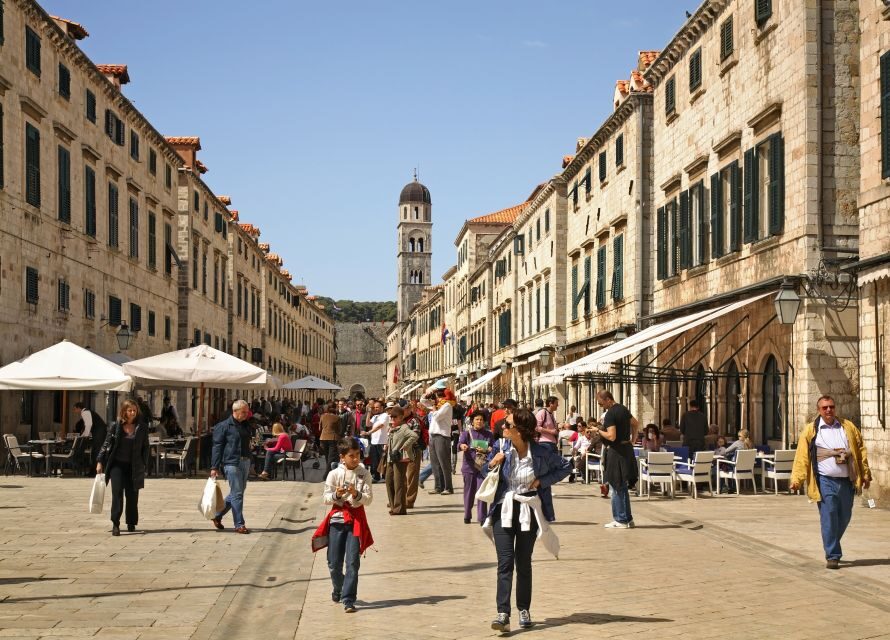
You end at Narodni trg, also known as Pjaca, Split’s main square. The stop is only about five minutes, but it’s a smart ending.
From this point, everything else is more reachable. The guide points out the 14th-century Town Hall and nearby structures so you have a “home base” to return to once the tour ends.
If you’re planning the rest of your day—lunch, another stroll, or deciding which streets to explore deeper—ending at the central square makes life easier. You’re not wandering out of the tour with no bearings. You’ve got a reference point.
What the 3D reconstructions change for your understanding
The biggest quality of this tour is what the guide does with missing context. Diocletian’s Palace is partly intact, partly altered, and partly repurposed. If you’re trying to read it as it would have looked in its first days, your imagination has to work overtime.
That’s where the 3D reconstructions matter. The guide shows visual interpretations of how parts of the palace looked during glory years, so you can compare the original concept to the reality you see today. That difference is what makes the architecture feel alive instead of like a pile of old walls.
Also, these reconstructions don’t just focus on Roman perfection. In the tour’s storytelling, you’ll hear about how the palace’s use changed across time. One review highlights how the guide’s renderings help visualize the palace before later disruptions—exactly the kind of context that turns buildings into history you can picture.
You’ll walk away with practical “seeing skills.” When you look at a gate or a square later, you’ll know what to ask yourself: what’s Roman here, what’s later, and what purpose did this space serve?
Price and value: $34.83 for a high-impact walking format
The price is $34.83 per person for a tour around 1 hour 40 minutes to 1 hour 50 minutes. That might sound small next to big-day tours, but the structure is designed for value: you get a guided route through major palace landmarks, plus the 3D demonstration, and you don’t spend time paying for museum entries.
Here’s what makes it good value for the kind of traveler this tour targets:
- You’re paying for interpretation, not ticketed attractions.
- Stops are mostly exterior, which keeps the flow tight and avoids spending your time in long indoor visits.
- The group size capped at 18 helps you actually hear and ask questions.
Where it may not be the best value is if you’re hunting for an experience that includes interior museums or long, slow self-guided wandering. This tour is built to give you context quickly, so you can decide what to explore more afterward.
Timing, weather, and how to get the most out of the walk
The tour is outdoors-heavy and, in the fine print, requires good weather. That doesn’t mean you should cancel instantly if clouds appear. It does mean you should plan for a day where you can reasonably walk and look closely.
Also, choose your departure time with your own energy in mind. One review specifically mentions an evening slot helping with heat. If you can pick a later start, you might find it easier to enjoy the smaller viewing moments—especially at gates and outside monuments where you’ll be standing and looking for a while.
Bring comfortable shoes. You’ll be moving through uneven old-city streets, and the tour only works if you can stand close enough to hear the explanations without straining.
Who should book this Split history walk
This is a strong fit if:
- You want a first-pass orientation to Split’s Diocletian’s Palace area
- You like Roman-to-medieval connections and how cities reuse old structures
- You enjoy visual aids like 3D reconstructions
- You want a smaller-group experience with room for questions
- You’re into Game of Thrones and would enjoy optional filming-location pointers
It’s less ideal if:
- You’re specifically looking for indoor museum time
- You hate standing still for short exterior stops
- You’re expecting a long, leisurely wander with lots of free time
Should you book DiocleSpot Tours with Toni Šare?
Yes, I’d book it if you’re coming to Split for a meaningful introduction and you want to understand what you’re actually looking at. The combination of a tight walking route, major palace landmarks, and the 3D reconstructions is the kind of value that pays off later when you explore on your own.
I’d skip it only if your dream Split day is mostly indoor museums and you’re not interested in exterior interpretation. Otherwise, this tour is one of the fastest ways to turn a confusing jumble of old walls into a clear story you can carry with you all trip.
FAQ
How long is the Walking Tour of Split with a Magister of History?
It runs about 1 hour 40 minutes to 1 hour 50 minutes.
Where does the tour start and end?
It starts at Brass Gate (Porta Aenea) on Obala Hrvatskog narodnog preporoda 22 in Split, and it ends at Narodni trg (Pjaca).
Is the tour offered in English?
Yes, it’s offered in English.
Who is the guide?
The guide is Toni Šare, the owner of DiocleSpot Tours.
Is this tour a museum or includes paid entrances?
No. The tour does not include entering museums or paid sites. You also will not enter the Cathedral of Saint Domnius or the Temple of Jupiter.
Are there 3D reconstructions included?
Yes. The tour includes demonstrations of some sites with 3D reconstructions.
How large is the group?
The group maximum is 18 travelers.
Is there a mobile ticket?
Yes, it includes a mobile ticket.
What should I know about weather and cancellation?
The experience requires good weather. Cancellation is free up to 24 hours in advance for a full refund, and if it’s canceled due to poor weather you’ll be offered another date or a full refund.