REVIEW · HISTORICAL TOURS
Split Walking Tour with Professor of History
Book on Viator →Operated by Split Walking Tour with History Professor · Bookable on Viator
History walks better with a professor. This Split tour takes you through the old-town bones of the city, especially Diocletian’s Palace, with a real academic tone and quick, human stories that make the stones make sense. Small group size keeps it interactive, and you’ll hear details you won’t spot just by staring at walls like a tourist statue—though you’ll still end up at one.
I like two things a lot here. First, you get professor-led context for the big sights, with guides such as Mario and Anita bringing the palace and the city’s layers to life. Second, many major stops are outside or free to access, so your money goes to learning rather than constant ticket lines.
One consideration: the timing can run a bit longer than the label, and at key religious sites like Saint Domnius Cathedral and the Temple of Jupiter you’ll see them from the outside unless you choose to add entry on your own. Plan comfortable shoes and a little extra time on your schedule.
In This Review
- Quick Hits Before You Go
- Why a History Professor Changes Everything in Split
- Brass Gate to Riva Harbor: Start Where Split Lives
- Diocletian’s Substructures: The Underground Proof of UNESCO
- Peristyle and the Vestibul: Where Power Was Performed
- Saint Domnius and Jupiter Temple: Outside Views That Still Teach
- Golden Gate, Gregory of Nin, and Marmontova Ulica: Roman Meets Ritual
- Prokurative Square and Fruit’s Square: Where Stories End—and Meals Begin
- Price, Time, and What You’ll Get for Your Money
- Pace and Practical Tips for a Smooth Walk
- Should You Book This Split Walking Tour with a History Professor?
- FAQ
- How long is the Split walking tour?
- Where does the tour start and end?
- Is the tour offered in English?
- How large is the group?
- Are all admission tickets included?
- Do we go inside Saint Domnius Cathedral or the Temple of Jupiter?
- What happens if the weather is poor or I cancel?
Quick Hits Before You Go

- Diocletian’s substructures (UNESCO-level) under-the-palace spaces you can actually walk through
- A professor-style explanation that connects Roman planning to everyday Split life
- Peristyle and Vestibule details like the emperor’s public stage and the circular rotunda’s size
- Outside viewing at Saint Domnius and Jupiter with optional add-on choices
- Local lore moments like the narrow Let Me Pass street and the statue toe ritual
- Small group max 17 for better questions and less milling around
Why a History Professor Changes Everything in Split
Split can feel like a museum that somehow forgot to close. The trick is knowing what you’re looking at—and why it survived, shifted, and got reused so many times. That’s where a history professor format pays off. Instead of reciting dates, the guide helps you connect the palace to power, religion, and city life.
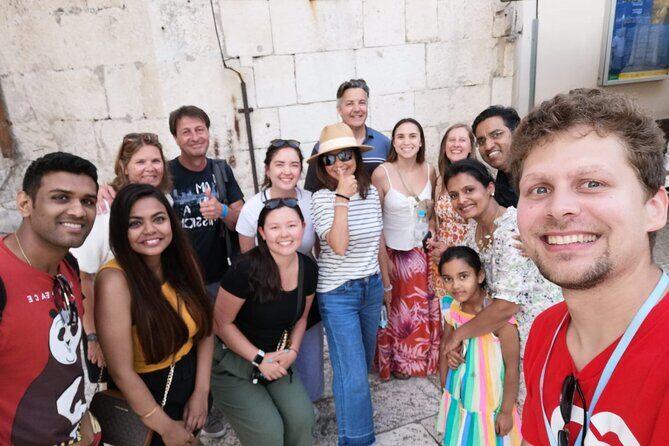
This is also the kind of tour where you can ask why certain things look the way they do, or how one era got layered on top of another. The group stays small (up to 17), which matters because the route is walkable but the details are not shallow. Even the humor—yes, there’s humor—works better when the guide can adjust to your questions.
You’ll likely get more than just monuments, too. A common theme from the experience is practical, on-the-ground advice: where to eat, how to move through the old town without getting stuck in the densest crowds, and even small tips that make your next day easier.
You can also read our reviews of more walking tours in Split
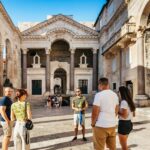
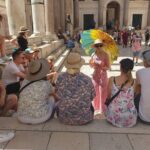

Brass Gate to Riva Harbor: Start Where Split Lives
The tour begins at Brass Gate (Porta Aenea), on Obala Hrvatskog narodnog preporoda. This location matters because it’s right at the edge of the action: you’re stepping into the city rather than touring it from a distance.
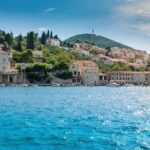
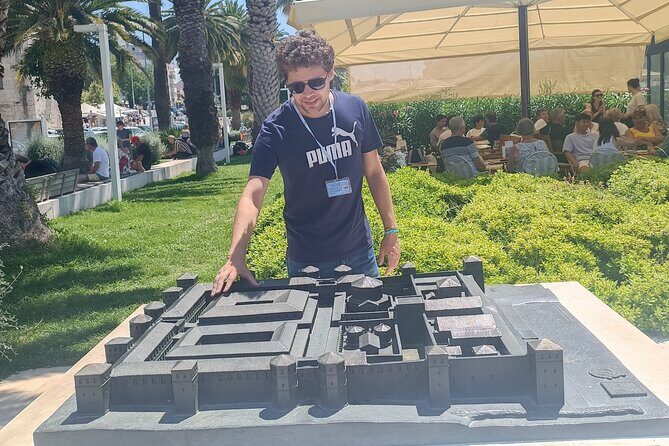
From there, you head to Riva Harbor on the Riva promenade, next to the model of the palace. This is where locals tend to spend time—coffee, sun, and public life. I love this opening because it resets your brain. Before you plunge into Roman architecture, you learn how modern Split breathes around it.
You’ll get orientation fast: where the palace sits, how the shoreline influenced movement, and why people still gather in the same kind of spaces that existed centuries ago. The stop is short, but it’s a smart warm-up.
Diocletian’s Substructures: The Underground Proof of UNESCO
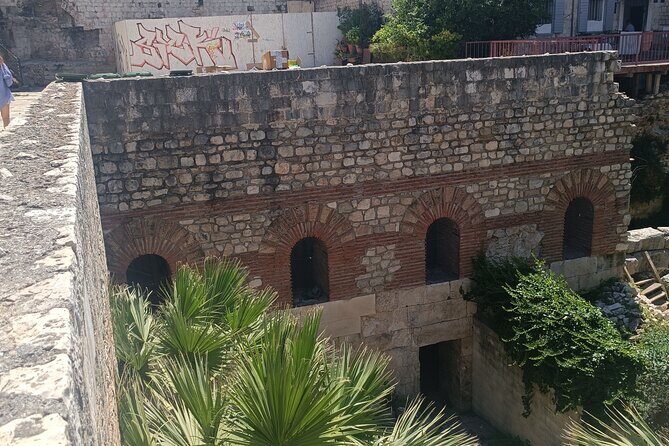
Then you go below the palace story: the substructures—the basement halls of Diocletian’s Palace. These are among the world’s best-preserved complexes from classical antiquity, and that preservation is exactly why Split’s historic center was added to UNESCO’s World Heritage List in 1979.
This part is worth your time because it changes how you think about the palace. You stop treating the palace like a single building and start seeing it as a whole machine: chambers, corridors, and foundations that helped the upper level function.
A drawback for some people: you can’t sprint through this. The best experience comes when you slow down enough to let the guide explain what you’re seeing. The upside is that once the substructures click in your head, the rest of the palace stops feel like you’re reading a book in order.
Peristyle and the Vestibul: Where Power Was Performed
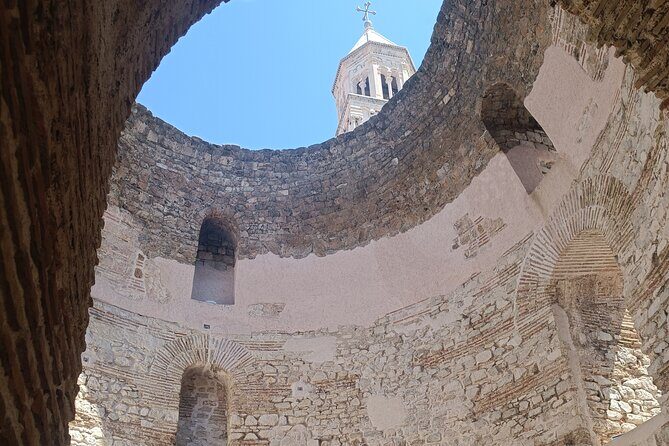
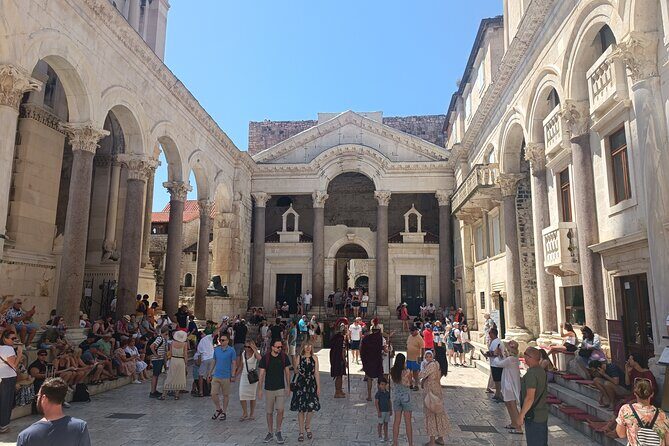
Next comes the Peristyle, the central square of Diocletian’s Palace. This is not just a courtyard—it was a political stage. You’ll hear how the emperor Diocletian was presented as a living son of Jupiter, and how people approached him in public rituals (kneeling, kissing the cloak hem, and more dramatic gestures depending on the moment and status).
If you’ve ever wondered why Roman spaces feel so choreographed, this is your answer. The Peristyle explains the layout logic behind the palace: movement toward authority, and authority displayed in the open.
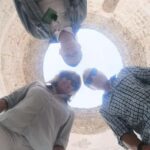
After that, you’ll visit the Vestibul, also called the Rotonda. It’s the first section of an imperial corridor that led from the Peristyle toward the emperor’s apartments. Built up to the beginning of the 4th century, it’s a circular hall (about 17 meters high and 12 meters in diameter) that was once topped with a dome.
This is where the tour becomes very practical for your eyes. Once you understand the building’s shape and size, the surrounding palace structures feel less like random stone blocks and more like intentional design.
Saint Domnius and Jupiter Temple: Outside Views That Still Teach
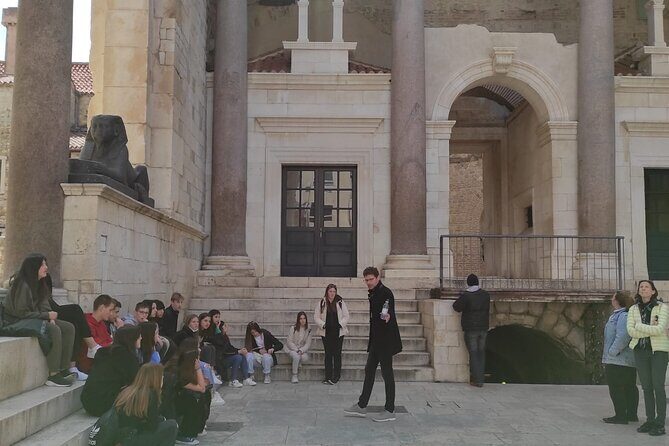
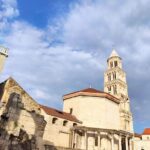
At Saint Domnius Cathedral, you’ll get an important lesson in how one site can be many things at once. The building is often described as a Roman temple, a mausoleum, and then a church—depending on how you look at it. On this tour, you view it from the outside only, and entry isn’t included.
That outside-only approach isn’t a downside if you use it right. Think of it like a guided orientation plus a decision point. If you want to go deeper later, the guide provides the information and you can decide whether entry is worth the extra time for you.
The same idea applies at the Temple of Jupiter. You’ll see it from outside. The tour explains Jupiter’s role in Roman religion and mythology (sky and thunder), and how the temple was converted into a baptistery dedicated to St. John the Baptist.
Between these two stops, there’s a quick walk through a small street locals believe is the narrowest street in the world: Let Me Pass street. It’s a fun interlude that breaks up the heavier architecture talk with something you can immediately picture.
You can also read our reviews of more historical tours in Split

Golden Gate, Gregory of Nin, and Marmontova Ulica: Roman Meets Ritual
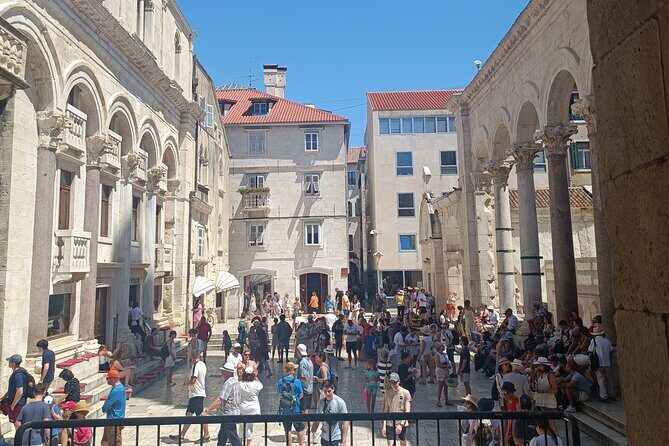
The Golden Gate is next—the Northern Gate—one of four principal Roman gates into old town Split. Built as part of Diocletian’s Palace, it was the main gate through which the emperor entered and was elaborately decorated to mark his status.
Here’s the historical twist you’ll enjoy: over the Middle Ages, the gate was sealed off and lost columns and statuary. In modern times it was reopened and repaired, and it now functions as a tourist focal point.
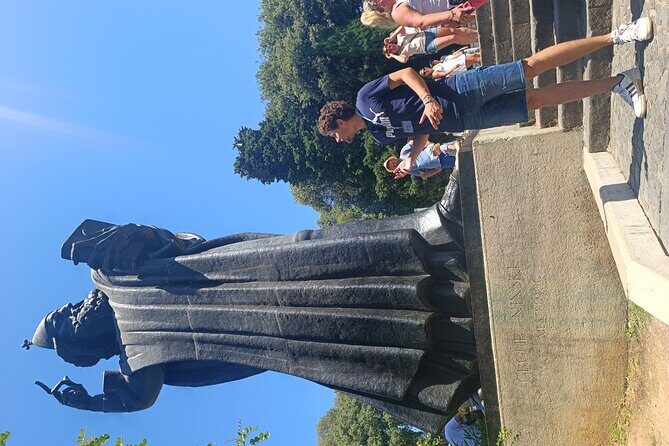
Then you’ll hit Grgur Ninski Statue. This tall statue (about 8.5 meters) was made by Ivan Meštrović. The toe is worn smooth from the tradition of rubbing it for good luck. You’ll see the polished toe up close, and it’s one of those silly-but-satisfying rituals that makes your visit feel more like participation than observation.
After that, walk Marmontova Ulica, named after Napoleon’s marshal Marmont. Even though he’s known as a conqueror, the tour explains that he’s tied to urbanisation in Dalmatian cities, and Split’s citizens responded by naming this street after him—described here as one of the city’s most beautiful.
Prokurative Square and Fruit’s Square: Where Stories End—and Meals Begin
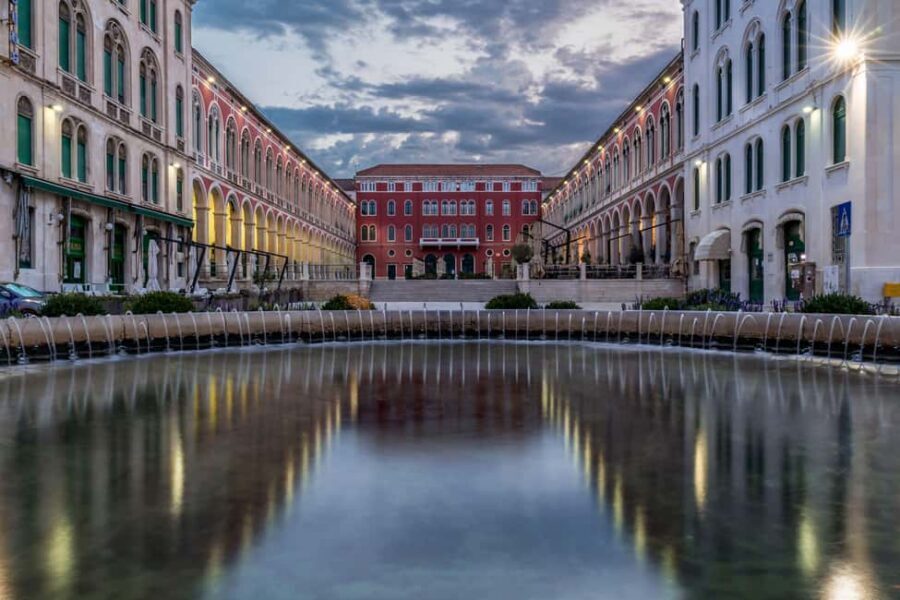
Prokurative is where the tour shifts from palace logic to city rhythm. This is Republic Square, an open space surrounded on three sides by neo-Renaissance buildings known as the Prokurative. It’s a good breather zone, too: a wide view helps you process what you just saw underground and inside the palace layout.
Then you finish at Fruit’s Square (Trg Brace Radic). This smaller square has a quieter feel, and you’ll hear about how women used to sell fruit there. The guide connects the square to Croatian history, including a statue of Marko Marulić, described as the father of Croatian literature.
I like finishing here because it turns history into practical travel. You’re done with the heavy walking lesson, but you’re not done with being in Split. It’s a natural place to plan your next move for food and a second look at any spot that pulled you in.
Price, Time, and What You’ll Get for Your Money
At $24.19 per person for about 2 hours 20 minutes, this is priced in the sweet spot for a walking tour focused on a major, high-density site like Diocletian’s Palace. You’re not paying for comfort perks. You’re paying for a guide who can explain what you’re seeing in plain terms and help you connect the fragments into one story.
A key value point: many stops are free or outside viewing, so you’re not forced into constant additional spending. Still, two bigger religious/ancient stops—Saint Domnius Cathedral and the Temple of Jupiter—are outside-only on this tour, and entry isn’t included. If you’re the type who loves interiors, you might want to budget some extra time and money afterward.
Group size also boosts value. With a maximum of 17 people, you’re more likely to get your questions answered without shouting over crowds. And since this is a professor-led style tour, the goal is for you to understand, not just to move from photo spot to photo spot.
Pace and Practical Tips for a Smooth Walk
This is a walking tour through the historic center of Split, so come ready for cobblestones and repeated viewing angles. The tour works best when you wear comfortable shoes and plan to stand and listen at several short stops.
Timing can vary. One important consideration: while the tour is listed around 2 hours 20 minutes, some people report it can run closer to 3 hours. So if you’re trying to catch a tight dinner reservation, give yourself a buffer.
Good weather matters. The experience requires decent conditions, and if it’s canceled due to poor weather, you should expect an alternative date or a full refund. In other words: check the forecast, and don’t book it as your only plan on a rainy day.
Should You Book This Split Walking Tour with a History Professor?
If you want to see Split’s old town with context—especially Diocletian’s Palace—this is a smart, cost-effective pick. The small group format and the professor-led approach mean you’ll come away with a mental map, not just photos.
I’d skip it only if you’re mainly after a quick highlights loop with zero learning. This tour is built for people who like to understand what they’re looking at, and who don’t mind hearing the same stones explained from multiple angles.
If you’re a first-timer in Split, you’ll get your bearings fast. If you’re returning, you may find that the later sites feel new because you now know what to look for.
FAQ
How long is the Split walking tour?
It runs for approximately 2 hours 20 minutes.
Where does the tour start and end?
It starts at Brass Gate (Porta Aenea), Obala Hrvatskog narodnog preporoda 22, Split, Croatia. The tour ends back at the same meeting point.
Is the tour offered in English?
Yes, the tour is offered in English.
How large is the group?
The tour has a maximum of 17 travelers.
Are all admission tickets included?
All fees and taxes are included, but admission is not included for Saint Domnius Cathedral and the Temple of Jupiter. Those two are visited from outside during the tour.
Do we go inside Saint Domnius Cathedral or the Temple of Jupiter?
No. Saint Domnius Cathedral and the Temple of Jupiter are viewed from the outside only during the tour. Entry is not included.
What happens if the weather is poor or I cancel?
The experience requires good weather. If it’s canceled due to poor weather, you’ll be offered a different date or a full refund. You can cancel for a full refund up to 24 hours in advance.