REVIEW · HISTORICAL TOURS
Split Walking Tour: History, Legends & Tales
Book on GetYourGuide →Operated by Tour4You · Bookable on GetYourGuide
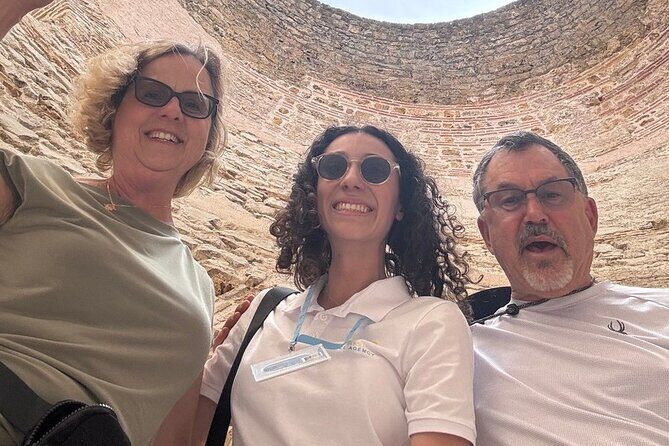
Split’s old stone tells stories fast. This Split Walking Tour is a tight 1.5-hour loop that links Diocletian’s era to modern life, with a licensed local guide and small-group pacing. I especially love how you get your bearings on the cobbled lanes instead of just ticking off sights, and I also like the way Lucija connects the big palace structures with the small street-level details and legends that make them feel human.
One consideration: entrance tickets aren’t included, so if you want to go deeper into specific cultural or religious sites, plan for extra tickets on your own after the walk.
In This Review
- Key highlights before you go
- A 90-minute Split orientation you’ll thank yourself for
- Meeting at the model of Split (and staying stress-free)
- Riva first: a waterfront start that frames the whole story
- Diocletian’s Palace: what to look for beyond the postcard
- Vestibul: the “in-between” space you’d otherwise skip
- Peristil: where the palace breathes
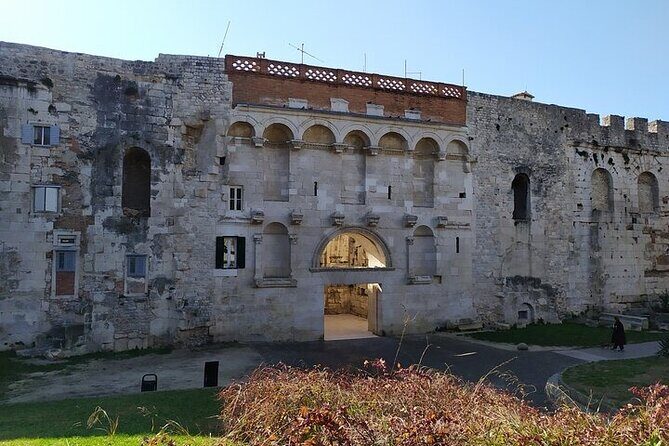
- Golden Gate and People’s Square: power to public life
- Fruit Square: the last stop that helps you keep exploring
- Price and value: why $28 can be a smart buy
- Small-group pacing and what it feels like on the ground
- Who this tour suits best (and who might want something else)
- Should you book this Split walking tour?
- FAQ
- How long is the Split Walking Tour?
- What is the price of the tour?
- Is the tour in English?
- Where does the tour start?
- Which stops are included during the walk?
- Are entrance tickets included?
- What should I bring?
- Is this tour refundable if plans change?
- Is the tour suitable for children?
Key highlights before you go
- A short, high-impact orientation: perfect when you want to understand Split quickly
- Diocletian’s Palace without the maze feeling: guided stops in the palace core
- Legends and local context: stories that explain what you’re looking at, not just dates
- English live guide with local answers: Lucija’s hometown perspective helps questions make sense
- Riva to key squares: a loop that moves from waterfront mood to palace power and back to street life
A 90-minute Split orientation you’ll thank yourself for
If Split is your first stop on the Adriatic, this tour is one of the smartest ways to start. In 1.5 hours, you’re guided through the big picture—how the city grew around Diocletian’s palace plan, then kept reshaping it as centuries passed. It’s history you can see, not history trapped in a museum label.
The format also matters. This is a small group, so you can actually hear the guide and ask follow-up questions when something grabs you. And because you’re walking, you notice what a brochure usually misses: how the palace walls shape movement, where viewpoints open up, and why certain squares feel like natural gathering places.
Most tours throw facts at you. This one tries to give you a mental map. That’s what makes it useful. After the walk, you’re not just standing in front of Diocletian’s Palace wondering what you’re looking at—you understand the logic behind the layout and can explore longer on your own.
You can also read our reviews of more walking tours in Split
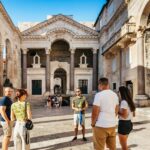
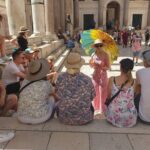

Meeting at the model of Split (and staying stress-free)
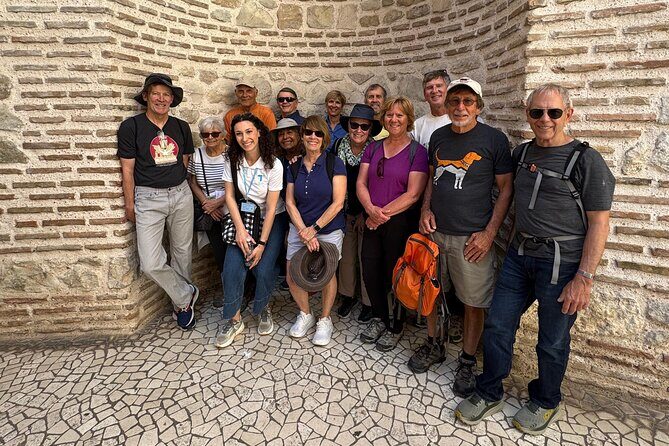
You’ll meet at Obala Hrvatskog narodnog preporoda 22, standing next to the model of Split, with the guide holding a Tour4You sign. That “model first” detail is handy: it sets the scale and helps you orient before the walking starts.
For a smooth start, wear comfortable shoes (the old town streets are cobbled, and you’ll be on foot most of the time). Also, bring your patience for weather. The tour runs in ENGLISH, but it’s still subject to weather conditions, and the provider may offer a reschedule or a full refund if poor conditions force cancellation.
If you’re the type who likes to be early, this is the kind of tour where being on time helps you enjoy it instead of rushing.
Riva first: a waterfront start that frames the whole story
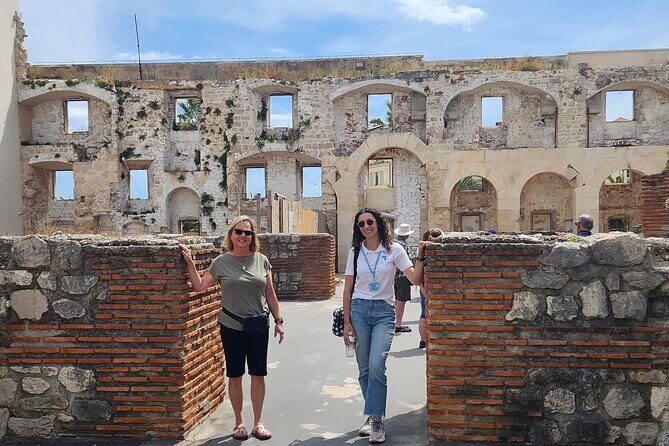
The tour begins with a guided walk along Riva, Split. Starting on the waterfront isn’t random. Riva sets the mood of a port city—where people come to watch the sea, meet friends, and feel the city’s daily rhythm.
This opening stop is where the guide can quickly connect the palace world to the outside world. You get a sense that Diocletian’s residence wasn’t floating in a vacuum. It sat within a functioning city, and over time the palace complex became part of the everyday street plan.
If you’ve ever wandered a historic center without context, you know the feeling: you see buildings but nothing connects. This Riva start helps connect the dots early.
Diocletian’s Palace: what to look for beyond the postcard

Next you’ll get a guided look at Diocletian’s Palace, the real anchor of the visit. The guide explains how Emperor Diocletian chose this spot as a luxurious residence, and you’ll hear why the palace walls and architecture matter so much even today.
One reason this stop works so well on a walking tour is that it’s structured. You aren’t just told “this is old.” You’re taught how to notice:
- the way walls define space and movement
- the scale of the palace complex
- how the palace remains visible in the city’s bones even after centuries of change
A helpful detail to remember: the palace stands for over 1,700 years, so it feels less like a single building and more like a long-lived foundation. That perspective changes how you read what’s around you. Even if you only spend a small amount of time inside or at entrances, you’ll understand why the streets and structures sit the way they do.
Vestibul: the “in-between” space you’d otherwise skip
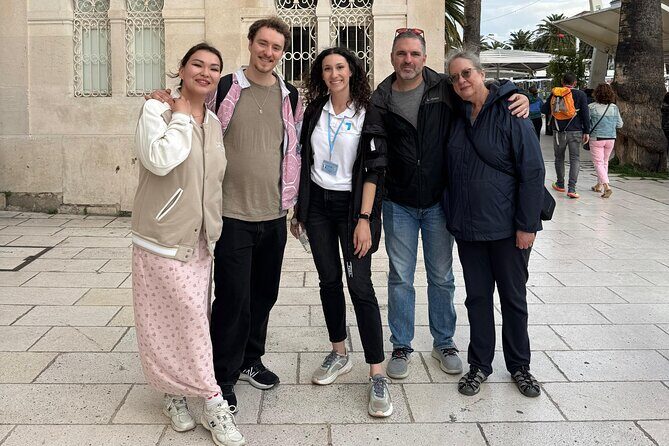
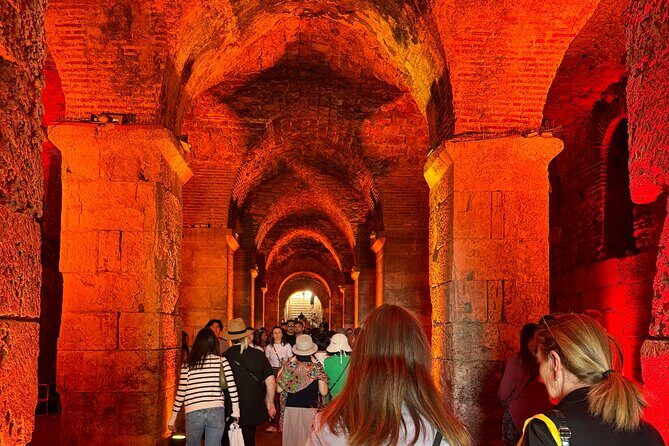
After the main palace focus, you visit the Vestibul. This is the kind of stop that can sound minor if you’ve only ever focused on the biggest name sites—but it’s exactly the kind of space that teaches you how the palace functioned.
Vestibul-type areas are about transitions: movement from one zone to another, control of entry, and the step-by-step choreography of daily life. On your own, you might not even pause here. On the tour, it becomes a clue. It helps you understand that palaces aren’t just about grand rooms—they’re about flow.
If you enjoy architecture and spatial reasoning, this stop will feel satisfying. If you’re less into details, don’t worry. The guide’s job is to translate the structure into plain meaning.
You can also read our reviews of more historical tours in Split



Peristil: where the palace breathes

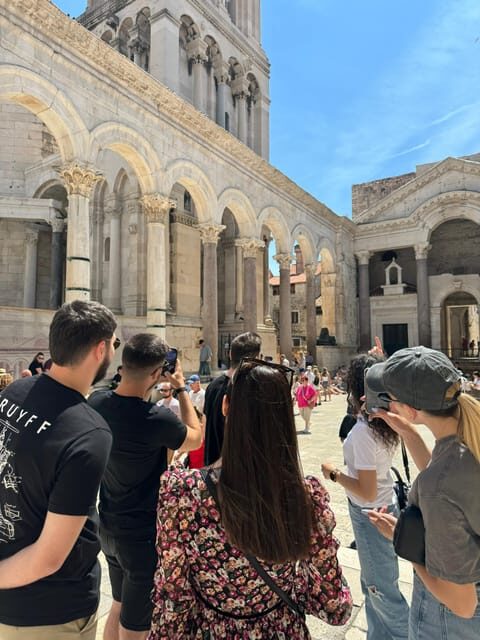
Then comes Peristil, one of the key interior spaces you’ll want to see. Peristil is often described as a heart of sorts, and the guide’s explanation helps you grasp why. It’s an open area within the palace complex that supports movement, light, and social life.
Even if you’re not a “history nerd,” you can usually tell when you’re standing in a place designed for people to gather. The tour’s walking approach makes that easy—you arrive, you look around, you hear the explanation, and you can immediately connect what you see to how the palace must have worked as a residence.
This is also where you’ll start noticing what makes Split special: the palace doesn’t feel like it’s been sealed off. It’s part of the living city. That shift—from private residence to public neighborhood energy—is one of the key ideas of the tour.
Golden Gate and People’s Square: power to public life
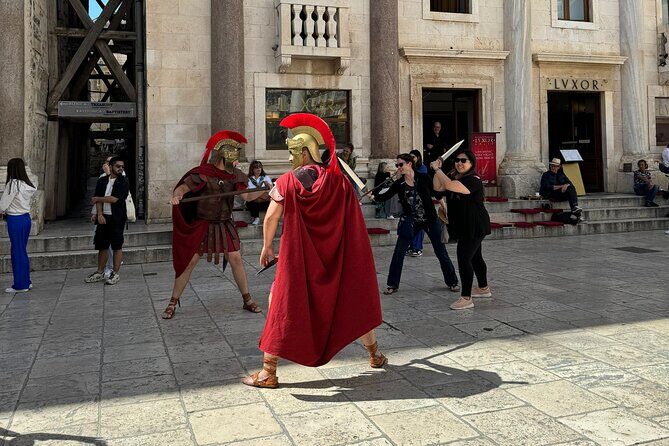
One of the most memorable parts of the loop is the move to Golden Gate and People’s Square.
Golden Gate gives you a sense of the palace’s authority—an entrance that feels designed to signal status and control. The guide connects its importance to the overall palace layout, so you understand it as part of the system, not just a decorative structure.
Then you step into People’s Square, and the tone changes. Squares tend to do that: they’re places for gathering, everyday commerce, and public life. The tour uses this contrast well, showing you how the space you’re seeing could belong to an emperor’s residence on one side, and a community’s daily routines on the other.
That’s the transformation theme you came for. The tour keeps returning to the idea that Split grew out of the palace, then adapted it into something ordinary people could use.
Fruit Square: the last stop that helps you keep exploring

You’ll also visit Fruit Square. The name alone tells you this is about daily life, not just monumental architecture. This is the part of the tour that helps you transition from “tour mode” into “wander mode.”
When you know where the squares sit relative to the palace core, your self-guided time gets easier. You don’t lose time guessing which direction you’re facing. You also get more out of your next meal or coffee stop because you understand why that square works as a meeting place.
This is also where the guide’s info becomes especially practical. Since entrance tickets aren’t included, you’ll likely decide what you want to pay for and see next based on what the guide points out and explains. Fruit Square helps you make those decisions without feeling rushed.
Price and value: why $28 can be a smart buy
At $28 per person for about 1.5 hours, this isn’t a “drive-by facts” deal. It’s priced like an orientation tour: short enough to fit your schedule, long enough to cover several major stops in a logical order.
Here’s why that price can be good value:
- You get a licensed, live guide in English.
- You cover multiple landmark areas: Riva, Diocletian’s Palace, Vestibul, Peristil, Golden Gate, People’s Square, and Fruit Square.
- You receive context you can use immediately while exploring on your own afterward.
The part to watch is what’s not included: entrance tickets to cultural and religious sites. The guide will give you information so you can check things later at your own pace, but you may still need to budget for entry if you want to go inside specific places.
Also factor in the time. If you’re only in Split for a short stay, paying $28 to get your bearings can save you hours of aimless wandering. That’s where value shows up.
Small-group pacing and what it feels like on the ground
Because you’re in a small group, the tour doesn’t feel like a cattle line. You can hear instructions and explanations, and if something sparks your curiosity, you have a shot at getting a direct answer.
The guide is English-speaking, and the experience is described as suitable for most travelers. Still, the route is not designed for wheelchair users, since you’ll be walking through areas that aren’t set up for that kind of mobility.
As for what you should bring: comfortable shoes is the big one. Beyond that, I’d treat it like any old-town walking day—plan for uneven ground and keep water handy if you’re walking in warmer weather.
Who this tour suits best (and who might want something else)
This tour is a great fit if you:
- are visiting Split for the first time and want a fast mental map
- like walking through history with explanations in real time
- want Diocletian’s Palace context without getting lost in architectural jargon
- prefer a local perspective for legends and street-level understanding
You might consider a different option if you:
- need wheelchair access (this one isn’t set up for it)
- already know Split’s layout well and mostly want deep museum time (this is a guided walk, not an all-day ticket plan)
- want guaranteed entry into every cultural site (since tickets aren’t included)
Should you book this Split walking tour?
I’d book it if you want your first day in Split to feel organized and meaningful. The stops connect into a clear story: waterfront mood at Riva, architectural power at Diocletian’s Palace, palace core points like Vestibul and Peristil, then the city’s public life at Golden Gate, People’s Square, and Fruit Square.
It’s also a good value for the price, especially because you leave with better direction for the rest of your trip. Just do one planning step before you go: decide what you want to enter on your own afterward, since entrance tickets aren’t included.
If that sounds like your style, this is a smart first move.
FAQ
How long is the Split Walking Tour?
The tour lasts about 1.5 hours.
What is the price of the tour?
The price is $28 per person.
Is the tour in English?
Yes, the tour is conducted in English with a live guide.
Where does the tour start?
Meet at Obala Hrvatskog narodnog preporoda 22 next to the model of Split, where the guide is holding a Tour4You sign.
Which stops are included during the walk?
You’ll visit Riva, Diocletian’s Palace, the Vestibul, Peristil, Golden Gate, People’s Square, and Fruit Square before returning to the meeting point.
Are entrance tickets included?
No. Entrance tickets to cultural and religious sites are not included, but you’ll get information to help you check them out later on your own.
What should I bring?
Wear comfortable shoes, since you’ll be walking through the Old Town.
Is this tour refundable if plans change?
Yes. You can cancel up to 24 hours in advance for a full refund.
Is the tour suitable for children?
Children must be accompanied by an adult throughout the duration of the tour.