REVIEW · SPLIT
Experience Split With Local Professional Historian – Small Group
Book on Viator →Operated by Pomalo tours · Bookable on Viator
Split’s Roman walls explain everything fast.
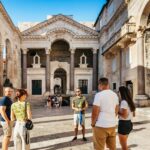
This small-group walk with licensed historian Boris connects street corners to Diocletian’s Palace and the everyday life of modern Split, using a display book with pictures and 3D reconstructions. I love how he helps you visualize what you’re seeing, especially when the palace layout feels confusing at first.
The experience also shines because it’s built for questions and photos: your guide can help you frame shots as you go, and the max group size of 12 keeps things personal. One possible drawback: at about 2 hours, it can feel like a tight route—if you want extra time inside any church or to linger in one square, plan to stretch your day afterward.
In This Review
- Quick hits before you walk
- A Split Walking Tour Built Around Real Understanding
- Price and time: what $38.62 buys you
- Meet at Golden Gate: the fastest way to start seeing Split clearly
- Gregory of Nin’s statue: where faith, identity, and art meet
- Diocletian’s Palace tour focus: the palace as a whole city
- Peristyle and the cellars: seeing power in the layout
- Jupiter’s Temple and St. Domnius: religion and the changing city
- Temple of Jupiter (outside)
- Cathedral of Saint Domnius (outside)
- Vestibulum: the palace entrance to private space
- Riva Harbor and Fruit Square: where the city breathes
- Pjaca (People’s Square): finishing with a map for your next hours
- What the 3D book and photo help do for you (not just the guide pitch)
- How this tour feels in real life: small group, teacher energy
- Who should book this, and who might want a different option
- Should you book this Split historian tour?
- FAQ
- How long is the Split walking tour?
- How much does it cost?
- Where does the tour start and end?
- What language is the tour offered in?
- Is admission included for the sights?
- How many people are in the group?
- Can I cancel for a full refund?
Quick hits before you walk
- Boris teaches like a classroom: lots of facts, but also questions and back-and-forth talk
- 3D reconstruction visuals: a picture book helps you understand palace spaces without guessing
- Diocletian’s Palace highlights, in order: Golden Gate → Peristyle → cellars → triclinium areas
- Outside-only sacred stops: Jupiter’s Temple and St. Domnius are shown from the right angles
- Old town orientation at the end: you finish at People’s Square (Pjaca) with ideas for what to do next
A Split Walking Tour Built Around Real Understanding
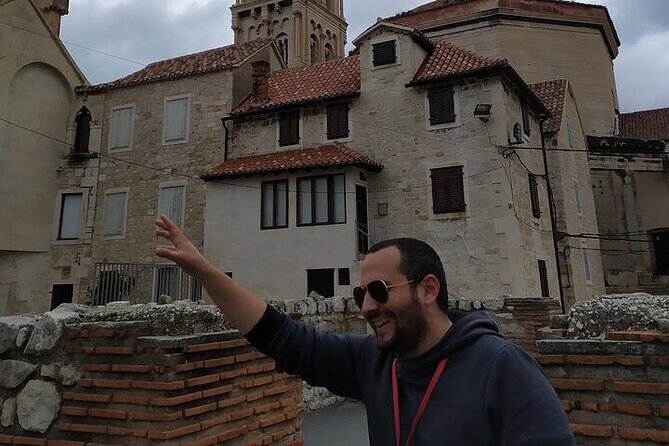
Split can feel like you’re wandering through one big maze—great maze, but still a maze. This tour helps you get your bearings quickly by walking you through Diocletian’s Palace landmarks and then stepping out into the everyday heart of the city.
What makes it work is the guide’s approach. Boris is a local, professionally licensed historian with a master’s degree in history, and you feel that teacher mindset right away: he explains what you’re standing on, why it mattered, and how the place changed once the Roman world shifted. It’s not just a string of names. It’s a map of causes and effects—how the palace shaped city life, and how the city kept reshaping the palace.
You can also read our reviews of more tours and experiences in Split.


Price and time: what $38.62 buys you
At $38.62 per person for about 2 hours, the value comes from three things you can’t easily DIY at street level:
- A history specialist (not a generic guide) who can connect architecture to daily life
- Visual aids: pictures plus 3D reconstruction images in a display book
- Small group pacing with room for questions, which matters inside a site this dense
Also, the tour is offered in English and uses a mobile ticket, so you’re not stuck juggling paper. And while many stops are listed as free to access from the outside, the tour still organizes them so you understand what you’re seeing. You’re paying for context more than entry tickets.
Meet at Golden Gate: the fastest way to start seeing Split clearly
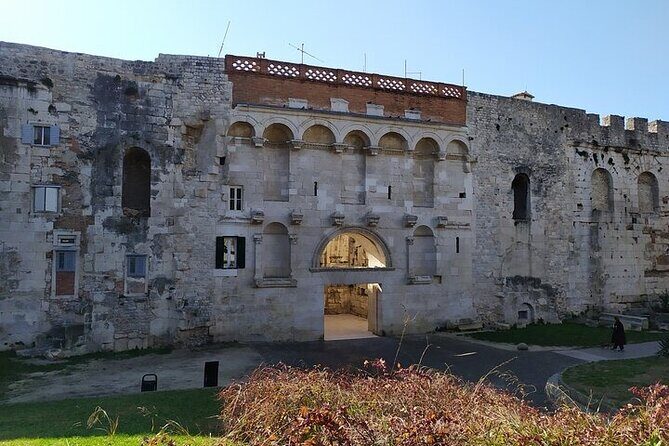
You begin at Golden Gate (Dioklecijanova 7), the northern gate of Diocletian’s Palace. It’s called Golden Gate, but it’s stone—more “impressive gatework” than fairy tale gold. Boris frames it as a starting point for how to read the whole palace complex.
This is a smart first stop because Golden Gate sits opposite another landmark you’ll hear about soon: the Gregory of Nin area. From the start, you learn that Split’s major points aren’t random; they’re placed in relation to Roman power and later local identity.
What I like here is the speed-to-understanding ratio. In about 15 minutes, you get the palace’s importance and why Golden Gate is a natural anchor for the rest of your walk.
Gregory of Nin’s statue: where faith, identity, and art meet
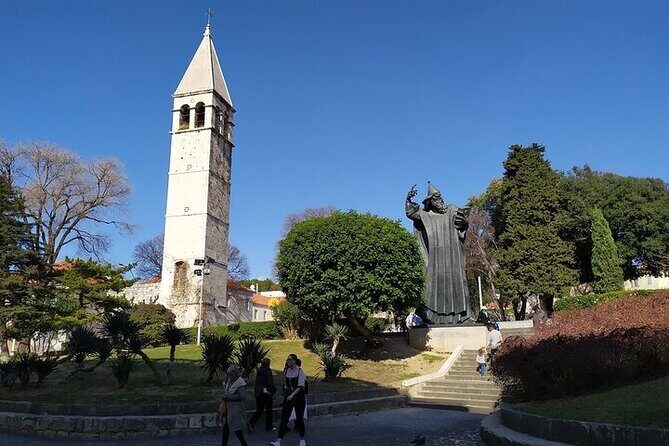
Next comes the Grgur Ninski Statue. The tour focuses on Gregory of Nin (Grgur Ninski): who he was, why there’s a major monument to him, and even who sculpted the statue.
This stop is short—around 10 minutes—but it does something useful. It breaks you out of “only Roman stuff” mode. Split isn’t just a Roman museum. It’s a city where later history still casts a shadow on the street level.
If you like your tours balanced—Roman foundations plus what came after—this statue stop is one of those moments that makes the day feel like real city time.
Diocletian’s Palace tour focus: the palace as a whole city

The main chapter starts with Palazzo di Diocleziano, the center monument of Split. Diocletian built it, and it’s described as one of the best preserved examples of its kind. Here, Boris doesn’t treat it like a set of isolated ruins. He treats it like an engine that shaped the city.
In this part, you explore the most important parts of the palace, with stops that include:
- Peristyle
- Jupiter’s Temple (outside)
- Diocletian’s Cellars (central substructure)
- Triclinium
- Mausoleum / Cathedral area (outside)
Even if you only remember a few names, you’ll leave with a mental model: what these spaces were for, how people moved through them, and how later centuries adapted the setting. That shift—from Roman palace to medieval city—is where the tour really earns its keep.
One practical note: because it’s a walking route with multiple exterior views and short explanations, you’ll want comfortable shoes. The pace is designed to fit everything into roughly 2 hours.



Peristyle and the cellars: seeing power in the layout
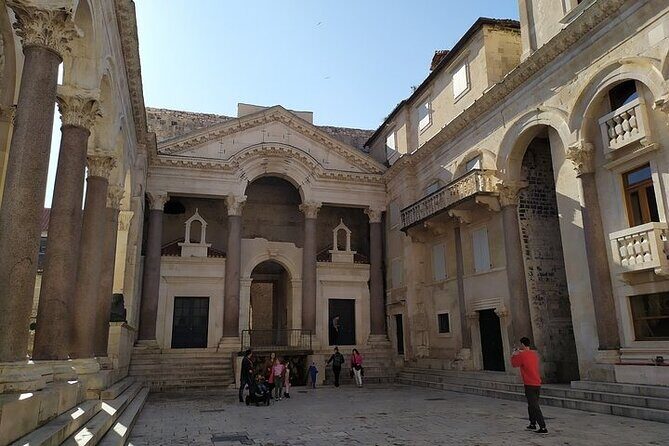
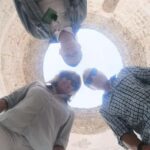
The tour’s next key stop is the Peristyle of Diocletian’s Palace. This is the central space, and Boris explains its function as a place that both connected people and separated them from the Emperor. That detail is what transforms the Peristyle from “big open courtyard” into “designed social space.”
From there, you move into the central part of the palace cellars (central substructure). This is one of those areas where visuals help a lot, because cellars and substructure can look like leftover stone until a guide gives you the usage during history and why it matters for Split today.
Then you check Triclinium. The focus here is eating habits and how the Emperor’s dining room worked—Roman dining as theater, schedule, status, and space.
This sequence is one of the most useful in the entire route. You go from the public-facing architecture to the private or supporting spaces, so you start to feel the palace as a machine.
Jupiter’s Temple and St. Domnius: religion and the changing city
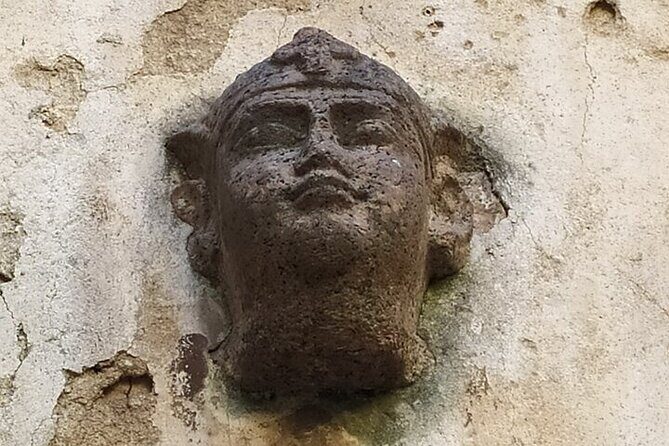
After the palace core, the tour steps into religion and transition.
Temple of Jupiter (outside)
Boris explains how religion mattered in the Roman Empire and why temples weren’t optional extras. You view Jupiter’s Temple from the outside, which keeps the stop smooth and makes it easier to keep pace.
Cathedral of Saint Domnius (outside)
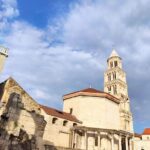
Then you’re at the Cathedral of Saint Domnius, also explained from the outside. Boris points out significant parts and gives you stories behind what you see.
One neat touch: he warns you about interesting interior details so that if you come back later (or decide on a self-guided visit), you know where to look and what to notice.
If you’re the kind of person who prefers to see something twice—once with context and once at your own pace—this “pre-tease” is a great strategy.
Vestibulum: the palace entrance to private space
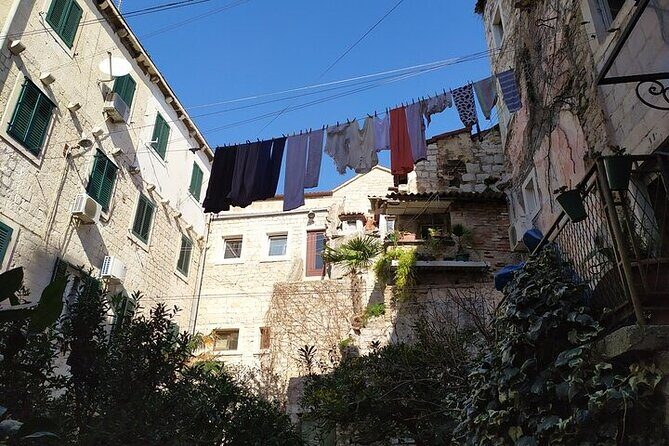
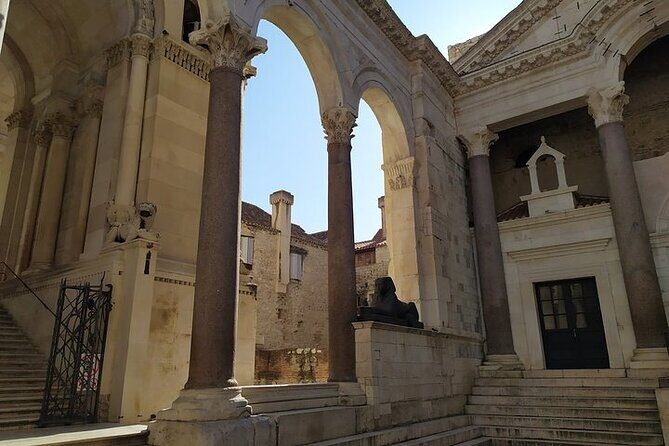
The Vestibulum of Diocletian’s Palace is the pre-entrance to the private chambers. This stop is about decoration and function: what it looked like and what its job was.
It’s only about 10 minutes, but it matters because it’s another reminder that palace life wasn’t one uniform world. There were layers—public spaces, administrative or functional spaces, and private spaces designed for the Emperor and close circle.
If you enjoy details like entrances and thresholds—how power controls access—this is exactly the kind of stop you’ll appreciate.
Riva Harbor and Fruit Square: where the city breathes
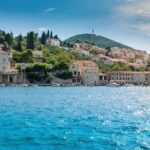
At Riva Harbor, you’re back in the open city promenade. Boris explains how Riva was built over the centuries and why it became central for locals.
Even though this is only about 5 minutes, it changes how you’ll experience Split after the tour. You stop thinking only in “Roman ruins” terms and start seeing how the coastline and promenade shape daily life.
Then you reach Fruit’s Square (Trg Brace Radic), a small but charming stop. Boris explains why it’s called Fruit Square and points out the significant monument in the middle, plus what matters around the surrounding sights.
This is the tour’s “human scale” section: squares where people pause, meet, or pass through—perfect for grounding all the palace talk.
Pjaca (People’s Square): finishing with a map for your next hours
The walk ends at People’s Square, Pjaca, on the old-city center axis from medieval times to today. Boris shares the story of the square and nearby buildings, including the old city hall.
This ending is practical. After you finish, you’re in the right spot to keep exploring without getting lost. And Boris suggests other places to visit in Split that weren’t part of the walking route—so you get direction instead of a blank slate.
One thing I like about ending at Pjaca: it’s easy to transition from tour mode to snack mode.
What the 3D book and photo help do for you (not just the guide pitch)
It’s easy to say a tour has 3D images. What matters is why they help here. Diocletian’s Palace is big, layered, and partially broken up by later uses. Stand in the wrong place and you can’t tell what belonged where.
The display book with pictures and 3D reconstruction images turns those uncertainties into clearer mental images. You start to match the flat stone around you with how the palace likely looked or functioned in different eras.
Add in the fact that your guide can help you take photos, and the experience becomes more than “listen and walk.” It becomes a more active session where you leave with both memories and better understanding of where your photos were shot from.
How this tour feels in real life: small group, teacher energy
The tour keeps the group to a maximum of 12 travelers, and that size shows. You’ll have an easier time hearing everything even in open spaces. You’re also more likely to get personal answers rather than the guide only managing a crowd.
The strongest pattern from the guide style is teacher energy. Boris encourages questions, uses interactive moments (including trivia-style prompts), and brings in personal perspective living in Split. That blend—professional historian plus local storyteller—is the reason this tour earns near-perfect marks.
Also, expect conversation. Some tours are lectures with walking. This one feels closer to a history class held outdoors.
One bonus that’s worth noting if you care about film locations: some participants have mentioned Game of Thrones filming sites along the way. Even if you’re not chasing that, it’s fun to notice when stories overlap with the modern city.
Who should book this, and who might want a different option
This is a great fit if you:
- Are visiting Split for the first time and want a strong orientation fast
- Like history explained in human terms, not just dates and names
- Want a small group where questions actually happen
- Enjoy visual aids when sites are confusing from the ground
You might skip it (or add extra time) if you:
- Plan to spend most of your day going inside churches or museums, because the route is packed
- Hate structured walking and would rather wander without stops
Should you book this Split historian tour?
Yes, if you want the best payoff from your limited time in Split. For $38.62 you get a licensed historian guide, 3D reconstructions, and a route that organizes Diocletian’s Palace landmarks into a clear storyline—from Roman power to later city life—then finishes in the center at Pjaca so you can keep going with confidence.
If your goal is simply to see famous stones without context, you may feel it’s more talk than you want. But if you’re the type who likes to understand how a place works, this is one of the smartest ways to start your Split trip.
FAQ
How long is the Split walking tour?
It’s about 2 hours (approx.).
How much does it cost?
The price is $38.62 per person.
Where does the tour start and end?
It starts at Golden Gate, Dioklecijanova 7, 21000 Split and ends at People’s Square (Pjaca), 21000 Grad, Split.
What language is the tour offered in?
The tour is offered in English.
Is admission included for the sights?
The tour notes that no admission tickets are included. Many listed stops are marked as free admission ticket points, but you’re not buying tickets through the tour.
How many people are in the group?
The experience has a maximum group size of 12 travelers.
Can I cancel for a full refund?
Yes. Free cancellation is available if you cancel at least 24 hours before the experience start time for a full refund. If you cancel less than 24 hours before, the amount paid is not refunded.