REVIEW · DIOCLETIAN'S PALACE
Split: Jewish Heritage & Diocletian’s Palace Walking Tour
Book on GetYourGuide →Operated by www.south-tours.com · Bookable on GetYourGuide
Split Jewish Heritage & Diocletian’s Palace Walking Tour Review
Split has layers, and this walk connects them fast. You’ll move through Jewish heritage sites and the famous Diocletian Palace area, guided by a local in English, with stops tied to how Jewish life shaped Split over time. It’s one of those tours where the city’s stone backdrops don’t just look good on photos—they explain real stories.
I particularly like the tight focus on Split’s long Jewish presence, including stops such as the Jewish cemetery and the city synagogue. I also like that you’re not stuck listening to facts only—you’ll get time to talk with local Jewish people and hear about culture and experiences in Split.
One consideration: you’ll be visiting religious spaces, so you’ll want to bring modest clothing that fits those settings. If you’re not prepared for that, you might feel more rushed—or end up having to sit out parts.
In This Review
- Key points to know before you go
- Two hours in Split: what you’ll actually get
- Starting at South Tours Travel Agency and getting oriented
- Diocletian Palace on foot: why the walking route matters
- Jewish cemetery stop: a grounded, respectful moment
- City synagogue and learning how place shapes identity
- Talking with local Jewish people: culture you can ask about
- Temple of Jupiter and Grgur Ninski statue: major Split landmarks in context
- Small group of 8: better questions, better pacing
- Price and value: is $176 for 2 hours fair?
- What to wear and bring (so the tour feels easy)
- Who this Split Jewish Heritage tour fits best
- Should you book this tour?
- FAQ
- How long is the Split Jewish Heritage & Diocletian’s Palace walking tour?
- Where does the tour start?
- How many people are in the group?
- Is the tour guide English-speaking?
- What stops are included on the tour?
- Is food included in the price?
- Do I need to wear modest clothing?
- Can I cancel for a full refund?
Key points to know before you go
- Small group (max 8) keeps questions from getting lost.
- English-speaking local guide makes the context click quickly.
- Jewish cemetery and city synagogue are central stops, not side notes.
- Conversation with local Jewish people adds real-life perspective.
- Diocletian Palace walking route gives you major Split landmarks in one loop.
- Modest dress for religious spaces is required—plan ahead.
Two hours in Split: what you’ll actually get
This is a 2-hour walking tour built around Jewish heritage in Split, with a strong sightseeing backbone. The tour isn’t trying to cover everything in Split; it’s trying to show you the connections between places—Jewish sites and major landmark areas inside the Diocletian Palace surroundings—so the city feels less like a random pile of sights and more like a story you can follow.
The value here is that the guide brings history and context while still getting you to recognizable stops. That matters, because in Split you’ll see plenty of impressive architecture on your own. This tour gives you the “why” behind several stops, plus a direct link to living community experiences through conversation with local Jewish people.
Also, it’s capped at 8 participants, which usually means you won’t be swallowed by a big group. You’ll have a better shot at asking the questions that matter to you.
You can also read our reviews of more walking tours in Split

Starting at South Tours Travel Agency and getting oriented
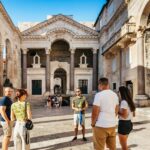
The tour starts at South Tours Travel Agency. You’re not thrown straight into the deep end. There’s a photo stop and an initial orientation moment before the main walking begins, so you can get oriented on the route and start noticing the details your guide will refer to later.
For a short tour like this, that first phase is smart. In two hours, wasted minutes add up. A quick start-and-setup helps you use the time well, especially if you’re new to Split and don’t already know how the Diocletian Palace area fits into the rest of town.
If you like tours that begin with a “Here’s what matters today” framing, this format fits.
Diocletian Palace on foot: why the walking route matters
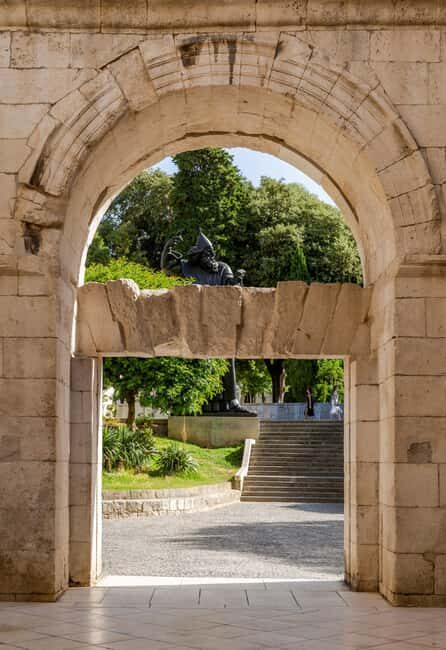
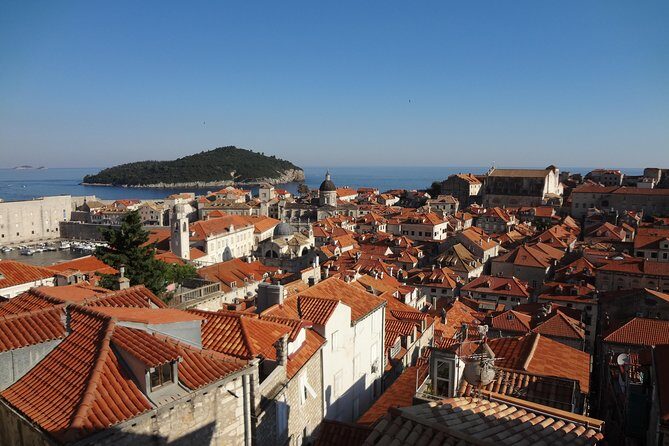
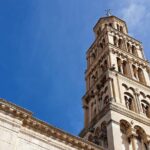
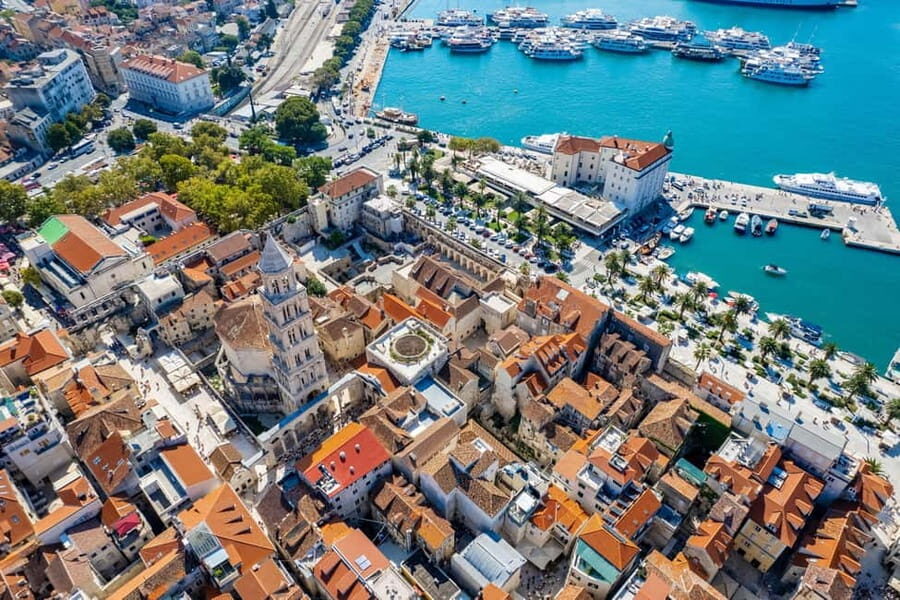
The heart of the experience is a walking route through the Diocletian Palace, described on the tour as 17th century Diocletian Palace. Even if you’ve seen Diocletian Palace landmarks before, the key here is that you’re not walking it as a generic sightseeing loop.
Your guide uses the palace spaces as a stage for how Jewish community life relates to Split’s city life. You’ll move through areas that connect different time periods and public spaces, and the route is paced for learning without turning into a marathon.
What’s great for your brain is the rhythm: you learn, you look at a relevant place, and then you connect it to the next stop. That beats trying to do everything with a map app and a vague idea of what you’re looking at.
And because it’s a walking tour, you’ll naturally notice the way public spaces feel—where people historically gathered, where people would travel through, and how landmarks shape the flow of a city.
Jewish cemetery stop: a grounded, respectful moment

One of the tour’s key stops is the Jewish cemetery. This is where the tour stops being about a headline and becomes personal. Cemeteries tend to bring gravity to a place, and a Jewish cemetery in a city like Split is an especially strong anchor for understanding continuity—how a community stays present across generations.
The tour includes a guide, so you’re not just staring at stones and guessing. You’ll get context to understand why this location matters in the broader story you’re following.
Practical note: because this involves religious space, the tour explicitly asks for modest clothing appropriate for religious spaces. If you show up in summer gear that’s too casual, you’ll likely feel uncomfortable—or have to adjust on the spot. Plan to dress respectfully from the start.
City synagogue and learning how place shapes identity
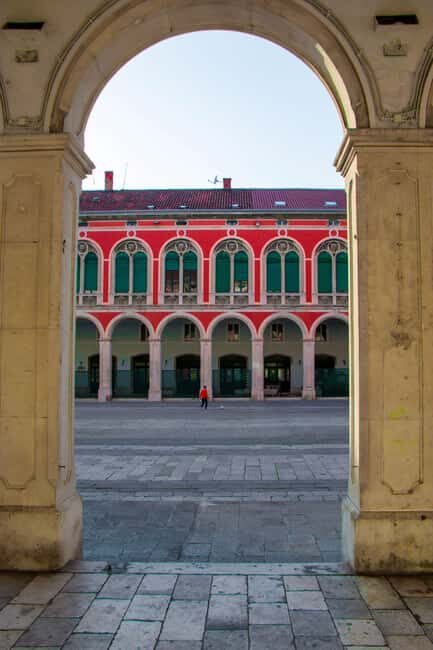
Another centerpiece is the city synagogue. This stop helps you connect what you learned at the cemetery to everyday community life. Synagogues aren’t just architectural; they reflect community structure, gathering, and tradition.
The tour framing is especially helpful here: your guide ties landmark visiting to the Jewish community’s long story in Split. That means the synagogue visit isn’t treated as an isolated “check it off” moment. It’s part of a chain of places the guide links together for you.
If you’re someone who likes tours that combine places with the human side—how people lived, celebrated, organized, and adapted—this stop does that well.
You can also read our reviews of more historical tours in Split


Talking with local Jewish people: culture you can ask about
What I find most meaningful in this tour is that you’ll get to speak with local Jewish people. That turns the experience from a one-direction lecture into a two-direction learning moment.
You’re also told you’ll hear about culture and experiences in Split. Since the format includes conversation, you can ask follow-ups that match your own curiosity, like how people experience daily life today or what it feels like to keep tradition in a specific city.
This is also one reason a small group matters. In a crowd, you lose your chance to connect. With a small group limited to 8 participants, the conversation stays more grounded and less performative.
A gentle reminder: if you meet people through a tour, treat that time with respect. Keep questions thoughtful, and don’t try to turn personal stories into trivia.
Temple of Jupiter and Grgur Ninski statue: major Split landmarks in context
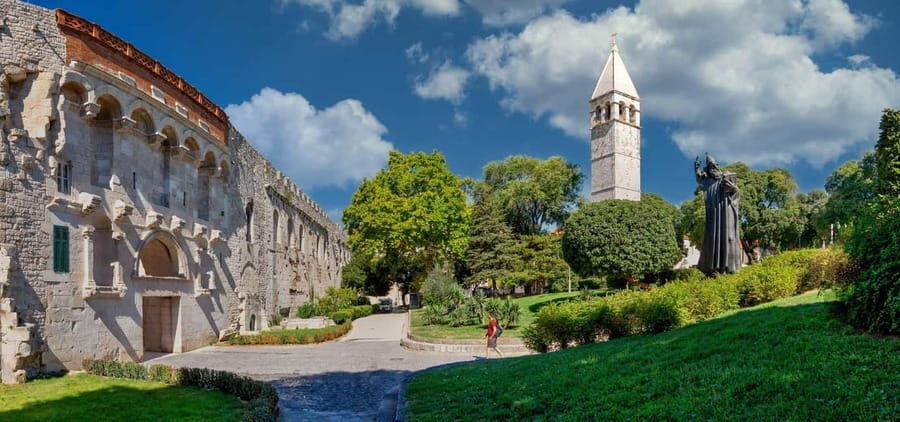
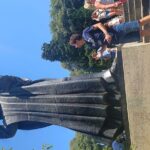
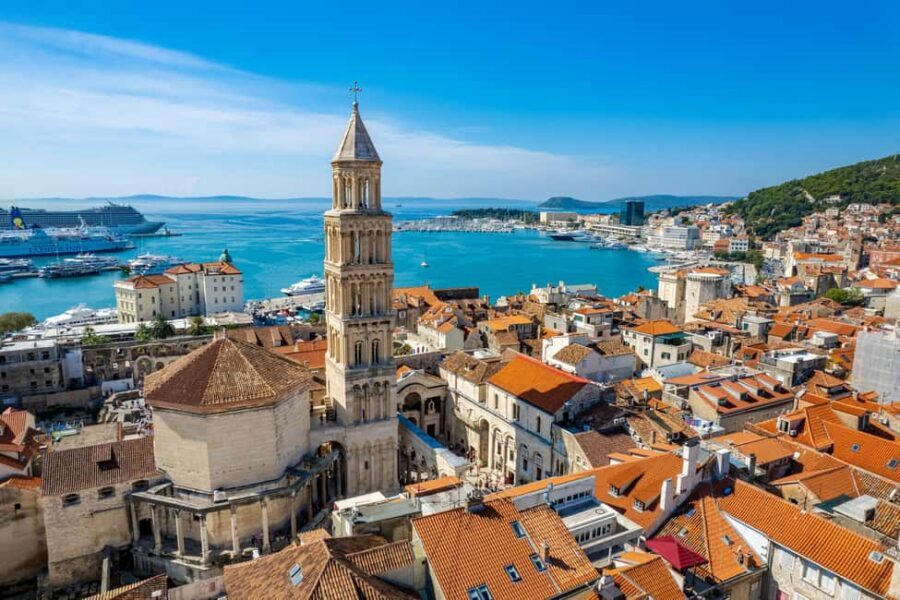
To balance the Jewish-focused route, the tour also includes recognizable Split landmarks. Two named stops are the temple of Jupiter and the statue of Grgur Ninski.
Even if you already know these names, the value is how the tour positions them. Instead of treating them as postcard stops, the guide uses them to help you see Split as a layered city—where different eras and communities share the same streets and public spaces.
Here’s the benefit for you: you’ll leave with more than photos. You’ll have a mental map of how these landmarks fit into the story your guide is building. And since you’re walking, you’ll actually see how close these sites feel to each other—something you can’t always capture with pictures alone.
If you like a tour that mixes “famous stops” with deeper meaning, this blend works.
Small group of 8: better questions, better pacing
The tour is explicitly described as small group, limited to 8 participants. In practical terms, that usually means you’ll get closer to the guide and you can actually hear explanations without leaning in like you’re at a rock concert.
For this specific topic, small group size also helps with sensitivity. The tour includes religious spaces and real community life. A smaller group keeps the tone respectful and the learning more personal.
You’ll likely appreciate this format if:
- you like asking questions,
- you prefer not to rush through stops,
- you want a guided route that still feels human, not factory-produced.
Price and value: is $176 for 2 hours fair?
The price is $176 per person for a 2-hour walking tour. At first glance, that’s not cheap. But value isn’t only about how long it lasts—it’s also about what’s included.
What you’re paying for includes:
- an English-speaking local guide
- a focused route connecting Jewish heritage with major Split landmarks
- time to speak with local Jewish people
- a small-group format
That last item is a big deal. A private-style group size often costs more than big-group tours, but it also tends to improve the quality of interaction. And adding conversation with local Jewish people changes the experience from standard sightseeing into something more personal.
You’re also not paying for extras like food, since food and beverage is not included. That’s normal for a walking tour, but it’s part of the math: if you’re planning your day, you’ll want a plan for snacks or a meal after.
Bottom line: $176 can feel steep, but the small group + guided context + community conversation is what makes it more than a basic “see the sights” walk.
What to wear and bring (so the tour feels easy)
This tour has one clear dress requirement: modest clothing appropriate for religious spaces. That’s not optional fluff. If you’re visiting a synagogue and a Jewish cemetery, you should dress with those settings in mind.
Also, since food and beverage are not included, don’t assume you’ll be handed a stop-and-snack. If you need something to tide you over before or after, plan for it around the tour time.
Finally, wear shoes you can walk in comfortably. This is a walking tour, and 2 hours is enough time to make uncomfortable footwear start to feel like a personal vendetta.
Who this Split Jewish Heritage tour fits best
I’d point this tour toward people who:
- want a guided introduction to Split that goes beyond famous stones,
- care about Jewish heritage and how it connects to place,
- like tours where you hear from locals, not just from a script,
- enjoy a tight, 2-hour format that doesn’t swallow your whole day.
If you’re in Split for a short stay or you want one focused experience that hits multiple landmark types—Jewish heritage sites plus well-known stops like the temple of Jupiter and the Grgur Ninski statue—this is a strong choice.
It also works well if you’re the kind of traveler who enjoys learning through “walk and talk,” where the city itself becomes your classroom.
Should you book this tour?
If you want a Split Jewish heritage experience that isn’t just architecture and dates, I think you should book it. The standout features are the small group setup, the guided route connecting Jewish sites with major landmarks, and the chance to talk with local Jewish people. Those elements make it feel more grounded than a typical sightseeing tour.
If the idea of visiting religious spaces makes you unsure about clothing, fix that first—bring something modest and you’ll feel comfortable right away. As long as you’re prepared to dress appropriately, this is the kind of short tour that can change how you see a city.
FAQ
How long is the Split Jewish Heritage & Diocletian’s Palace walking tour?
The tour duration is 2 hours.
Where does the tour start?
It starts at South Tours Travel Agency.
How many people are in the group?
The group is small and limited to 8 participants.
Is the tour guide English-speaking?
Yes, the tour includes an English-speaking local guide.
What stops are included on the tour?
The tour includes stops such as the Jewish cemetery, the city Synagogue, the temple of Jupiter, and the statue of Grgur Ninski.
Is food included in the price?
No. Food and beverage are not included.
Do I need to wear modest clothing?
Yes. The tour advises modest clothing appropriate for religious spaces.
Can I cancel for a full refund?
Yes. Free cancellation is available up to 24 hours in advance for a full refund.