REVIEW · WALKING TOURS
Split: Group or Private Walking Tour with Art Historian
Book on GetYourGuide →Operated by Aspalathos Guided Tours · Bookable on GetYourGuide
Split makes sense fast on this walk. With Art Historian Josipa from Aspalathos Guided Tours, you get a clear way to read the city’s Roman-to-medieval layers, not just a list of stops. I especially like the off-the-usual-route stories—from Egyptian sphinxes to how the palace turns into a living neighborhood—and I also like that the tour helps you notice details yourself as you go.
One thing to consider: this is a walking tour with several unavoidable steps, so it’s not for wheelchair users or people with mobility limits, and it runs rain or shine. If you’re traveling in summer, plan a bit of buffer too, because you’re only given a short window to find the meeting point before the group departs.
In This Review
- Key highlights worth your time
- Why Diocletian’s Palace feels different with an art historian
- Strossmayer Park: the smart launchpad just above the walls
- Gates, streets, and small religious stops that explain the whole city
- Peristyle and Jupiter’s Temple: seeing the big icons without the pressure
- Street Let Me Pass, Vestibul, and Triklinij: the palace as a real machine
- Diocletian’s Cellars to Riva: where Roman space became daily life
- From Maketa grada Splita to the fruit and People’s Square: small stops with big clues
- Republic Square and the gentle finish: your next moves in Split
- Varoš at the end: why the oldest neighborhood is the best wrap-up
- Price and time: is $32 a fair deal for 2 hours?
- What you’ll actually see vs what you’ll plan later
- Logistics that matter in Split (and how to avoid the common headaches)
- Who this tour is best for (and who should skip it)
- Booking advice: should you book Aspalathos Guided Tours?
- FAQ
- How long is the Split Old Town and Diocletian’s Palace walking tour?
- Where does the tour start?
- What language is the tour in?
- Does the tour enter paid sites inside Diocletian’s Palace?
- What happens if it rains?
- Is the tour suitable for wheelchair users or people with mobility impairments?
- Is there a cancellation option?
Key highlights worth your time
- Josipa’s art-history lens: you learn how to read architecture, not just facts.
- Strossmayer Park start: a calm “warm-up” just above the palace walls.
- Iconic sights plus quiet corners: you hit big names and lesser-known spots.
- No paid-site tickets required: the tour passes key places and tells you what to look for later.
- End in Varoš: you see how Roman fabric has been repurposed over centuries.
- Small group or private options: more questions, more back-and-forth.
Why Diocletian’s Palace feels different with an art historian

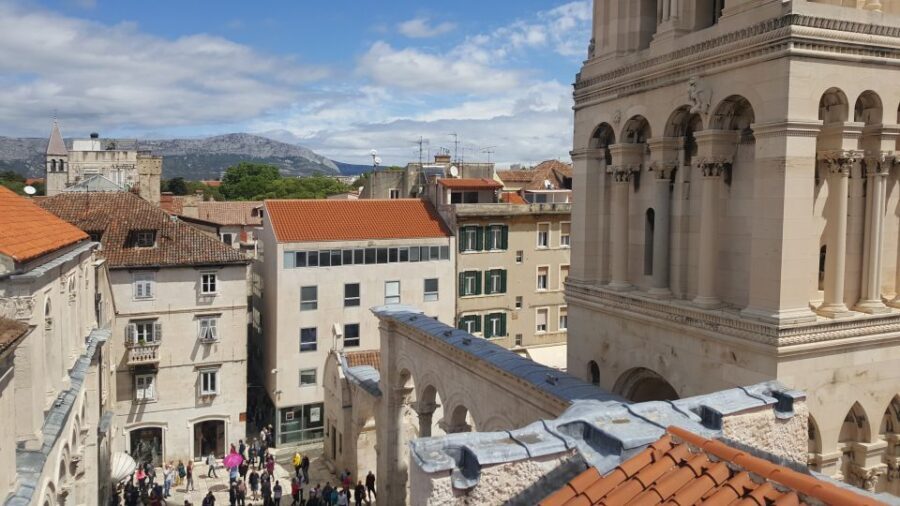
Split’s old town can look like “wow, cool ruins” from a distance. The change here is how you’re taught to look up close. Josipa is an Art Historian with ties to ongoing archaeological fieldwork, so the explanations lean toward how structures were used and reused—then reused again.
I like that the tour doesn’t treat buildings as static monuments. You’ll get the sense that Roman planning and later medieval life are still talking to each other. And because you’re walking with a guide who can answer questions on the spot, the tour becomes practical: by the end, you’re better at figuring out what you’re seeing even when you’re off the route.
You can also read our reviews of more walking tours in Split


Strossmayer Park: the smart launchpad just above the walls
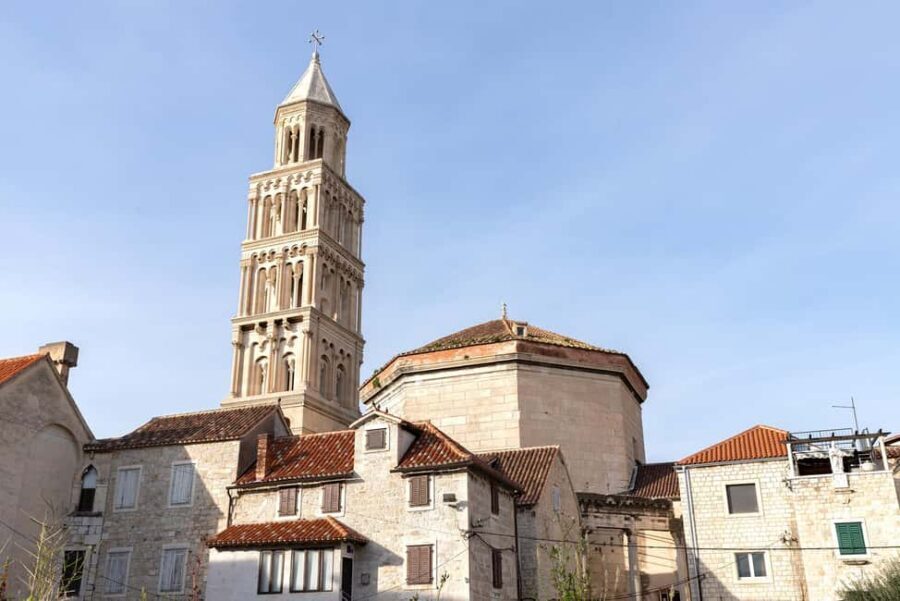
The tour begins at Strossmayerova Fountain in Strossmayer Park (also called Djardin). It’s a great starting point because it’s a green pause before you hit the dense maze of the palace and old town. You also get an early view of how the palace sits like a stronghold—up and above the streets that developed around it.
From there, the walk builds momentum toward the gates. You pass key points such as Gregory of Nin—and you’ll get the kind of context that makes a statue feel more like a chapter title than a random landmark. If you’re trying to understand Split quickly, this first stretch helps you get your bearings fast.
Gates, streets, and small religious stops that explain the whole city
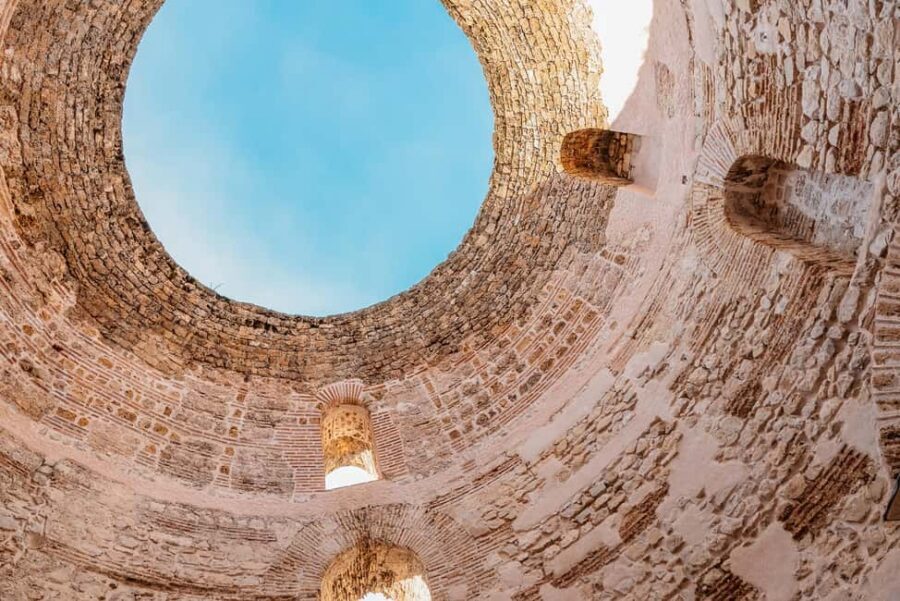
One reason this tour works so well is that it starts connecting dots early. You’ll move through areas defined by thresholds—gates and entryways—then through smaller stops that show how everyday life grew around the palace.
Expect stops around:
- Golden Gate and Silver Gate, where the palace defenses meet the urban reality outside.
- Sv. Martin, a brief stop that helps you understand why churches, street names, and passageways matter in how the city developed.
The guide’s approach is simple: you’re not just looking at stone. You’re learning what the stone was meant to do—protect, separate, funnel movement, or signal status. That turns the route into something you can “read” later, even if you only return for a quick wander.
Peristyle and Jupiter’s Temple: seeing the big icons without the pressure

If you’re a first-timer, the “must sees” in Split Old Town can feel like a photo checklist. Here, the stops are framed so the big icons make sense as part of one system.
At Peristil, you’ll understand why this central space matters inside Diocletian’s Palace. Then you’ll hear stories tied to Jupiter’s Temple and how the palace’s ceremonial core shaped what came after. Even when you’re just outside a site, you’ll be given guidance on how to look—what to notice, what to ignore, and what questions to ask yourself while you’re there.
And yes, the tour includes the surreal-feeling detail of Egyptian sphinxes—the kind of object that usually gets a quick photo at best. With Josipa, it’s treated as a clue. That’s the recurring theme: you’re being taught to interpret the city’s leftovers.
Street Let Me Pass, Vestibul, and Triklinij: the palace as a real machine
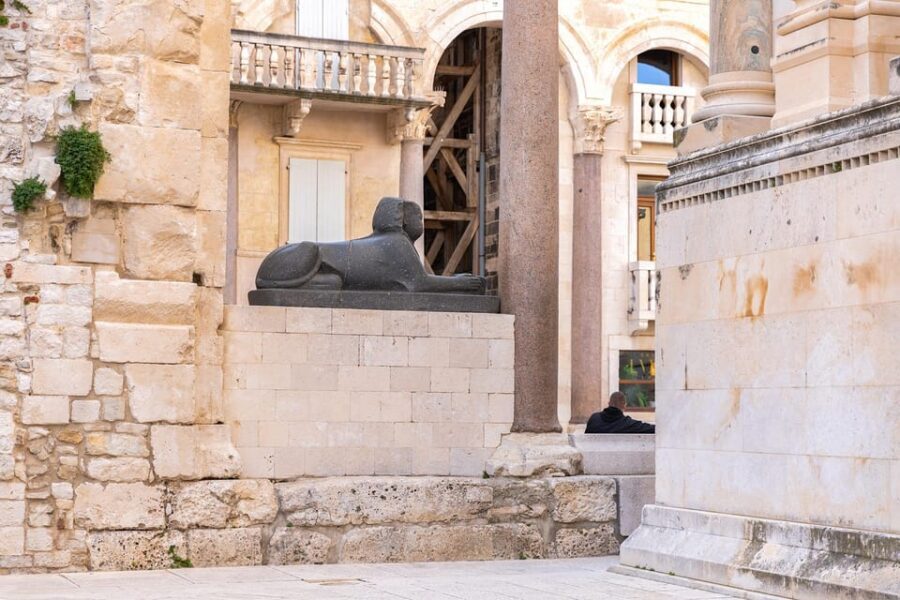
The middle of the walk is where Diocletian’s Palace stops being “ruins” and starts acting like a former world. You’ll pass through spots such as Street Let Me Pass, along with Vestibul and Triklinij.
These names can sound like labels from a museum. The value is what you learn from the layout and purpose behind them. You begin to see the palace as a planned machine: movement corridors, ceremonial spaces, and daily-use zones all stitched into one heavy, intentional design.
This is also where the tour’s Q-and-A style shines. The walk is structured, but you’re not stuck listening to a monologue. Josipa’s style is friendly and approachable, and the tour gives you time to ask questions and get clear answers, including what you’re likely to miss if you stroll on your own.
You can also read our reviews of more private tours in Split





Diocletian’s Cellars to Riva: where Roman space became daily life
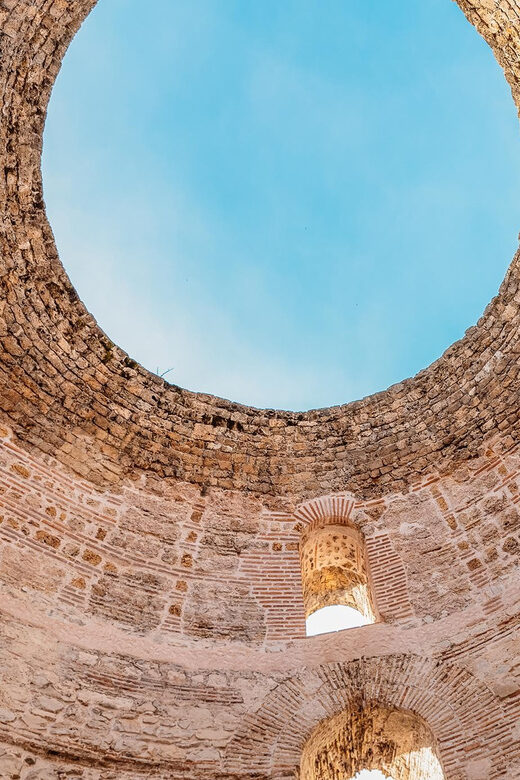
When the route reaches Diocletian’s Cellars, you’re stepping into a key example of reuse. Even if you don’t enter every paid interior, you’ll still get the story of the space: how Roman infrastructure shaped later uses, and how the city grew around older volumes.
Then you shift toward Riva, Split’s famous waterfront promenade. This is a good contrast moment. You go from thick palace masonry to the everyday energy of the coast walk. The guide’s explanations help you see why this location became such a magnet for public life—and how the palace’s internal logic still influences the city’s flow.
For me, the smartest part here is that you’re learning to connect architecture to human behavior. It’s not just “what is it.” It’s “what did it enable, and what does that mean today?”
From Maketa grada Splita to the fruit and People’s Square: small stops with big clues

As the tour continues, you head through squares and street areas that feel less monumental—but they matter because they show the city as a working place.
You’ll cover stops such as:
- Maketa grada Splita (a spot that helps you wrap your head around the city’s structure)
- Fruit Square (a practical focal point for market life)
- People’s Square (another hub that anchors how public space functions)
Then you move toward the market atmosphere around the Split Fishmarket. Even if you aren’t there to shop, the guide’s timing helps you see how tourism and locals share the same streets. And because the tour keeps tying locations back to Roman and medieval traces, you don’t lose the “big picture” while enjoying the everyday scenes.
Republic Square and the gentle finish: your next moves in Split
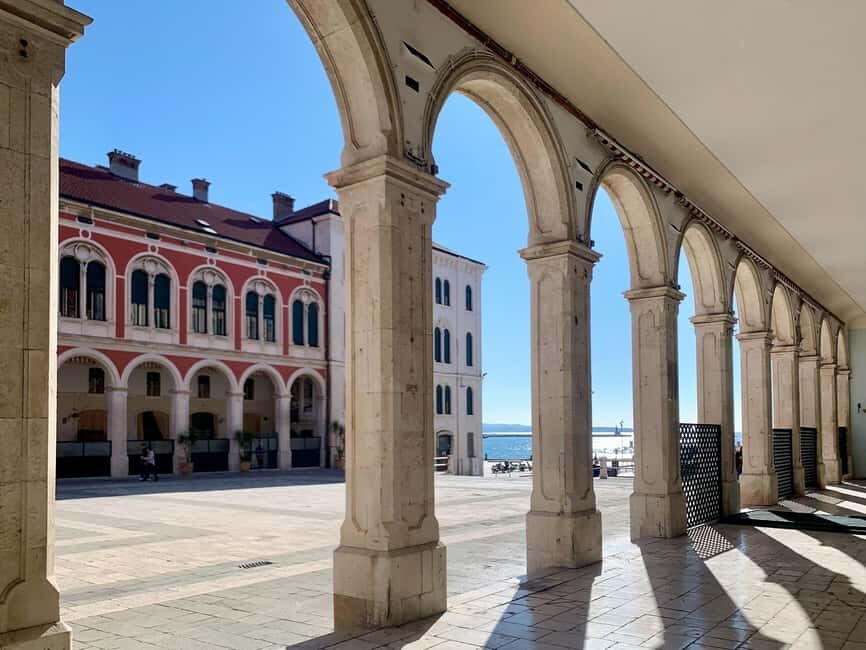
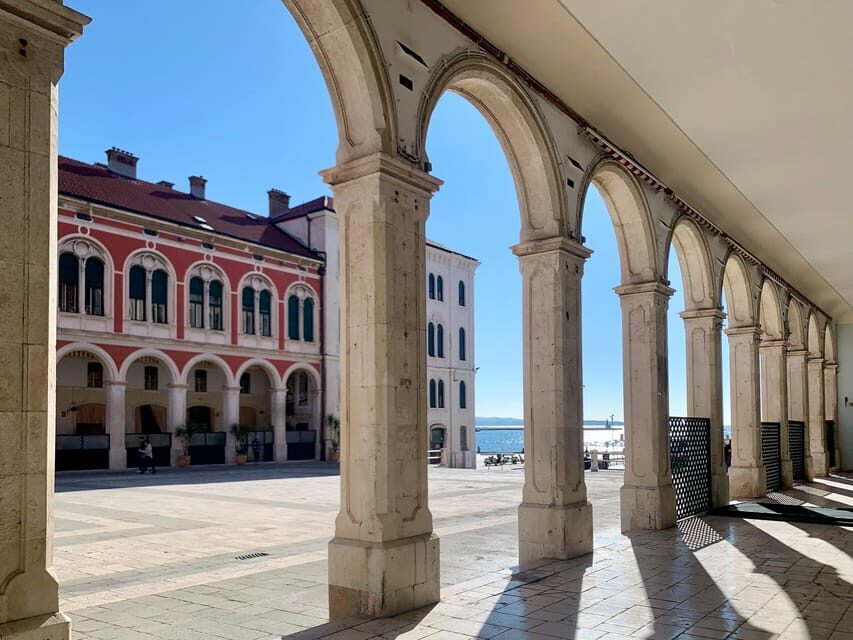
You’ll reach Republic Square, which gives you that “center-of-it-all” feeling. The walk also lists a couple of end/drop-off points in the Republic Square area and at Trg Šperun.
Still, the activity is designed to end back near the start area around Strossmayer Park, so you don’t feel like you’re stranded across town. In plain terms: you get a full loop of the old core with a sensible finish point for continuing on your own.
Varoš at the end: why the oldest neighborhood is the best wrap-up
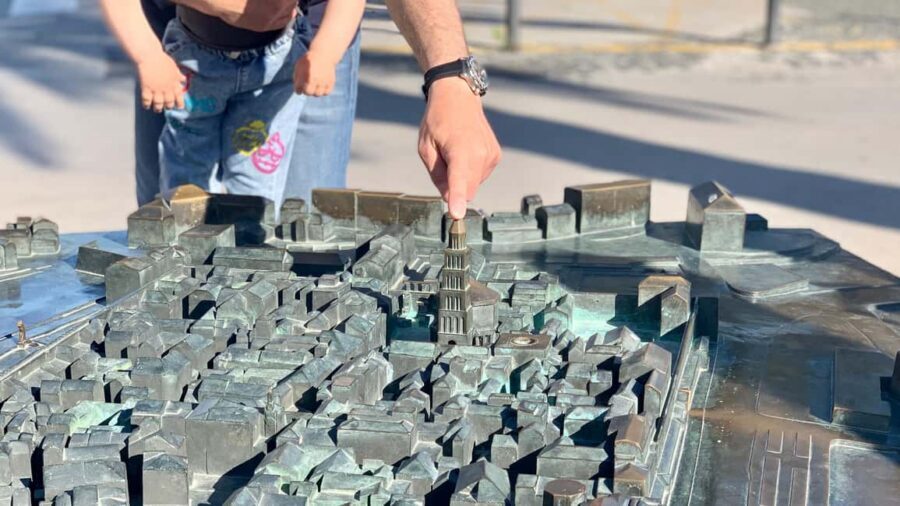
The tour’s final act is Varoš, one of Split’s oldest neighborhoods. This is where the “Roman fabric repurposed over the centuries” idea becomes concrete.
You’ll be guided through the way 4th-century Roman architecture has survived and changed use. That makes Varoš a powerful conclusion because it proves the city isn’t just frozen in time. It’s a living UNESCO site, and you’re seeing the evidence of that in how spaces were kept, altered, and folded into daily life.
If you like your city visits to end with meaning instead of a last photo, this part delivers.
Price and time: is $32 a fair deal for 2 hours?
At $32 per person for about 2 hours, this tour is good value if your goal is understanding, not just stamping famous names. The price makes sense because you’re getting a licensed local guide who owns and runs the business, and the focus is on explanation plus route guidance.
Also, the tour avoids a common trap: spending your limited time waiting in lines or paying for entrances. This experience doesn’t enter paid sites, but it passes them and gives you stories and practical suggestions for how to visit them later on your own. That can be a better deal than trying to squeeze paid interiors into a short walking format.
If your priority is deep stops inside every major attraction, you might need a second add-on visit. But if you want to walk away seeing Split with better eyes, the math works.
What you’ll actually see vs what you’ll plan later
This walk is very clear about its scope. It does not enter paid sites like the Substructures and the Cathedral (or the Temple of Jupiter interiors). Instead, it brings you close enough to understand why those places matter and how to approach them independently later.
The payoff is that you don’t waste tour time on entry fees and interior navigation. You’ll still hear why each site is significant, and you’ll get instructions and suggestions for revisiting on your own. For many visitors, that’s the sweet spot: you’re informed first, then you choose which interiors to pay for when you want them.
Logistics that matter in Split (and how to avoid the common headaches)
This tour runs rain or shine, so you’ll want to pack accordingly. It also includes several unavoidable steps, and it is not suitable for wheelchair users or people with mobility impairments.
In summer, arrival can be the real boss fight. Traffic can be heavy, and there’s a maximum waiting time of 10 minutes after which the group departs. So set your navigation carefully, and aim to arrive a little early at Strossmayer Park near the fountain.
On timing: the tour is listed as 2 hours, with starting times that depend on availability. In practice, that makes it a strong fit for a first afternoon or early day slot when you still want orientation.
Who this tour is best for (and who should skip it)
This is ideal for you if:
- You want a guided path through Diocletian’s Palace and Split Old Town that explains what you’re seeing.
- You like architecture, symbols, and how buildings were used—not just where to stand for photos.
- You prefer a guide who answers questions and adjusts the route to your group’s interests (private or small group options).
It’s not ideal if:
- You need wheelchair access or have limited walking ability, due to stairs/steps.
- You rely on accommodations for hearing impairments, since the tour is listed as not suitable for hearing-impaired people.
Booking advice: should you book Aspalathos Guided Tours?
I think you should book this tour if you’re spending limited time in Split and you want your “big sights” to come with meaning. The combination of a skilled guide, a structured route through palace and old town highlights, and a finish in Varoš makes it a strong overview.
Skip it if your travel style is purely “I want interiors and ticketed sites” and you’re not comfortable with a stepped walking route. But if you’re okay with outdoor views, short stops, and lots of storytelling, this is a smart way to turn a confusing city into a place you can actually interpret.
If you want Split to feel like more than Instagram backdrops, this is the kind of walking tour that helps you do that fast.
FAQ
How long is the Split Old Town and Diocletian’s Palace walking tour?
It lasts about 2 hours.
Where does the tour start?
The meeting point is around Strossmayerova Fountain in Strossmayer Park (Djardin). You can search Strossmayer Park or Strossmayerova Fountain on your map.
What language is the tour in?
The live guide provides the tour in English.
Does the tour enter paid sites inside Diocletian’s Palace?
No. It does not enter paid sites such as the Substructures or the Cathedral. It passes by major spots and the guide explains them, plus offers suggestions for visiting later.
What happens if it rains?
The tour takes place rain or shine.
Is the tour suitable for wheelchair users or people with mobility impairments?
No. It is not suitable for wheelchair users and not suitable for people with mobility impairments.
Is there a cancellation option?
Yes. Free cancellation is available up to 24 hours in advance for a full refund.