See Split fast on an electric rickshaw. This private ride is built for time-tight visits, stacking major sights from the Riva promenade to Diocletian’s Palace while keeping most of the effort off your feet. You can also choose a departure time, and the route can be arranged around one of three itineraries, so you’re not stuck doing the same walk-everywhere loop.
What I like most is the mix of big-ticket landmarks and scenic stops in one compact window. The route threads through classic city highlights like Prokurative and the Croatian National Theater, then shifts to photo-friendly palace gates, underground cellars, and finally the viewpoints and beaches of Marjan Forest Park.
One thing to consider: many stops are short (often just a few minutes). That’s great for seeing a lot, but if you want long beach time or slow museum wandering, you’ll likely want to build extra time after the rickshaw.
In This Review
- Key things that make this rickshaw tour work
- The real value: a private route that saves your energy
- From the Riva to Prokurative: the tour starts where Split breathes
- Diocletian’s Palace gates and cellars: the star of the show
- Eastern-and-western Split flavor: where the city opens up
- Marjan Park and the beaches: the part that changes the day
- The small stops that build a fuller picture
- Guides who set the tone, and why that matters in a short tour
- The free drink and what’s actually included
- How long you should plan: matching Split time to your pace
- What to watch for: brief stops, good weather, and small capacity
- Who this tour fits best
- Should you book Split by Private Electric Rickshaw?
- FAQ
- How long is the Split by Private Electric Rickshaw tour?
- Where is the meeting point, and does it end there too?
- Is pickup available for cruise ship passengers?
- Is this tour private?
- What is the rickshaw capacity?
- What language is offered?
- What’s included in the price besides the electric rickshaw?
- Are there admission tickets you need to buy at the stops?
- What if the weather is bad, or I need to cancel?
Key things that make this rickshaw tour work
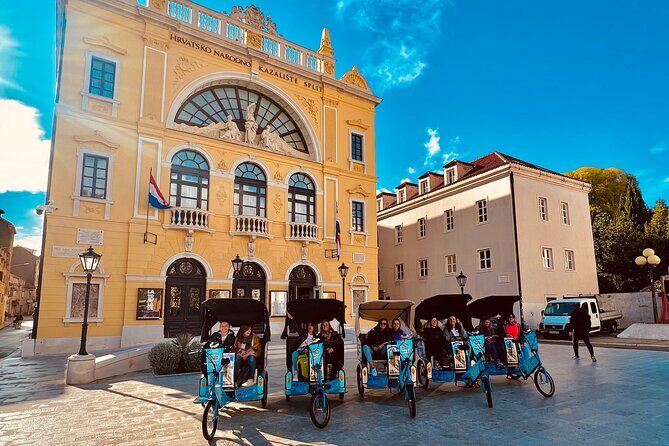
- Private electric ride that cuts walking while still getting you close to the sights
- Diocletian’s Palace stops focused on the gates and the palace cellars area
- Marjan Forest Park access, where cars are restricted and rickshaws keep the flow easy
- Cruise-port meeting point at Trajektna Luka, with pickup by the terminal when needed
- Free seaside drink at Va Bene Café as part of the experience
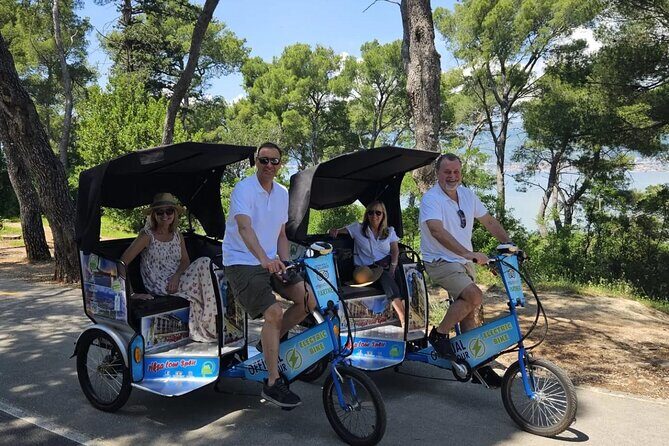
- Small rickshaw capacity (max 2 adults and 1 child), so families/groups may need more than one vehicle
The real value: a private route that saves your energy
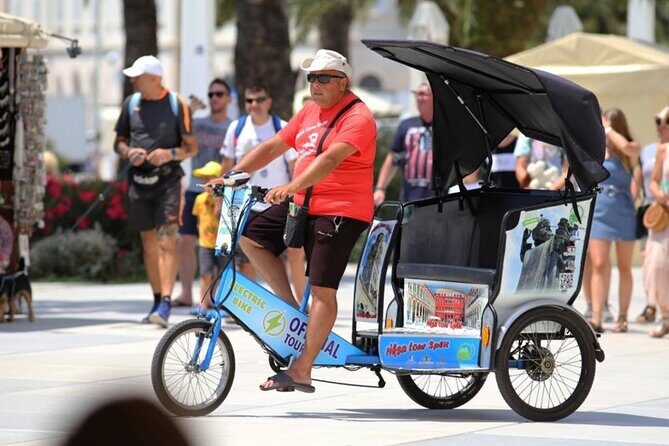
Split’s old town is gorgeous, but it can also feel like a moving bottleneck: stone streets, crowds, and the kind of walking that quietly adds up—especially on a cruise day. This tour solves that with an electric rickshaw style vehicle that keeps you rolling while you still get prime sightline stops. It’s the sort of plan I love for first-time orientation because it gets you oriented fast, without turning the day into a test of endurance.
Since it’s private, you’re not dealing with a group that drags or rushes. If your schedule is tight, you can pick a departure time that matches your day. And if you’re traveling with a family or someone who needs a gentler pace, the structure helps: you can get photos at key points and still have energy left for walking later.
The other advantage is how the tour’s built around neighborhoods and viewpoints rather than only central streets. The route includes both the historic-core highlights and the greener, coastal side of Split—so you end up with a more complete sense of the city, not just the postcards.
You can also read our reviews of more private tours in Split



From the Riva to Prokurative: the tour starts where Split breathes
Most rickshaw tours are good at one thing: moving you around. This one also does a smart warm-up, starting on the Riva promenade. That strip by the Adriatic is Split’s social center, lined with cafés and old stone buildings, with the sea doing what the sea does best—providing a constant horizon line.
From there you jump to Prokurative, known for elegant arches and Venetian-style architecture just steps from the water. This is a great early stop because you immediately get a feel for the city’s layered look: seaside promenade life beside classical-era architecture. It’s also photo-friendly without needing a long walk between scenes.
Then you head toward the Croatian National Theater (HNK), founded in 1893. Even if you’re not catching a performance, the exterior matters. It’s one of those landmarks that helps you understand Split isn’t only a Roman-ruins city—it’s also an arts-and-culture city with a civic identity.
How this helps you: early stops like these let you settle your bearings. After that, the tour goes into the big anchor—Diocletian’s Palace—where you’ll want your attention.
Diocletian’s Palace gates and cellars: the star of the show

If you do only one thing in Split, it’s usually Diocletian’s Palace. This tour gives you a structured way to see it without treating it like a scavenger hunt.
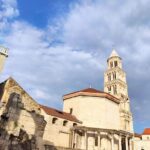
You’ll ride around the palace perimeter and hit the main entrances, including the Golden Gate (the famous 4th-century gate once adorned with gold), the Silver Gate on the eastern side, and the Brass/Bronze Gate on the southern side. These gates are more than decorative landmarks. Each one frames a different approach angle into the palace complex, and seeing the gates by vehicle helps you grasp how the palace sits in the city.
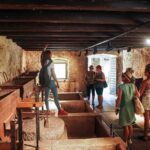
Then there’s the part people often skip when they only do a quick surface tour: the cellars. The palace cellars are where Roman engineering meets atmosphere—underground chambers that make you feel how practical the palace system was. Even if you keep expectations modest, this stop tends to land because it adds texture. You go from street-level views into a more enclosed, historical mood.
Also pay attention to the little stop that feels silly until it doesn’t: the Grgur Ninski statue near the northern gate. There’s a local tradition connected to it, and it’s the kind of pause that makes the tour feel more human and less like a checklist.
Eastern-and-western Split flavor: where the city opens up
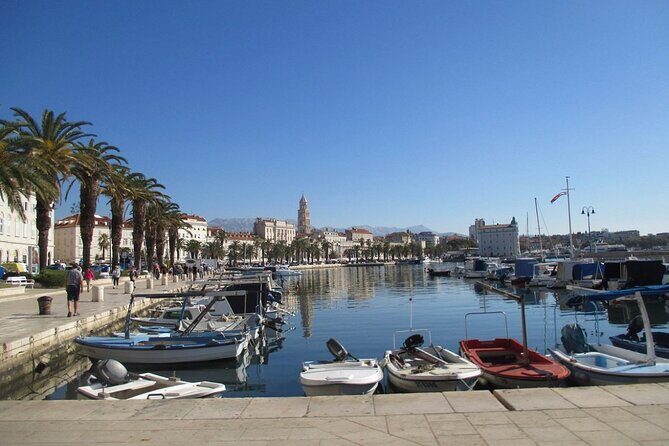
The route doesn’t keep you trapped in one pocket of old town streets. It shifts west toward the harbor area with Matejuška Harbor (Matejuška port). This is a traditional fishing port edge-on, with colorful boats and daily catch energy. The best part is the framing: you get a classic combination of water, boats, and palace backdrop views, which is hard to recreate on your own without knowing the best angles.
On the way, you may also pass or stop near Zvončac Park, a small green break in the middle of the city. If Split is starting to feel like stone and sun, this kind of pause helps you reset. You’re not rushing to another major attraction—you’re letting your eyes breathe.
Another scenic stop often included is Sustipan, a promontory viewpoint that carries a sense of history without feeling like a formal museum stop. Once a monastery and defensive point, the area today is more about outlooks: Adriatic views, nearby islands, and a calmer pace for photos and a quiet moment.
Marjan Park and the beaches: the part that changes the day
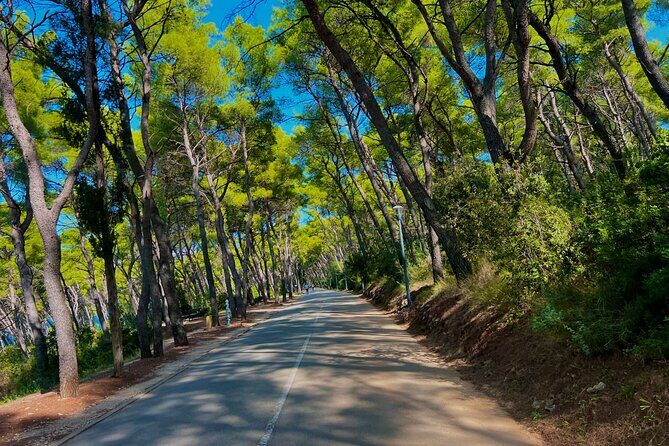
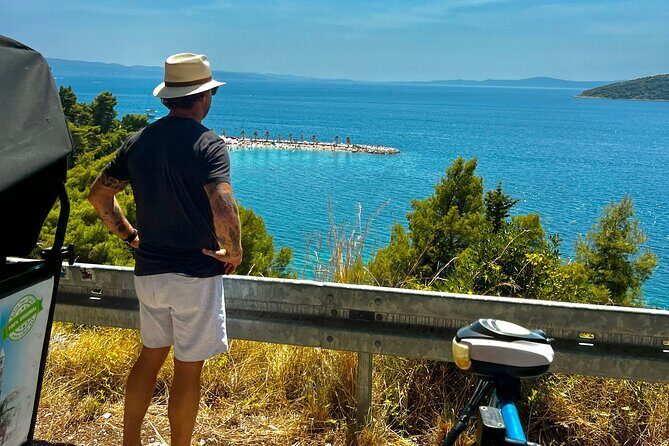
If Diocletian’s Palace is the “wow” in the center, Marjan Forest Park is the “oh, this is why people stay in Split.” The tour includes entry to the park and then uses the rickshaw to reach multiple viewpoints and beach areas without losing time to long walks.
Inside Marjan, you’ll have a chance for:
- Galerija Meštrović in the park area, dedicated to Ivan Meštrović’s work, in the artist’s own villa setting. Even if sculpture isn’t your main interest, the setting and views help it feel special rather than purely indoor.
- Obojena Svjetlost (Colored Light) Beach, where the water color does most of the talking. It’s one of those stops where you’ll probably want a few minutes just to enjoy the light.
- Kasjuni Beach, a quieter coastal spot with pebbles and pine-tree shade nearby. It’s more laid-back than the typical promenade experience.
- Bene Beach (Kupaliste Bene), included on the larger itinerary, with a free drink. This is a practical swim-and-relax choice because the waters are described as calm and shallow in the tour overview.
One extra detail that I think matters: access. In Marjan, cars are restricted, so cars can’t just roll right up to many viewpoints. The rickshaw model fits the rules and keeps you moving through areas that foot travelers can reach but with less strain.
You may also get a view toward Poljud Stadium while driving through Marjan. It’s not the reason you book the tour, but it adds a modern Split layer against the natural backdrop.
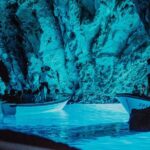


The small stops that build a fuller picture
The itinerary includes a mix of cultural and historical side stops that help you connect the dots between eras:
- Museum of Croatian Archaeological Monuments: a quick chance to see ancient sculptures, pottery, and relics in one place. If you’re into Roman and earlier periods, this fills a gap between palace gates and real artifacts.
- Tito’s Villa (Dalmacija Villas): a luxury seaside complex that once served as residence for Josip Broz Tito. Even just viewing it as a landmark gives you a sense of how 20th-century history shaped parts of the coast.
- Zvončac Park and Sustipan: both add green space and viewpoints, making the tour feel less like only “look, move, look, move.”
These stops may feel minor compared to Diocletian’s Palace, but they do something important: they make Split feel like a lived-in city across time, not only a single heritage site.
Guides who set the tone, and why that matters in a short tour
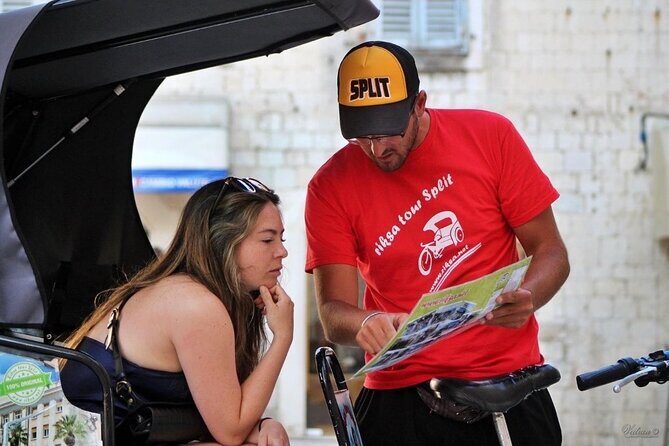
In a short tour, the guide’s style matters as much as the route. This one tends to score high because guides are friendly and adapt to what you need.
Names that come up again and again include Toma, Rosa, Manuela, Mario, Marco, Tin, Ella, and Mounass. Across those accounts, a few themes repeat:
- They make the ride feel easy, not scripted.
- They manage timing so you still get photos.
- They can adjust stops based on requests.
- They share local context that helps you understand what you’re looking at, not just where to point your camera.
One practical example: people describe being tired from walking and finding the rickshaw a real relief. Another: a few guides are praised for accommodating timing when cruise schedules shift. That kind of flexibility is valuable because cruise-day timing is chaotic by nature.
And if you’re a movie fan, you might hear references to filming locations around the park area, including links to Mama Mia.
The free drink and what’s actually included
The tour includes more than the vehicle. You get:
- Driver/guide and the electric rickshaw
- Private transportation
- A free soda/pop refreshing drink by the sea at Va Bene Café (listed as exclusive to the Split tour)
- Entry/Admission for Marjan Forest Park and Bene Beach (with the free drink noted on the larger tour)
That drink stop is small, but it’s smart. It gives you a break that matches the tour’s pace—so you don’t turn the whole day into a sprint.
Also note: many of the palace and city stops are listed with admission as free. That’s great for avoiding surprise costs, and it helps the day feel more predictable.
How long you should plan: matching Split time to your pace
The tour duration is listed as roughly 30 minutes to 2.5 hours. That range usually comes down to which itinerary you choose and how much time you spend at viewpoints and beaches.
If you only have a short window—common with cruise stops—go for a plan that prioritizes:
- Riva + Prokurative
- The main palace gate loop
- A quick Marjan look if time allows
If you have a little more time and want the coastal side, choose the longer version that includes more Marjan stops like Meštrović Gallery, the beaches, and the included drink at Va Bene Café (on the larger tour).
Practical tip: because many stops are short, decide up front what you care about most. If your top priority is the palace, treat beach time as a bonus. If beaches are your priority, plan to linger after the rickshaw so you don’t feel like the tour only gives you quick peeks.
What to watch for: brief stops, good weather, and small capacity
A few practical considerations:
- Stop length is short. Some are listed at 1 to 5 minutes. That’s enough for photos and a quick orientation, but not for long wandering.
- Good weather matters. The experience requires good weather. If weather gets rough, it can be rescheduled or refunded under the tour’s rules.
- Capacity is small. The max capacity per rickshaw is 2 adults and 1 child. If your group is bigger, you may need more than one vehicle to keep it private.
Also, since it ends back at the meeting point, you don’t have to worry about a transportation gap after.
Who this tour fits best
This is a strong match if:
- You’re in Split for a cruise stop and want a plan that respects limited time.
- You prefer not to sweat your way between Roman gates and beach viewpoints.
- You want a local-style route that feels flexible instead of rigid.
- You’re traveling with someone who needs a gentler pace. The overall format is often praised for being easier on people who don’t want to walk as much.
It may not be ideal if:
- You want museum-level time at multiple indoor sites.
- You like to linger and don’t mind walking between sights yourself.
- You want a single beach day rather than a beach-and-photo stop.
Should you book Split by Private Electric Rickshaw?
I’d book it if your goal is a fast, high-impact overview that still feels personal. The private electric setup is especially valuable in Split because it lets you cover Diocletian’s Palace gates and cellars, then pivot to Marjan’s beaches without exhausting yourself.
Book it sooner than later, because these tours regularly sell out. If you’re traveling on a cruise day, this is also one of the better ways to make the meeting point simple: Trajektna Luka Split with pickup in front of the cruise terminal when needed.
If you’re ready to trade some slow travel comfort for smart sight coverage, this is a solid pick. You’ll come away with a clearer map of where things are and which areas you’ll want to return to on your own.
FAQ
How long is the Split by Private Electric Rickshaw tour?
The tour duration is listed as about 30 minutes to 2 hours 30 minutes, depending on the itinerary and your chosen schedule.
Where is the meeting point, and does it end there too?
The start point is Trajektna Luka Split, 21000, Bačvice, Split, Croatia, and the activity ends back at the same meeting point.
Is pickup available for cruise ship passengers?
Yes. If you are arriving by cruise ship, pickup is offered directly in front of the cruise terminal.
Is this tour private?
Yes. It’s a private tour, and only your group participates.
What is the rickshaw capacity?
The max capacity per rickshaw is 2 adults and 1 child.
What language is offered?
The tour is offered in English.
What’s included in the price besides the electric rickshaw?
Included items are the driver/guide, electric rickshaw, private transportation, a free soda/pop refreshing drink by the sea at Va Bene Café, and entry/admission for Marjan Forest Park and Bene Beach.
Are there admission tickets you need to buy at the stops?
The listed stops in the route show admission ticket free, and Marjan Forest Park and Bene Beach entry are included in the tour price.
What if the weather is bad, or I need to cancel?
This experience requires good weather. If it’s canceled due to poor weather, you’ll be offered a different date or a full refund. You can cancel for a full refund up to 24 hours in advance. If you cancel less than 24 hours before the start time, the amount paid isn’t refunded.