REVIEW · WALKING TOURS
Walking Tour Split
Book on GetYourGuide →Operated by Sol Travel Croatia · Bookable on GetYourGuide
Roman stones, real stories in Split. I love getting the big-picture context from a licensed local guide and walking the UNESCO-protected Diocletian’s Palace to see how Roman designs shape today’s Old Town.
One thing to plan for: tickets and entrance fees for sights are not included, so you may want to budget extra if you want to go inside specific places.
The tour lasts about 1.5 hours, runs with live Spanish or English guidance, and it’s a smart way to get your bearings quickly in Split. In the past, guides like Anna and Victoria G have stood out for turning stone-and-dates into something you can actually picture.
In This Review
- Key Highlights
- Walking the Old Town the Right Way: Diocletian’s Palace in 90 Minutes
- Start Smart at the National Theatre Meeting Point
- The Route Through Split’s Center: How You’ll See the City Make Sense
- Inside Diocletian’s Palace: Peristyle, Jupiter’s Temple, and the Vestibul
- Peristyle
- Jupiter’s Temple
- Vestibul
- Split’s Big Landmarks: Cathedral of St. Duje, Golden Gates, and Grgur Ninski
- Cathedral of St. Duje
- Golden Gates
- Grgur Ninski statue
- Pjaca and Fruit Square: The Walk Ends Where Everyday Life Happens
- Pjaca
- Fruit Square
- The Guide Matters: What to Expect From a Live, Licensed Local
- What You Pay ($28) and Why It Can Still Be a Smart Deal
- Using the Tour to Plan the Rest of Your Day
- Who This Tour Is Best For
- Should You Book This Walking Tour?
- FAQ
- What is the duration of the Walking Tour Split?
- Where does the tour start?
- What sights will I see?
- Is the tour led by a guide?
- Are entrance tickets included in the price?
- What languages are offered, and can I cancel?
Key Highlights
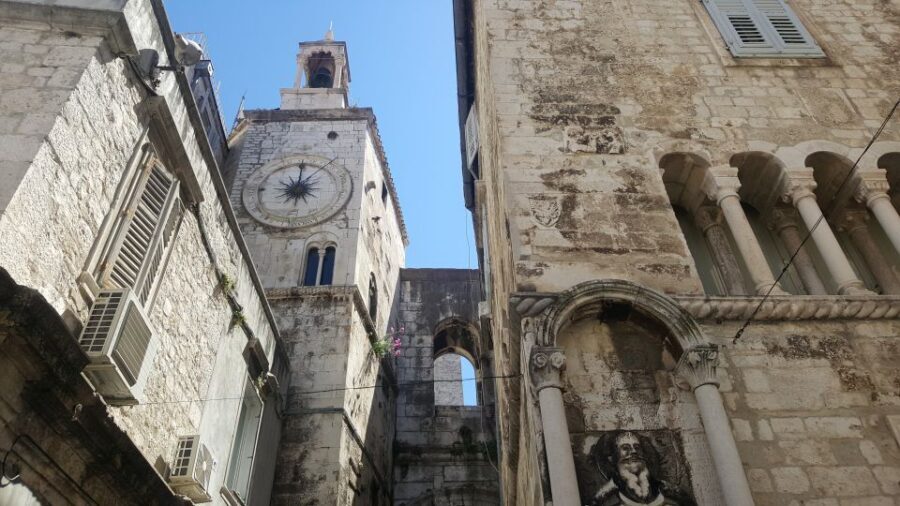
- UNESCO Diocletian’s Palace, on foot: see the spaces that still define Split
- Peristyle, Jupiter’s Temple, Vestibul: key Roman landmarks in one route
- Split’s signature stops: Cathedral of St. Duje, Golden Gates, Grgur Ninski statue
- Two central squares at the end: Pjaca and Fruit Square for an easy wrap-up
- Licensed local guide: live narration, plus advice for what to do next
- Good value for a short visit: $28 for an organized, 90-minute overview
Walking the Old Town the Right Way: Diocletian’s Palace in 90 Minutes
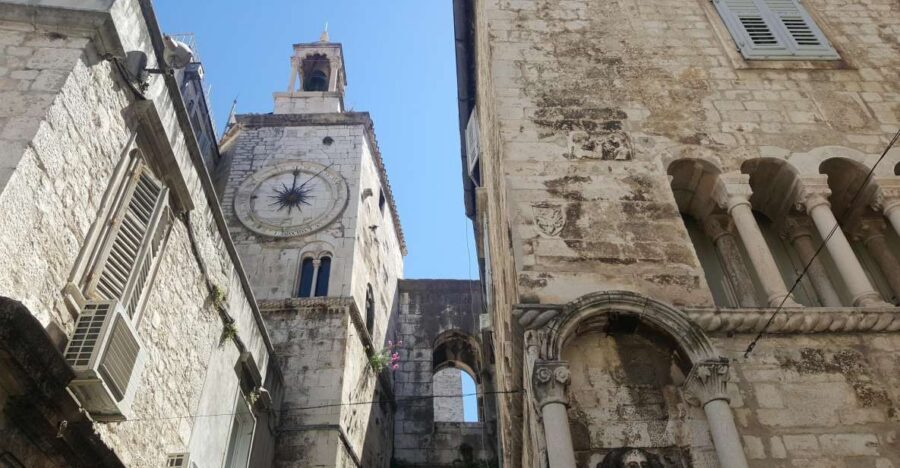
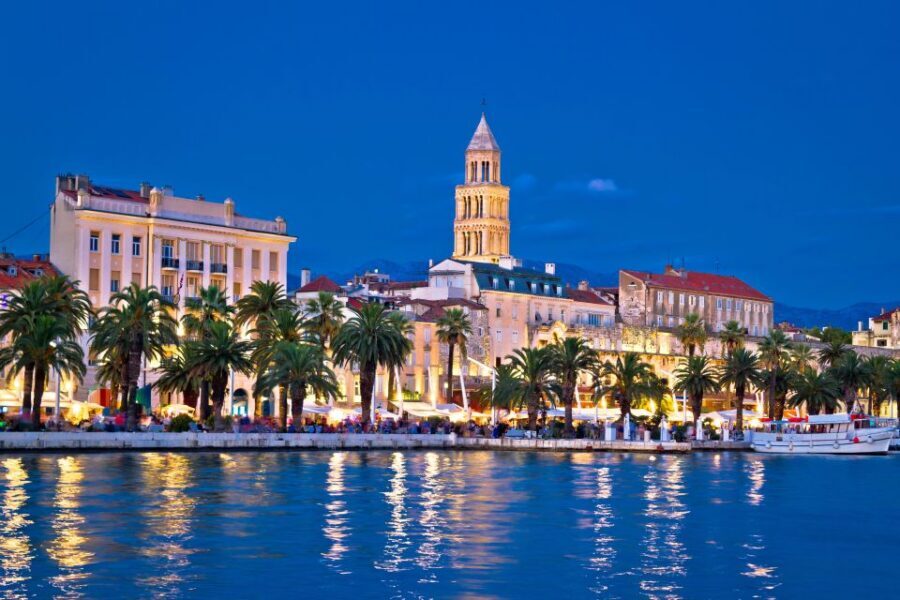
Split’s Old Town can feel like a maze—pretty, historic, and a little confusing on your first morning. This tour is built to solve that problem fast. In about 1.5 hours, you get a guided path through the heart of town, with explanations that connect Roman-era architecture to what you’re seeing right now.
The real win is the UNESCO-protected Diocletian’s Palace. This isn’t just a place you pass by. You walk around it with an official-style guide and learn how its layout shaped streets, squares, and major landmarks. Even if you’re not a Roman history buff, the tour helps you read the city. You start noticing alignments, entrances, and ceremonial spaces instead of treating everything like random stonework.
And at $28 per person, it’s priced as a compact orientation tour. You’re paying for a structured route, a licensed guide, and an easy way to hit the “main ideas” without spending half a day sorting out where to go.
You can also read our reviews of more walking tours in Split
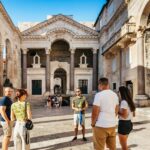
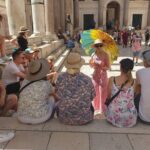

Start Smart at the National Theatre Meeting Point
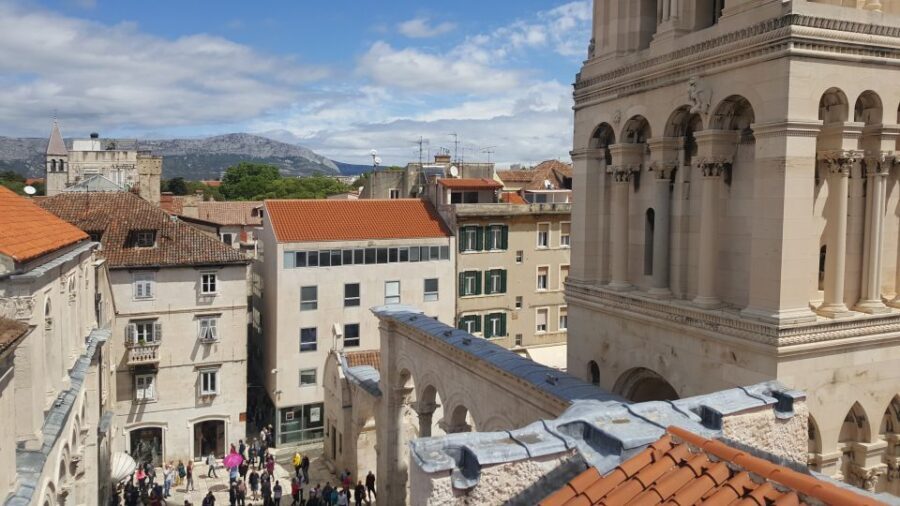
The tour begins in front of the National Theatre in Split, at Trg Gaje Bulata 1, 21000, Split. Starting here is convenient because it places you near the city center foot-traffic flow—so you’re not forced to drag yourself across town before the walk even starts.
Right at the beginning, you can expect your guide to set the tone: what you’ll see, why it matters, and how the different areas connect. That early framing helps. When you reach the big Roman sites later, you’re not just collecting names—you’re understanding what role each space played in the palace’s daily life.
The Route Through Split’s Center: How You’ll See the City Make Sense
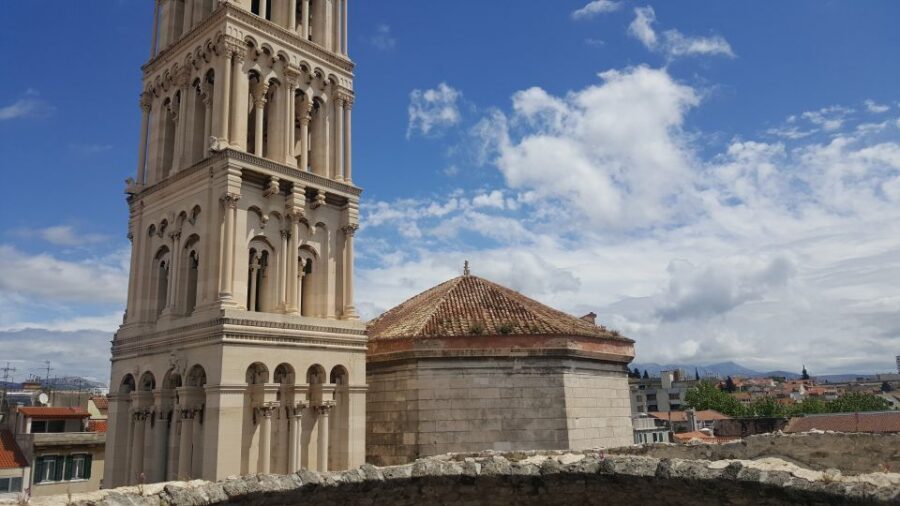
This is a walking tour around Split’s city center, focused on the historical Old Town. That “city center first” approach matters. It’s how you avoid the classic first-day mistake: seeing highlights out of order, missing relationships between places, and ending the day with a list of sights but no story.
As you move through the Old Town, you’ll be guided to several of the area’s most important landmarks. The tour is designed so you can keep walking without losing time searching for directions. And because it’s a guided walk with a live person, you can ask follow-up questions when something catches your eye.
If you like travel in which someone points out the details you’d miss on your own—good. If you prefer complete freedom and no structure, you might feel a bit channeled. But for many first-timers in Split, this setup is exactly what you want.
Inside Diocletian’s Palace: Peristyle, Jupiter’s Temple, and the Vestibul
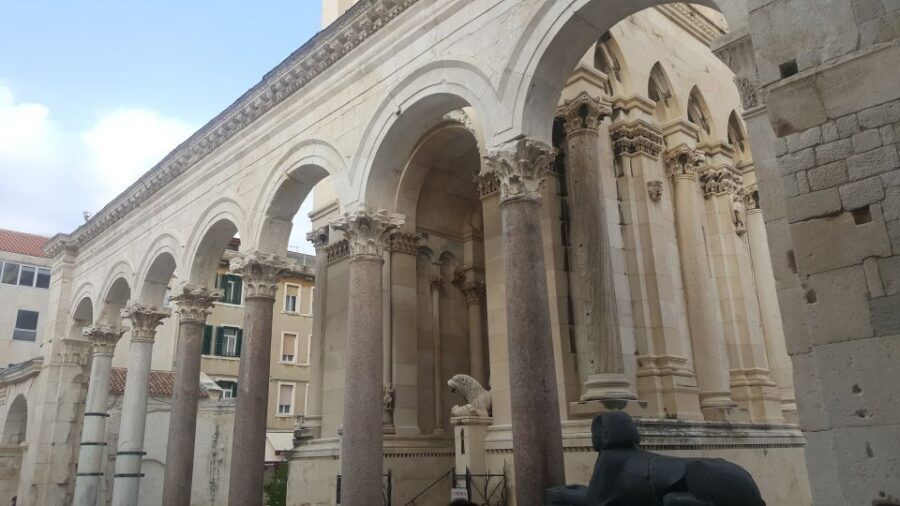
The core of the tour is your walk around Diocletian’s Palace, still one of the most influential historic complexes in the Adriatic region. You don’t just hear about it—you experience it as space you’re moving through.
Here are the main palace stops you’ll encounter:
Peristyle
The Peristyle is one of those places where you can feel the scale. It’s the kind of open, central space that helps you understand how power and public life worked in ancient times. Your guide’s job here is to put names to features and explain what you’re looking at as you stand in the middle of it.




Jupiter’s Temple
Next comes Jupiter’s Temple. The value of this stop is interpretive: it’s not only about where it is, but what the temple represented and how the palace’s religious and ceremonial areas fit into the bigger system.
Vestibul
Then you’ll pass through the Vestibul, which helps round out the story. Instead of only seeing monumental features, you also get a sense of movement—how people entered spaces, how circulation worked, and how different rooms and sections related to one another.
If you’re the type who likes history you can picture, this cluster of stops is excellent. You’ll leave knowing what to look for when you return on your own.
Split’s Big Landmarks: Cathedral of St. Duje, Golden Gates, and Grgur Ninski
After the palace, the tour keeps the momentum going with some of Split’s signature sights. This part is especially good for first-timers, because it connects the ancient complex to modern Split identity.
Cathedral of St. Duje
You’ll see the Cathedral of St. Duje (Saint Domnius). It’s a major landmark and a reminder that history in Split didn’t freeze in place. Roman structures and later layers of religious and civic life overlap here, and your guide explains the relationship so it feels less like random historic confusion.
Golden Gates
The Golden Gates are another high-impact stop. Even if you don’t know the details before you arrive, the name alone signals something ceremonial. This is where your guide’s context helps turn a dramatic entrance into an understood feature of the palace system.
Grgur Ninski statue
You’ll also see the Grgur Ninski statue, one of the city’s most recognizable figures. It’s a good bridge between ancient and local. A Roman site can stay abstract until you connect it to who lived, influenced, and shaped the city afterward—and this statue gives you that human anchor.
This section is a strong reminder that Split isn’t only about ancient ruins. It’s about continuity, memory, and what locals chose to honor and keep visible.
Pjaca and Fruit Square: The Walk Ends Where Everyday Life Happens
A lot of history tours end with a whimper: you see a few monuments, then you’re left figuring out where to go next. Here, the tour finishes back near its starting meeting point and includes two central squares: Pjaca and Fruit Square.
Pjaca
Pjaca is one of the key public spaces in Split. It’s useful as a finishing area because it helps you shift from ancient scale to everyday street life. You can look around and start spotting storefronts, rhythms, and street patterns that define the Old Town.
Fruit Square
Then comes Fruit Square, which is a great place to relax for a moment and watch people moving through the city. Even if you don’t stop for a long meal, it gives you a natural reset after palace walking.
By the time you reach these squares, you’ll likely feel oriented. You’ll know what direction you’re heading in and why the streets curve the way they do.
The Guide Matters: What to Expect From a Live, Licensed Local
This tour is led by a licensed tour guide, and that’s not a small detail. In a place like Split, where layers of history sit close together, a good guide saves you time and mental effort. Instead of you trying to connect dots between landmarks, your guide does it for you.
The live narration is available in English and Spanish, so you can choose the language that feels easiest when the facts start stacking up. Based on guide examples like Anna and Victoria G, the tour style tends to be engaging and story-driven, with a focus on Roman times and how that era echoes through modern Split.
Here’s what I think you’ll appreciate most if you take this tour:
- You’ll get clear explanations at each stop instead of vague descriptions
- You’ll know what to ask when you spot something you don’t understand
- You’ll walk away with a structure for remembering the city
What You Pay ($28) and Why It Can Still Be a Smart Deal
Let’s talk value honestly. $28 per person for 1.5 hours isn’t a budget-tour price, but it’s also not a premium private-guide cost. You’re paying for organization, a live licensed guide, and coverage through included insurance.
The main thing to note is that entrance fees and tickets are not included. That means your final out-of-pocket cost depends on whether you plan to go inside any sights that charge. If you’re happy to explore many features from the outside (which you can do on a walking tour), you might keep costs close to the base price.
In practice, this kind of tour often works best when you:
- want a guided overview early in your trip
- prefer history explained in plain language
- want to hit the major points without building a complicated self-guided route
If you already know you’ll want multiple paid entrances, consider budgeting a little extra. If you don’t, this remains a good way to see Split’s headline landmarks efficiently.
Using the Tour to Plan the Rest of Your Day
One of the most useful parts of this experience is what happens after. The guide gives you a chance to ask for information about additional activities around the city center after the walk.
That matters more than it sounds. When you finish a structured tour, you’re usually facing the same question: Where should I go next so I don’t waste time?
By asking your guide, you’ll get recommendations that fit your interests and your timing—whether that means another walk, a stop for a slow coffee, or a plan for later in the day.
Tip: when you ask questions at the end, ask for options with different energy levels. For example, ask for something that’s easy on your feet and something more focused, so you can choose based on how you feel.
Who This Tour Is Best For
This tour fits best if you:
- are visiting Split for a short time and want the core highlights
- like guided context, not just photo stops
- want an easy route through the Old Town without getting turned around
- enjoy Roman-era settings but also want to understand later layers of Split
It may be less ideal if you:
- want a long, slow wandering experience with no structure
- dislike walking or prefer a ride-based tour (this is a walking route)
- want every major sight entrance included in the price (tickets are not included)
Should You Book This Walking Tour?
Yes, you should strongly consider booking if you want a tight, meaningful orientation to Split’s most important historic space. For $28, you’re getting a licensed guide, a walk through the UNESCO Diocletian’s Palace area, and a hit list of iconic stops like Peristyle, Jupiter’s Temple, Golden Gates, Cathedral of St. Duje, and the squares of Pjaca and Fruit Square.
I’d book it especially if this is your first time in Split. It gives you a “map in your head,” so the rest of your time feels easier. Just plan for the fact that some sights may require extra tickets if you decide to go inside.
FAQ
What is the duration of the Walking Tour Split?
The tour is about 1.5 hours long.
Where does the tour start?
Meet in front of the National Theatre in Split, Trg Gaje Bulata 1, 21000, Split, Croatia.
What sights will I see?
You’ll see major landmarks including the Cathedral of St. Duje, Peristyle, Jupiters Temple, Vestibul, the Golden Gates, Grgur Ninski statue, Pjaca, and Fruit Square, as well as walking around UNESCO-protected Diocletians Palace.
Is the tour led by a guide?
Yes. It includes a licensed tour guide and a walking tour around Split city center.
Are entrance tickets included in the price?
No. Tickets and entrance fees for sights are not included.
What languages are offered, and can I cancel?
The live guide is available in Spanish and English. There is free cancellation up to 24 hours in advance for a full refund, and you can reserve with pay later.