REVIEW · WALKING TOURS
Private Split Walking tour with a Photo session
Book on Viator →Operated by Costumed Tours · Bookable on Viator
Bring your camera to Roman Split. This private walking tour in Split pairs a guided “see it, understand it” stroll with a photo session so the city’s stone stories come out on your phone or camera in a better way than a solo walk.
I love how smoothly it gets you oriented fast, starting right on the Riva promenade with an easy-to-find meeting spot. I also love the pacing: you get about 2.5 hours of guided highlights, then the rest of the day is yours.
One thing to consider: at $300.73 per person, this is a premium choice. If you’re price-sensitive, or you’d rather wander with no schedule at all, you may prefer something less structured.
In This Review
- Key Things You’ll Actually Notice on This Tour
- A Private Split Walking Tour with a Photo Session That Makes the City Easier to Read
- Meeting on the Riva Promenade: Quick Start, Strong First Impression
- Diocletian’s Palace: Seeing Roman Scale Up Close
- The Vestibulum: Acoustics, Mosaics, and a Surprise Domestic Past
- Saint Domnius Cathedral and the Mausoleum-to-Cathedral Story
- Gregory of Nin: The Statue, the Language Fight, and the Famous Toe
- Pjaca (Narodni Trg) and Fruit’s Square: Squares Where Split Still Lives
- Prokurative: A Venetian-Style Finish West of Riva
- Photo Session with Ivan Gudić: More Than Snapshots
- Price and Value: When $300.73 Per Person Makes Sense
- Should You Book This Private Split Photo Walking Tour?
- FAQ
- How long is the Private Split Walking Tour with a Photo Session?
- Is this tour private or shared with other groups?
- What language is the guide?
- Where do we meet, and do we end there too?
- Is admission to Saint Domnius Cathedral included?
- Who is the photographer, and is the photo session included?
Key Things You’ll Actually Notice on This Tour
- Private and paced for you: your group controls the tempo, not a big bus crowd.
- Riva to Roman ruins without wasting steps: the route hits the main “first look” sights in 2.5 hours.
- Diocletian’s Palace details you’ll see (and remember): big scale facts plus small visual cues.
- Photo help from Ivan Gudić: a pro lifestyle photographer, not just a guide holding a phone.
- Iconic Split squares still feel local: Pjaca, Fruit’s Square, and Prokurative are built for daily life.
- Weather matters: the experience is planned for good conditions, so expect flexibility if it’s rough.
A Private Split Walking Tour with a Photo Session That Makes the City Easier to Read
Split can feel like one long photo wall. The trick is knowing what you’re looking at. This tour is built for that. You walk the city’s core like a story: waterfront life at Riva, Roman power at Diocletian’s Palace, then churches and squares where Split still meets, eats, and relaxes.
What makes it practical is that it’s private. That means you can slow down when something catches your eye, ask questions as you go, and keep moving without the stop-start rhythm of larger group tours. And after roughly 2.5 hours, you’re done. That’s a big deal in a city where you’ll also want unplanned time to sit by the water, explore side streets, or just take another round of photos on your own.
The tour is offered in English and uses a mobile ticket, so there’s less friction before you even start. You also end back at the meeting point, which is helpful if you plan to head off immediately afterward.
You can also read our reviews of more walking tours in Split
Meeting on the Riva Promenade: Quick Start, Strong First Impression
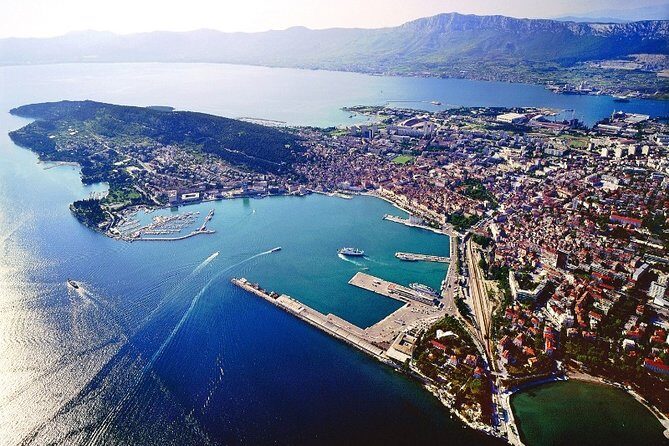
You start on Obala Hrvatskog narodnog preporoda in Split, right where the Riva promenade begins. The guide’s chosen landmark is smart: they meet near a bronze model of Split, so it’s easy to connect the directions to the real place.
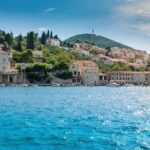
Riva isn’t just pretty waterfront. It’s the city’s living room. It hosts major seasonal moments like New Year celebrations, Christmas events, City Day, Carnival, and more throughout the year. Even if you’re not there during a big event, you still feel how the space works: cafés and restaurants line the promenade, locals linger, and the sea view is part of the rhythm of daily life.
For photos, Riva also gives you a clean “establishing shot” vibe. If you’re going to shoot the city, this is where you frame Split as a whole before the Roman stone takes over.
Diocletian’s Palace: Seeing Roman Scale Up Close
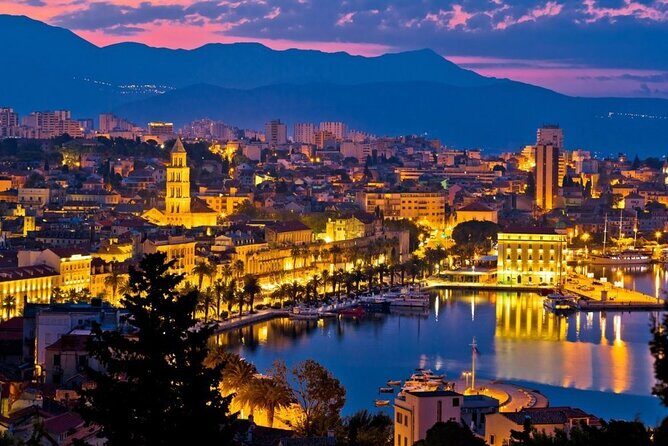
Next comes the heart of the Roman story: the Diocletian Palace. This is one of the best-preserved Roman palace complexes anywhere. That claim matters because you don’t just see a few columns and call it history. You walk through a plan that was designed with real military and imperial logic.
The palace is described as a blend: a luxury villa and a Roman military camp (castrum). It’s divided into four parts, with two main streets cutting through the layout. One side related to the emperor’s ceremonial and living space, while the other supported the guard and all the practical needs—servants, storage, and more.
The size is huge: roughly 215 x 180 meters, with four large towers at the corners. Doors exist on each of the four sides, and the walls carry smaller towers. When a site is that intact, it helps you understand why Split’s modern city grew around it rather than replacing it.
A drawback to know: Diocletian’s Palace looks easy from afar. Up close, it can be busy and full of tour traffic at peak times. This is where the private format helps—your guide can steer you through the moments that feel less hectic and give you time to compose shots.
The Vestibulum: Acoustics, Mosaics, and a Surprise Domestic Past

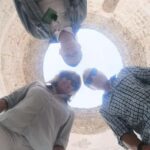
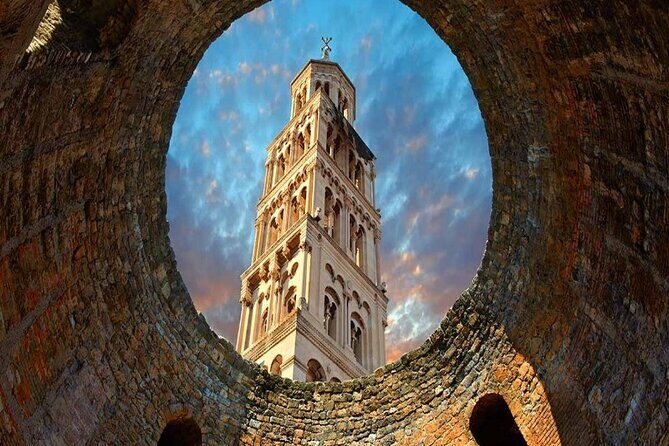
From the palace outside shape (rectangular) to the inside feeling (circular), the Vestibulum stands out. Even today it leaves a strong impression, partly because of the mix of forms—semicircular niches and statues, plus a big cupola featuring colorful mosaic work.
There’s also a detail that makes this place more than a museum piece. Not long ago (in historical terms), it wasn’t only ceremonial space. It was reportedly used for living, including raising poultry and cultivating gardens. That shift is the kind of thing that makes your photos feel alive, not just old.
And then there’s the acoustics. The Vestibulum is appreciated for its sound. If you hear a group sing traditional Dalmatian a cappella songs, the architecture does the heavy lifting for the sound. Even without a performance, you’ll still notice why people say it’s memorable—curved stone interiors can turn voices into something that feels bigger than the room.
This stop is quick—about 10 minutes—but it’s a great “mental reset.” You go from broad Roman architecture to a more intimate, human-scale space.
Saint Domnius Cathedral and the Mausoleum-to-Cathedral Story
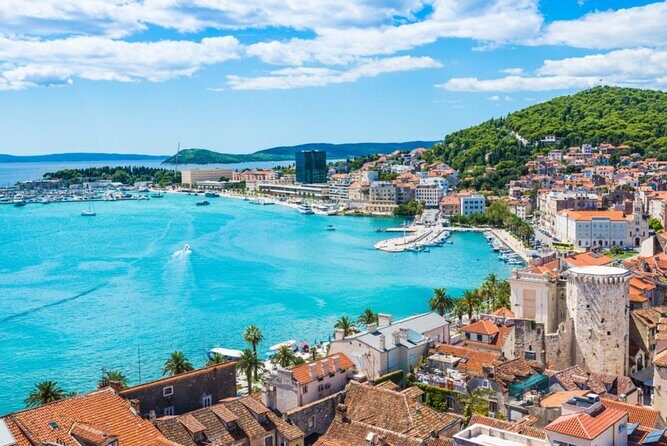
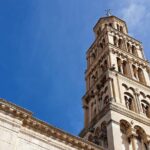
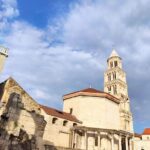
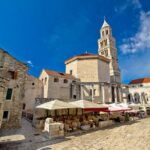
After the palace spaces, you land at the Cathedral of Saint Domnius. This is housed in the oldest building in Split’s cathedral complex: the mausoleum of Roman Emperor Diocletian.
Here’s the big historical pivot you’ll want to understand as you enter: the mausoleum originally connected to pagan imperial power. In the 7th century it became a cathedral. Over time, the space carried layered heritage: ancient pagan roots, medieval Christian worship, and modern liturgy all in the same footprint.
Inside, altars with relics of St Domnius and St Anastasius are part of the story. There’s also continuity you can feel through how the cathedral is used today, including liturgy and the renewed splendor of procession traditions tied to St Domnius’s day (Split’s patron saint day).
One very practical detail for your visit: the cathedral complex includes the Temple of Jupiter and the Crypt of St Lucy, and admission is listed as 25 Croatian kuna (about 3.5 euros). Since your tour pricing notes admission in a slightly mixed way, I’d treat this as a pay-on-arrival expectation unless your confirmation clearly states otherwise.
Photo tip: cathedrals can be tricky for lighting. You’re better off shooting steady, not chasing every angle. Let your guide point you to the strongest doors and interior moments instead.
You can also read our reviews of more private tours in Split


Gregory of Nin: The Statue, the Language Fight, and the Famous Toe
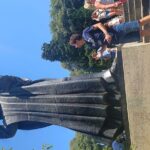
Outside the Golden Gate—one of the principal Roman gates into Diocletian’s Palace—you’ll find the statue of Gregory of Nin.
Gregory of Nin was a medieval bishop known for clashing with the Catholic church in Rome over language. The key point: he pushed for Catholic services to be in the national Croatian language so people could understand what was being said, instead of Latin.
The statue was crafted by Ivan Meštrović in 1929 to mark one thousand years since Gregory historically defended Croatian culture. And yes, there’s a ritual: rubbing the big toe is said to grant you your wish.
Is it superstition? Sure. But it’s also a fun way to anchor a political and cultural story in a single physical gesture. For photos, it also helps you get a quick “foreground action” shot without needing complicated camera setups.
If you don’t want the toe-rub crowd moment, you can still photograph the statue cleanly—just step slightly to the side for angles that don’t look like a foot close-up.
Pjaca (Narodni Trg) and Fruit’s Square: Squares Where Split Still Lives

Split’s squares aren’t frozen in time. They’re active social spaces. This tour uses that fact instead of treating squares like empty scenic stops.
At Pjaca—also called People’s Square—you’ll see how the place grew beyond the palace. It’s first mentioned in the 13th century as St. Lawrence’s Square, and it became the first inhabited area outside Diocletian’s Palace on the western side.
The Old Town Hall building there has Gothic roots and functions today as an exhibition center. You’ll also learn that the noble families who lived around the square—like Cambi, Pavlović, Nakić, Ciprianis, and others—helped shape what the area became. Today, Pjaca is packed with bars, restaurants, and shops. It’s one of the main tourist gathering points, but it still reads like a place locals use.
Fruit’s Square (Trg Brace Radic) keeps the story moving. Even though it’s smaller, it’s full of landmarks:
- An octagonal Venetian tower, leftover from a 15th-century fortress built for defense.
- The Milesi palace, a 17th-century building with a spectacular Baroque facade that stands out in Dalmatia.
- A monument to Marko Marulić, an important Split citizen and Croatian literature figure, created by sculptor Ivan Meštrović.
These stops are good for photography because squares give you a lot of lines for framing—arches, facades, and towers. They also help you diversify your shots beyond Roman stone.
Prokurative: A Venetian-Style Finish West of Riva

To wrap the walking portion, you reach Prokurative (Republic Square). The name and feel are tied to Venice. The square resembles St. Mark’s Square in layout and mood, and it’s surrounded by neo-Renaissance buildings with arches.
The colonnade feel here is deliberate. The project is connected to Antonio Bajamonti, a renowned mayor in the mid-19th century. He aimed to show Split’s Italian tradition through architecture: the Venetian-like arches and the relief details above windows.
There was also a major theatre planned by Bajamonti, but it was destroyed by fire. Even with that history, the square still works as a cultural stage. It’s a common event spot, especially around pop music festivals, and it’s also full of bars and restaurants where locals hang out.
This final stop matters because it gives you a contrast. You finish with 1800s-era city planning and daily life energy—not more ancient ruins. Then you get to continue your day on your terms.
Photo Session with Ivan Gudić: More Than Snapshots
The standout added value here is the presence of a private professional lifestyle photographer: Ivan Gudić. That’s what separates this from the usual walking tour where you’re left to hope your friends can take a good shot.
With a pro involved, expect the photo work to be integrated with what you’re seeing. In other words, you should spend less time figuring out angles and more time getting photos that match the city’s architecture and your body position relative to it.
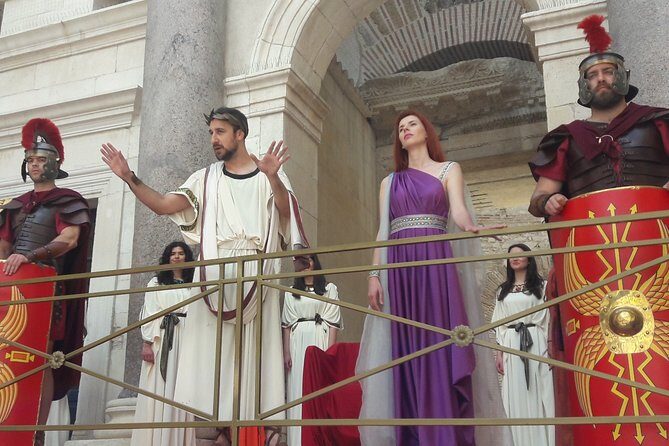
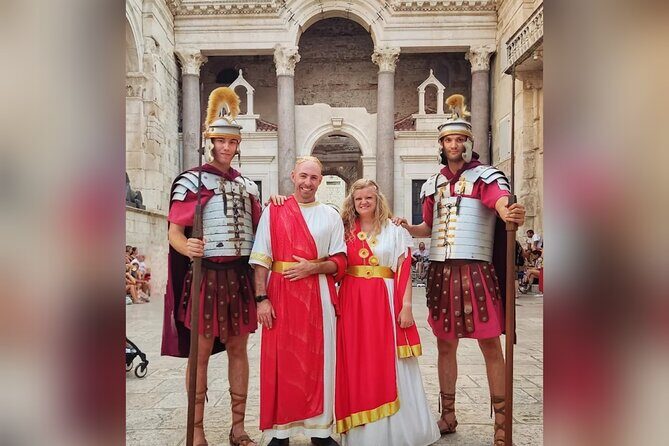
One fun possibility you might see at the end: Roman-style photo sets with outfits. That idea shows up as part of how the experience can be made playful, and it fits the theme of Diocletian’s world perfectly. If that’s available during your time slot, it can turn a good photo into a memorable one.
Even if costumes aren’t part of your session, you’ll still benefit from guidance on where to stand, how to frame stone details, and how to avoid the common tourist problem: shooting too wide when the story is in the textures.
Price and Value: When $300.73 Per Person Makes Sense
Let’s talk money. At $300.73 per person, you’re paying for three things at once:
- A private guide service for about 2.5 hours.
- A private professional photographer (not a free bonus).
- A structured route that covers major Split highlights efficiently.
If you love photography, this price can feel easier to justify because you’re not just buying a walk—you’re buying help turning the walk into better images. And because the tour is private, you’re not splitting attention across a large group, which helps both your questions and your photos.
Where the price may feel steep is if you’re the kind of traveler who prefers to wander solo with minimal structure. Also, if you only want one or two iconic sites, a tour like this covers a lot of ground in a short time. It’s designed for first-time orientation and photo-friendly sight stops, not deep off-the-beaten-path exploration.
My practical take: book this when you want your first day in Split to do double duty—learning the main story and getting photos that look like you planned them.
Should You Book This Private Split Photo Walking Tour?
Book it if:
- You want an efficient first-pass Split highlights route in about 2.5 hours.
- You care about photos and want professional help from Ivan Gudić.
- You prefer a private pace where your questions and stops matter.
Skip it if:
- You’re traveling on a tight budget and don’t want to pay premium for photography and privacy.
- You’d rather do a long, slow, unscheduled walk and treat the day as pure wandering.
If you’re on the fence, think about your goal. If your goal is Roman Split with better photos and an easy orientation start, this is a strong fit.
FAQ
How long is the Private Split Walking Tour with a Photo Session?
It lasts about 2 hours 30 minutes.
Is this tour private or shared with other groups?
It’s private. Only your group participates.
What language is the guide?
The tour is offered in English.
Where do we meet, and do we end there too?
The meeting point is Obala Hrvatskog narodnog preporoda, 21000 Split, Croatia, and the tour ends back at the meeting point.
Is admission to Saint Domnius Cathedral included?
Admission for the Cathedral of Saint Domnius, the Temple of Jupiter, and the Crypt of Saint Lucy is not included, listed at 25 Croatian kuna (about 3.5 euros).
Who is the photographer, and is the photo session included?
A private professional lifestyle photographer, Ivan Gudić, is included as part of the experience.