REVIEW · HISTORICAL TOURS
History Split Walking Tour in French -Small group
Book on Viator →Operated by Ancient Tours · Bookable on Viator
Diocletian’s palace is built for power. I love the French guide narration that turns stone into a story you can actually follow, and I love the small-group feel that makes it easy to ask questions. One catch: this is not ideal if you struggle with high steps, since the palace areas can involve uneven ground and stairs.
This is a smart way to get your bearings in Split fast. In about 1 hour 30 minutes, you’ll hit the main architectural anchors—peristyle, entrances, and underground passageways—then connect them to the later city layers that grew around the palace.
You should also know this is a walking tour with some standing and close-up viewing. Expect a bit more time than the posted duration at times, depending on questions and how the guide paces the explanations, and wear shoes you trust on stone.
In This Review
- Key Highlights Worth Planning For
- Start at the Peristyle: The Palace’s Central Crossroads
- Vestibulum Stop: Where Emperor History Meets Local Sound
- Substructures Walk-Through: Learning the Palace’s Hidden Engine
- Golden Gate and Gregory of Nin: A Name That Matters
- Riva Harbor and the Bronze Palace Model: From Empire to Promenade
- Fruit’s Square (Trg Brace Radic): Venetian Layering and Marko Marulić
- The Split Synagogue: What You’ll Learn, and What’s Not Included
- Timing, Walking Pace, and Small-Group Reality
- Price and Value: What $69.14 Really Buys
- Practical Tips for a Better Walk in Split
- Who Should Book This French Split Walking Tour
- Should You Book It?
- FAQ
- What language is the tour in?
- How long is the Split walking tour?
- How much does it cost?
- How many people are in the group?
- Where does the tour start?
- Is a mobile ticket included?
- Are there any entry tickets included?
- Does the tour include the synagogue?
- Is gratuity included in the price?
- Is the tour suitable for everyone with mobility issues?
Key Highlights Worth Planning For

- Diocletian’s Palace orientation first: the peristyle is your map in stone.
- Storytelling with named landmarks: Gregory of Nin, Marko Marulić, and the Venetian layer show up in plain language.
- Substructures explained, museum skipped: you learn how the underground space worked without being forced into extra entry.
- Riva Harbor tied to the palace model: you’ll connect today’s promenade to the empire-era setting.
- French language throughout: guides run the tour in French, and many explanations are built for Q&A.
- Synagogue stop is a pass-by: you’ll learn about the Jewish presence in Split, but admission isn’t included.
Start at the Peristyle: The Palace’s Central Crossroads
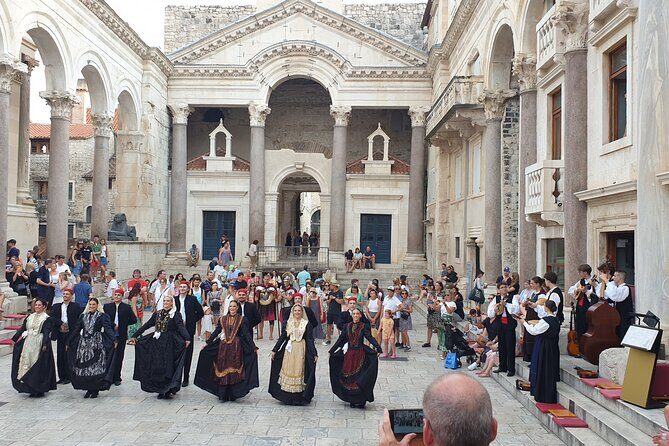
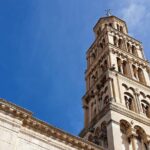
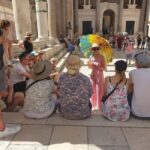
Your tour kicks off at the Peristyle—the central square inside Diocletian’s Palace. Think of it as the place where everything “clicks” because from here you can reach many of the other key areas. The guide uses this spot to explain what you’re looking at and why it was designed that way.
What I like about starting here is that it prevents the classic Split problem: walking around and realizing you saw beautiful architecture, but you never learned how the palace was laid out. With the peristyle explained early, later stops feel connected instead of random.
You can also read our reviews of more walking tours in Split

Vestibulum Stop: Where Emperor History Meets Local Sound
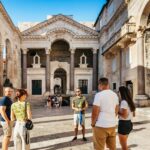
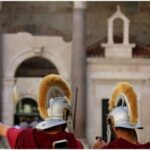
Next you’ll stand at the Vestibulum, the palace’s vestibule area tied to Emperor Diocletian. This is a short stop, but it matters because it sets context for how power was staged—thresholds, entrances, and “arrival” spaces were part of the messaging, not just decoration.
You might also get something extra: the guide can reference traditional Dalmatian singing that belongs to the broader regional culture. Even if it’s not performed in every moment, the idea is the same—this city isn’t only Roman; it’s Roman plus Dalmatian, layered over centuries.
Substructures Walk-Through: Learning the Palace’s Hidden Engine
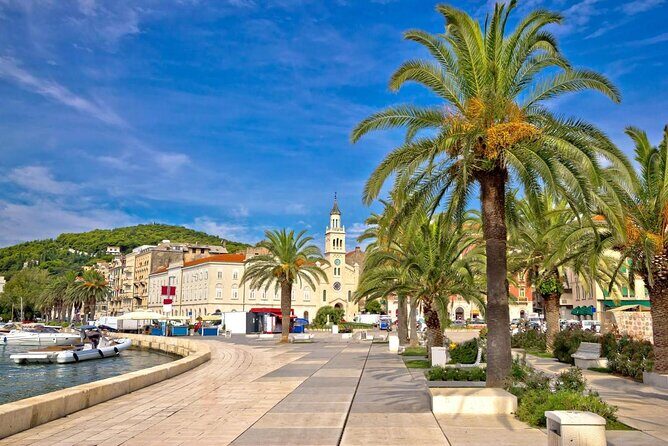
Then you’ll move into the Diocletian Palace substructures—the underground/behind-the-scenes spaces that helped the palace function. This part is especially good if you like practical questions like: Who did what here, and what was the space actually for?
The tour is designed so you go through the substructures to understand their role over time, but you won’t be routed into the museum portion as part of this experience. That’s a smart tradeoff if you want the story plus the atmosphere without adding another entry decision mid-tour.
One more practical thought: this is where the ground and movement can be more uneven. If you’re sensitive to steps, take it slow and stay aware of footing.
Golden Gate and Gregory of Nin: A Name That Matters
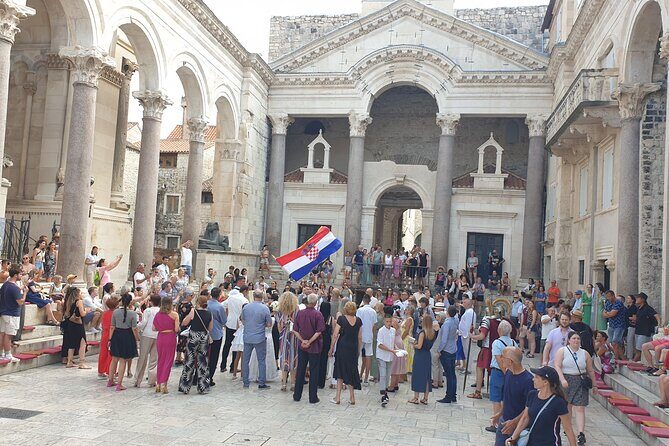
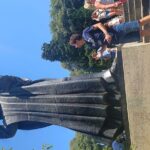
At the Golden Gate, you’ll get a key palace entrance lesson and a very specific historical spotlight: the statue of Gregory of Nin. The guide uses this landmark to explain why Gregory mattered and how his influence connects to local history and language.
This is one of those stops where the architecture is only half the point. The other half is cultural memory—why certain figures survive as symbols, and how a city teaches you who it believes it is.
If you’re the kind of person who loves when a tour doesn’t just point at buildings, this stop is where you’ll feel the payoff.
Riva Harbor and the Bronze Palace Model: From Empire to Promenade
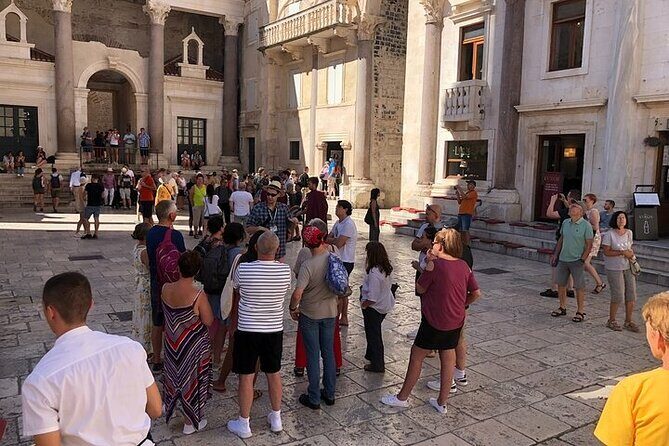
After the palace core, the tour heads toward Riva Harbor, where you can see a bronze model of Diocletian’s Palace. That model is useful because it translates the palace from “I saw parts of it” into “I can picture it as a full system.”
You’ll also learn how the Riva promenade became such an important part of Split’s waterfront life. The contrast works well: you’re moving from the controlled Roman/imperial space to a public-facing city shoreline that locals use every day.
If your time in Split is tight, this stop helps you stop thinking only in monuments and start thinking in daily urban space.
You can also read our reviews of more historical tours in Split


Fruit’s Square (Trg Brace Radic): Venetian Layering and Marko Marulić
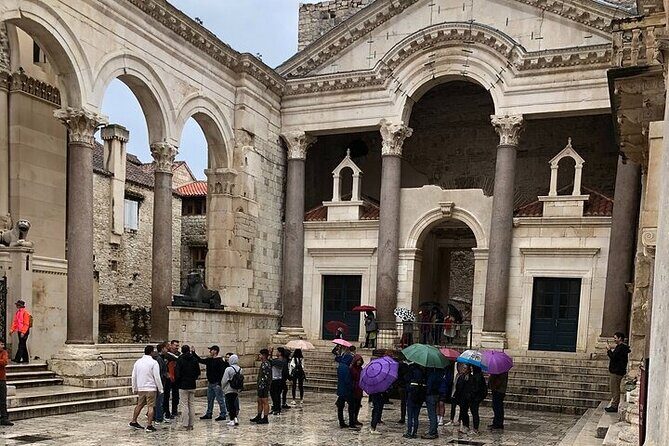
Next is Fruit’s Square (Trg Brace Radic), a place where the city’s layers show up fast. You’ll hear about a Venetian citadel tied to the area from centuries ago, which helps explain why Split doesn’t feel like one single era frozen in place.
Then the guide connects the square to Marko Marulić, described as the father of Croatian literature. Even if you don’t read Croatian literature on vacation, it’s still a valuable cultural anchor. It gives you a human thread—an idea of who shaped language and learning—not just who ruled buildings.
This is also a nice breather spot. You can look around, reorient your route, and let the stories “stick” before the final stop.
The Split Synagogue: What You’ll Learn, and What’s Not Included
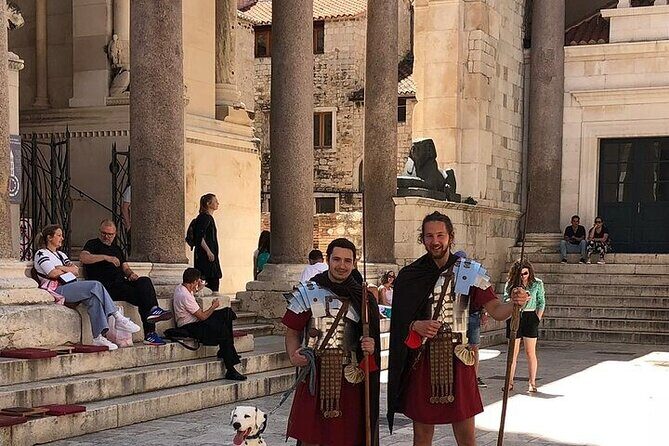
The tour then includes a pass-by of the Split Synagogue from the 16th century. You’ll learn about the history of the Jewish community in Split, which adds an essential layer to the city story. Split’s old center is crowded with Roman and Venetian references; learning the Jewish presence helps round out the whole picture.
Important detail: the synagogue entry is not included, so you’re not being sold extra time inside as part of this walking circuit. If you want to see more inside, you’ll need to plan that separately.
This “pass-by” format is good for keeping the tour moving and keeping costs predictable.
Timing, Walking Pace, and Small-Group Reality
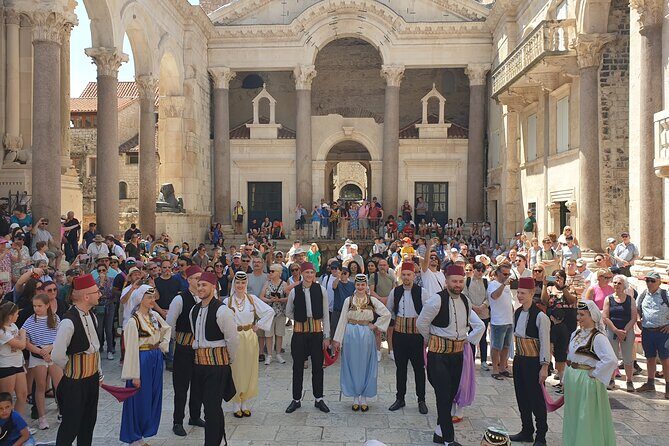
The duration is listed at about 1 hour 30 minutes, but in practice it can stretch a bit if the guide answers lots of questions. That’s often a sign you’re getting a lively explanation, not a rushed checklist.
Your group size is capped at 30 travelers, which usually keeps the pace reasonable and the guide’s attention more focused. One of the best parts of small-group tours is how they handle questions: you can ask something that’s only half-formed and the guide can still connect it to what you’re seeing.
If you’re traveling with family, this format can work because the guide typically explains the story in a way that fits different attention spans. Short stops plus clear points help kids and adults stay with it.
Price and Value: What $69.14 Really Buys
At $69.14 per person, this tour doesn’t feel like a bargain in the “cheap” sense. But it does look like solid value when you match it to what’s included: a guided walk focused on Diocletian’s Palace highlights, plus a circuit through key old-city points.
A big value factor here is that the major palace viewing stops are marked as ticket-free within the experience. The synagogue stop is the exception (not included), so you aren’t paying for everything blindly. Add the mobile ticket convenience and the small-group cap, and the price starts to make more sense.
Also, group discounts are part of the offering. If you’re traveling with friends or family, you’ll likely appreciate that flexibility rather than having to pay “solo prices” across the board.
Practical Tips for a Better Walk in Split
This is a palace-and-old-town walk, so plan for stone surfaces and frequent looking up. Here are the small things that make the experience easier:
- Wear comfortable shoes with good grip; the palace areas can be slick or uneven.
- If steps are an issue for you, you’ll want to reconsider this tour. It’s explicitly not recommended for travelers who have issues with high steps.
- If you’re doing this early in your day, it helps you navigate the rest of Split with more confidence.
- If you enjoy Q&A, arrive a few minutes early so you’re not rushing when the tour starts.
Who Should Book This French Split Walking Tour
You’ll probably love this tour if you want more than photos. It’s ideal when you like architecture explained with context—who Diocletian was, how the palace worked, and how later Split layers grew around it.
It’s also a good choice if:
- You’re comfortable walking for around 90 minutes (plus potential extra time).
- You want the major highlights without trying to plan every detail yourself.
- You want the tour in French and enjoy story-based guiding rather than silent wandering.
You might skip it if you have mobility concerns around steps, or if you only want a very light, stop-and-look version of old-town sightseeing.
Should You Book It?
I’d book this if you’re excited by Diocletian’s Palace and you want a guided path that turns the site into a story. The format is built for orientation: start at the peristyle, learn entrances and underground function, then connect it to Split’s waterfront and civic squares.
If you’re worried about steps, or you’d rather do a totally flexible self-guided walk, look for an option designed with easier movement. But if you can handle the walking, this is one of the more efficient ways to understand why Split feels like it does.
FAQ
What language is the tour in?
The tour is in French.
How long is the Split walking tour?
It lasts about 1 hour 30 minutes (approx.).
How much does it cost?
The price is $69.14 per person.
How many people are in the group?
The tour has a maximum of 30 travelers.
Where does the tour start?
The meeting point is Peristil ulicaPeristil ul., 21000, Split, Croatia.
Is a mobile ticket included?
Yes, the experience includes a mobile ticket.
Are there any entry tickets included?
Admission is marked as free for the main palace stops, but the Split Synagogue admission is not included.
Does the tour include the synagogue?
You pass by the Split Synagogue, but admission to it is not included.
Is gratuity included in the price?
No. Gratuities are not included.
Is the tour suitable for everyone with mobility issues?
It is not recommended for travelers who have issues with high steps. Service animals are allowed, and it’s near public transportation.