REVIEW · WALKING TOURS
Walking tour of Split with an Art Historian
Book on Viator →Operated by Aspalathos Guided Tours · Bookable on Viator
Diocletian’s palace starts with a fountain. I love how Josipa turns Split into a living timeline, from water in Strossmayer Park to the Roman street grid inside the walls. Two big wins for me: the small-group pacing (max 10) and Josipa’s art-history clarity, linking architecture to the way people lived from Roman times onward.
You’ll also get a lot of classic Split photo moments—Gregory of Nin’s toe, the narrow Let Me Pass (Pusti me da prodjem), and the Peristyle’s monumental space—without needing to buy extra museum tickets. The main drawback to plan around: you don’t enter paid sites (so you’ll see Saint Domnius from the outside, and the substructures aren’t fully explored here), plus there are unavoidable steps in places.
In This Review
- Key highlights if you only read a few lines
- Starting in Strossmayer Park: why Split begins with water
- The palace you can walk through: Diocletian’s gates and Roman street logic
- Gregory of Nin: the toe-rub, the sculptor, and why it sticks
- Golden Gate to Peristyle: learning Cardo and Decumanus the fun way
- Saint Domnius Cathedral: what you see without paying extra
- Let Me Pass (Pusti me da prodjem): the tiny street with big personality
- Vestibulum and the Peristyle photo stops: when the architecture helps you
- The shortcut to the Riva waterfront: substructures without the extra cost
- Riva Harbor and the model at the end: leaving with your bearings
- Price and value: $30.23 for a focused art-historian walk
- Who this walk is for (and who should choose something else)
- Booking tips: timing, language, and what to bring
- Should you book this Split art historian walking tour?
- FAQ
- How long is the Split walking tour with an art historian?
- What language is the tour offered in?
- Is the tour group small?
- Does the tour include entry to the Cathedral of Saint Domnius?
- Are museums or paid sites included during the tour?
- How do I get my ticket?
- Does the tour run in rain or shine?
- Is it pet-friendly, and are service animals allowed?
Key highlights if you only read a few lines
- A tight, well-paced 1 hour 40 minutes to 2 hours that still covers the essential “how Split works” story
- Diocletian’s Palace gates and streets explained in a way you can actually remember
- Gregory of Nin + local folklore beats (including the famous toe-rubbing ritual)
- Let Me Pass (Pusti me da prodjem): the tiny street that explains a big part of Split’s character
- Photo-stop planning so you’re not just stopping, you’re stopping smart
- No paid-site hopping: you’ll get the big visuals, then optional depth later
Starting in Strossmayer Park: why Split begins with water
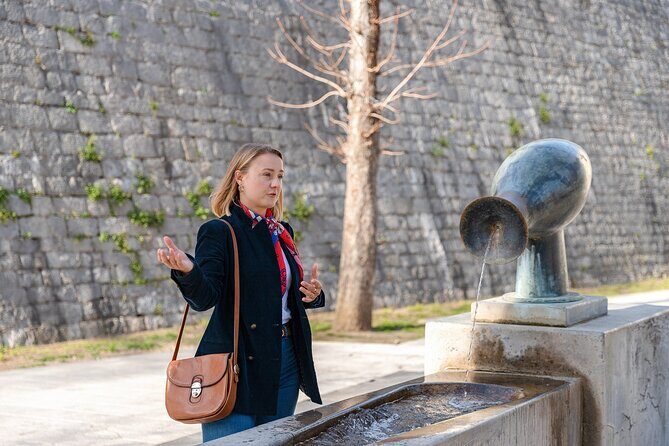
Your walk starts at Strossmayerova Fountain in Strossmayer Park (Đardin), with a meeting point on Ul. kralja Tomislava. This is a great way to begin because water is not just scenery here. Josipa frames it as a life-giver for the palace complex—how the peninsula’s water mattered for a Roman ruler’s “retirement home” and how that legacy shaped what grew around it.
This first segment is also your low-pressure warm-up. You’re meeting near the central fountain, getting oriented, and learning the big picture before the stones start getting complicated. If you’re the type who likes context before you stare at walls, this opener will click fast.
You can also read our reviews of more walking tours in Split
The palace you can walk through: Diocletian’s gates and Roman street logic
After Strossmayer Park, you move into the Diocletian’s Palace story with a stop at Tower 2 of the palace. It might not feel glamorous at first, but it sets up what you’re about to see: a whole city-like structure designed with deliberate Roman planning. Josipa explains how the site works as a system, not a pile of old buildings.
Then you’ll hit the major entrances. The Golden Gate (one of the palace’s key Roman entry points) is the kind of stop where everything suddenly connects. Josipa ties what you’re looking at—gate design, approach routes, and palace layout—to the Roman idea of movement through space. From there, you’ll walk along Cardo, the main Roman street running north to south.
A little later, you’ll come back to the idea of gates with the Iron Gate and the Peristyle area. The Iron Gate is described as the city’s “platinum” gate through history—an affectionate way of saying it mattered far more than its name might suggest. This tour style is smart: it teaches you to notice what people valued, not just what dates something was built.
Finally, you’ll reach the Eastern (Silver) Gate through a short detour from the Peristyle. Even if it’s just a few minutes on foot, it helps you read the palace walls like a map. When you finish, you won’t just remember pretty corners—you’ll know which direction you were facing and why.
Gregory of Nin: the toe-rub, the sculptor, and why it sticks
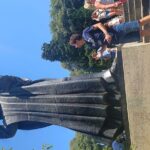
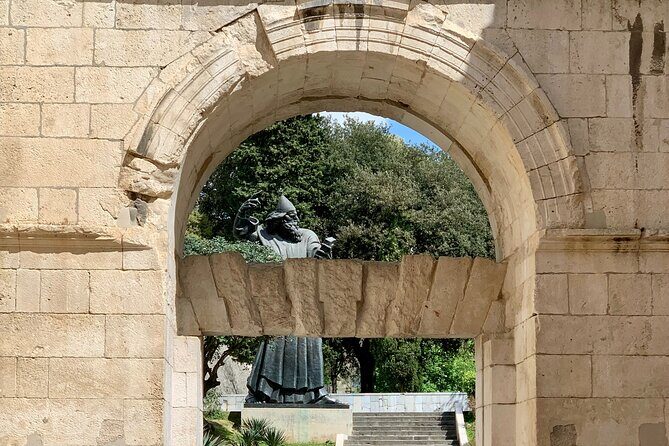
Before entering the palace at the Golden or Northern Gate, you stop at the statue of Grgur Ninski (Gregory of Nin). This isn’t a “look and move on” stop. Josipa gives you the basics and then adds the cultural layer: it’s a 7-meter bronze monument by the Croatian sculptor Ivan Mestrovic, and it became part of everyday popular ritual.
Yes, you can rub the toe for good luck. But the bigger point is why people keep doing it. Josipa explains how certain monuments turn into memory tools for locals—symbols you interact with, not just admire. That’s the difference between seeing a statue and understanding why it’s still alive in the city’s habits.
If you like history that shows up in current life (not just in textbooks), this part lands. It also gives you a natural break in the walking rhythm right before you enter the palace’s most dramatic zones.
Golden Gate to Peristyle: learning Cardo and Decumanus the fun way
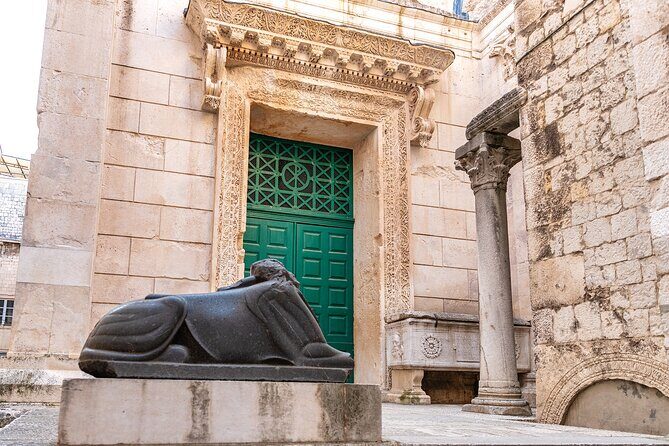
Once inside, you’ll traverse Cardo Maximus—again, that north–south spine that helps explain how Diocletian’s complex functioned. Josipa’s approach is practical: as you walk, she points out how the street direction, gate placements, and palace entrances create a logical flow.
The Peristyle of Diocletian’s Palace is where the scale becomes obvious. This is the monumental centerpiece you’ve probably seen in photos, but on the ground it hits differently. Josipa walks you through the story of its origin and how its history evolved over time. You’re also guided along the Decumanus (the east–west axis), so you start to understand how the architecture frames public space.
One nice bonus: this tour doesn’t treat the palace like a closed museum. It connects the Roman plan to what came later—medieval patterns and the way today’s Split residents live around (and inside) these structures. That’s the key to why this experience feels more useful than a quick stop-and-snap route.
Saint Domnius Cathedral: what you see without paying extra
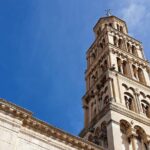
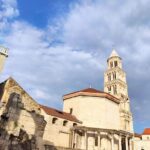
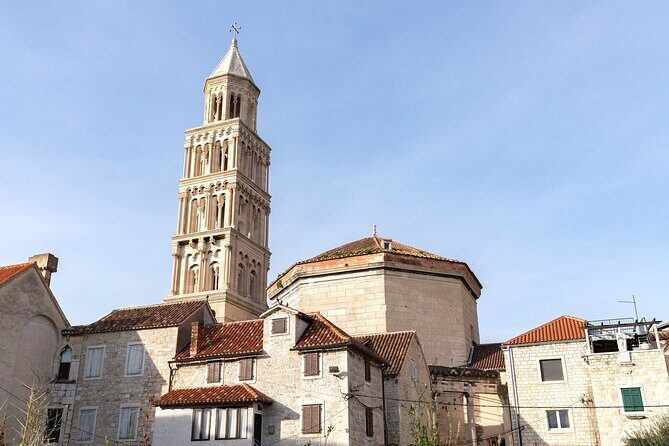
On the Peristyle, you’ll reach the Cathedral of Saint Domnius. Josipa explains the big transformation: it began as the mausoleum of the Roman emperor and became a Christian cathedral later on. This is a powerful story because it shows how buildings can change role without losing their ability to command attention.
Here’s the practical detail: you won’t enter. The tour does not include paid sites or museums, so Saint Domnius is part of the “see it and understand it” category, not the ticketed “walk inside” experience. If you want to go farther afterward, you can decide on your own time—but you’ll leave this tour with the why behind what you’re looking at.
This approach is also part of the value. You get the structure and story while keeping the tour moving on schedule.




Let Me Pass (Pusti me da prodjem): the tiny street with big personality
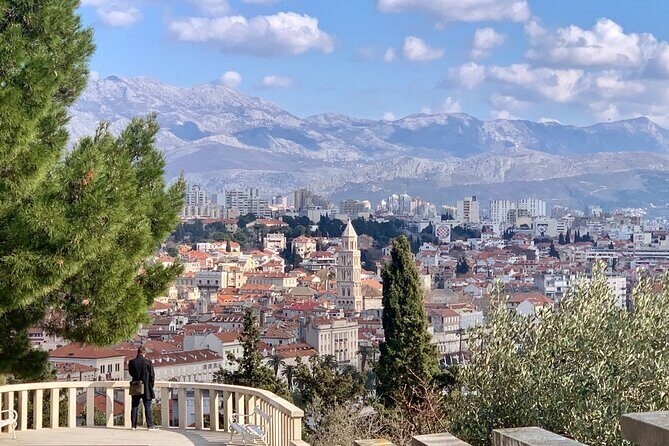
One of the most memorable stops is Let Me Pass (Pusti me da prodjem). It’s under 10 meters long and only 57 centimeters wide, and Josipa’s explanation makes it more than a fun fact. You’ll also learn why this small passage holds special meaning for Split citizens—plus there’s a public monument tied to that memory elsewhere in town.
This is the kind of stop that works in two ways. First, it gives you a quick laugh and a strong visual anchor. Second, it shows how everyday life shapes the city’s folklore. After you’ve seen enough gates and monumental spaces, a tiny street like this reminds you Split is still a working, human-scale city.
If you’re traveling with friends who love odd details, this is the moment they’ll remember later when you’re back at dinner.
Vestibulum and the Peristyle photo stops: when the architecture helps you
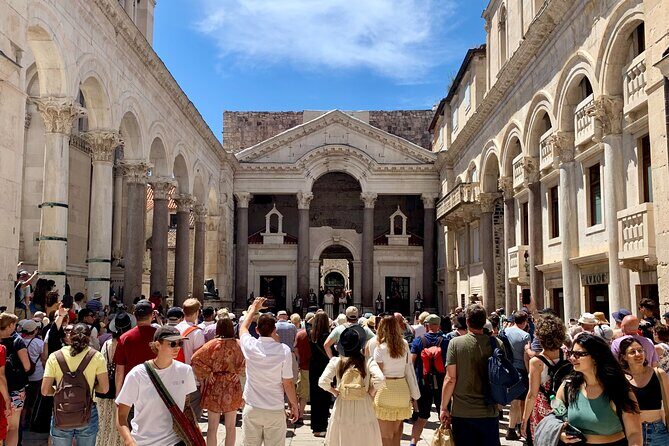
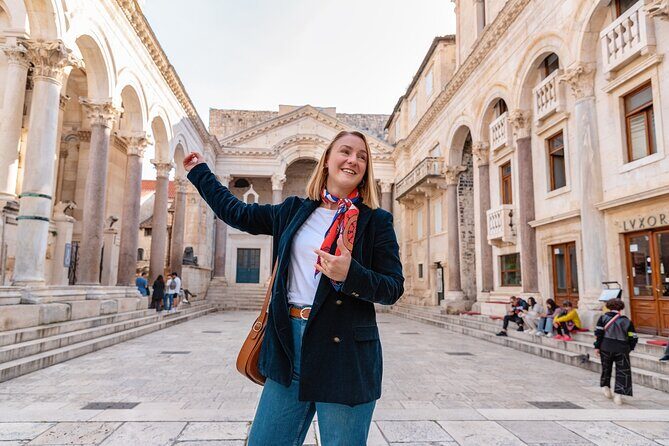
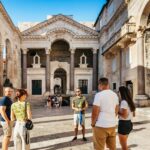
You’ll also pause at the Vestibulum of Diocletian’s Palace. It’s one of the most popular open-air photo spots, and Josipa knows why. The space has an acoustics-and-geometry feel, which is why klapa singing often happens there. Even if you don’t catch a performance, you’ll see why the place invites sound.
This stop is useful even if you’re not chasing photos. Photo spots in old cities are often more than aesthetic. They’re viewpoints that show proportion, sight lines, and how different levels of the palace connect.
If you want to walk away with pictures that look like you actually planned your route, you’ll appreciate this part.
The shortcut to the Riva waterfront: substructures without the extra cost
After the palace’s grand interior zones, you’ll take what’s described as a “shortcut” through the Diocletian Palace substructures to reach the Riva waterfront area. This is a meaningful shift. The atmosphere changes from bright monument-space to quieter, darker, more cavern-like underworld feeling.
Important note: you won’t explore the substructures in their entirety during this walk because full access usually involves additional admission fees and time constraints. But Josipa can point you toward the option for a separate guided visit if you want more depth.
This works well for most people because it gives you a taste of the scale and layout without turning your day into a ticket-queue juggling act.
Riva Harbor and the model at the end: leaving with your bearings
Your final phase brings you to Riva Harbor, a meeting place that doubles as street, promenade, and square. You’ll stroll a portion of it toward the Fruit Square area as part of the wayfinding into the rest of your day.
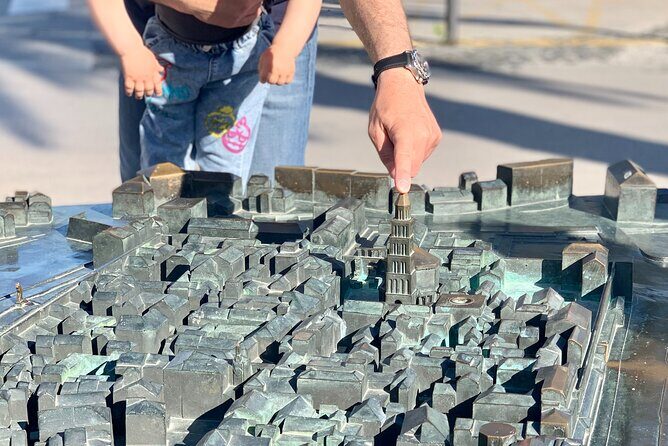
Then you end at the bronze model of Split Old Town near Obala Hrvatskog narodnog preporoda. That ending spot is practical. It helps you map what you just walked, so you can wander afterward without guessing. Josipa will recap and share tips for further exploration, which is especially helpful if this is your first time in town.
If you’re doing other coastal plans later, ending on the Riva waterfront also makes it easy to pivot into a meal or a short water-side walk.
Price and value: $30.23 for a focused art-historian walk
At $30.23 per person for about 1 hour 40 minutes to 2 hours, the price isn’t “cheap,” but it is fair for what you get. You’re paying for more than passing landmarks. You’re paying for someone trained in explaining how architecture and art reflect political power, everyday life, and centuries of reuse.
This is also a money-smart tour structure. Many Split experiences either:
- rush you through key sites with minimal context, or
- pile on paid admissions.
Here, you’re guided through the palace core while staying outside paid-site entry requirements. That means the tour can stay relatively predictable for your budget, and you can decide later what’s worth extra tickets (if anything is).
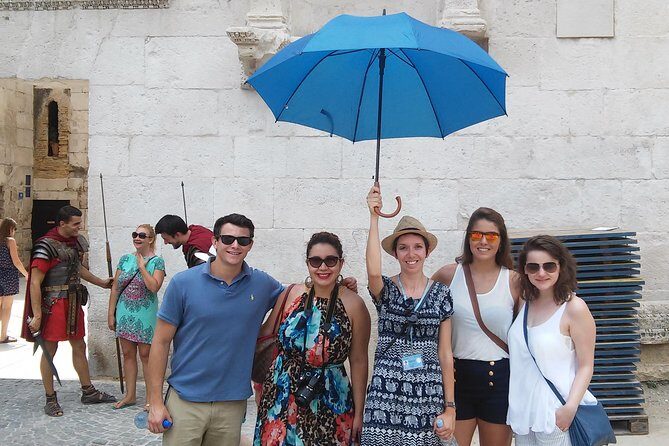
Small group matters too. With a max of 10, you’re more likely to hear answers clearly and ask your own questions when something catches your eye.
Who this walk is for (and who should choose something else)
This tour suits you if you want a clear, art-historian style explanation of Diocletian’s Palace without drowning in ticket lines. I’d also pick it if you like photo stops that have a purpose—like learning why a space looks the way it does, not just grabbing a quick shot.
It’s a good first Split activity, too. You get the “how the city is put together” logic early, so you can spend the rest of your visit wandering with confidence. The pace also sounds flexible in practice, which helps if your group has mixed comfort levels.
The main reason to think twice is the walking effort. The tour includes several unavoidable steps, and some surfaces can be uneven in old-town corners. If you’re limited by mobility, plan carefully.
Booking tips: timing, language, and what to bring
This one gets booked. On average, people reserve it about 25 days in advance, so pick your time soon—especially if you’re traveling in peak season or want a less crowded window.
It runs in English, uses a mobile ticket, and operates rain or shine. So bring sun protection and a water bottle for warmer days, and expect the group to keep moving even if the weather gets dramatic.
Also, look at the start/end points in your plan. You begin at Strossmayerova Fountain and finish at the bronze model near the Riva waterfront. That’s a smooth route for combining the walk with lunch, but you’ll want to plan transit and your meal accordingly.
Should you book this Split art historian walking tour?
Yes, if you want a smart, guided way to understand Diocletian’s Palace as a whole city—Roman design, later Christian repurposing, and modern-day life woven through the stones. Josipa’s style (clear explanations, good pacing, and practical local context) is exactly what turns “I’ve seen pictures” into “I get it now.”
Skip it or compare alternatives if you need inside access to paid sites during the same outing, because this walk does not include entering museums and paid attractions like Saint Domnius. You’ll see the big story outside and then decide later if you want extra ticket time.
If you’re aiming for a first-day orientation, budget-friendly sightseeing, and photo stops with meaning, this is a strong choice for Split.
FAQ
How long is the Split walking tour with an art historian?
The tour lasts about 1 hour 40 minutes to 2 hours.
What language is the tour offered in?
The tour is offered in English.
Is the tour group small?
Yes. It has a maximum group size of 10 travelers.
Does the tour include entry to the Cathedral of Saint Domnius?
No. You do not enter the Cathedral of Saint Domnius because this tour does not include paid-site entry.
Are museums or paid sites included during the tour?
No. The tour does not enter any museums or other paid sites.
How do I get my ticket?
You receive a mobile ticket.
Does the tour run in rain or shine?
Yes. It takes place rain or shine.
Is it pet-friendly, and are service animals allowed?
Service animals are allowed. The tour is also pet-friendly, but you should contact before booking so everyone stays comfortable.