REVIEW · HISTORICAL TOURS
Private History Split Walking Tour in English
Book on Viator →Operated by Ancient Tours · Bookable on Viator
Split’s story is built into the stones. This private English walking tour takes you straight through the most important stops in and around Diocletian’s Palace, then links them to everyday Split life. I especially like how it turns major sights into a clear timeline, and I also like the added stops that go beyond the palace walls to places like Riva Harbor and Fruit’s Square. The main thing to consider is that the walk includes areas where steps may come up, so if you have trouble with higher steps, you’ll want to plan carefully.
What makes it work is the private format. You get an educated guide who can tailor the explanations to your pace, and you’re not stuck listening while others rush ahead. In past tours led by guides like Antonella, the palace felt easier to understand, almost like a time machine. Still, it’s only about 1 hour 30 minutes, so if you want lots of museum time, you’ll likely need to add that on your own after the walk.
If you’re in Split for a short stay, this is a smart way to get your bearings. You’ll finish back at the meeting point in the Peristil area, which makes it easy to keep exploring Old Town right after.
In This Review
- Key highlights you’ll feel right away
- Why Split’s Palace story works best on foot
- Meeting at Peristil: where the tour starts and how it feels
- Stop 1 and 2: Peristyle and Vestibulum of Diocletian’s Palace
- Stop 3: Diocletian Palace substructures (and what you skip)
- Stop 4: The Golden Gate and Gregory of Nin’s statue
- Stop 5: Riva Harbor and the bronze model
- Stop 6: Fruit’s Square (Trg Brace Radic) and Marko Marulić
- Stop 7: Passing the Split Synagogue and Jewish history
- Price and value: why $66.54 can make sense
- What I’d expect from the guide (and why it matters)
- Pacing, steps, and comfort notes for your day plan
- Who should book this private Split history walk
- Should you book this Private History Split Walking Tour?
- FAQ
- Is this tour private or shared?
- How long is the Private History Split Walking Tour?
- What language is the tour offered in?
- Where does the tour start and end?
- Are tickets included for all stops?
- Is the museum inside the Diocletian Palace substructures visited on this tour?
- Does the itinerary include visiting the Split Synagogue inside?
- Can I bring a service animal?
- Is the tour suitable for people with mobility issues?
- What is the cancellation policy?
Key highlights you’ll feel right away
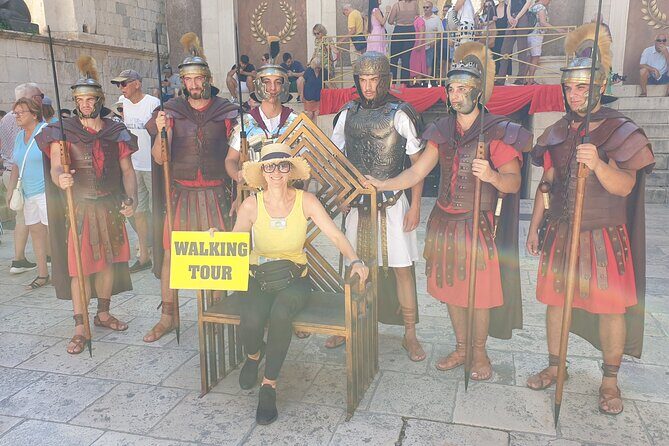
- A private English guide: you’re with only your group, not a mixed crowd
- Diocletian’s Palace core: Peristyle and Vestibulum set the stage fast
- Golden Gate + Gregory of Nin: big visual landmarks, explained clearly
- Riva Harbor model: a bronze model helps you understand the palace-to-promenade connection
- Old Town stops with meaning: Fruit’s Square (Marko Marulić) and the Split Synagogue pass-by
Why Split’s Palace story works best on foot
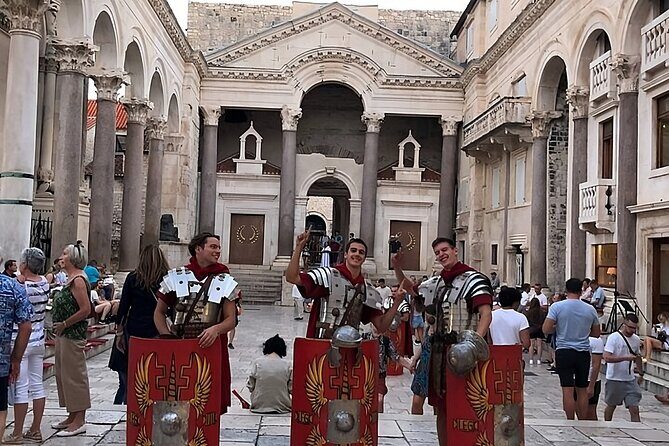
Split looks simple on a map. Reality is different. Diocletian’s Palace isn’t just one sight—it’s an entire layout of spaces, entrances, and underground areas that shaped how the city grew. That’s exactly why this tour stays walking-focused: it links places in the order you’d naturally move through them.
You’ll get a guided route through the palace’s key points first, then step into Old Town context with stops tied to language, culture, and communities. It’s the kind of structure that helps you understand what you’re seeing, not just where it is.
The time window matters too. At around 1 hour 30 minutes, the pace is long enough to explain the big ideas, but short enough that you won’t feel trapped. This is great if you also want to browse cafes, wander streets, or watch the light change around the palace.
You can also read our reviews of more walking tours in Split

Meeting at Peristil: where the tour starts and how it feels
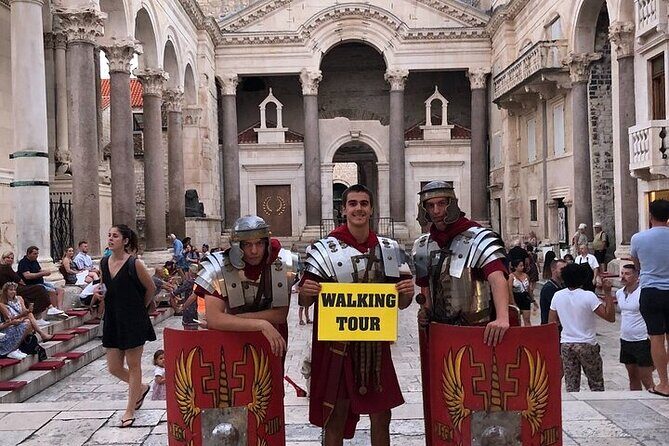
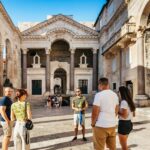
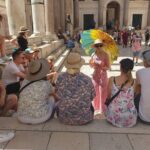
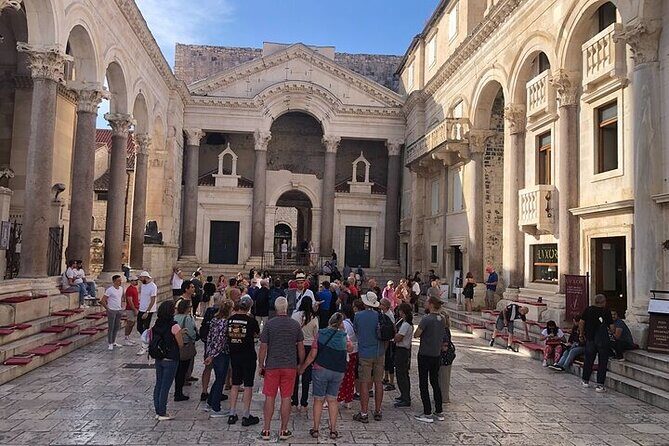
The meeting point is in the Peristil area: Peristil ulica, 21000 Split, Croatia. That location is useful because it’s central to the palace complex, so the tour can start with the palace’s most important “hub” moment and quickly branch out from there.
You should expect a guided walk through multiple locations that are close enough to keep momentum. You’ll also be able to orient yourself afterward, since the tour ends back where it starts. That means you can keep your day moving without needing to retrace steps or figure out new directions.
Also, the tour uses a mobile ticket. That’s one less thing to juggle while you’re trying to enjoy the streets.
Stop 1 and 2: Peristyle and Vestibulum of Diocletian’s Palace
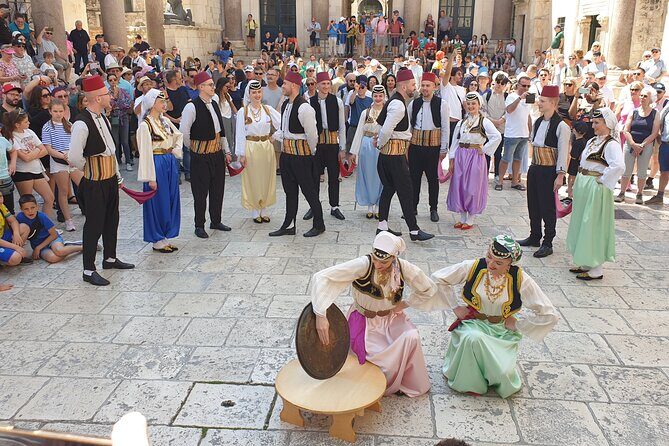
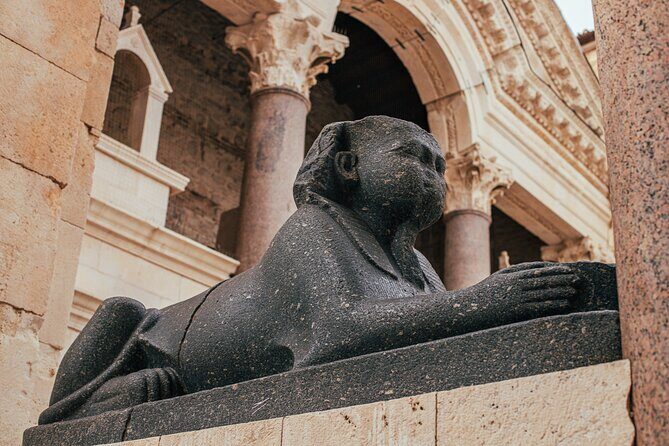
The tour begins at the Peristyle, described as the central square of Diocletian’s Palace. This is where you can get to almost all other locations within the palace complex. In plain terms: it’s the best starting point for understanding the layout.
From there, you move into the Vestibulum, where the guide explains Emperor Diocletian’s presence in the palace world. There’s also a fun chance here—your guide may include traditional Dalmatian singing during this stretch. Even when it’s brief, it changes the feeling of the stop. Instead of reading history from signage, you hear how local tradition can connect to place.
Why these first two stops are strong:
- They build a map in your head before you start walking deeper.
- They set tone: palace architecture becomes a story, not just facts.
Stop 3: Diocletian Palace substructures (and what you skip)
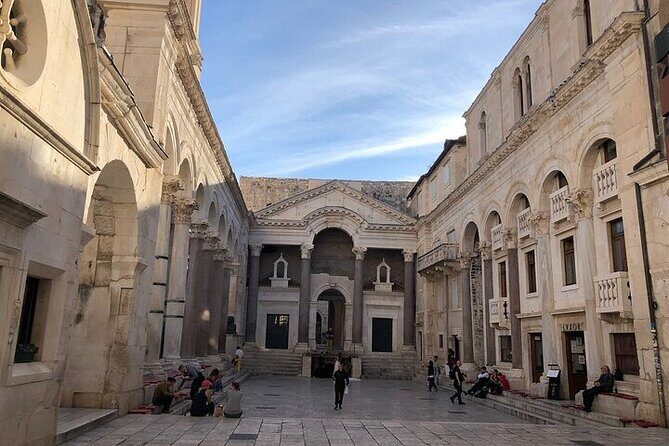
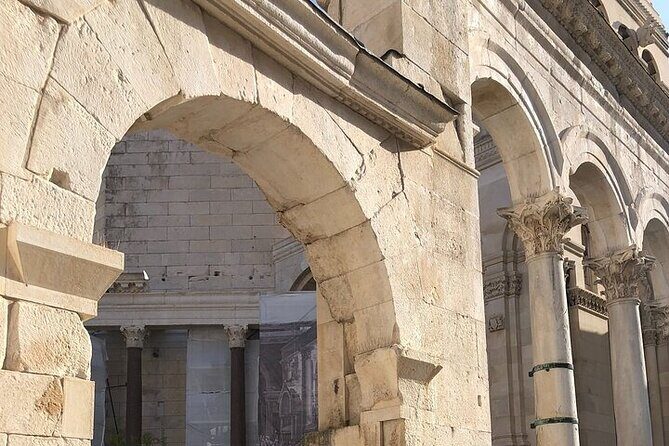
Next come the substructures of Diocletian’s Palace. This is where the tour focuses on construction history and how these spaces served different functions over time.
There’s one important note: you won’t visit the museum part during the tour. That’s actually a good design choice for most people. You get the guided “why it matters” version without losing the main timeline thread to ticket lines, museum wandering, and extra time.
What you should do if you want more:
- Treat the tour as the orientation and explanation layer.
- If the museum area interests you, you can plan to visit it after the walk, when you’ll already understand what you’re looking for.
Potential drawback: if you were hoping for a museum-style inside visit during the 1 hour 30 minutes, this stop is more about guided architecture and function than museum time.
Stop 4: The Golden Gate and Gregory of Nin’s statue
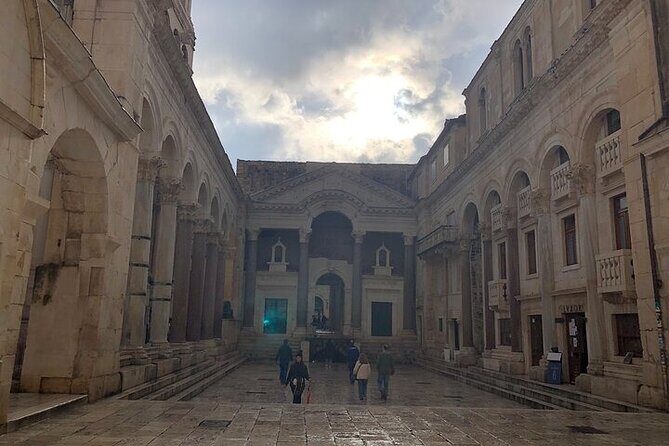
The Golden Gate is the main entrance of Diocletian’s Palace, so it’s a perfect “big moment” midpoint. You’ll learn about the gate and also see the statue of Gregory of Nin, along with the guide’s explanation of why Gregory matters to history and language.
This is one of those spots where the guide’s storytelling makes the difference. Statues can feel like background decoration if no one explains who the person was and why people still talk about them. Here, the tour ties Gregory of Nin to meaning beyond the photo.
Why I think this stop lands well:
- It mixes architecture (the palace entrance) with culture (a person connected to language).
- It gives you a clear anchor for the rest of the walk.
You can also read our reviews of more private tours in Split





Stop 5: Riva Harbor and the bronze model
After the palace-focused sections, the tour moves out toward Riva Harbor—one of the places most people imagine when they picture Split.
Here you’ll see a bronze model of Diocletian’s Palace. That model is a practical teaching tool. When the palace layout is explained piece by piece, a scale model helps you make sense of how the complex fits together in one view.
You’ll also learn about the history of Split’s Riva promenade. Even if you’re not a big “promenade” person, this is useful because it connects the palace’s physical influence to how Split developed into a place people walk, meet, and relax.
Small consideration: this stop is scenic and story-based, but it’s not a long sit-down break. If you want long café time, plan it after.
Stop 6: Fruit’s Square (Trg Brace Radic) and Marko Marulić
Then you’ll move to Fruit’s Square (Trg Brace Radic). This stop ties Split’s palace origins to later layers of city life.
You’ll learn about a Venetian citadel connected to the area and about Marko Marulić, described as the father of Croatian literature. This is where the tour starts showing you that Split isn’t only about one emperor’s palace—it’s about multiple waves of culture, language, and identity.
This is also a smart stop for people who like “one person, one story.” Marko Marulić is an easy thread to follow, and it helps you see Croatian literary history as something that lives in real streets, not only in books.
Stop 7: Passing the Split Synagogue and Jewish history
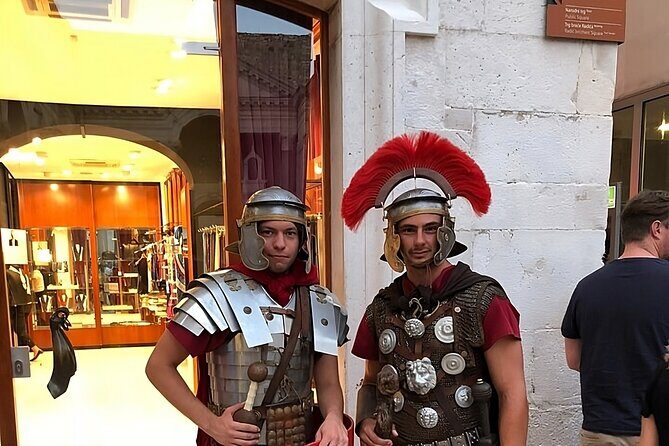
The final palace-to-old-town connection is a pass-by of the Split Synagogue, described as a 16th-century synagogue. The guide shares history about the Jewish people in the city of Split.
Two practical things to know here:
- You’re not going inside during the tour.
- The synagogue admission isn’t included in the walk.
That pass-by approach can be a benefit. It keeps the itinerary moving while still giving you context for why the building matters. If you want to go deeper later, you can treat it as a springboard.
Price and value: why $66.54 can make sense
The tour price is $66.54 per person for about 1 hour 30 minutes in English. At first glance, it might feel like a “premium” walking tour. In practice, the value comes from a few specifics that matter in Split:
- Private format means you’re not sharing the guide with strangers.
- An educated guide is built into the experience, and the route is carefully chosen for a fast, meaningful storyline.
- You get time at several high-impact locations: Peristyle, Vestibulum, substructures, Golden Gate, Riva Harbor, Fruit’s Square, and the synagogue pass-by.
- Mobile ticket and a straightforward route reduce friction when you’re on foot.
Also, there’s group discount mentioned. If you’re traveling with friends or family, splitting the cost can make this price feel much more reasonable.
Compared to piecing together individual tickets and self-guided wandering, this tour saves you the hardest part: turning stones and streets into a coherent explanation.
What I’d expect from the guide (and why it matters)
The biggest praise from people who loved this tour comes down to the guide experience. The language is clear, the pace feels easy, and the explanations connect architecture to real-life meaning.
Some guides bring the palace alive in a way that makes it easier to understand quickly. Antonella, for example, is specifically mentioned for making Diocletian’s Palace feel understandable and engaging, not like a lecture.
One more small but important detail: the tour doesn’t just recite facts. It gives you suggestions for what else to learn and how to keep exploring after the walk, which helps your time in Split feel more like a guided journey than a quick checklist.
Pacing, steps, and comfort notes for your day plan
This is a walking tour, and the itinerary includes multiple locations around the palace complex. The tour notes it is not recommended for travelers who have issues with high steps.
So if you have mobility concerns, don’t guess—plan around the possibility of steps and uneven historic surfaces. On the plus side:
- The tour is near public transportation.
- Service animals are allowed.
- Most travelers can participate.
The good news is that the tour duration is fixed and manageable. You won’t be trapped for hours, and you can adjust the rest of your day based on how you feel once you return to Peristil.
Who should book this private Split history walk
Book this if:
- You want a clear, guided storyline through Diocletian’s Palace and nearby Old Town.
- You prefer private group time over a big group format.
- You like architecture and want context, not just photos.
- You’re interested in cultural connections: Gregory of Nin, Marko Marulić, and Jewish history in Split.
Skip it or think twice if:
- You want a long museum visit during the tour. The substructures museum portion isn’t included.
- You need a low-step, fully flat route.
Should you book this Private History Split Walking Tour?
If you’re spending limited time in Split, I think this is an easy yes. The stops are chosen to give you a full mental picture fast: where the palace “starts,” how entrances and spaces matter, and how the story continues into Riva and Old Town culture.
The private format makes a real difference, especially if you enjoy asking questions or want a calmer pace while learning. With an English-speaking guide and a route that stays focused on major landmarks, you’ll likely leave with the feeling that you can read Split’s Old Town instead of just looking at it.
If you’re comfortable with some steps and want a high-value history walk rather than a long museum day, this is a strong way to kick off your Split exploration.
FAQ
Is this tour private or shared?
It is a private tour/activity, so only your group will participate.
How long is the Private History Split Walking Tour?
It runs for about 1 hour 30 minutes.
What language is the tour offered in?
The tour is offered in English.
Where does the tour start and end?
It starts at Peristil ulica, 21000, Split, Croatia and ends back at the same meeting point.
Are tickets included for all stops?
Some stops have free entry, while the tour notes that certain areas have admission rules. The Diocletian Palace substructures museum part is not included during the tour.
Is the museum inside the Diocletian Palace substructures visited on this tour?
No. The tour goes through the substructures but does not visit the museum part. You can visit it after the tour.
Does the itinerary include visiting the Split Synagogue inside?
The tour notes a pass by the Split Synagogue, and it indicates that admission is not included.
Can I bring a service animal?
Yes, service animals are allowed.
Is the tour suitable for people with mobility issues?
It is not recommended for travelers who have issues with high steps.
What is the cancellation policy?
You can cancel for a full refund up to 24 hours in advance of the experience’s start time. Free cancellation is offered, and cancellations after that window are not refunded.