REVIEW · HISTORICAL TOURS
Split Walking Tour with History Professor
Book on GetYourGuide →Operated by Lanterna · Bookable on GetYourGuide
Split’s streets pack a lot into two hours. This Split walking tour guides you through Diocletian’s Palace and on into medieval and modern Split, with Game of Thrones filming spots, legends, and local life along the way.
I love two things most: Mario’s professor-style delivery keeps the story moving, and the route hits the exact landmarks you want for a first-time understanding of Split. I also like that the pacing gives you short, focused stops, so you’re not stuck in one place too long.
One thing to plan around: this tour is not suitable for wheelchair users, and it’s a walking route, so comfortable shoes matter.
In This Review
- Key highlights worth your attention
- Meeting at the Brass Gate and getting your bearings fast
- Starting at the Riva Harbor model: a shortcut to understanding Split
- Diocletian’s Palace substructures: the quick look that sets the tone
- Peristyle and Vestibul: where the Roman palace starts to feel real
- Saint Domnius Cathedral: landmark status with a real practical note
- Temple of Jupiter: another Roman anchor, with optional admission planning
- The Golden Gate: a quick architectural landmark with big symbolic meaning
- Grgur Ninski Statue and the walk toward real city life
- Marmontova Ulica and Prokurative: you start hearing the city’s later influences
- Fruit’s Square (Trg Brace Radic): the end point that feels like a real break
- Game of Thrones stops that don’t feel like a side quest
- Price and value: why $23 can make sense in Split
- What this tour is best for
- Should you book Split Walking Tour with History Professor Mario?
- FAQ
- Where does the tour start and where do I meet?
- How long is the walking tour?
- Is the tour in English?
- Is this a small-group tour?
- What sights are included, and what admissions are not?
- What should I bring for the tour?
- Is the tour suitable for wheelchair users?
- Can I cancel for a refund?
- Are private tours available?
Key highlights worth your attention
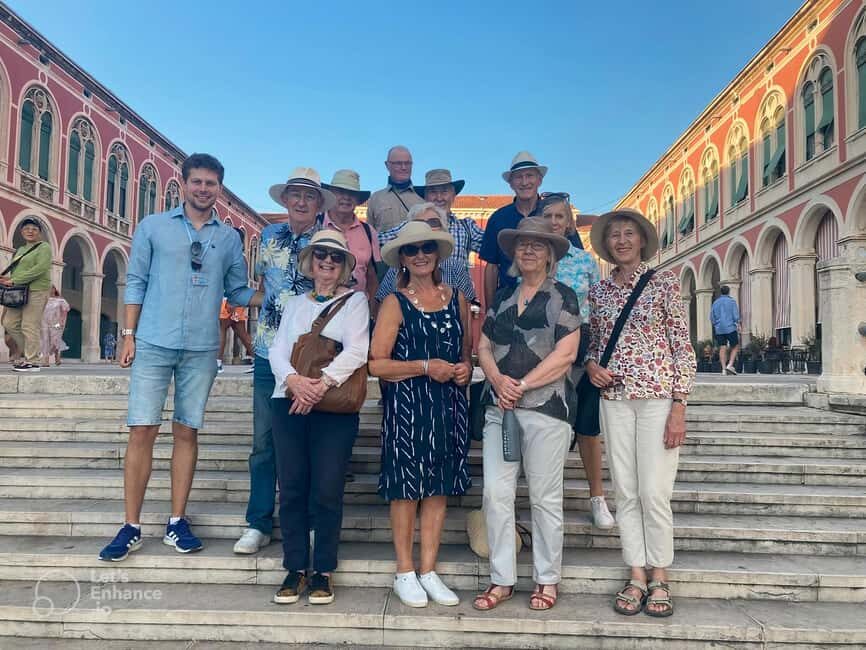
- Professor Mario leads the conversation with clear explanations and lots of engagement, not a lecture you tune out
- Small private groups keep the pace human and the questions possible
- Roman to modern in one loop, moving from Diocletian’s Palace into the city center
- Game of Thrones locations are woven into the history so it feels grounded
- Timed stops at major sites, including Saint Domnius Cathedral and the Golden Gate
- Local legends and everyday Split show up between monuments
Meeting at the Brass Gate and getting your bearings fast
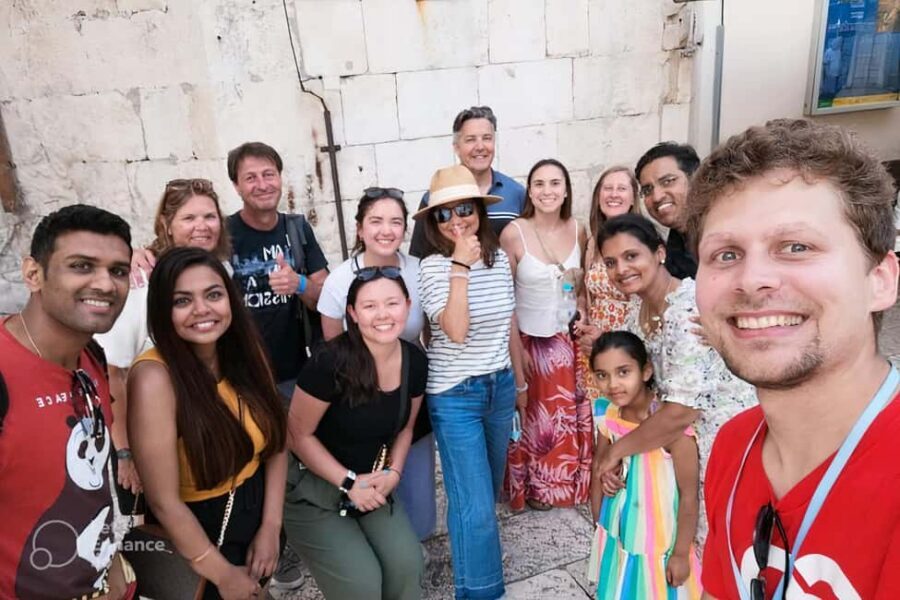
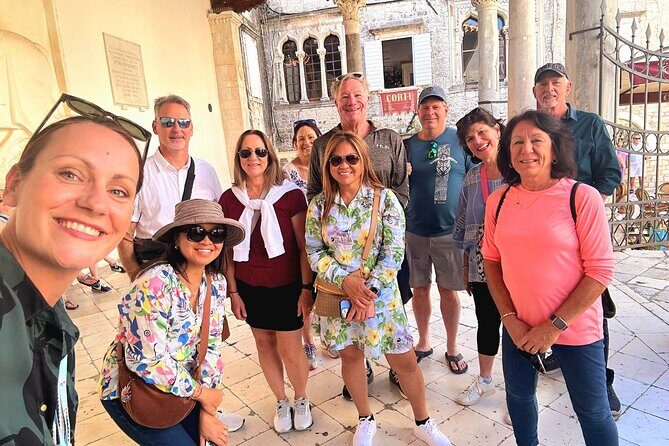
You start at the Brass Gate of Diocletian’s Palace. Mario waits next to it, and that matters, because Split’s old-core streets can feel like a maze when you arrive. The tour then routes you toward the Riva area to set the big picture before you get lost in details.
What I like about this kind of setup is simple: you get context early. The tour is only about two hours on the clock (the highlights describe it as about 2 hours 15 minutes), so wasting time trying to decode the city is a real risk. Here, you get the map in human form and move on quickly.
Also, the vibe is lively. In the best guides, you get history without the dry tone. Mario brings a sense of humour and stays interactive, which makes you remember what you heard because you were part of it, not just listening from the sidelines.
You can also read our reviews of more walking tours in Split

Starting at the Riva Harbor model: a shortcut to understanding Split
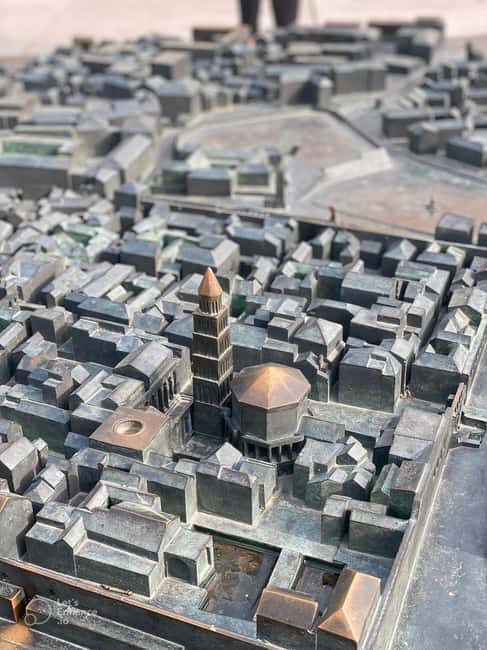
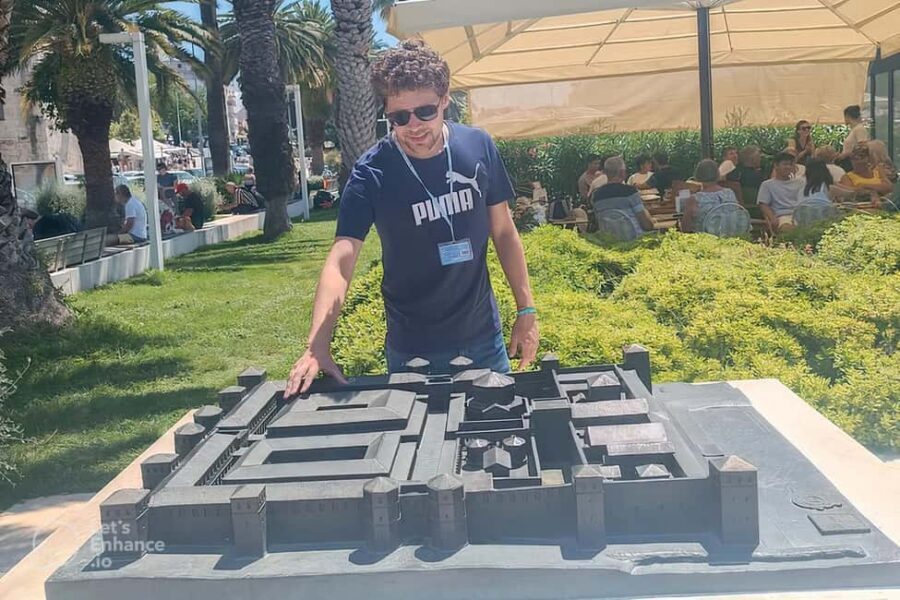
The first stop is the Model of the historical core of the city of Split at Riva Harbor. You get about 10 minutes here. This is where the tour earns its value: instead of only seeing buildings, you learn how the pieces fit together.
Think of it as your cheat code for scale. You’ll see what’s where, then when you walk into Diocletian’s Palace zone, it stops feeling random. The palace isn’t just a famous ruin. It’s a system of spaces, entrances, and transitions, and the model helps you notice those connections later.
You can treat this stop like a warm-up. If you want great photos, you also get your first orientation without hunting around for the right angle.
Diocletian’s Palace substructures: the quick look that sets the tone
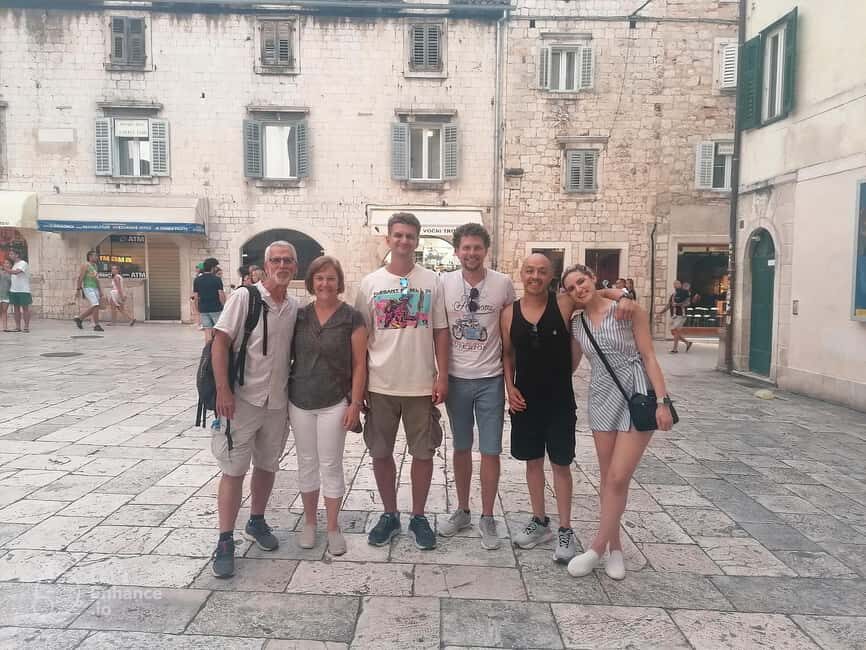
Next is the Diocletian Palace Substructures for about 5 minutes. This stop is short on purpose. You are not meant to wander. You’re meant to understand one key idea: under and around what you see above ground, the Roman palace had its own logic.
The benefit of a tight stop is that it keeps momentum. You’re not sitting through a long explanation while your feet start to complain. Instead, you get the context you need so the next stops feel more meaningful.
If you’re the type who wants museums and long indoor time, you might wish this part lasted longer. But for a two-hour tour, this is a smart use of time.
Peristyle and Vestibul: where the Roman palace starts to feel real
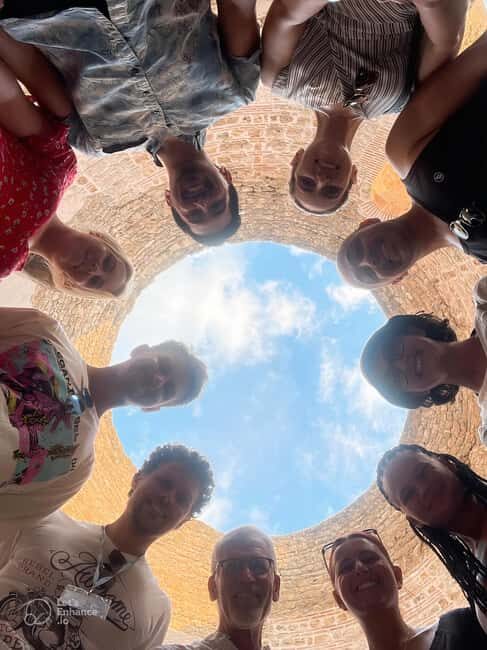
Then you move into the Peristyle (about 10 minutes) and the Vestibul (about 10 minutes). These spaces are the heart of the palace experience. Even if you’re not an architecture nerd, you can feel the shift from streets into a planned, structured environment.
Here’s what makes this stop valuable for you: you learn to read the space. Mario’s approach is practical and story-based, so you’re not just looking at walls. You’re learning what visitors historically would have noticed first—because the palace was designed to be used like a functioning world, not a static monument.
This is also a good stretch of the walk to slow down just enough for details. Expect to stand and listen. Bring the kind of shoes you can stand in without thinking about it every minute.
Saint Domnius Cathedral: landmark status with a real practical note
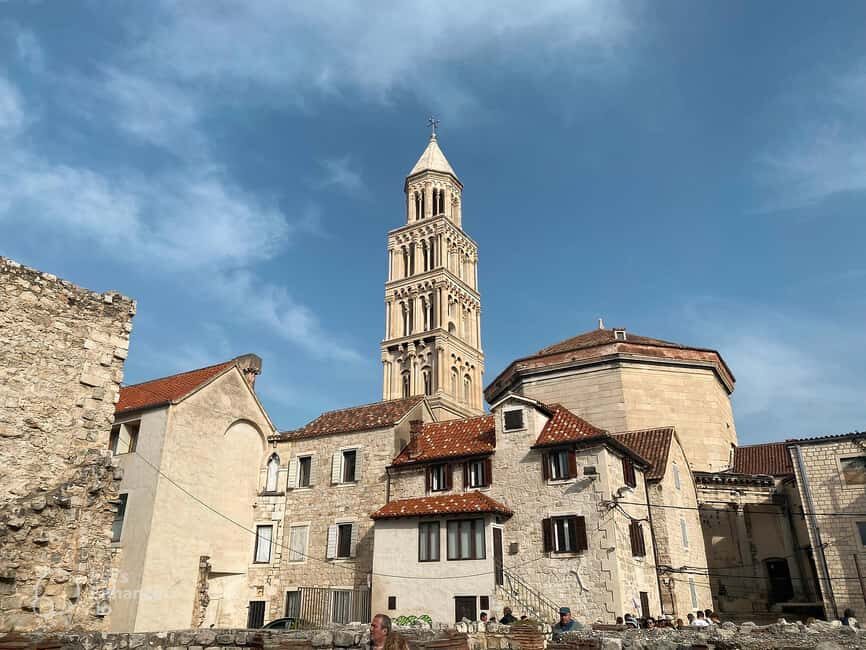
The Cathedral of Saint Domnius gets about 20 minutes, and admission is excluded. That single line changes how you plan your time. You’ll get guided time at the cathedral, but if you want to go inside and pay, you’ll need to budget for the ticket separately.
Why the cathedral belongs in this route: it’s a bridge between the Roman palace world and the later layers of Split. You’re seeing how the city kept evolving rather than freezing in time. This is where history stops being a list and starts being a pattern.
Tip for you: if you think you might want more interior time than you get during the tour, decide ahead of time. The tour gives you a solid guided visit window; it isn’t built to double as a self-paced cathedral session.
You can also read our reviews of more historical tours in Split


Temple of Jupiter: another Roman anchor, with optional admission planning
Next is the Temple of Jupiter for about 10 minutes, and admission is excluded again. This stop complements the cathedral by reinforcing the Roman thread. You get the palace-era atmosphere, then you move forward knowing what kind of space you’re looking at.
Because the admission is not included, you’ll have the kind of choice most people like: listen and look during the guided time, then decide whether paying for access fits your schedule. In a short tour, that flexibility can be a lifesaver.
The Golden Gate: a quick architectural landmark with big symbolic meaning
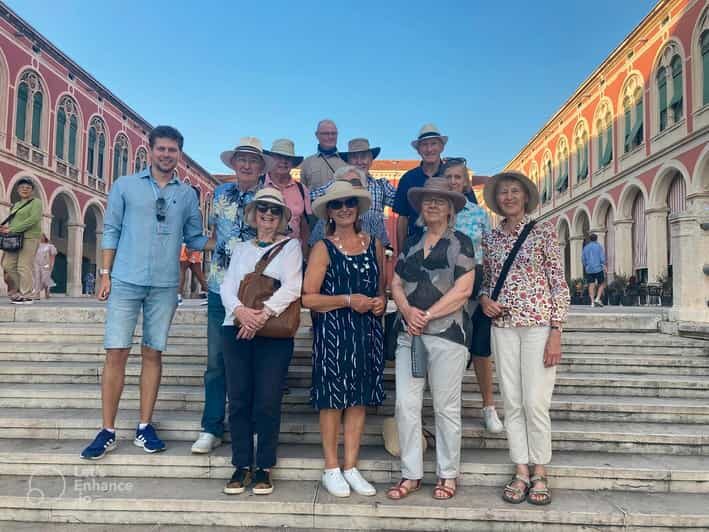
The Golden Gate is next for about 10 minutes. This is a classic “oh, I get it now” moment. Gates are more than entrances. They tell you where power wanted traffic to go, and how people were meant to experience the city.
This is also the kind of stop where Mario’s stories help. If you like history that explains why things were built—not just what they are—this portion is easy to enjoy.
You also get a natural pause before you leave the palace core and shift toward streets and squares.
Grgur Ninski Statue and the walk toward real city life
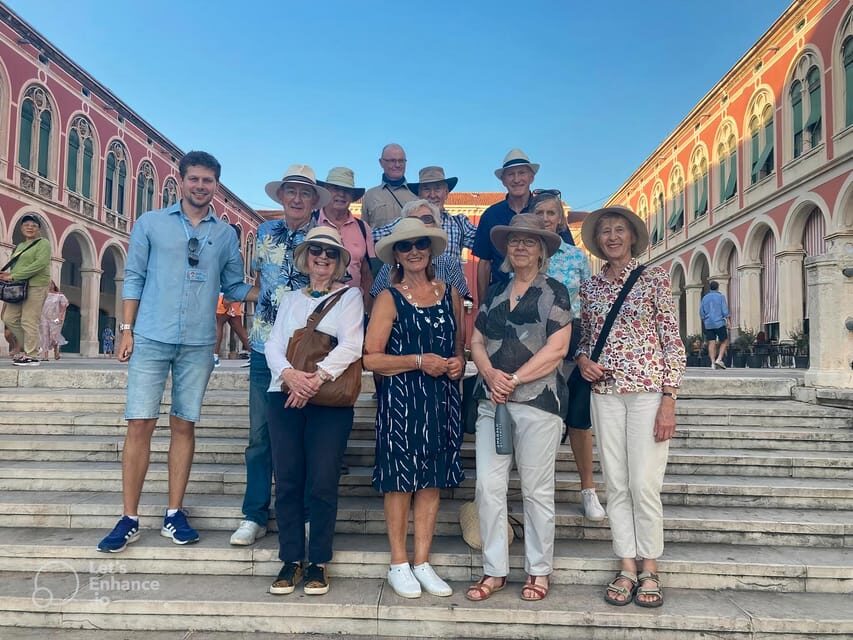
Then you see the Grgur Ninski Statue for about 10 minutes. It works as a visual milestone: you’re no longer only in the palace zone. You’re entering the center where everyday Split happens.
From a practical point of view, this statue stop gives your brain a break. You’ve been processing Roman and sacred spaces. Now you’re in the public, photo-friendly world, where the story can shift from grand architecture to human scale.
This is also a good time to check your bearings. You’ll continue walking toward Marmontova Ulica and Prokurative, so your feet will want a reset.
Marmontova Ulica and Prokurative: you start hearing the city’s later influences
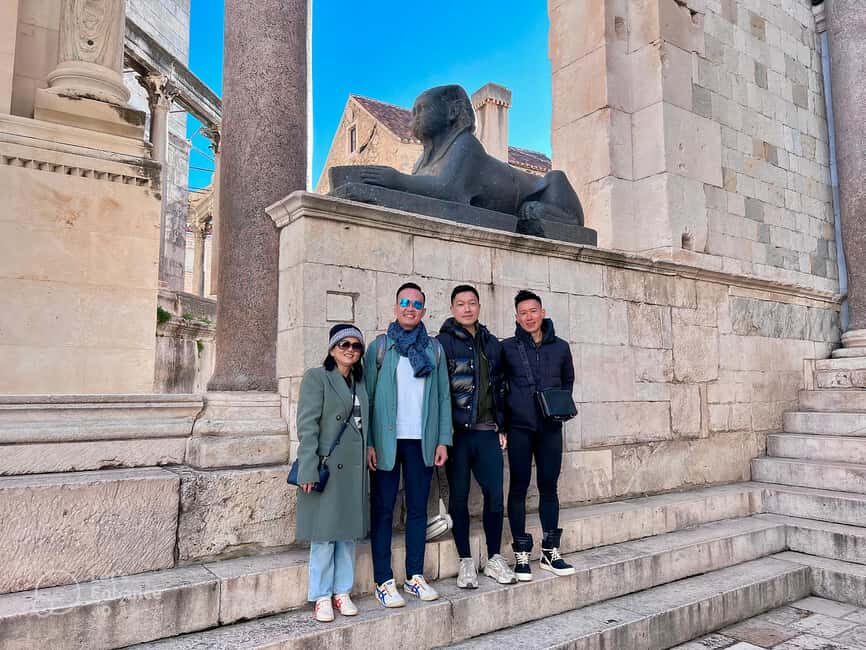
Marmontova Ulica gets about 10 minutes, and Prokurative also gets about 10 minutes. These are the stops where Split’s later influences start to come through more clearly—especially the layers tied to Venice, the Ottomans, and Napoleon.
The value here isn’t a history trivia dump. It’s learning how those influences show up in what you can still see: street feel, public space design, and the way the city used its location over time. You start noticing that Split didn’t just inherit one style. It adapted, traded, and reworked what came before.
If you’ve got limited time and you want a clean way to understand why the city looks the way it does, these stops help a lot. They turn “random pretty streets” into “these details have reasons.”
Fruit’s Square (Trg Brace Radic): the end point that feels like a real break
The tour ends at Fruit’s Square (Trg Brace Radic) after about 15 minutes. This longer final stop is useful. It gives you room to absorb what you just learned and then let the city take over again.
It’s also a good place to reassess your day. With a tour like this, you finish with enough context to wander on your own without feeling like you’re guessing. You can also ask Mario for quick suggestions based on what you cared about most, which is handy when you’re trying to plan the next move in a city like Split.
Game of Thrones stops that don’t feel like a side quest
This tour includes Game of Thrones locations, but the real win is how they’re handled. They’re not treated like a separate theme park layer. Instead, they’re folded into the buildings and street corners that already have meaning.
For you, that means you get two rewards at once: pop-culture recognition plus an explanation of what you’re seeing historically. That’s why this kind of tour works for a mix of interests. If you’re a show fan, you feel the connection. If you’re there for history, the show references don’t hijack the day.
And because Mario uses humour and asks questions, it tends to stay fun without turning shallow.
Price and value: why $23 can make sense in Split
At $23 per person for about two hours (with the highlights describing around 2 hours 15 minutes), this tour sits in the “high value for time” category. You’re paying for a guided thread through major landmarks, not for a long museum day.
Here’s what you’re getting for that price: a guided route that includes Diocletian Palace substructures, Peristyle, Vestibul, Saint Domnius Cathedral time, Temple of Jupiter time, the Golden Gate, Grgur Ninski Statue, Marmontova Ulica, Prokurative, and Fruit’s Square. That is a lot of ground for a short outing.
Now the practical catch: admission is excluded for the Cathedral of Saint Domnius and the Temple of Jupiter. So your true cost depends on what you want to do with those interiors. Still, the guided visit time is included, which means you’re not paying just to stand outside.
Small private groups also matter here. In a crowded, big-group scenario, your guide often spends time herding rather than teaching. With a smaller group, you can actually follow the story.
What this tour is best for
This is the kind of tour that fits well if you:
- want a first-time overview that connects Roman, medieval, and modern Split in one loop
- like history explained with energy and humour
- appreciate a guide who asks questions and keeps the group involved
- want Game of Thrones locations but with real context
It may feel less ideal if you:
- want lots of indoor time and slow pacing
- need wheelchair accessibility
Should you book Split Walking Tour with History Professor Mario?
If you’re trying to make the most of limited time in Split, I think this booking makes sense. The route is structured around the landmarks that define the city, and Mario’s style keeps the information from turning into noise. You get both the big picture and the key details you can actually use while you walk around afterward.
My one checklist item before you commit is admissions. The Cathedral of Saint Domnius and Temple of Jupiter are not included. If you know you want inside access for both, plan for tickets early so you don’t feel rushed.
Overall: this is a strong choice when you want your Split day to start with clarity and end with confidence.
FAQ
Where does the tour start and where do I meet?
The guide waits next to the Brass Gate of Diocletian’s Palace.
How long is the walking tour?
The duration is listed as 2 hours, and the tour highlights describe it as about 2 hours 15 minutes.
Is the tour in English?
Yes, the live tour guide speaks English.
Is this a small-group tour?
Yes. It is described as a small private group experience.
What sights are included, and what admissions are not?
The tour includes time at the Diocletian Palace substructures, Peristyle, Vestibul, the Cathedral of Saint Domnius, the Temple of Jupiter, the Golden Gate, Grgur Ninski Statue, Marmontova Ulica, Prokurative, and Fruit’s Square. Admission is excluded for the Cathedral of Saint Domnius and the Temple of Jupiter.
What should I bring for the tour?
Wear comfortable shoes and comfortable clothes.
Is the tour suitable for wheelchair users?
No, it is not suitable for wheelchair users.
Can I cancel for a refund?
Yes. Free cancellation is available up to 24 hours in advance for a full refund.
Are private tours available?
Private tours are available on request. The provided contact is [email protected].