REVIEW · WALKING TOURS
Split Palace & Old Town -Private walking tour- Entrance included
Book on Viator →Operated by Split Guide · Bookable on Viator
Roman ruins live inside Split’s streets. This private walk ties together Diocletian’s Palace and the lanes around it, so you see how Roman power turned into a working Christian city. I love that the route hits the big set-pieces (cellars, cathedral, and the Temple of Jupiter) without you having to plan ticket stops. I also like the ending stretch through Old Split squares and the fish market, where the city smell is part of the story. One thing to consider: a few sights can be changed if there’s a church service or an event.
If your tour guide is good, Split goes from wow to I get it. With guides like Dana or Jana, you get a clear, step-by-step sense of what you’re looking at, plus practical tips for where to go next.
It’s also a true private experience for your group, lasting about 2 hours 30 minutes, and it includes mobile tickets and an English-speaking guide. The pace is friendly, but it is still a lot of walking on old stone.
In This Review
- Key highlights you’ll feel right away
- Start on the Riva promenade: Split’s easiest “orientation win”
- Inside Diocletian’s Palace: basement scale, cathedral transformation, Jupiter’s temple
- Stop 2: The palace complex and the included entry trio
- Stop 3: Diocletian’s Cellars and what “1700+ years old” looks like
- Stop 4: The Peristyle, where power staged itself
- Stop 5: The Temple of Jupiter, now a baptistery
- Stop 6: Vestibulum of the private chambers
- Stop 7: Cathedral of Saint Domnius, the mausoleum that changed religions
- Gates and sacred spaces: Peristyle to Golden Gate
- Stop 8: Golden Gate and the road to Salona
- Stops 4 and 6 revisited through context
- Old Town wander: Narodni Trg, Pjaca, Voćni Trg, and the fish market smell test
- Stop 9: Old Split along the walls to Narodni Trg and Voćni Trg
- Stop 10: People’s Square (Pjaca) and Venetian-style identity
- Stop 11: Fruit’s Square (Trg Brace Radic) and Marko Marulić
- Stop 12: Split Fish Market and the sulfur bath connection
- Marmontova ulica to Procurative: shopping street history and a Venice-like square
- Stop 13: Marmontova ulica, built under Napoleon’s rule
- Stop 14: Procurative, the finish point that invites you to pause
- Price and what you get for your $203.95 per person
- Guide quality: what Dana and Jana bring to the walk
- Practical pacing and logistics that actually affect your day
- Who should book this Split Palace & Old Town tour
- Should you book it?
- FAQ
- How long is the Split Palace & Old Town private walking tour?
- Where does the tour start and end?
- Is the tour private?
- What language is the tour offered in?
- What entrances are included?
- Do I need to print anything?
- What happens if a sight is closed due to an event or church service?
- Is the fish market part of the tour?
- Is there any weather requirement?
- What is the cancellation policy?
Key highlights you’ll feel right away
- Cellars with real scale: walk into sections of the palace built over 1700 years ago and still standing strong
- Included interiors: cathedral (inside) and the Temple of Jupiter are part of the included entry set
- Religion layered over empire: pagan spaces became Christian ones, often without losing the architecture’s drama
- Old Town squares in sequence: Narodni Trg, Pjaca, and Voćni Trg flow naturally from the palace walls
- Fish market trick: the sulfur smell helps keep flies away, and it explains why sulfur baths are nearby
- French-built shopping street: Marmontova ulica adds an extra timeline beyond Roman and medieval Split
Start on the Riva promenade: Split’s easiest “orientation win”
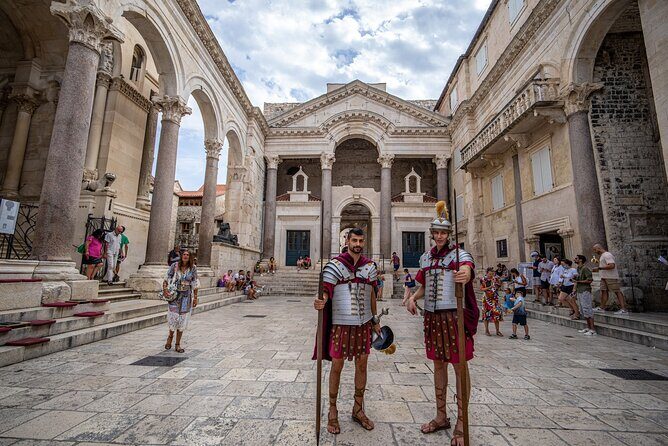
Your tour starts at the Model of the historical core of the city of Split near Obala Hrvatskog narodnog preporoda. That’s a smart move because it gives you a quick mental map before you step into the maze. Stop 1 is the Riva, the main waterfront promenade, where your guide sets the tone for what makes Split unusual: it isn’t just ruins in a park. It’s a palace complex that became neighborhoods.
You’ll get general city context early—enough to connect street names, walls, and squares later in the walk. This is the part where I like to listen closely, because the palace and Old Town pieces only make full sense once you know the geography.
Plan on about 10 minutes here. It’s short, but it’s the kind of start that can save you from wandering in circles later.
You can also read our reviews of more walking tours in Split
Inside Diocletian’s Palace: basement scale, cathedral transformation, Jupiter’s temple
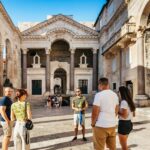
Stops 2 through 7 are the backbone of the day. This is where Diocletian’s Palace goes from “famous name” to “I can picture it.” Your guide brings you through a sequence that mirrors how the site developed.
Stop 2: The palace complex and the included entry trio
After the Riva, you move into the palace complex. Depending on access (no worship or event and openings available), you visit three specific attractions together: the basement, the interior of the Cathedral of Saint Domnius, and the Temple of Jupiter. The entrance fees for those are included when accessible.
If those sites are not available, your guide adjusts the program. That can be a minor disappointment if you were aiming at a specific interior, but it’s also realistic—this is a working city with religious spaces.
Time here is around 15 minutes, which is just enough to understand what each space represents without you feeling like you’re standing in a museum queue.
Stop 3: Diocletian’s Cellars and what “1700+ years old” looks like
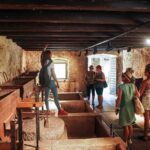
From there you head into the cellars of the palace through the South Gate. These cellars are extremely well preserved, and walking through them gives you a real sense of the palace’s dimensions. It’s one thing to read that the palace was huge; it’s another to feel the scale in a preserved underground environment.
Expect about 15 minutes. This stop is one of the best value parts of the tour because the entrance is included and the payoff is immediate: you stop seeing the palace as a single building and start seeing it as a full machine.
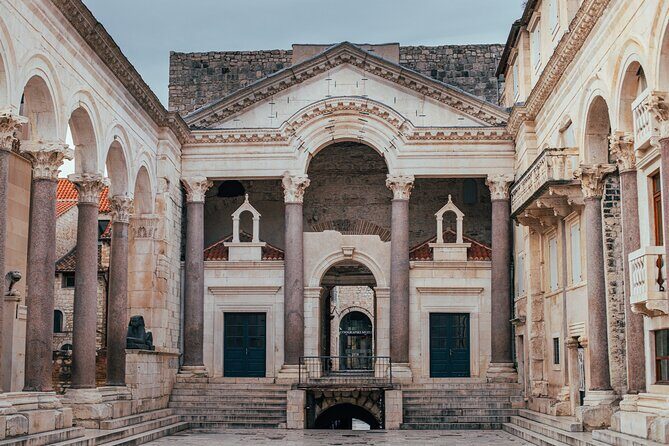
Stop 4: The Peristyle, where power staged itself
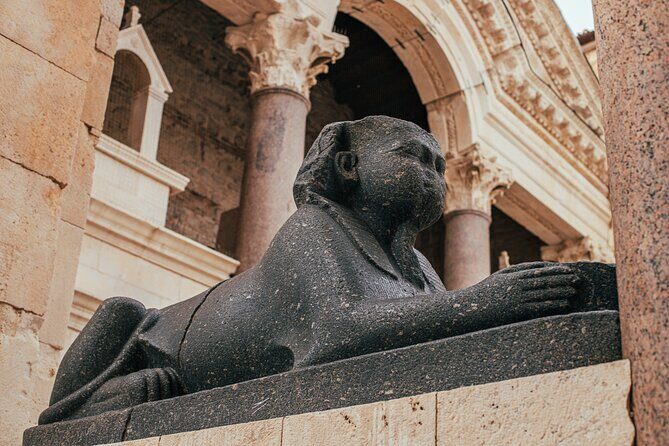
Next is the Peristyle. In Diocletian’s time, this was a sacral meeting place—where he appeared to his subjects and presented himself in a semi-divine role tied to Jupiter. Even now, it’s easier to understand the politics when you stand in the kind of space meant for public presence.
Time is about 10 minutes, and it’s more about interpretation than long lingering.
You can also read our reviews of more private tours in Split





Stop 5: The Temple of Jupiter, now a baptistery
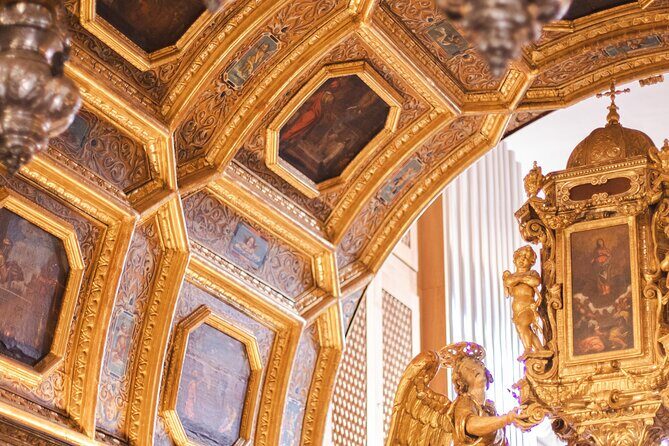
Then comes one of the most interesting contrasts on the route: the Temple of Jupiter. Today it’s a baptistery, and it has a casket ceiling design that influenced Renaissance architects in Dalmatia.
This stop is roughly 10 minutes. The main thing you’ll take away is the layered story: a Roman temple becomes a Christian function, not as a total wipeout, but as reuse and transformation.
Stop 6: Vestibulum of the private chambers
You also visit the Vestibulum, the entrance area to Diocletian’s private chambers. This is one of those “you don’t always think to look for the transition spaces” moments. It helps you understand that the palace wasn’t just public halls and dramatic temples; it included private corridors and controlled access.
Time here is about 10 minutes.
Stop 7: Cathedral of Saint Domnius, the mausoleum that changed religions
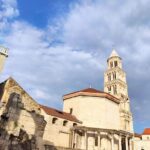
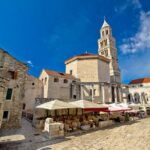
The Cathedral of Saint Domnius is the spiritual anchor. In the Roman era it functioned as Diocletian’s mausoleum for the late emperor. During Christianization, the coffin and remains disappeared, and the pagan mausoleum became a cathedral.
Your visit here includes the entry fee, and it runs about 15 minutes. What I like about including this inside portion is that you get the conversion story in your own eyes, not just a name on a map.
Gates and sacred spaces: Peristyle to Golden Gate
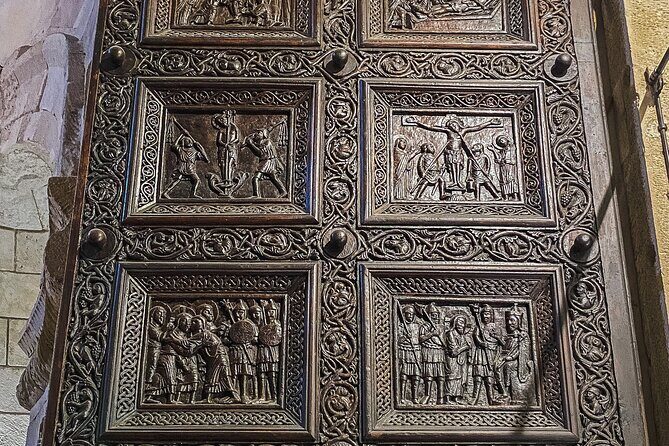
After the interior cluster, the route starts to “connect the dots” outward, especially through the palace gates and major movement routes.
Stop 8: Golden Gate and the road to Salona
You’ll reach the Golden Gate, the North Gate of the palace, which was considered the most important gate in Roman times. From here the road led to Salona, the capital of the Roman province.
This is a compact stop (about 10 minutes), but it’s a big idea in small time: it shows the palace as a hub linked to other cities, not isolated as a self-contained fortress.
Stops 4 and 6 revisited through context
Even if you’re moving quickly, your guide’s job is to help you see how the Peristyle, vestibule, and gates form a single storyline—from staged public power to controlled private access to the major travel route.
That connective thinking is the difference between “I saw a lot” and “I understand what I saw.”
Old Town wander: Narodni Trg, Pjaca, Voćni Trg, and the fish market smell test
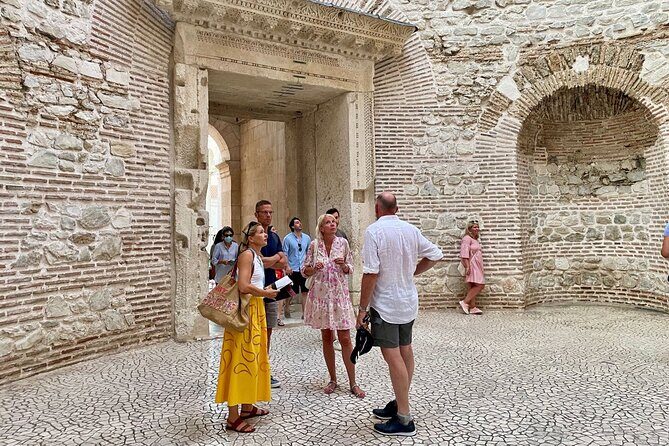
Once you’re out past the palace walls, the walk shifts from imperial architecture to everyday Old Town geography. You’ll follow the palace walls toward the actual center of Old Town—starting around Narodni Trg and continuing to former fruit market area Voćni Trg.
Stop 9: Old Split along the walls to Narodni Trg and Voćni Trg
This part develops west of the palace since the Middle Ages. That’s a clue your guide can point out while you walk: the palace is Roman; the Old Town pattern is medieval growth built around it.
Time is about 10 minutes. Don’t rush it—this is where you get the sense of how people lived around the palace long after Diocletian’s era ended.
Stop 10: People’s Square (Pjaca) and Venetian-style identity
Pjaca has been the city center since the Middle Ages and still plays that role. Here you’ll see old Venetian palaces and a old city hall in neo-Gothic style.
This stop is shorter, about 5 minutes, but it works well because you’re moving. You get the “feel” of the square and the architectural mix, then you head onward before you tire out.
Stop 11: Fruit’s Square (Trg Brace Radic) and Marko Marulić
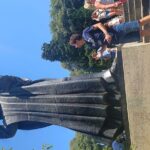
Voćni trg was a market place for fruit. Today, there’s a monument to one of Split’s important Renaissance authors, Marko Marulić.
Time is about 10 minutes. What you get here is a quiet reminder that culture and commerce overlap in Old Town. The square isn’t just scenery—it has a job.
Stop 12: Split Fish Market and the sulfur bath connection
Then comes the fish market, right next door to sulfur baths. It’s an attraction in its own right, and your guide adds the context: even Diocletian knew that sulfur baths can help with rheumatism and other diseases.
And yes, the sulfur smell is why there are no flies in the fish market. This is one of those details that makes the place feel real.
Time here is about 10 minutes. If you’re sensitive to strong odors, keep that in mind, but it’s also part of why the market feels alive rather than staged.
Marmontova ulica to Procurative: shopping street history and a Venice-like square
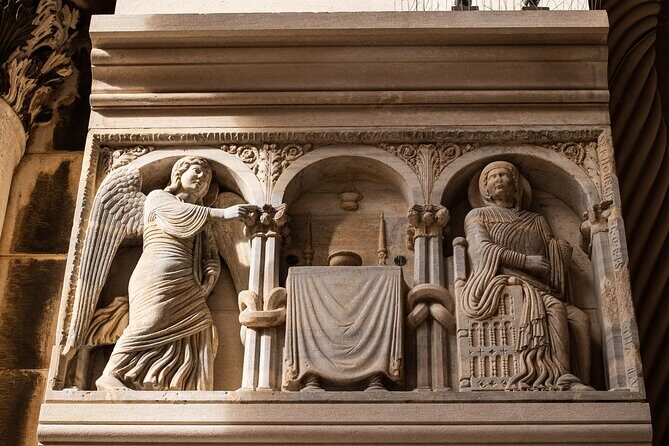
The last stretch is about texture. You move from palace walls and markets into streets and squares where you’ll likely linger afterward.
Stop 13: Marmontova ulica, built under Napoleon’s rule
Marmontova is a busy shopping street and pedestrian zone in the old town. It was built by the French under Napoleon’s rule in the early 19th century.
Time is about 10 minutes. This stop is valuable because it adds another timeline. Split isn’t locked in Roman and medieval only; it keeps getting layers added.
Stop 14: Procurative, the finish point that invites you to pause
You end at Procurative, a beautiful square reminiscent of St. Mark’s Square in Venice. It’s also full of cafés and restaurants, so it’s a great place to reset and decide what you want to do next.
Time is about 10 minutes. I like finishing here because it’s not just an exit—it’s a landing spot.
Price and what you get for your $203.95 per person
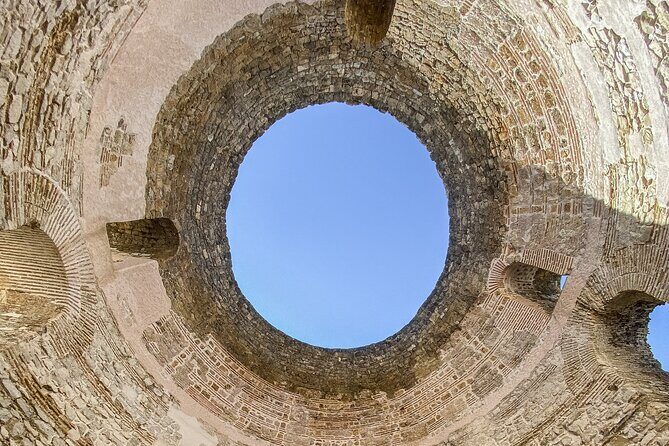
At $203.95 per person for about 2 hours 30 minutes, this tour isn’t the cheapest way to see Split. But it’s also not trying to be.
What you’re paying for is a guided route that stacks multiple major sites into one visit, plus entrance fees that are included for key attractions in the palace area when accessible: the palace basement, the interior of the Cathedral of Saint Domnius, and the Temple of Jupiter.
That matters because you avoid the mental tax of building your own mini itinerary inside a complex site. Even if you’re comfortable self-guiding, Split’s Old Town is compact and busy, and the palace layout can feel confusing if you arrive cold.
This is also a private tour, meaning your guide can adapt if something specific is important to your group (your tour can be adjusted for special needs if you inform them in advance). That can be worth real money if you’re traveling with kids, older adults, or anyone who needs a slower approach.
Guide quality: what Dana and Jana bring to the walk
Two names stand out from the guide feedback: Dana and Jana. Both are described as excellent at connecting the physical spaces to the stories behind them.
What that looks like in practice is simple: you don’t just hear facts, you get a clean sense of what you’re looking at and why it matters. Dana is singled out for being amazing, and Jana is noted for strong historical knowledge plus helping with ideas for what to see after the tour and directions to keep the day moving.
Even if you read guides well online, this kind of in-person guidance helps because Split is full of details that you might miss unless someone points them out.
Practical pacing and logistics that actually affect your day
This is offered in English, runs about 2 hours 30 minutes, and uses a mobile ticket. It starts at the historical model area near the waterfront and ends at Procurative near Republic Square.
A few practical points you’ll care about:
- It’s a private activity, so only your group participates.
- Service animals are allowed.
- It’s near public transportation, which helps if you’re planning the rest of your day.
- Most travelers can participate, and the tour can be adapted to special needs if you tell them in advance.
Weather matters too. The experience requires good weather, and if it’s canceled because of poor conditions, you’ll be offered a different date or a full refund.
Who should book this Split Palace & Old Town tour
This is a great fit if you want:
- A structured walkthrough of Diocletian’s Palace plus Old Town in one go
- Included entrances for major palace interiors
- A guide who can explain how Roman, Christian, Venetian, and French timelines overlap in the same few blocks
It’s also a solid pick if you’re short on time and don’t want to decide what to prioritize inside the palace complex.
You might choose something else if you already know Split’s palace story and you prefer total freedom to linger for longer in specific spots. This route is thorough, but it follows a set sequence with stops that are mostly 5–15 minutes.
Should you book it?
I’d book it if you want the fastest path to understanding Split. The palace stops are the main draw, and the included entrances make it feel like a fair deal rather than “pay extra for the good parts.”
If your group loves history but also wants a clear plan and a pleasant finish at Procurative for food and coffee, this one fits well. Just keep one eye on conditions: church events and occasional access issues can shift what you see, and good weather helps.
If you’re trying to decide right now, this tour is especially worth it for first-time Split visits when you want the city to make sense quickly.
FAQ
How long is the Split Palace & Old Town private walking tour?
It’s approximately 2 hours 30 minutes.
Where does the tour start and end?
It starts at the Model of the historical core of the city of Split (Obala Hrvatskog narodnog preporoda 23, Split) and ends at Republic Square, Procurative (Procurative, 21000 Split).
Is the tour private?
Yes. Only your group will participate.
What language is the tour offered in?
The tour is offered in English.
What entrances are included?
Entrance fees are included for Diocletian’s Cellars, the Cathedral of Saint Domnius (interior), and the Temple of Jupiter. The cathedral and temple entry is included when accessible based on conditions like events or worship.
Do I need to print anything?
No. You’ll use a mobile ticket.
What happens if a sight is closed due to an event or church service?
Some sights may not be visited due to events or church services. The guide will slightly change the program in that case.
Is the fish market part of the tour?
Yes. The tour includes a stop at the Split fish market.
Is there any weather requirement?
Yes. The experience requires good weather. If it’s canceled due to poor weather, you’ll be offered a different date or a full refund.
What is the cancellation policy?
Free cancellation is available. You can cancel up to 24 hours in advance for a full refund. If you cancel less than 24 hours before the start time, the amount you paid is not refunded.