REVIEW · DIOCLETIAN'S PALACE
Split & Diocletian Palace Historical Walking Tour
Book on Viator →Operated by Ancient Tours · Bookable on Viator
Split’s Roman roots show up fast. This 1.5-hour historical walking tour threads together the palace’s main spaces and the waterfront, so you get a clean mental map of Diocletian’s complex without feeling rushed. I like the small-group option (max 5), and I also like that most stops are ticket-free so your time goes to the sights and not the paperwork. One thing to consider: a couple of the most “museum-like” areas or extras can be ticketed or not included, so you may need to budget a little extra if you want those indoor parts.
You’ll start at the Peristyle, then move through the palace’s substructures and key entrances—places that explain how the complex worked over time. I also appreciate that the route gives you multiple photo moments, including up-close palace views and the Golden Gate area. The possible downside is simple: if your guide’s voice carries less well, you can miss details, so it helps to stand where you can hear clearly early on.
In This Review
- What This Tour Gives You in 90 Minutes
- Peristyle of Diocletian’s Palace: The Square That Solves Confusion
- Palace Substructures: The Hallway Lesson You’ll Actually Remember
- Riva Harbor and the Palace Wall: Waterfront Photos With Meaning
- Fruit’s Square (Trg Brace Radic): A Venetian Layer and Marko Marulić
- The Last Remaining Roman Temple: The Small Stop With Big Payoff
- Vestibulum and Triklinij: Where the Emperor’s Daily Life Gets Visual
- Grgur Ninski Statue and the Golden Gate: Language, Power, and the Best Gate Photos
- City Museum and Cathedral Area: What You’ll See, What You Might Want Later
- Bronze Model and Riva Again: A Quick Way to Understand the Big Picture
- Price and Value: Is $156.17 Worth It?
- Small-Group vs Regular: Choose Based on How You Like to Travel
- Timing Tips for Morning or Afternoon Departures
- Should You Book This Diocletian Palace Walking Tour?
- FAQ
- How long is the Split & Diocletian Palace Historical Walking Tour?
- What is the price per person?
- Are there options for small groups?
- Is the tour offered in English?
- Are admissions included for the stops?
- Where does the tour start, and how does it end?
What This Tour Gives You in 90 Minutes
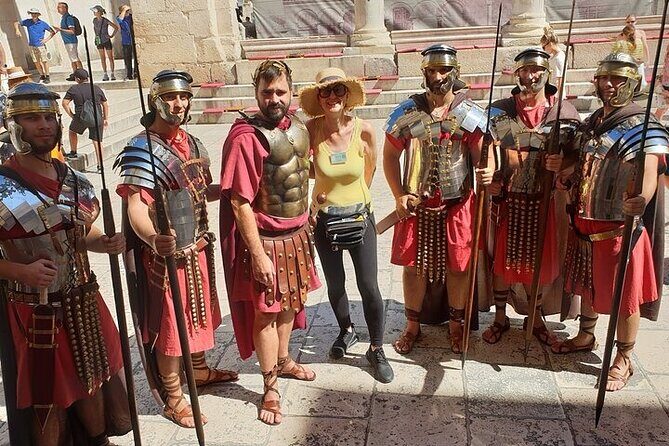
This is a classic “get your bearings fast” route through Split’s biggest draw. You’ll cover a lot of ground in a short window, with guidance that ties spaces together: square, hallways, waterfront wall, gates, and the courtyard-and-building shapes you’d otherwise have trouble connecting.
The tour is offered in English, with both morning and afternoon departures, and it runs about 1 hour 30 minutes. You can choose between a Small group (up to 5) or a Regular group (up to 20). The small group option is the one I’d aim for if you like asking questions and keeping the pace steady.
At a price of $156.17 per person, you’re paying for a guided route plus the convenience of a ready-made circuit. In a place like Split, that’s often worth it if you want orientation and interpretation, not just wandering with a map.
Peristyle of Diocletian’s Palace: The Square That Solves Confusion
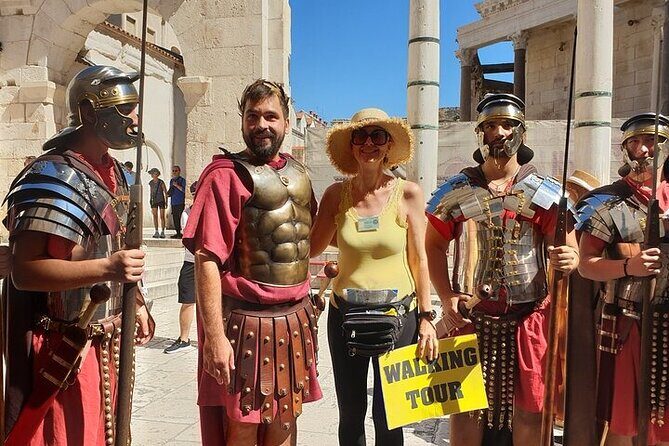
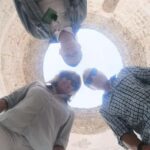
You begin at the Peristil ulica area, then step into the Peristyle—Diocletian’s palace central square. This stop is the “hub,” meaning from here you can access a huge chunk of the palace’s other areas. That matters because Split is not laid out like a simple grid; the palace streets curve and fold.
The Peristyle itself is ticket-free, and it sets the tone for everything that follows. Expect a guided look at why this central space is so important, and how it links to the rest of the palace layout.
Practical tip: if you want the cleanest photos, take a minute right here to position yourself before the group keeps moving. This is one of the easiest places to get a sharp view of the palace environment.
You can also read our reviews of more walking tours in Split

Palace Substructures: The Hallway Lesson You’ll Actually Remember
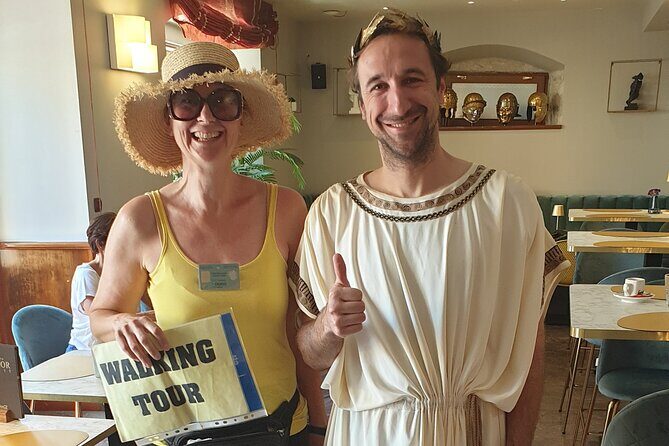
Next you go into the Diocletian Palace Substructures. This is a guided walk through the central hallway and the key foundation-related information. You’re learning about how the palace was constructed and what the substructures have done over the ages—so this stop isn’t just sightseeing, it’s context.
The best part for most people is that you won’t spend your whole time inside a museum. You do walk through the substructures, and the tour notes that the museum part isn’t included, with a suggestion you can visit it later if you want. It’s a smart way to keep the tour moving while still giving the “how this place works” story.
Reality check: if you were hoping for a full museum experience here, you’ll likely feel shortchanged. The tour is built around the walk and the explanation, not an extended indoor exhibit.
Riva Harbor and the Palace Wall: Waterfront Photos With Meaning
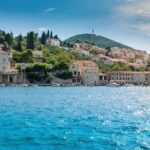
Then you shift to the city waterfront at Riva Harbor. This stop is where the palace meets the modern promenade, and the guide connects what you’re seeing to the south wall of the palace.
You’ll get a short but focused window to understand the relationship between old structures and the current city edge. The stop is ticket-free, so it fits neatly into a walking tour without turning into a separate admission line.
Photo tip: stand where you can frame both water and stone. It’s one of the easiest places to capture that “palace meets promenade” feel.
Fruit’s Square (Trg Brace Radic): A Venetian Layer and Marko Marulić
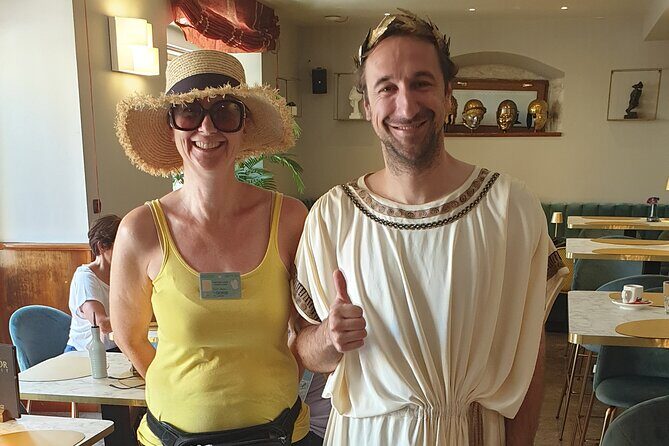
Fruit’s Square, also listed as Trg Brace Radic, is one of those corners that quickly changes the mood. Here you see the old Venetian citadel atmosphere and a sculpture tied to Marko Marulić.
This stop is brief, but it gives you another layer—proof that Split’s story isn’t only Roman. Even if you only have 90 minutes, squeezing in one symbolic art moment helps you read the city better later.
If you care about language and cultural history, don’t rush through this square. The guide’s framing here helps connect the later Golden Gate content.
The Last Remaining Roman Temple: The Small Stop With Big Payoff
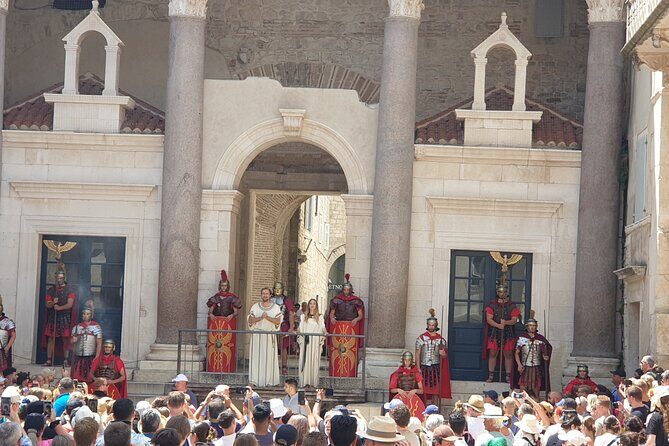
At some point on the route, you’ll reach the last remaining ancient Roman temple within the palace. This is one of those “you’ll recognize it when you’re there” stops, because it’s rare enough to feel special without needing a long lecture.
It’s also ticket-free, which keeps the pace simple. The guide’s job is to point out what to look for and why this surviving element matters in the palace setting.
Consideration: because the temple stop is short, go into it with the mindset of “look closely, then move.” Don’t expect a long museum-style explanation unless your group’s timing allows for it.
You can also read our reviews of more historical tours in Split



Vestibulum and Triklinij: Where the Emperor’s Daily Life Gets Visual
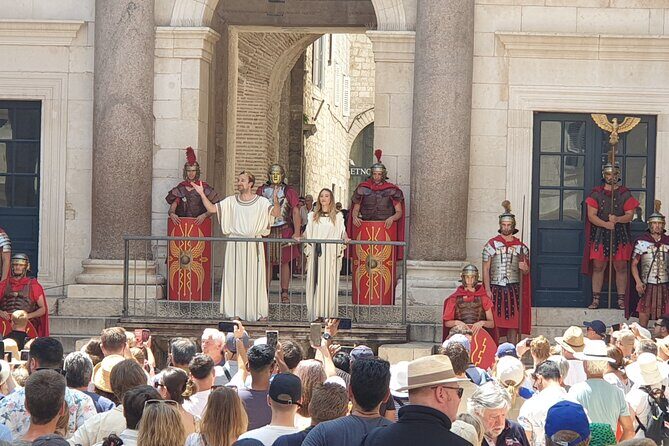
One of the tour’s strengths is that it doesn’t only show “important buildings.” It also shows the palace spaces tied to how Diocletian lived and used the complex.
First comes the Vestibulum of Diocletian’s Palace, the entrance hall of his personal quarters. The guide talks about its history and you might even hear traditional Dalmatian singing. That small chance adds personality to the stop and gives the tour a living-cultural angle, not only stone-and-stories.
Next is the Triklinij, the remains of and a partial reconstruction of Diocletian’s personal walkway and dining hall. Even with limited time, this stop helps you imagine how movement and social space worked inside the palace.
Both of these are ticket-free stops, which makes them good value. They also tend to be the kind of sites that feel clearer when someone points out what you’re actually looking at.
Grgur Ninski Statue and the Golden Gate: Language, Power, and the Best Gate Photos
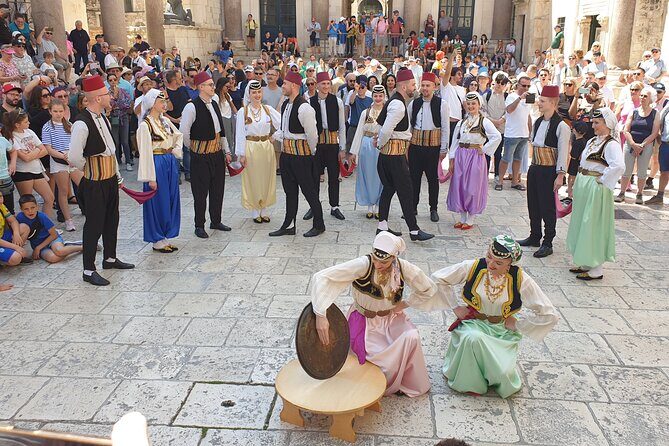
You then move toward the north gate area to see the Grgur Ninski Statue, made by Meštrović. The theme here is Croatian language and identity, and the guide frames Grgur Ninski’s role in that story.
This section is longer than the smallest stops, which is nice because you get time to absorb symbolism, then take photos without feeling like you’re sprinting.
After that is the Golden Gate—the main entrance of Diocletian’s Palace. The tour includes guided context and a view of the statue of Gregory of Nin, and you also learn his importance to our history and language. One note: Golden Gate admission is not included, so if you want access where a ticket applies, plan for that separately.
Practical photo tip: gates look different depending on how you stand. Take one shot from a wider angle to show the entrance shape, then step slightly to get a cleaner view of the statue.
City Museum and Cathedral Area: What You’ll See, What You Might Want Later
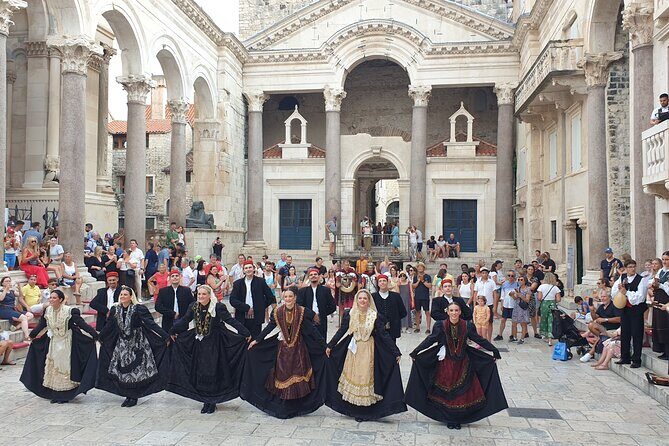
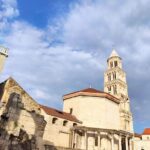
Near the later portion of the route, you’ll pass by a 15th-century Venetian palace now used as the City museum, plus the Cathedral in the mausoleum of emperor Diocletian.
These are major “Split card” sights, and having them in the walking sequence helps you connect the palace story to what people do here today. The tour doesn’t position these as long stops, so think of them as guided orientation moments more than deep museum hours.
If you’re the type who loves indoor time, you might find yourself wanting more access than this tour provides. That’s normal, and it’s also why the tour’s structure works: you leave with a map in your head, so you know what to return to.
Bronze Model and Riva Again: A Quick Way to Understand the Big Picture
The final push brings you back toward Riva Harbor for an educational stop: a bronze model of Diocletian’s Palace. This is useful because it turns all the walking paths you just did into a single visual layout.
After the model, you learn about the history of the Split Riva promenade. Then the route wraps back to the meeting point, which is helpful if you’re trying to time dinner, photos, or another attraction without losing your way.
One practical advantage here: finishing near Riva means you’re already close to the easiest places to reset, grab a snack, and plan your next step.
Price and Value: Is $156.17 Worth It?
Let’s be honest: $156.17 for a 1.5-hour walk is not a budget impulse buy. But it can be a smart value purchase if you care about getting more than random sightseeing.
Here’s what supports the price:
- A guided route that connects multiple major palace zones, rather than just a checklist of stops.
- Ticket-free admissions at many stops, which keeps costs from creeping up on you mid-tour.
- Small group potential (max 5). If you pick that option, the guide can pace the experience better and answer questions without a wall of silence.
Where it might feel less worth it:
- If you expected a lot of museum time, you may feel the tour skips the heavier ticketed interiors.
- One of the provided experiences pointed out that some important material can be tied to charged areas not included in the tour portion.
My take: if you want orientation and a story-driven walk through Split’s key palace spaces, this pricing can make sense. If you only want to see exteriors and don’t care about interpretation, you may find cheaper self-guided options.
Small-Group vs Regular: Choose Based on How You Like to Travel
You can select between small group (max 5) and regular (max 20). I’d base the choice on your tolerance for crowd noise and how much you value interaction.
Small group is best when:
- you like questions,
- you want a steadier pace,
- you prefer hearing the guide clearly without shouting.
Regular group may work if:
- you’re comfortable reading the city even while listening less,
- you mainly want the highlights and timing.
Either way, the tour keeps a maximum of 20 travelers, so you should still be able to move as a unit.
Timing Tips for Morning or Afternoon Departures
Because there are morning and afternoon tours, you can pick based on your day plan. Morning can be great if you want quieter photography and an easier start. Afternoon can be good if you’re sequencing it after a slower breakfast and want the tour to break up the day.
If you’re sensitive to heat or sun, choose the part of the day when you’ll enjoy being outside for 90 minutes. This is a walking-heavy route with multiple short stops, so comfort matters.
Also, arrive a little early at the meeting point near Peristil ulica (21000 Split). Starting on time makes the whole route feel smoother.
Should You Book This Diocletian Palace Walking Tour?
Book it if you want a guided route that hits the palace’s core spaces—Peristyle, substructures, gates, key interiors like the vestibule and Triklinij—and you want Riva Harbor moments that connect the palace to modern Split. The high recommendation rate and the overall strength of the story-first pacing are exactly what you want when you only have a short window.
Pass or adjust your expectations if:
- you’re aiming for long museum access,
- you hate any chance of extra costs tied to indoor areas not included,
- you’ve had trouble hearing guides on past tours and you know you need a very quiet, close setup.
If you do book, I’d plan to use this tour as your foundation. Then, when you come back on your own, you’ll know what to prioritize: the areas that felt most meaningful to you and the indoor bits you want to see with more time.
FAQ
How long is the Split & Diocletian Palace Historical Walking Tour?
It runs about 1 hour 30 minutes.
What is the price per person?
The price is $156.17 per person.
Are there options for small groups?
Yes. You can choose a Small group tour (max of 5) or a Regular tour (max of 20).
Is the tour offered in English?
Yes, it’s offered in English.
Are admissions included for the stops?
Many stops are listed as ticket-free, but admission for the Golden Gate is not included. The tour also does not include the museum part of the substructures, with an option to visit it after the tour.
Where does the tour start, and how does it end?
It starts at Peristil ulica, 21000, Split, Croatia, and it ends back at the meeting point.