REVIEW · DIOCLETIAN'S PALACE
History & Cultural Walking Tour of Split and Diocletian’s Palace
Book on Viator →Operated by Ancient Tours · Bookable on Viator
Diocletian’s Palace is a street-level time machine. I love the small-group pace and the guide’s story-first approach to the city’s top sites. One thing to plan for: this walking tour isn’t recommended if you struggle with high steps.
You’ll spend about 90 minutes in Split’s UNESCO-listed old center, starting and ending at the Peristyle area. The price is reasonable for what you get: a real guide-led walk through major palace spaces, with free admission ticket access for the stops that are included, plus a pass-by of the Split Synagogue where admission isn’t included.
In This Review
- Key Highlights to Expect
- Why Diocletian’s Palace Changes How You See Split
- Tour Snapshot: 90 Minutes, $22.98, and a Max-15 Group
- Start at the Peristyle: Your Navigation Shortcut
- Vestibulum of Diocletian’s Palace: Emperor Diocletian Up Close
- Substructures Through the Ages: What’s Under the Palace
- Golden Gate and Gregory of Nin: A Landmark With Meaning
- Riva Harbor: The Bronze Model Makes It Click
- Fruit’s Square (Trg Brace Radic): Venetian Walls and Marko Marulić
- Split Synagogue: What You Pass By (and What You Pay For)
- The Guides Are the Secret Sauce: Darko, Ivana, and Ante
- Practical Tips for Your Walk in Split’s Old Town
- Value Check: Is $22.98 Worth It?
- Who This Tour Fits Best
- Should You Book This Split History and Cultural Walking Tour?
Key Highlights to Expect
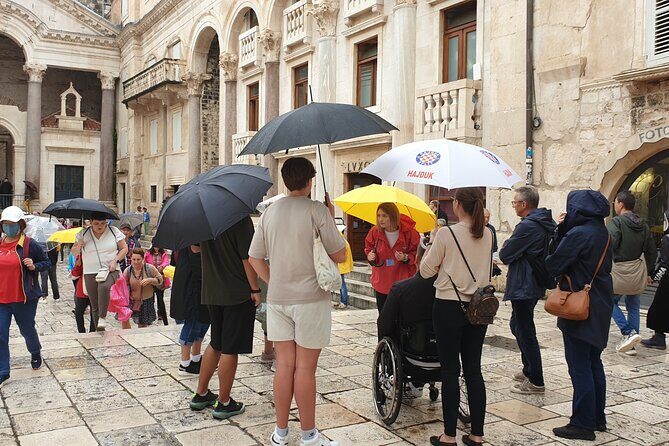
- Max 15 travelers for a more personal experience and easier Q&A
- Free admission ticket access for the included palace stops (museum part not visited)
- Peristyle, Vestibulum, Substructures, and Golden Gate inside Diocletian’s Palace
- Golden Gate + Gregory of Nin: learn why this figure matters in Croatian culture
- Riva Harbor + a bronze palace model that helps you picture the whole complex
- Fruit’s Square + Marko Marulić and a pass-by of Split’s Synagogue
Why Diocletian’s Palace Changes How You See Split
Split doesn’t feel like a typical old city. It feels like a working neighborhood built around one huge Roman structure, still shaping streets, squares, and daily life.
That’s the magic of starting with the palace. Once you understand where the spaces are and what they were for, everything you see afterward makes more sense—especially the way Split’s waterfront, churches, and public squares connect back to Diocletian’s original plan.
You can also read our reviews of more walking tours in Split

Tour Snapshot: 90 Minutes, $22.98, and a Max-15 Group
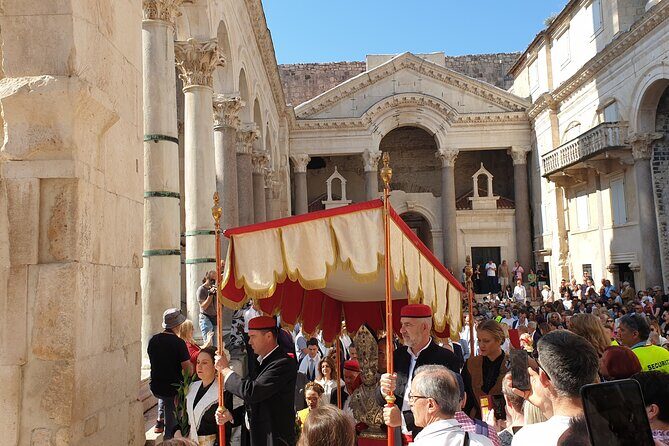
This tour runs about 1 hour 30 minutes and costs $22.98 per person. It’s offered in English, and it’s capped at 15 travelers, which keeps the walk from feeling rushed or crowded.
You’ll also get a mobile ticket, and group discounts may apply. Most stops in Diocletian’s Palace come with free admission tickets as part of the experience, so you’re mainly paying for a guide who can connect the stones to the stories.
Start at the Peristyle: Your Navigation Shortcut
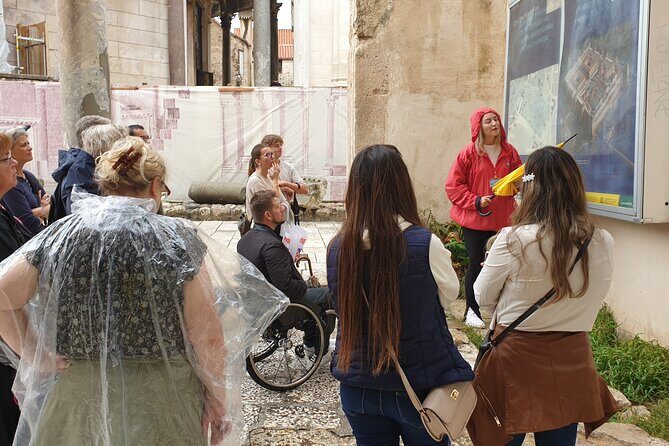
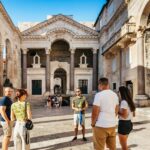
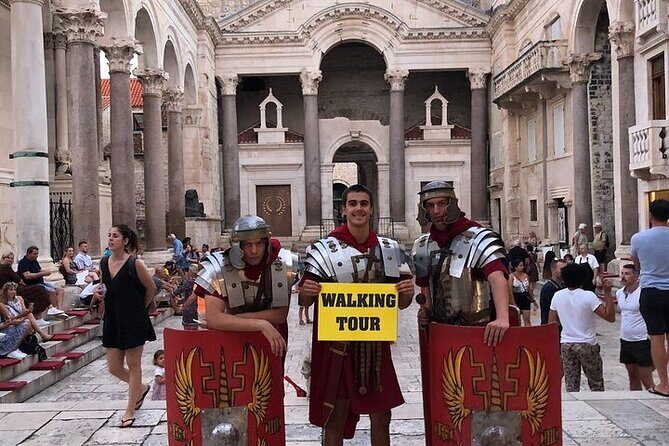
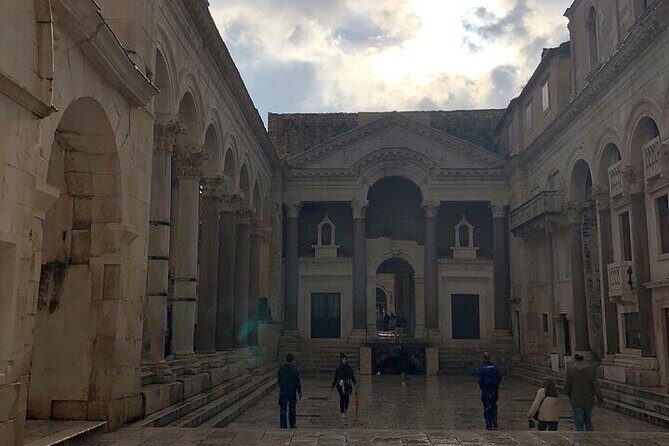
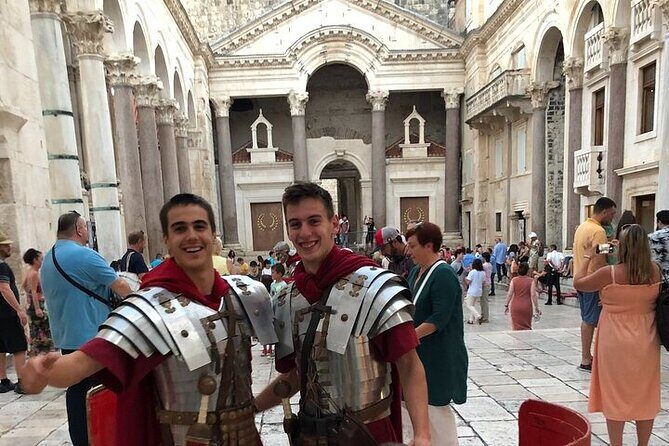
The tour begins at the Peristyle, the central square of Diocletian’s Palace. This is the hub where you can visually “map” how the rest of the palace connects, even if you’ve never been to Split before.
I like the way the Peristyle sets the tone. It’s not just a pretty Roman courtyard—you use it as a reference point for almost everything else you’ll walk through during the tour.
Time on stop: about 15 minutes.
Vestibulum of Diocletian’s Palace: Emperor Diocletian Up Close
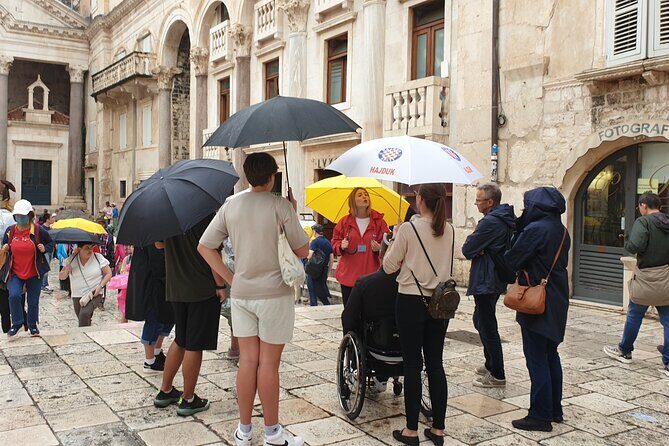
Next you move into the Vestibulum of Diocletian’s Palace. This is where you learn about Diocletian and the meaning of the space, and you might even catch traditional Dalmatian klapa-style singing depending on what’s happening at the moment.
Even if you don’t hear singing, the vestibule visit is useful. It’s a quick way to understand how the palace functioned and why certain areas were designed for public importance.
Time on stop: about 5 minutes.
Substructures Through the Ages: What’s Under the Palace
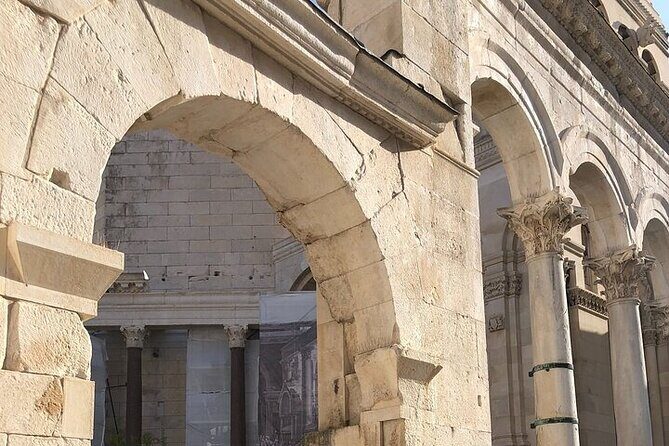
Then you head into the substructures of the palace. These are the “beneath it all” spaces where the tour focuses on construction and changing function over time.
A key detail: you won’t visit the museum portion of the substructures on this tour. That said, you can visit the museum afterward if you want more depth on displays and artifacts, once the big-picture orientation is done.
Time on stop: about 10 minutes.
You can also read our reviews of more historical tours in Split



Golden Gate and Gregory of Nin: A Landmark With Meaning
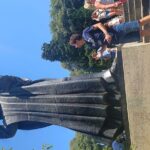
One of the most memorable stops is the Golden Gate, the main entrance of Diocletian’s Palace. Here, your guide ties the architecture to how Split grew around it, and you also get the story behind the statue of Gregory of Nin.
What I like about this part is that it connects “history” to language and identity, not just dates. You’ll leave with a better sense of why this figure is still important in Croatian culture.
Time on stop: about 10 minutes.
Riva Harbor: The Bronze Model Makes It Click
After the palace, you shift toward the waterfront at Riva Harbor. This stop includes a bronze model of Diocletian’s Palace, which is hugely helpful if your brain needs a visual to understand scale.
Then you’ll hear how Split’s promenade became the way it is today. If you’re the type who wants to know how today’s views got shaped, this is where the tour quietly pays off.
Time on stop: about 15 minutes.
Fruit’s Square (Trg Brace Radic): Venetian Walls and Marko Marulić
The tour next heads to Fruit’s Square, also called Trg Brace Radic. Here, you learn about an 15th-century Venetian citadel and how that era left a mark on the city’s layout and power center.
You’ll also hear about Marko Marulić, often described as the father of Croatian literature. I like that this isn’t just Roman-only storytelling. It widens the frame so you understand how Split kept rewriting its identity long after the palace era.
Time on stop: about 10 minutes.
Split Synagogue: What You Pass By (and What You Pay For)
You’ll pass by the Split Synagogue, a site tied to the Jewish community in the city’s story. This stop is specifically noted as admission not included, so don’t count on the tour covering entry fees.
That means your experience here is mostly about context and observation from the outside. If you want to go inside, you’ll need to plan for that separately based on what’s available when you’re in Split.
Time on stop: about 10 minutes.
The Guides Are the Secret Sauce: Darko, Ivana, and Ante
A walking tour lives or dies on the guide. This one clearly benefits from strong on-the-ground storytelling, and you’ll see that in real examples of how guides present the palace.
I’ve heard how Darko brings the material to life with clear explanations and extra details that make you feel oriented fast. I’ve also seen Ivana structure the walk with engaging Q&As that help you retain what you just learned. And when the guide is Ante (Anthony), the tone can feel warm and welcoming, with added flair and extra pointers beyond the obvious spots.
Another small bonus that can happen depending on the day: a guide may include an additional cultural moment such as traditional klapa singing, and you might even be shown a Meštrović statue in a public park area. Those extras fit the theme of “learn while you walk,” not just “see and leave.”
Practical Tips for Your Walk in Split’s Old Town
A 90-minute route inside the palace zone is still a lot of stone underfoot. Wear shoes you trust on uneven surfaces, and if you’re sensitive to steps, take that seriously.
A few other practical notes based on what the experience offers:
- Service animals are allowed, so if you travel with one, you’re covered.
- The tour is near public transportation, which helps if you’re bouncing between stops in town.
- Free admission ticket access is built into the included palace stops, but remember the synagogue admission isn’t included.
Also, go in with a mindset of connection, not scavenger hunting. When your guide points out how one area links to another, it’s easier to build a mental map for the rest of your trip.
Value Check: Is $22.98 Worth It?
For the price, you’re not just buying entry tickets. You’re buying a guided structure for understanding what you’re seeing—especially at the palace stops where the layout can feel confusing without context.
You also get a small-group setup and a time-efficient route that hits the biggest “anchor points”: Peristyle, Golden Gate, Riva Harbor, and cultural context like Marko Marulić and the Venetian-era layer at Fruit’s Square. If you want to explore Split deeply but don’t have time to research every block first, this is a strong way to get oriented fast.
And if you’re a history-minded traveler, the pacing matters. The tour doesn’t try to cram the palace museum into the walk; instead, it gives you the framework, then leaves room for you to choose what you want to see afterward.
Who This Tour Fits Best
This tour is a great fit if:
- you want an orientation walk in Split’s old center,
- you care about how Diocletian’s Palace shaped the city,
- you prefer a small group so your questions don’t get lost,
- you’d like cultural context, not just architecture.
It may not be ideal if you:
- have trouble with high steps,
- need fully guaranteed access to every interior space (the synagogue admission isn’t included, and the substructures museum isn’t part of the tour).
Should You Book This Split History and Cultural Walking Tour?
I’d book it if this is your first time in Split and you want to understand why the city looks the way it does. The route hits the palace “spine,” then connects it to the promenade and key cultural references like Gregory of Nin, Marko Marulić, and the synagogue site.
Skip it only if you already feel confident about the palace layout and you’d rather spend your limited time on museum tickets and independent wandering. But if you want a clean, guided way to get your bearings quickly, this is one of the most efficient ways to do it in about 90 minutes.