REVIEW · HISTORICAL TOURS
Experience Split History Walking Tour With Local Historian
Book on GetYourGuide →Operated by Pomalo · Bookable on GetYourGuide
History walks here, not just reads. I like the See, Hear and Feel style led by a local historian with a master’s degree in history, and I really enjoy the way the tour turns Diocletian’s Palace into a lived-in story—plus you get 3D reconstruction images to make the past easier to picture. One thing to consider: it is still a walking tour through uneven stone and tight spaces, so it is not a good fit if you have mobility limits.
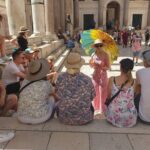
This Split walking tour runs about 2 hours, caps at 12 people, and starts at the Golden Gate (the northern gate) opposite the 8-meter statue of Gregory of Nin. You’ll finish around Narodni trg, with skip-the-line entry included and plenty of chances to ask questions to Boris as you go.
In This Review
- Key things to know before you go
- Golden Gate meeting: starting like an emperor at Diocletian’s Palace
- Peristil square and Jupiter’s Temple: the Roman heart you can actually read
- Saint Domnius Cathedral and the Vestibule: when faith changes the building
- Diocletian’s Cellars: stories beneath the palace you would miss alone
- Riva promenade: the Roman-to-medieval connection you can feel
- Fruit Square and People’s Square: two medieval stages with different personalities
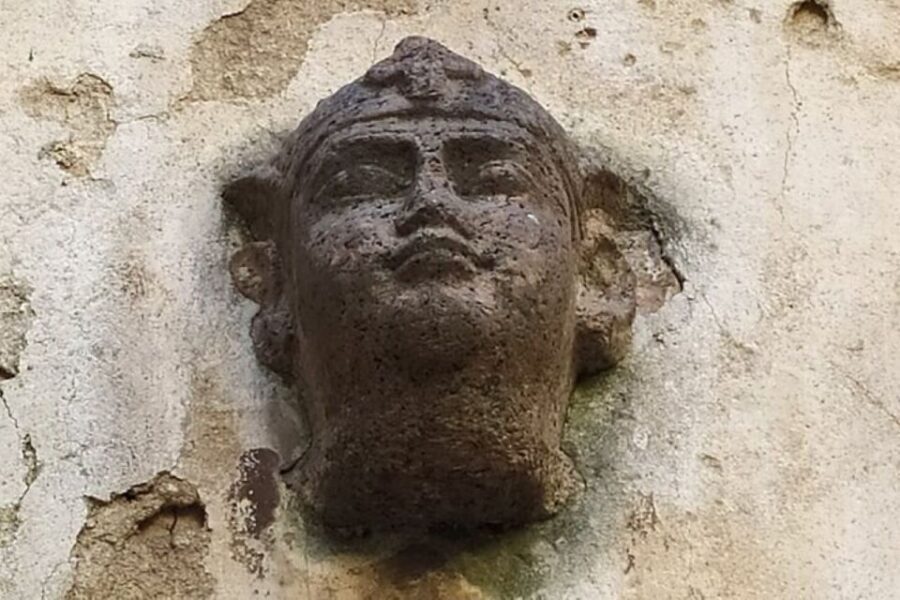
- Narrow church corners, lost Sphinx head, and a secret garden moment
- Value check: is $37 for a 2-hour Split palace tour a smart deal?
- Who should book this Split walking tour (and who shouldn’t)
- Tips to make your 2 hours feel longer than 120 minutes
- Should you book this Split history walking tour?
- FAQ
- How long is the Split History Walking Tour?
- Where does the tour start?
- Where does the tour end?
- What does the tour cost?
- How big is the group?
- Who is the guide, and what languages are offered?
- What’s included in the tour?
- What should I bring?
- Is the tour suitable for wheelchair users?
Key things to know before you go
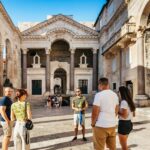
- Golden Gate start point: meet by the northern gate of Diocletian’s Palace, facing the large Gregory of Nin statue
- Small group feel: up to 12 people, which keeps the pace relaxed and the conversation possible
- Roman to medieval through one walk: Peristil, Jupiter’s Temple, the Cathedral area, and then out to Riva
- Two medieval squares: Fruit Square and People’s Square come with architecture-based stories
- Look closer in the side lanes: narrow church/street moments plus a mention of the lost Sphinx head and a secret garden
Golden Gate meeting: starting like an emperor at Diocletian’s Palace
The tour begins at a spot that makes the whole day click: Golden Gate, the northern gate into Diocletian’s Palace. From there, you get a quick orientation to Split and Croatia before you step into the palace area, so you are not wandering around collecting random facts.
I also like that you start with the Gregory of Nin statue right in your view. It is a big, unmistakable landmark (the statue is about 8 meters tall), and the guide uses it to connect the Roman-era setting to later Split identities. The best part is the tone: you are not just looking at stone, you are learning why this gate mattered and how it shaped movement in and out of the palace complex.
Inside, the story keeps its momentum. You’ll learn how Diocletian’s palace was meant to work in its original Roman life, then you watch how later generations adapted the spaces. It’s the kind of context that makes your next stop easier, because your brain already knows what you are seeing.
Practical note: wear comfortable shoes. Golden Gate and the palace interior involve lots of walking on old surfaces, and you will want your feet to feel good.
You can also read our reviews of more walking tours in Split

Peristil square and Jupiter’s Temple: the Roman heart you can actually read

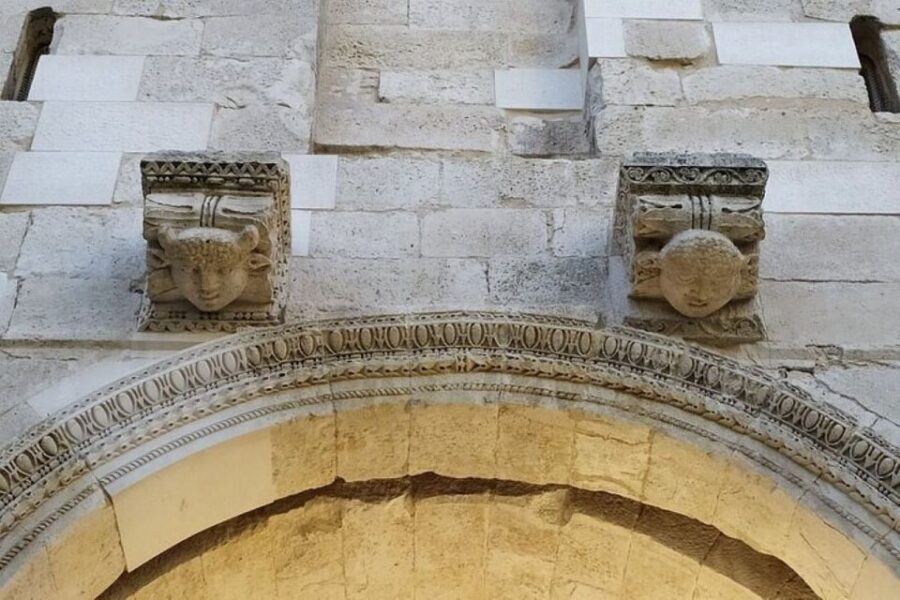
Once you pass the gate, the tour moves to Peristil, the main palace square. This is where you see why Diocletian’s Palace is such a big deal: the space is monumental, but it is also practical, and it explains how power and daily life were arranged in the ancient world.
The way the guide frames Peristil makes a real difference. Instead of treating it like a museum room, you learn what it would have meant for people moving around the palace and for the presence of authority inside those walls. You get guided stops that focus on sight lines, architectural purpose, and the legends that cling to these spaces.
From there, Jupiter’s Temple is next. Even if you do not know the religious context, the guide’s explanations help you understand how Roman beliefs were built into the palace layout. I like that you are not forced to memorize dates; you are taught how to recognize function—who used the space, and what that suggests about power, ritual, and community.
If you enjoy travel where architecture teaches you history, this is one of the best parts. You can stand in a square, look up, and connect the dots without needing a guidebook.
Saint Domnius Cathedral and the Vestibule: when faith changes the building
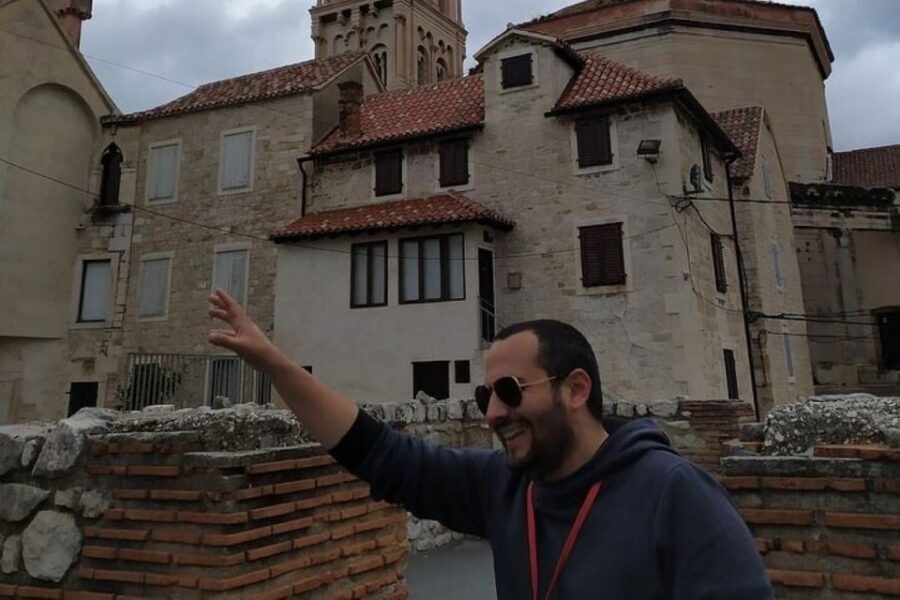
Split’s Roman shell did not stay frozen in time. The tour includes the Cathedral area of Saint Domnius and also the Vestibule, and the guide uses these stops to show how a place can be both ancient and still actively meaningful.
What makes this section valuable for you is the contrast. You see how earlier structures were reused and reinterpreted as centuries moved forward. The building becomes a timeline you can walk through: Roman planning, later medieval adjustments, and a modern city that still lives around the heritage.
The Vestibule stop works especially well if you like the micro-details. Small architectural transitions can be easy to miss on your own, but with a historian guiding the eye, those “in-between” spaces start telling their own story. It is not just big-name landmarks; it is how the palace was stitched together.
This is also where the guide’s question-friendly style pays off. When you ask what things were used for or why certain design choices happened, you get answers that connect the dots rather than sending you off on a tangent.
Diocletian’s Cellars: stories beneath the palace you would miss alone
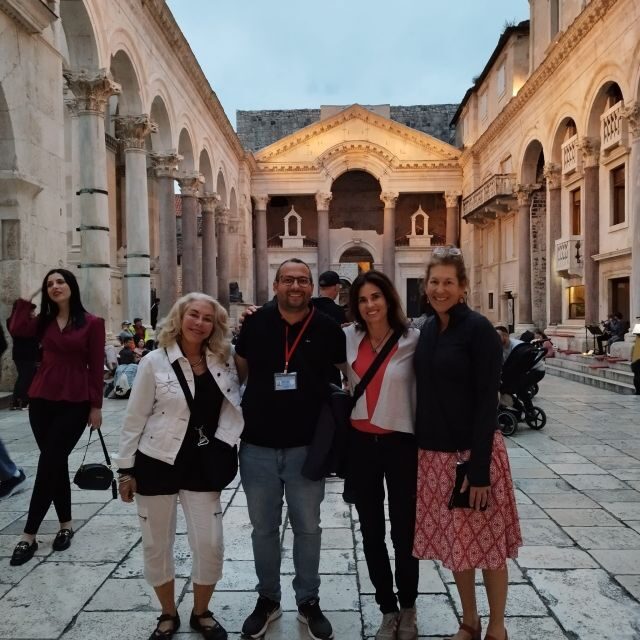
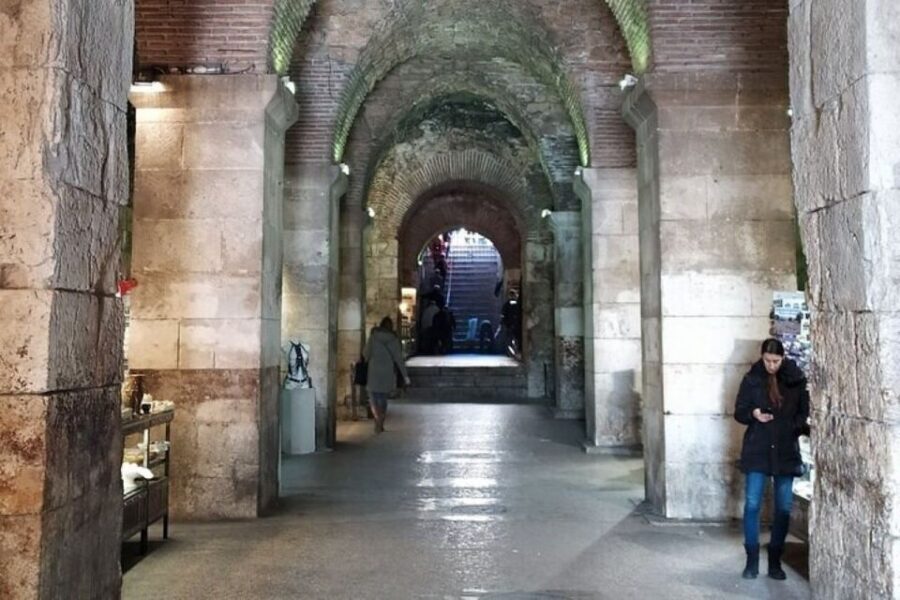
Next comes a section that changes how you see the palace: Diocletian’s Cellars, including the central substructures beneath. If you tend to rush through lower areas in museums or sites, slow down here—this is where the tour helps you understand how the palace supported life.
Underground spaces can feel like dead ends unless someone explains why they exist. The guide does that, tying these cellars to the practical side of palace life and later use. You start noticing how the palace design wasn’t only about appearances; it was also about storage, movement, and control of resources.
I also appreciate that this part is not treated like a simple “look at rocks” stop. The guide frames it so you can visualize what those rooms contributed to everyday routines, and that makes the palace feel like a working system rather than a grand backdrop.
This is a strong choice for anyone who wants more than a quick Instagram loop. You leave with a better mental map of where everything fits.
Riva promenade: the Roman-to-medieval connection you can feel
After the palace interior, the tour heads toward the Riva promenade, the lively waterfront edge of Split. The guide uses this transition to show the connection between Roman planning and the later medieval city that grew around it.
For you, this matters because it grounds the history. When you’re only inside the palace, it can be tempting to think Split stopped evolving after the Roman era. Riva shows the opposite: the city adapted, rebuilt, and kept its relationship to the sea and the flow of people.
This part is also useful if you want practical next steps. The guide’s “local life” angle helps you understand where the city energy comes from today, not just how it looked in ancient times. You will likely walk away with a sense of what to try next, where to wander later, and what to look for when you’re not under a guide’s spotlight.
You can also read our reviews of more historical tours in Split



Fruit Square and People’s Square: two medieval stages with different personalities
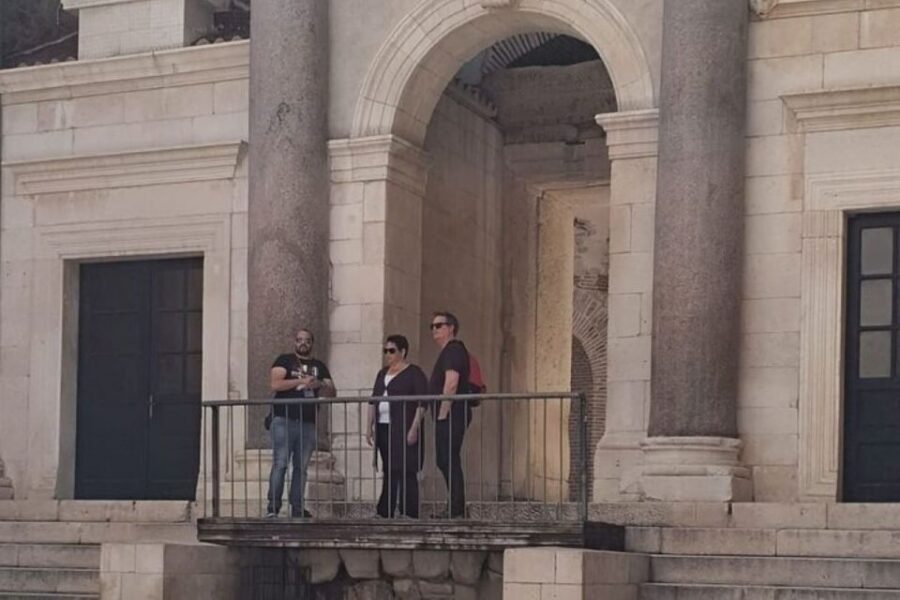
Split’s medieval story comes through powerfully in two stops: Fruit Square and People’s Square. These aren’t just pretty open spaces. The tour explains what they hid through centuries—how architecture influenced daily events and how public life unfolded.
I like that the guide treats these squares like social engines. They were places where people gathered, traded, waited, and argued—meaning the stone around you is part of human behavior. You come away seeing why certain designs supported crowds and movement.
People’s Square also helps you understand the link between civic space and religious or political shifts over time. Fruit Square, with its own historical associations, gives you a different angle on the same city evolution. Together, they make the medieval part of Split feel real, not like a separate chapter you missed.
If you enjoy city walking tours that feel like a story you can follow, this pair of squares is a high point.
Narrow church corners, lost Sphinx head, and a secret garden moment
Not every highlight is a named building with a big sign. This tour includes smaller side stops that make the city feel lived-in.
As you move through these quieter moments, you might notice references such as the narrowest church and narrowest street, plus mentions of a lost Sphinx head and a secret garden. The value here is the “look closer” lesson. You learn what to notice when the streets squeeze in and when a normal alley becomes a stage for centuries of mystery.
I recommend you slow your pace during these small sections. In tight spaces, it is easy to walk past details without registering them. With the guide pointing out what to watch for, you start seeing textures, alignments, and tiny remnants that you would almost certainly miss alone.
This is also where the tour’s size helps. With a max of 12, the guide can keep groups together without turning the experience into a fast-moving line.
Value check: is $37 for a 2-hour Split palace tour a smart deal?
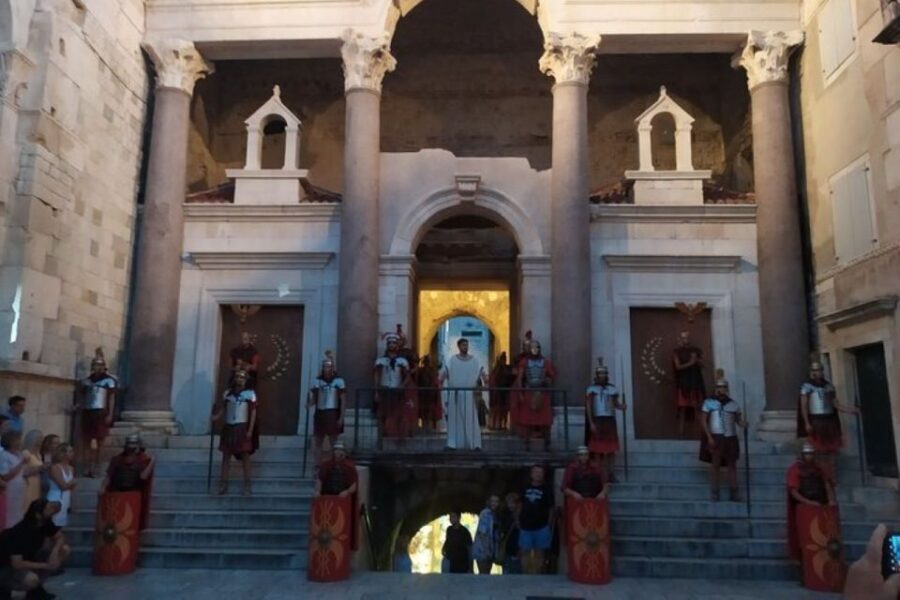
At $37 per person for about 2 hours, you’re paying for three things that matter: a historian-guide, time inside Diocletian’s Palace, and help seeing what you would otherwise overlook.
First, the guide is not just a storyteller; the tour description calls out a local professional guide with a master’s degree in history. In practice, that’s what you feel when explanations stay rooted in structure and context, not vague “this is old” talk.
Second, the tour includes 3D reconstruction images and a display book. That is real value because Diocletian’s Palace is partly preserved and partly transformed over time. Visual aids help you understand what might have existed in earlier forms and how parts of the complex would have functioned.
Third, skip-the-line entry reduces wasted time. Heritage sites often make you queue at the moments you most want to be inside, and this tour is designed to keep you moving.
What is not included: food and drinks. That’s normal for a history walk, but plan to grab a snack afterward so you’re not stuck making decisions when you’re tired.
Overall, I think it is good value if you care about architecture, you want a guided narrative, and you like asking questions. If you only want a quick pass through the big landmarks, you might find the time tight. But if you want meaning, this tour is priced in a reasonable zone for what you get.
Who should book this Split walking tour (and who shouldn’t)
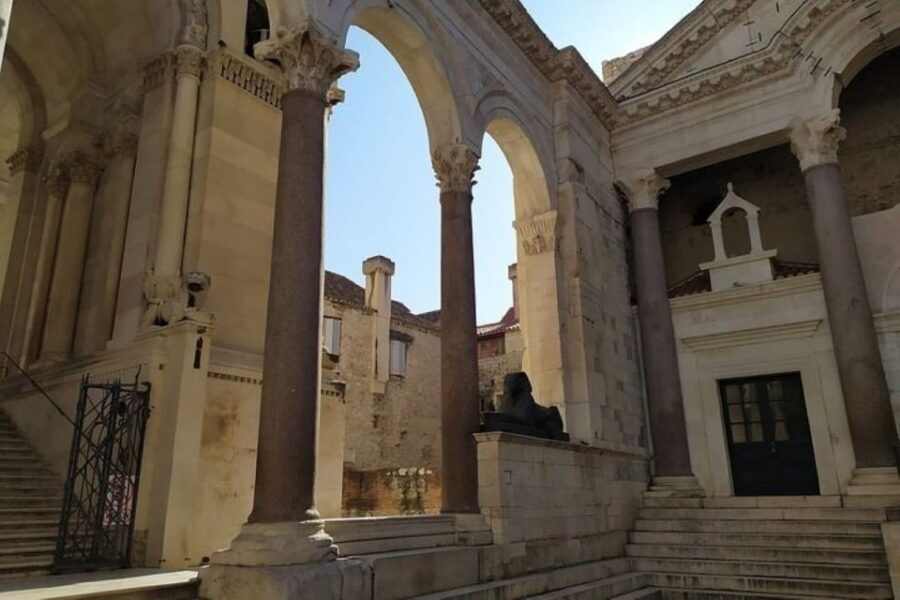
This is a great fit if you:
- want a guided history walk focused on Diocletian’s Palace and the UNESCO setting
- enjoy learning how Roman spaces were adapted by later communities
- prefer small-group touring (maximum 12) where questions are welcome
- like a pace that mixes major stops with smaller details
It is probably not a great fit if:
- you have mobility impairments or need wheelchair access, because it is not suitable for wheelchair users
- you dislike walking on older, uneven ground and through tight areas
- you’re expecting a food-focused tour (food and drinks are not included)
For best results, bring your curiosity and your questions. The guide’s style is built around answering them, including practical bits like where to wander next.
Tips to make your 2 hours feel longer than 120 minutes
A short walking tour works best when you show up prepared and present. Here’s how to get more from your time.
- Bring water and plan for heat. The tour notes water or a hat/cap on sunny days.
- Wear comfortable shoes you trust on stone streets. You’ll be covering multiple palace and city areas.
- If you’re photographing, pause and let the guide finish a point. In places like Peristil and the cathedral area, a single explanation can change how your photo turns out.
- Use questions strategically. Ask what you should notice in the next square or room. You’ll start spotting details faster.
Also, keep in mind the tour ends at Narodni trg. That finish point is convenient for continuing on foot, so you can extend the day without rushing back for transport.
Should you book this Split history walking tour?
If your goal is to understand Split through Diocletian’s Palace—not just to check off famous spots—this tour is a solid choice. You get historian-led context, small-group pacing, skip-the-line entry, and visual tools like 3D reconstructions that help you build a mental picture of the palace across centuries.
Book it if you like guided architecture, Roman-to-medieval connections, and the small-city charm of squares and narrow lanes. Skip it if you want a slow, fully comfortable stroll with minimal walking, or if wheelchair access is essential.
FAQ
How long is the Split History Walking Tour?
The tour lasts about 2 hours.
Where does the tour start?
The meeting point is at the Golden Gate, the northern gate of Diocletian’s Palace, opposite the Gregory of Nin statue.
Where does the tour end?
The tour finishes at Narodni trg.
What does the tour cost?
The price is $37 per person.
How big is the group?
The tour is limited to a maximum of 12 participants.
Who is the guide, and what languages are offered?
A local professional guide with a master’s degree in history leads the tour. Languages offered are English and Croatian.
What’s included in the tour?
What’s included is the local professional guide (with a master’s degree in history) and 3D reconstruction images and pictures.
What should I bring?
Comfortable shoes are recommended, and on sunny days you should bring water or a hat/cap.
Is the tour suitable for wheelchair users?
No. It is not suitable for people with mobility impairments or wheelchair users.
If you want, tell me your travel dates and what you care about most (Roman ruins, medieval squares, or the day-to-day feel), and I’ll suggest the best time to fit this into your Split itinerary.