Split’s old streets have a knack for surprises. This short guided walk connects the dots between Roman power, Christian shifts, and the city symbols you see every day. What makes it especially useful is the tight route and clear storytelling, all in English with a small group.
I really like two things about the experience. First, the focus on Diocletian’s Palace landmarks means you get context fast, not just photo stops. Second, the guide I’m referencing here (Nicole, also called Nikol by the team) brings the kind of answers that actually help you understand what you’re looking at, at a pace that feels manageable.
One consideration: this is still an old-town walk, and there are some stairs (not many, but they exist). If you have mobility limits, you’ll want to think about that before you go.
In This Review
- Key highlights at a glance
- A 90-minute route that helps you read Split fast
- Meeting point and pacing: simple start, small-group comfort
- Stop 1: The Peristyle of Diocletian’s Palace as the palace’s living “heart”
- Stop 2: Cathedral of Saint Domnius—where Roman tomb becomes a city symbol
- Stop 3: Temple of Jupiter inside the palace complex—Roman faith, not just ruins
- Price and value: why $41.70 can actually feel fair
- What you’ll remember after the walk
- Should you book this Split’s Hidden History walking tour?
- FAQ
- How long is the Discover Split’s Hidden History guided walking tour?
- What language is the tour offered in?
- Is admission included for the main sights?
- Where does the tour start and end?
- What’s the group size limit?
- What is not included in the price?
Key highlights at a glance
- Peristyle of Diocletian’s Palace: the palace’s courtyard origins and the Roman layout made visible
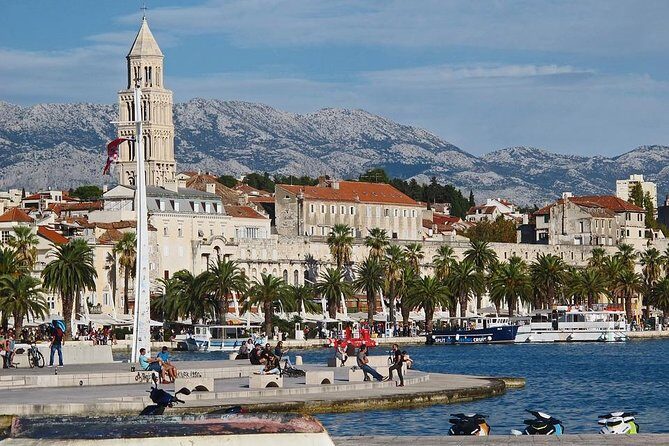
- Cathedral of Saint Domnius: bell tower as an everyday city emblem, plus a treasury stop
- Temple of Jupiter: a 3rd-century Roman temple tucked inside the palace complex
- Small group size (max 15): easier questions, less crowd crush, better flow
- Admission tickets included for the main sights: you’re not juggling extra payment at each stop
A 90-minute route that helps you read Split fast
Split can feel like one long archaeological puzzle: columns here, carvings there, medieval walls doing their best Roman impression. This tour is built for getting oriented quickly. In about 1 hour 30 minutes, you walk through three major landmarks that basically explain why Split looks the way it does.
The payoff is not just seeing impressive structures. It’s learning what each place meant at the time. Diocletian’s Palace is the starting point thread. Then you see how the city’s most famous cathedral grew from that Roman foundation. Finally, you end with the Temple of Jupiter, a reminder that this area was once about ancient gods, not saints.
And because the tour is offered in English with a certified local guide, you don’t have to guess what matters. You can focus on noticing details: where the columns line up, how the spaces were designed, and why those symbols became part of the city identity.
You can also read our reviews of more walking tours in Split

Meeting point and pacing: simple start, small-group comfort
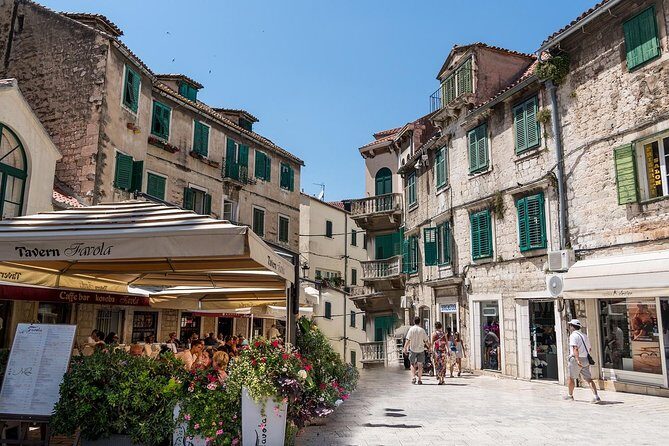
You meet at Obala Lazareta 3, 21000, Split, and the tour ends back at that same meeting point. The plan is straightforward, which I appreciate. No bus runs, no long detours—just an efficient walking route through the old core.
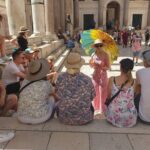
Small group size matters here. With up to 15 people, the guide can actually answer questions without shouting over everyone. From the feedback you’ve got, Nicole’s style seems to be exactly what you want on a short tour: clear explanations, plenty of Q&A, and not too much rushing.
Also, the timing is built around a realistic pace. The stops are capped in a way that keeps you moving, but not sprinting. Still, plan for some stairs. It’s not a marathon, but if you’re sensitive to uneven steps and tight old-street corners, wear supportive shoes.
Stop 1: The Peristyle of Diocletian’s Palace as the palace’s living “heart”
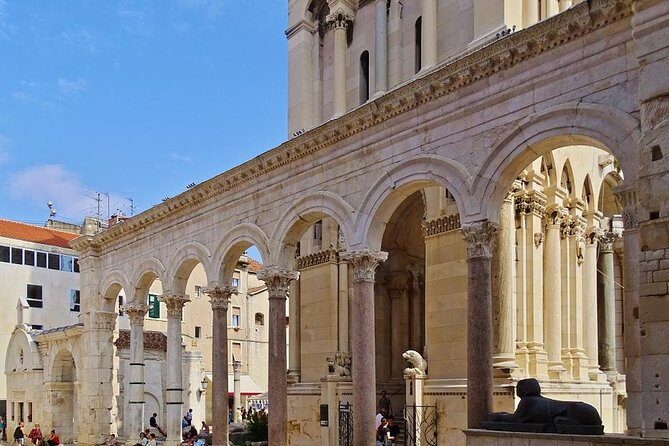
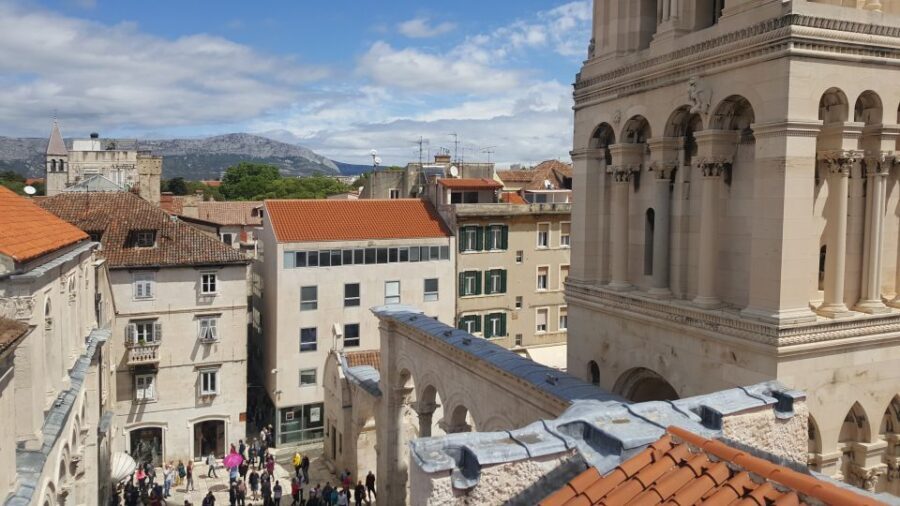
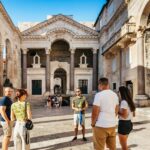
Your first major stop is the Peristyle of Diocletian’s Palace, described for good reason as the beating heart of Split’s old world. This isn’t just a pretty open space. The Peristyle is the former courtyard of the fortress built by one of the last Roman emperors, so you’re seeing the layout of authority and daily movement, all in one place.
Why this stop is smart early in the tour: it gives you a mental map before you hit the cathedral and temple. You start to notice how Roman design creates power through order—how the columns frame space, how the courtyard functions as a centerpiece, and how the palace complex worked as an integrated system.
You’ll have about 30 minutes here, and the key point is that your admission ticket is included for this segment. That matters because it keeps the experience flowing. Instead of breaking the rhythm to figure out payments, you can stay focused on the story: this courtyard started as Roman fortress life, and centuries later, it remains a central stage for Split.
Practical tip: take a minute at the start to look beyond the main view. The Peristyle is all about how lines of architecture guide your eye. If you only glance once, you’ll miss the structure’s logic.
Stop 2: Cathedral of Saint Domnius—where Roman tomb becomes a city symbol
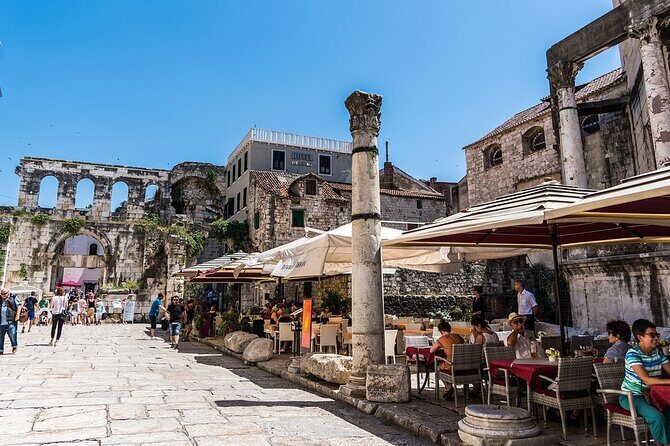
Next up is the Cathedral of Saint Domnius, often treated as Split’s most popular attraction. This isn’t just a church you walk past. It’s a building layered with meaning, starting with its original purpose.
Here’s the core story you’ll want to remember: the cathedral was built as a mausoleum for Diocletian. The tour notes also frame Diocletian as the last famous persecutor of Christians, which gives the shift from Roman rule to Christian identity a sharper edge. In other words, you’re walking through a space where political power and religious change overlap.
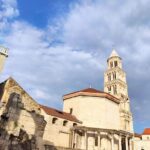
One of the biggest reasons this place sticks in your head is the bell tower. The tour emphasizes that it has become an emblem of the city—so even if you think you’ve already seen it on postcards, this is where you understand why it became iconic.
You’ll also spend about 30 minutes here, and this stop includes an admission ticket. That gives you access not just to the main space, but to the cathedral treasury, which is described as housing items like reliquaries, icons, church robes, and illuminated manuscripts. The detail that really stands out: documents in Glagolitic script. That’s the kind of thing that turns a routine church stop into a historical clue you can’t easily fake with guesswork.
What to expect in the moment: you’ll likely move between exterior views and interior highlights, and the guide should help you connect what you see to the why behind it. If you like facts that make architecture click, this is the stop that delivers.
Consideration: if you’re short on time in Split, this cathedral is still worth your attention because it’s doing double duty—spiritual site and historical anchor.
Stop 3: Temple of Jupiter inside the palace complex—Roman faith, not just ruins
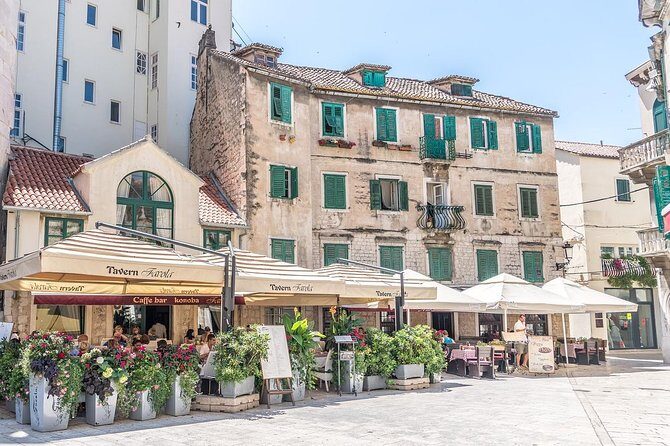
The final stop is the Temple of Jupiter, constructed in the 3rd century as part of Diocletian’s Palace. This is one of the reasons the tour feels coherent. Instead of scattered sightseeing, you’re ending where the Roman story was originally centered: belief, authority, and worship.
The tour frames Diocletian’s belief that he was the reincarnation of Jupiter, which connects politics to religion in a way you can actually visualize. And it reminds you how the Romans built sacred spaces with a sense of permanence. When later Christian rule took over, worship patterns changed—but the architecture remained.
You’ll have about 15 minutes here. That’s not long, but it’s designed as a finishing note, not a replacement for a full museum-style visit. The key value is that you understand what this temple is and where it fits: tucked into the palace complex, not standing alone as a random monument.
Why this works as a tour ending: after the cathedral, you’ve seen Roman origins and Christian continuity. Then the temple brings you back to the original religious system—Jupiter worship—so the timeline in your head feels complete, even in a short window.
Practical tip: at this stop, slow down for a quick architecture check. Look at what you can see clearly rather than hunting for details that take time. Fifteen minutes goes fast, and the guide helps you pick the right things to notice.
You can also read our reviews of more guided tours in Split





Price and value: why $41.70 can actually feel fair
At $41.70 per person, this tour sits in a range that can feel either expensive or reasonable—depending on what’s included. Here, the math leans toward the reasonable side because key elements are built into the experience.
First, the tour includes a certified English-speaking local guide. For many short history walks, you’re paying for narration and interpretation more than the stones themselves.
Second, admission tickets are included for each of the main stops: the Peristyle, Cathedral of Saint Domnius, and Temple of Jupiter. Even if you’re the kind of person who doesn’t buy lots of extras, that’s real value in a place where ticket costs add up quickly.
Third, the duration is tight at about 1 hour 30 minutes. If you’re only in Split briefly, this helps you get a high-information overview without losing a whole half day. And because the group caps at 15, you’re less likely to get stuck in a chaotic queue dynamic.
Not included is also clear: coffee or tea and any optional entrance fees beyond what’s already covered for the stops. That means you’re not paying for things you didn’t ask for, but you should still plan for your own refreshment break.
Who this tour suits best: first-timers and returners
This is ideal if you’re a first-time visitor and want structure. You’ll get oriented in Diocletian’s palace area, understand how the cathedral became central, and end with the Jupiter temple as the Roman religious bookmark.
It’s also a good choice if you’ve already walked around Split on your own and you want someone to connect the dots. The guide’s approach—especially Nicole’s Q&A style—seems built for people who ask questions and want precise answers, not vague commentary.
If you’re traveling with a friend who loves architecture while you love stories, this also makes a good compromise. You get both: spaces that make sense, plus the human meaning attached to them.
What you’ll remember after the walk
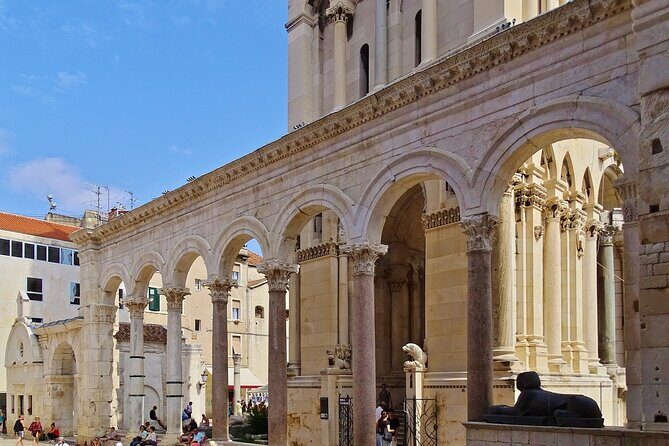
The best part of tours like this is when the city starts making sense after you leave. In this case, you’ll likely carry three clear images: the Peristyle as the Roman courtyard core, the bell tower of Saint Domnius as the city emblem, and the Temple of Jupiter as a 3rd-century statement of Roman belief inside Diocletian’s world.
You’ll also have a stronger sense of how old Split works. The palace wasn’t just one building. It was a system that held power, worship, and everyday spaces. Then later religions and cultural shifts reused and reinterpreted that infrastructure. The tour gives you that timeline without making you read a textbook outdoors.
One more reason it’s memorable: the experience is short enough that you don’t fade halfway. You keep energy. You stay curious. And with a small group, the guide can tailor explanations to the people asking.
Should you book this Split’s Hidden History walking tour?
If you want an organized, high-value way to understand Split’s Roman-to-Christian layers in about 90 minutes, I’d book it. The included admissions for the biggest sights remove friction, and the small group size helps you actually get answers—especially if you like history but hate wandering in circles.
I’d think twice only if stairs or walking comfort is a major concern for you. Otherwise, this is a smart pick for first-time Split visits, and it’s a solid refresher if you’ve already seen the obvious and want the why behind the stones.
FAQ
How long is the Discover Split’s Hidden History guided walking tour?
It lasts about 1 hour 30 minutes.
What language is the tour offered in?
The tour is offered in English.
Is admission included for the main sights?
Yes. Admission tickets are included for the Peristyle of Diocletian’s Palace, the Cathedral of Saint Domnius, and the Temple of Jupiter.
Where does the tour start and end?
It starts at Obala Lazareta 3, 21000 Split, Croatia, and ends back at the same meeting point.
What’s the group size limit?
The tour has a maximum of 15 travelers.
What is not included in the price?
Coffee and/or tea are not included, and any optional entrance fees are not included.