REVIEW · CITY TOURS
Split Tour by Electric Tuk-Tuk: Top City Highlights
Book on Viator →Operated by Tuk Tuk Split City Tour | Viking Travel Agency · Bookable on Viator
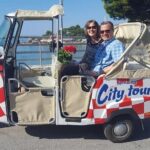
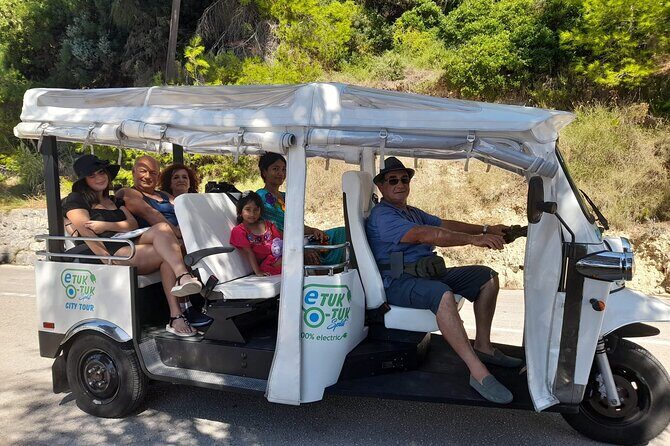
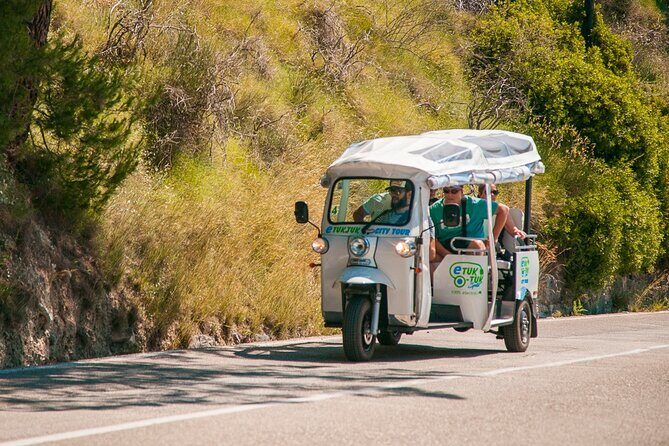
Tuk-tuks beat buses in Split. This is a small-group electric tuk-tuk tour that takes you across key sights in less time than a walking plan, including parts that bigger vehicles can’t reach easily. I like that it’s built for flexibility too, with departures across the day and a route that mixes waterfront views, parks, and city landmarks.
My favorite parts: the coverage. In about 1.5 to 2 hours, you get a true “highlights + viewpoints” scan of the city—Riva and Prokurative up front, then parks, museums, and Marjan’s beaches. And the guide quality matters here; I’ve seen guides like Luca and Tony bring the city to life with clear stories and practical tips.
One consideration: timing and stop length can vary. A few folks reported late pickups or that the tour felt shorter than expected, so if you’re on a tight cruise schedule, I’d give yourself buffer time.
In This Review
- Key Things I’d Prioritize
- Why Split Works With an Electric Tuk-Tuk
- Riva Harbor and St. Francis: Your Split “Orientation” Stop
- Zapadna Obala and ACI Marina: Modern Coastline Views
- Zvončac and Sustipan: Parks With Sea Views (and Shade)
- Museum Time: Archaeological Museum and Meštrović Gallery
- Obojena Svjetlost and Kasjuni: The Beach Stops That Change the Mood
- Poljud Stadium and Teraca Vidilica: Photos With Real Scale
- Republic Square (Prokurative): The Central Finish
- Price and Time: Is It Worth $50.81 for 1.5 to 2 Hours?
- What to Watch For (Without Killing the Fun)
- Who This Tour Fits Best
- Should You Book This Split Highlights Tuk-Tuk Tour?
- FAQ
- FAQ
- How long is the Split Tuk-Tuk City Tour?
- How much does the tour cost?
- Is pickup available?
- What language is the tour guide?
- What’s included in the price?
- How large is the group?
- Is it dependent on weather?
- Are there places where entrance fees are free?
Key Things I’d Prioritize

- Electric tuk-tuk access: you can reach areas where cars or buses are a no-go.
- Small group size (max 8): easier conversations and fewer bottlenecks at photo stops.
- Marjan Peninsula variety: viewpoints, beaches, and a stadium in one loop.
- Outdoor-first pace: many stops are quick, so you can decide what’s worth extra time.
- Guide-driven sightseeing: history, stories, and food or photo suggestions from people like Luca, Tony, and Emir.
Why Split Works With an Electric Tuk-Tuk
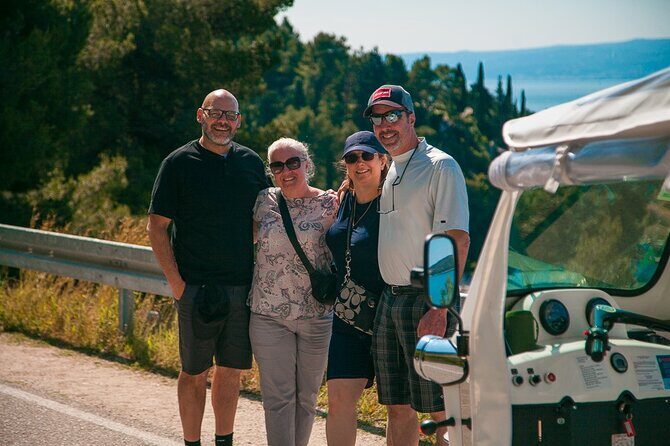
Split is a mix of tight old streets, windy coastal roads, and hills with big views. That’s exactly where a tuk-tuk makes sense. It’s smaller than the usual bus, so the route can include places that feel unreachable if you’re only walking or stuck with big-vehicle limits.
The electric part also changes the vibe. It’s quieter than you’d expect, which means you can actually hear your guide while you’re riding. That matters when you’re moving fast and want the quick context, not just the scenery.
You’ll be with a guide (English), and the group is capped at 8. In plain terms: you get the advantage of a tour without feeling trapped in a crowd.
You can also read our reviews of more city tours in Split


Riva Harbor and St. Francis: Your Split “Orientation” Stop

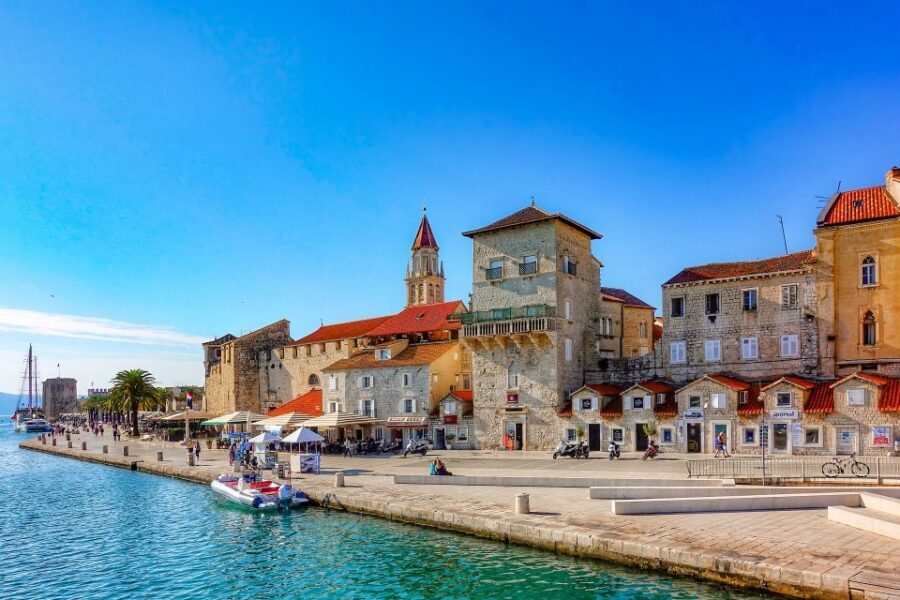
Start along Riva Harbor, Split’s famous waterfront promenade. This is where you get your bearings fast: sea views, palm-lined walkways, café terraces, and the sense that the city lives right at the waterline. If you’re arriving by cruise or spending only a short day, Riva is a smart opening move because it anchors everything else you’ll see.
From there, the tour shifts toward the quieter side of the center with the Church and Convent of St. Francis at the western end of Riva. This is a calmer, older pocket of Split, dating to the 13th century, with a blend of Gothic and Baroque elements. Inside, you’re looking at historic altars, paintings, and sculptures, plus a tranquil courtyard and gardens—an easy reset after busy streets.
What I like about this pairing (waterfront + religious-historic site) is the contrast. One moment you’re watching the Adriatic. The next you’re stepping into a place designed for reflection.
Zapadna Obala and ACI Marina: Modern Coastline Views
Next comes Zapadna Obala, the western waterfront promenade. It stretches from the area near Matejuška Bay toward the ACI Marina, with wide paths and a line of cafés and restaurants. This stop is less about monuments and more about perspective—how Split frames the sea and how the Old Town sits in the background when you’re looking from the coast.
Then you roll into the ACI Marina Split area. This marina sits near the foot of Marjan Hill and is close enough to the historic center that it feels like part of the city, not some far-off dock. It’s also a practical place: over 300 berths, plus services like fuel, restaurants, and maintenance.
Even if you’re not visiting by boat, the marina is a good visual anchor. You’ll see how Split’s modern side and nautical life line up with the viewpoints you’ll hit later on Marjan.
Zvončac and Sustipan: Parks With Sea Views (and Shade)
If you’re heat-sensitive, don’t skip the park stops. Zvončac is a peaceful park near the center, close to the Riva promenade and not far from spots like Sustipan and the marina. You’re here for greenery, shaded paths, and Mediterranean plants, plus open areas that work well for a breather or a quick snack.
Zvončac also gives you a good look at the coastline feel—rocky shoreline nearby and that “walkable to swim” sense, even if you don’t plan to get in the water.
From there, the tour goes to Sustipan, another park area with sea views near the marina. Sustipan is especially interesting because it’s tied to older use: once an old monastery and cemetery site, now it functions as a quiet retreat. The elevated viewpoints are ideal for photos, and the shaded walkways make it a comfortable stop when you need a break from the sun and traffic.
I like both of these because they’re not just “pretty parks.” They help you understand Split’s layout: water, hills, and pockets of calm within reach of the main sights.
Museum Time: Archaeological Museum and Meštrović Gallery

Split isn’t all beaches and stadiums. If you want culture that fits into a short day, this tour includes two strong stops in the wider city zone.
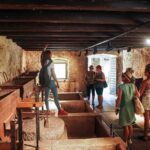
First is the Archaeological Museum in Split, established in 1820. It’s the oldest museum in Croatia, and it’s a solid way to connect Split to the larger region of ancient sites. You’ll find artifacts spanning prehistoric, Roman, early Christian, and medieval periods—things like stone inscriptions, sculptures, mosaics, pottery, jewelry, and tools. One highlight is material tied to Salona, the nearby ancient city often considered the largest archaeological site in Croatia, plus collections like Roman-era sarcophagi.
Then comes the Meštrović Gallery, focused on Croatian sculptor Ivan Meštrović. The setting helps: the gallery is inside a villa with Mediterranean gardens, and you can explore both indoor works and outdoor sculpture displays. The outdoor area matters because the views over the sea add to the art—so it doesn’t feel like a museum boxed inside walls.
Here’s my practical advice: if you’re the type who rushes through museums, you may want to keep expectations short and pick what you want to focus on. This tour is about breadth, not deep study of every room.




Obojena Svjetlost and Kasjuni: The Beach Stops That Change the Mood
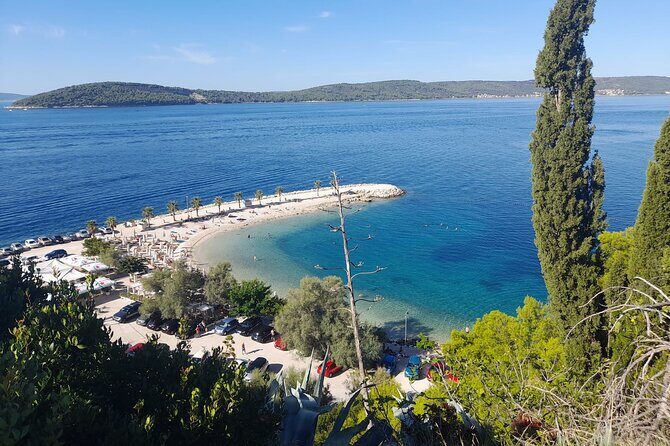
The tour includes beach time, and it’s not just a quick photo for the sake of it. You get a shift in setting from stone and streets to water and shoreline.
Obojena Svjetlost beach is described as a peaceful cove with crystal-clear water and a pebbled shore. It’s the kind of stop that works well for sitting, sunbathing, and regrouping away from the busy central streets.
Then you move to Kasjuni Beach on the Marjan Peninsula. This one is surrounded by pine trees, which means shade is more likely than on a fully exposed beach. Kasjuni is known as a pebble beach with calm, shallow water—good for an easy swim or at least a relaxing dip if the temperature works for you. There are also beach amenities like loungers, umbrellas, and a beach bar.
One note: pebbles can be tough on bare feet. If you plan to spend more time than a quick dip, you’ll be happier with beach shoes.
Poljud Stadium and Teraca Vidilica: Photos With Real Scale

Two of the most memorable “wow” moments on this loop are Poljud Stadium and Teraca Vidilica.
Poljud is built for football culture and for pictures. It opened in 1979 for the Mediterranean Games and is home to Hajduk Split. The stadium’s shell-like design makes it stand out immediately, and it’s a popular spot for photos at golden hour when light catches those curves. Even if you’re not a die-hard fan, it feels like modern architecture perched with sea views around it.
Then you head to Teraca Vidilica, a café/restaurant on Marjan Hill with panoramic views over the city and the Adriatic. This is where you slow down. You can grab a refreshing drink, consider a light meal, and take in a wide-angle view that puts everything you’ve seen into one picture.
If you’re deciding what to do with your remaining time in Split, Teraca Vidilica is a great “decider” stop—use the view to choose which areas you’ll want to return to on your own.
Republic Square (Prokurative): The Central Finish
To close the tour, you return to the heart of Split with Republic Square, also known as Prokurative. This square is neo-Renaissance in style, framed by elegant colonnades and historic buildings. It’s also inspired by Venice’s St. Mark’s Square in feel, which makes it a good “central plaza” moment in an Adriatic city.
You’ll also get those sea-line views again, plus the chance to pause for a coffee or a slower stroll. Since Prokurative hosts cultural events and concerts, it often feels lively even when you’re just passing through.
I like ending here because it puts you back where you can easily continue your day—Old Town wandering, waterfront walks, or just finding a simple place to eat.
Price and Time: Is It Worth $50.81 for 1.5 to 2 Hours?
At $50.81 per person for roughly 1 hour 30 minutes to 2 hours, you’re paying for speed, access, and a guide in one package. The value is strongest if you meet two conditions:
1) You want to see a lot without spending your whole day in transit.
2) You’re okay with stops that are quick enough to sample, then choose what to revisit.
The tour’s structure supports that. It mixes outdoor viewing points with short visits and includes a guide to supply the context. Since the tour includes guide service but tickets, food, and drinks are not included, your overall cost might be a bit more if you want to enter museums or galleries fully. The good news: some stops are set up as free admission areas, especially the outdoor viewpoints.
This is also a great price-point for a group of two or four in your travel style, because you can use the tour to reduce decision fatigue. You’ll come away with a shortlist of beaches, viewpoints, and neighborhoods that match your taste.
What to Watch For (Without Killing the Fun)
This tour is designed to be smooth and efficient, but there are a couple things to keep your expectations grounded.
First, stop length can be short. Some parts of Split are best enjoyed by lingering, like beaches and parks. If you’re the type who needs 45 minutes to decompress, you might treat this tour as the sampler and plan an extra follow-up on your own.
Second, timing can be sensitive if you’re on a cruise day. There have been reports of pickup delays due to busy port conditions or mechanical issues with a tuk-tuk. You’ll reduce stress by booking an early-day departure when possible and staying flexible.
Finally, roads around Split can feel rough in spots. If your ride comfort matters, I’d mentally tag this as an “adventure transport” experience, not a smooth airport sedan.
Who This Tour Fits Best
This electric tuk-tuk route is a strong match for:
- First-time visitors who want to get oriented fast
- People who want viewpoints and beaches without doing a long hike
- Travelers who like having a guide handle the planning and explain what you’re seeing
- Anyone with limited time who still wants more than Old Town only
It may not be the best fit if you want:
- Deep time inside multiple museums
- A highly structured, stop-by-stop checklist where every listed beach gets equal time
- A long, slow day with lots of free wandering
If you’re pairing this with independent time, it works especially well alongside a classic Old Town walk—use the tour for the outer-city views, then come back later for the streets you love most.
Should You Book This Split Highlights Tuk-Tuk Tour?
If your priority is maximum highlights in minimal time, I’d say yes. The mix of Riva, St. Francis, western coast views at Zapadna Obala and ACI Marina, park breaks at Zvončac and Sustipan, and the Marjan Peninsula sequence (beaches, Poljud, and a panoramic café stop) is exactly the kind of “short trip win” that makes a city feel navigable.
Book it if you:
- Want to see both sides of Split quickly
- Like getting story context from a guide (people like Luca, Tony, Emir, and others bring energy)
- Plan to revisit your favorite stops later
Skip it (or adjust your expectations) if you:
- Need long time at each stop
- Are extremely strict about hitting every single beach or finish point in a long list
- Have a razor-thin schedule with no buffer
FAQ
FAQ
How long is the Split Tuk-Tuk City Tour?
It runs about 1 hour 30 minutes to 2 hours, depending on the exact route and timing.
How much does the tour cost?
The price is listed as $50.81 per person.
Is pickup available?
Yes. Pickup is offered, and a return drop-off at your cruise ship can be arranged if you tell them in advance.
What language is the tour guide?
The tour is offered in English.
What’s included in the price?
The guide is included. Tickets, food, and drinks are not included.
How large is the group?
The tour has a maximum of 8 travelers.
Is it dependent on weather?
Yes. The experience requires good weather. If it’s canceled due to poor weather, you’ll be offered a different date or a full refund.
Are there places where entrance fees are free?
Many of the outdoor stops in the route are marked as admission ticket free, but tickets are not included overall, so you should be ready to pay if the visit includes paid-entry sights.