REVIEW · CITY TOURS
Split: Old City Guided Walking Tour
Book on GetYourGuide →Operated by Day Trips d.o.o. · Bookable on GetYourGuide
Split’s old walls start talking fast. I love how this tour uses Diocletian’s Palace as the backbone for everything you see, and I like that it starts right on the Split Riva so you get the city’s real rhythm before you duck into the old stone lanes. It’s a 90-minute walk that trades checklist photos for stories you can actually use.
Two things to watch for: first, you’ll get a local English-speaking guide who explains how Greek, Roman, Byzantine, and Venetian influence shows up in the old-town layout and architecture. Second, the walk is set up so you’re not stuck staring at one monument—there are photo moments, sightseeing time, and smaller side streets that make Split feel lived-in. One possible drawback: there are reports that the guide may speak quietly and that there’s no headset, so if you’re sensitive to audio, choose a spot where you can hear well and arrive a little early.
In This Review
- Key highlights worth your 90 minutes
- Where the walk begins on Split Riva
- Diocletian’s Palace: the UNESCO anchor you’ll understand faster
- What to keep an eye on
- From palace walls to narrow stone streets and alleys
- The stories behind the architecture (and why Greeks, Romans, Byzantines, Venetians matter)
- A real-world note about your ears
- How the timing works: a 90-minute walk you can actually finish
- Dress and footwear
- Price and value: is $29 really fair?
- Practical notes so the tour feels smooth
- Who should book this (and who might not love it)
- Should you book Split: Old City Guided Walking Tour?
- FAQ
- Where is the meeting point for the Split Old City Guided Walking Tour?
- How early should I arrive before the tour starts?
- How long is the tour?
- Is food and drink included?
- What should I wear or bring?
- What language is the tour guide?
- Is this tour suitable for wheelchair users?
- Are pets allowed on the tour?
- Is there free cancellation and a pay later option?
Key highlights worth your 90 minutes

- Diocletian’s Palace as the starting storyline: you’ll see the old walled complex and learn how different eras left their marks
- Split Riva meetup, easy to find if you arrive early: the walk begins at Obala Hrvatskog narodnog preporoda 21
- Greek-to-Venetian connections: the guide ties monuments and spaces to shifting power across centuries
- Photo stop plus guided time: you get time to look, stop, and ask questions—not just march forward
- A guide can make or break the experience: when the tour lands a great explainer (like Hrystovich, as one guest noted), the stories really click
Where the walk begins on Split Riva
You’ll meet at Obala Hrvatskog narodnog preporoda 21, right at the very beginning of the famous Split Riva promenade. This matters more than it sounds. Riva is wide and open, so your first minutes are a quick orientation: you see the coastline vibe, get your bearings, and understand which direction the old city sits in.
Plan to arrive 15 minutes early. That extra buffer helps because one practical complaint was that the guide wasn’t clearly marked and it could take a moment to spot them. Once you’re matched up, the group gets rolling fast, and the whole tour flows better.
If you’re the kind of person who hates being late and stressed, this is an easy win. You don’t need a complicated plan—just show up early, take in the waterfront, then let the guide steer you into the old streets.
You can also read our reviews of more walking tours in Split


Diocletian’s Palace: the UNESCO anchor you’ll understand faster
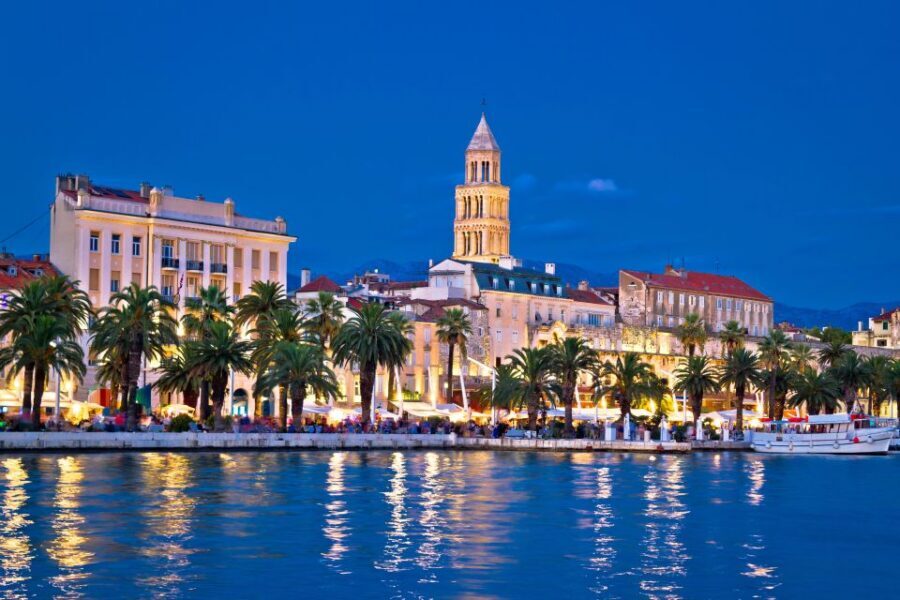
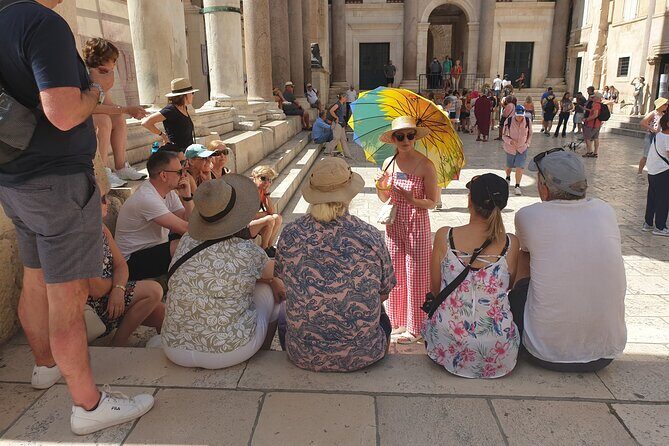
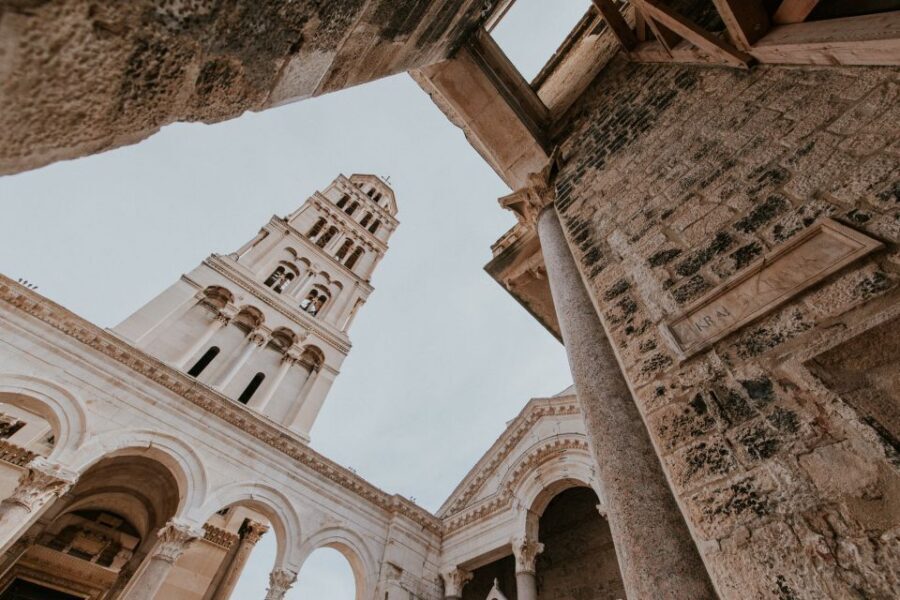
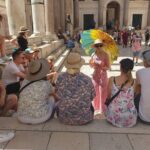
The heavy hitter is Diocletian’s Palace, where the tour includes a photo stop and guided sightseeing time (about 1.5 hours in the palace area during the walk). This is where the tour earns its reputation. Instead of treating the palace like a single sight, the guide uses it as a map of layered influence.
Here’s what you’ll gain: you’ll learn how the palace setting—and the spaces inside it—reflect different civilizations over time. The tour specifically connects the area to Greeks, Romans, Byzantines, and Venetians. Even without memorizing dates, you’ll start to see patterns: why certain spaces feel the way they do, how older structures shape daily movement, and how later periods interacted with what already existed.
The best part is that you’re not just looking at stone. You’re being taught how to read it. That’s what turns a palace visit from sightseeing into understanding.
What to keep an eye on
Since the tour focuses on architecture and lifestyle, pay attention to how people move through spaces and how the old layout still affects today’s city life. If you’ve ever visited ruins and felt like you needed captions, this is the opposite. The guide gives you the captions in real time.
From palace walls to narrow stone streets and alleys

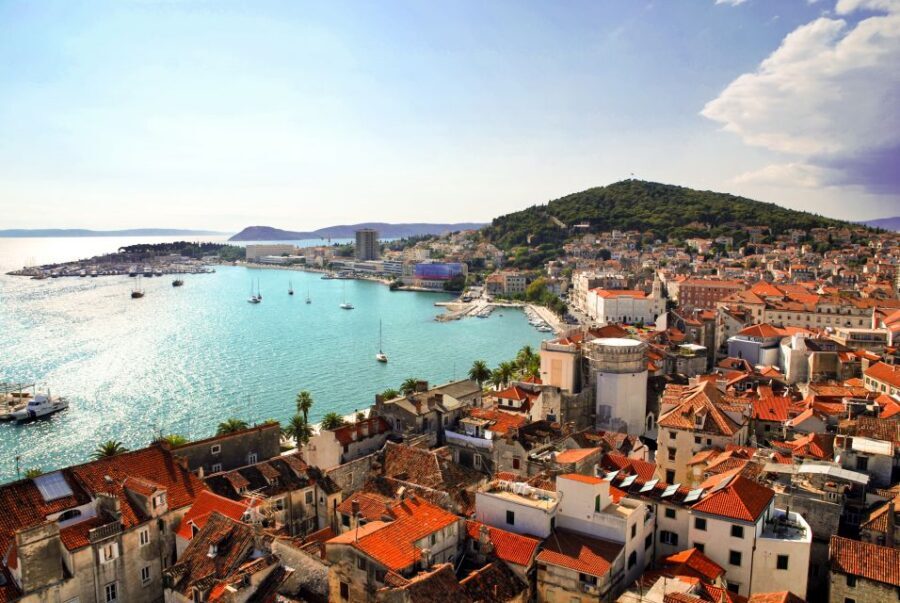
After the palace section, the tour continues through the old-town fabric—narrow stone streets, historical sights, and hidden alleys. This is where your brain starts to relax, because the guide isn’t bouncing you between random landmarks. Instead, you’re walking a connected route through the way Split’s old core actually feels.
This is also a good segment for the “I don’t want the guidebook-only version” mindset. One of the tour’s promises is that you’ll uncover stories a local guide knows. In practice, that means you’re more likely to notice details you’d normally glide past: the way a lane narrows, how buildings present themselves at turns, and how daily life continues in spaces that used to serve entirely different purposes.
You also get a clearer picture of the contrast between historic architecture and modern living. The tour doesn’t ask you to treat Split like a museum. It frames the old area as something people still inhabit—so the city reads as a living place, not just a backdrop.
The stories behind the architecture (and why Greeks, Romans, Byzantines, Venetians matter)

The tour’s core teaching style is cause-and-effect. You’ll hear how different empires and cultures influenced the area, and you’ll connect those influences to what you see on the ground.
You don’t need to be a Roman-history superfan to enjoy this. The value is in learning the “why” behind the shape of things. When the guide explains how Greek and Roman influences show up, it’s usually about form and function—how spaces were designed, and why certain features end up looking a certain way.
Then the Byzantine and Venetian connections add another layer: Split didn’t sit still. Control shifted, trade mattered, and the city kept adapting. The walk helps you understand that history isn’t one straight line. It’s an overlap of eras, and you can still feel those overlaps in the streets and buildings today.
You can also read our reviews of more guided tours in Split





A real-world note about your ears
One critique stands out: the guide may speak a bit quietly, especially when you’re in a broader city setting. Also, there’s mention that there were no microphones/headsets. So choose a spot where you can hear comfortably and don’t be afraid to ask a quick follow-up—your guide likely welcomes questions.
How the timing works: a 90-minute walk you can actually finish
This is listed as a 90-minute tour. That’s a sweet spot. Long enough to get past the “first 10 photos and then you’re done” phase, but short enough that it won’t eat your whole day.
The itinerary is structured around the palace time and then a continuation into the old streets, with the tour wrapping back at the same meeting point: Obala Hrvatskog narodnog preporoda 21.
What that means for you:
- You can slot it into a morning or early afternoon without wrecking your schedule.
- You’ll leave with enough context to enjoy the rest of Split more freely—because you’ll know what you’re looking at when you wander on your own later.
- You won’t need a stamina plan. Just wear shoes you’re comfortable walking in for the whole session.
Dress and footwear
This one is simple: smart casual is recommended, and comfortable shoes are a must. The “narrow stone streets” part is doing work here—Split’s old core can be uneven and the stone surfaces don’t forgive slippery shoes.
Price and value: is $29 really fair?
At $29 per person, you’re paying for the main ingredient: a local English-speaking guide who interprets what you’d otherwise see as “cool buildings.” The tour also includes a guided sightseeing component inside the Diocletian’s Palace area and a photo stop, so you’re not just buying movement and a meeting point—you’re buying a guided explanation.
Here’s how I’d think about value in plain terms:
- If you like museums and monuments only when someone makes them make sense, this price-to-person fits well.
- If you’re happy reading signs at your own pace and you don’t care about historical connections, you may feel it’s optional.
- If you’re short on time and want one solid orientation that connects architecture to power shifts over centuries, this is the kind of tour that often earns its cost.
Also, the pricing makes it easy to fit into a tighter itinerary. You’re not committing to a half-day tour or expensive transportation—this is walk-and-learn.
Practical notes so the tour feels smooth

There are a few details worth taking seriously because they affect comfort and clarity.
First, no hotel pickup is included. You meet at the address on the Riva and you start from there. That’s normal for a walking tour, but it means you’ll want to plan your day around reaching the meetup point easily.
Second, food and drink aren’t included. If you’ll be walking after, grab water nearby before you start, especially in warm weather.
Third, this isn’t suitable for wheelchair users. If accessibility is a concern, you’ll want to choose a different format.
Finally, one guest also reported a negative experience with office customer treatment. You can’t control every staff interaction, but if you have questions, keep your message direct and make sure you’re clear on what you need. For most people, the tour itself is the point, not the office conversation.
Who should book this (and who might not love it)
This tour is a great fit if you want:
- a guided route through Split’s old core instead of aimless wandering
- the big-picture connections between major civilizations and what you see
- a short, manageable walk that ends back at the start
It may be less ideal if:
- you strongly rely on loud audio and you’re easily blocked by noise (since there’s no mention of headsets and some people found the guide hard to hear)
- you hate the idea of meeting a guide at a precise waterfront spot and might get stressed if someone isn’t easy to spot
If you’re comfortable with walking on uneven old stone and you want context, this is a smart use of time.
Should you book Split: Old City Guided Walking Tour?
If your goal is to understand Split’s old center—especially Diocletian’s Palace—in a way that helps you enjoy the rest of the city, I think it’s worth booking. The strongest reason is the storytelling framework: Greek, Roman, Byzantine, and Venetian influence tied directly to what you’re seeing and where you’re walking.
Just go in with the right expectations. It’s not a silent “see sights” stroll. It’s a guide-led walk, and audio clarity may depend on where you stand. Arrive early at Obala Hrvatskog narodnog preporoda 21, wear comfortable shoes, and you’ll get a lot more out of the stone than you would alone.
FAQ
Where is the meeting point for the Split Old City Guided Walking Tour?
You meet at Obala Hrvatskog narodnog preporoda 21, at the very beginning of the Split Riva promenade.
How early should I arrive before the tour starts?
Arrive 15 minutes before departure so you can find the guide and get settled.
How long is the tour?
The tour lasts about 90 minutes.
Is food and drink included?
No. Food and drink are not included.
What should I wear or bring?
Bring comfortable shoes. A smart casual dress code is recommended.
What language is the tour guide?
The tour is guided in English by a local guide.
Is this tour suitable for wheelchair users?
No, it is not suitable for wheelchair users.
Are pets allowed on the tour?
No, pets are not allowed.
Is there free cancellation and a pay later option?
Yes. You can cancel up to 24 hours in advance for a full refund, and there is also a reserve now & pay later option so you can book without paying immediately.