REVIEW · WALKING TOURS
Discover The Old Town Split 1.5h walking Small group tour
Book on GetYourGuide →Operated by Gray Line Croatia - A4y · Bookable on GetYourGuide
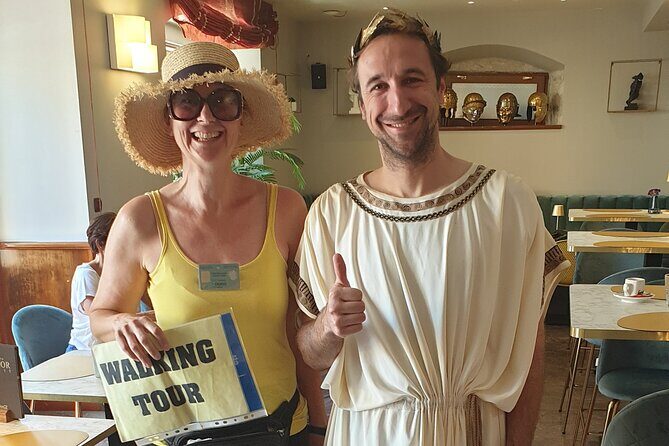
Roman stone, medieval alleys, one easy walk. What makes this old town tour click is that it turns the chaos of Split into a clear story, from the Diocletian Palace ruins to the Roman traces tucked into everyday streets. I also like the guide-driven feel: guides such as Aneka, Anita, Marko, and Ina are repeatedly praised for local detail, great humor, and for making the city feel personal.
You’ll walk real streets—some are narrow and can be uneven—so the main drawback is simple: this isn’t a sit-and-stare tour, and the pace assumes comfortable shoes. If you’re sensitive to walking in heat, plan to take breaks when your guide offers them, and don’t count on this being wheelchair-friendly.
In This Review
- Key things that make this Split Old Town walk worth your time
- Entering Split From the Riva: How the tour starts strong
- Diocletian Palace Ruins: Cellars, peristyle courtyard, and Roman power
- Palace-side streets and squares: why the narrow lanes matter
- St. Domnius Cathedral: finding the mausoleum site of Diocletian
- UNESCO World Heritage: what you’re actually getting from the story
- Group pace and how 90 minutes plays out on the ground
- Price and value: why $29 can make sense here
- What to bring (and what to expect when you arrive)
- When this tour is the best fit for you
- Should you book this Split Old Town walking tour?
- FAQ
- How long is the Old Town Split walking tour?
- Where does the tour meet in Split?
- What language is the guide?
- Are entrance fees included?
- Is the tour wheelchair accessible?
- Can children join the tour?
- Can I get a refund if I cancel?
- Is there a pay later option?
Key things that make this Split Old Town walk worth your time
- Diocletian Palace ruins in context, not as random photo spots
- St. Domnius (St Doimus) and the Diocletian mausoleum site explained in plain language
- A small-group vibe that leaves room for questions and detours for shade
- UNESCO World Heritage stories tied to what you’re standing on
- Licensed local guide energy, often with humor and local “how it works” tips
Entering Split From the Riva: How the tour starts strong
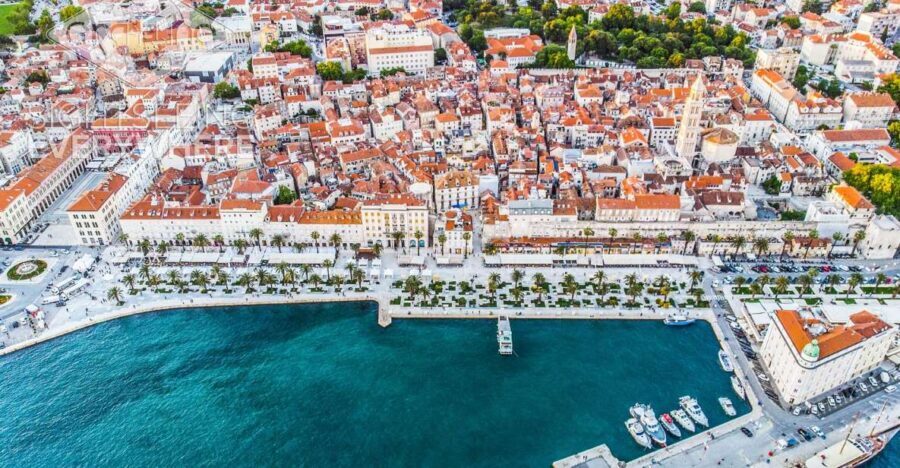
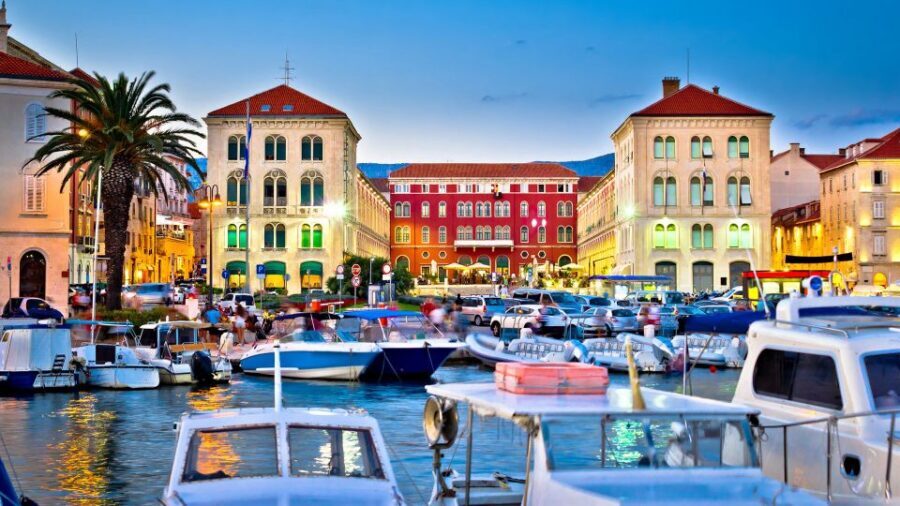
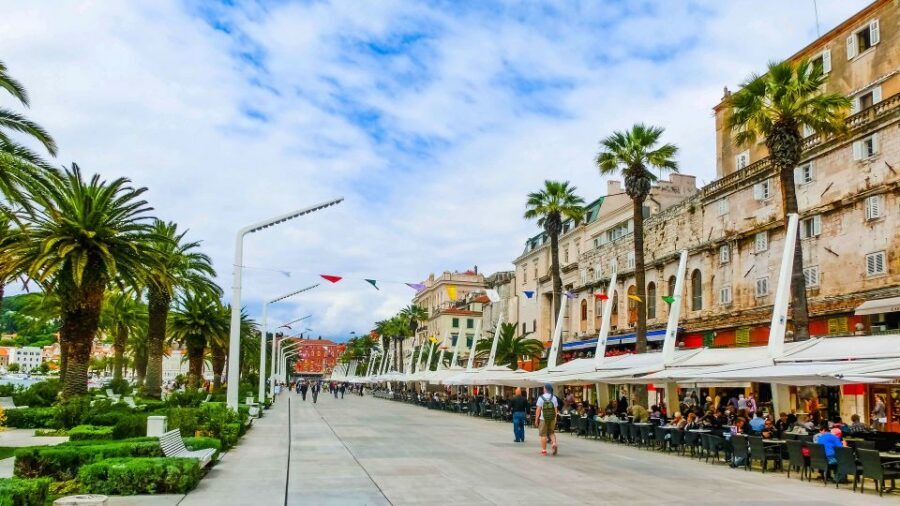
The meeting point is on the famous Riva promenade, at Obala Hrvatskog narodnog preporoda 21. It’s a smart start because the Riva is where you immediately feel Split’s seaside rhythm—cafés, boats, the constant movement of people coming and going. Your guide checks you in, and you’re encouraged to arrive about 15 minutes early so you can get oriented before the walking begins.
Depending on your time slot, you may also see an alternate start option near ATM Auro Domus. Either way, your route is built around the same idea: get your bearings fast, then work inward toward the Roman core of the city.
This is the moment where the guide sets the tone. The best ones—people like Toni, Roko, and Maja are examples from past tours—don’t just rattle facts. They translate the city’s layers into something you can actually picture while you walk: first the Roman plan, then the medieval life that grew around it, then the present-day Mediterranean atmosphere you can taste in the air.
You can also read our reviews of more walking tours in Split


Diocletian Palace Ruins: Cellars, peristyle courtyard, and Roman power
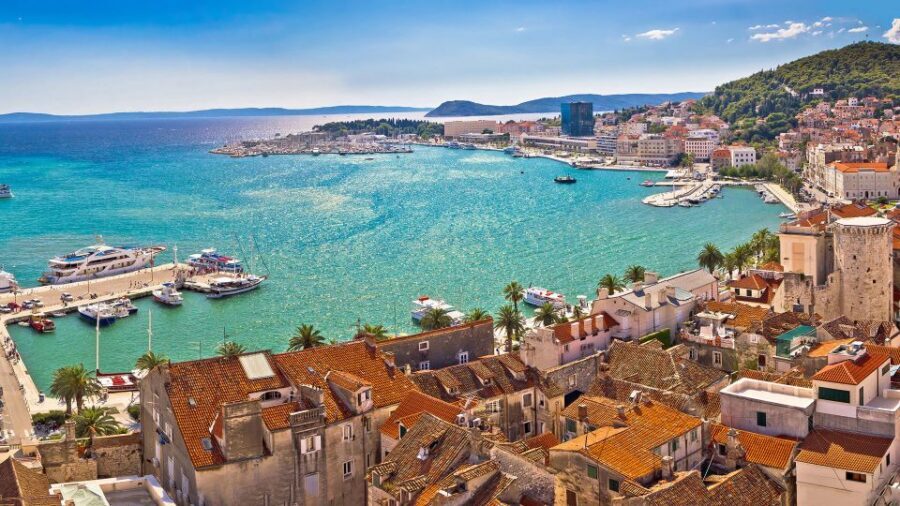
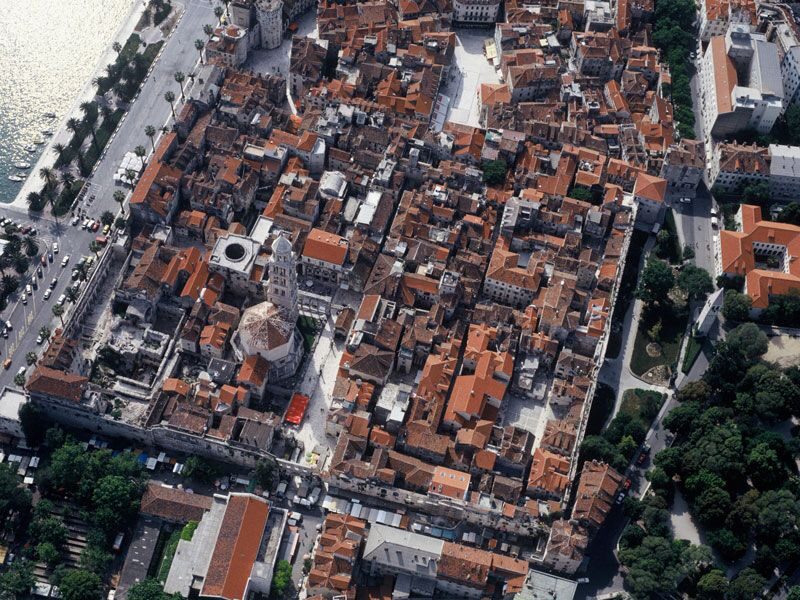
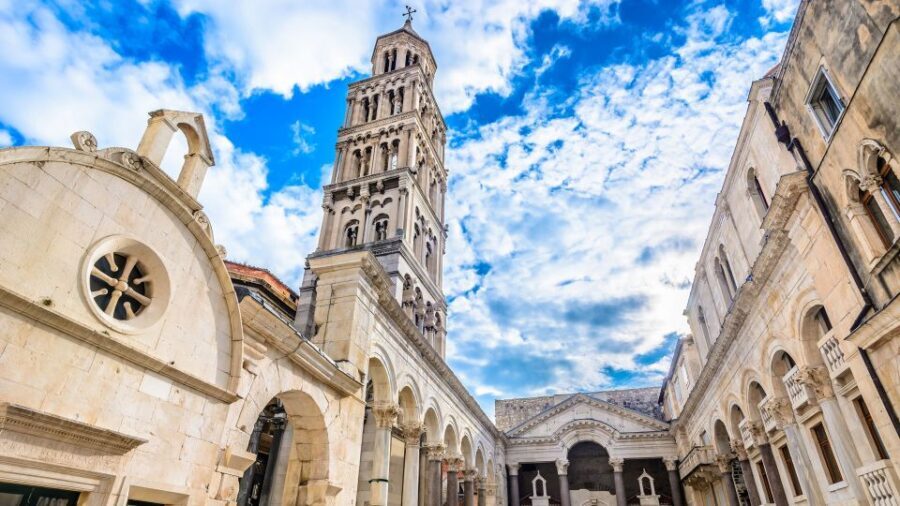
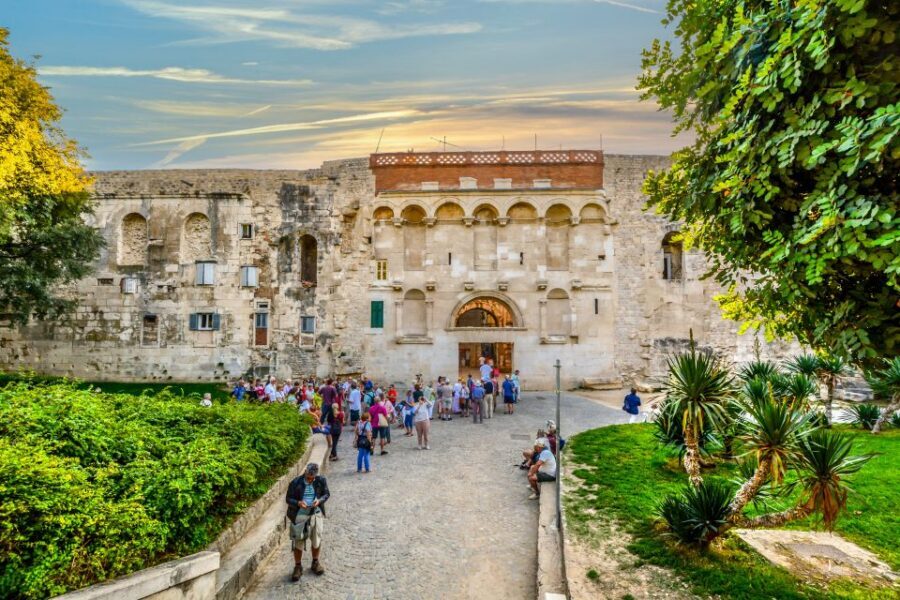
The big opening act is the Palace of the Roman Emperor Diocletian. Even if you’ve seen Roman ruins before, this palace hits differently because it’s not just “a ruin.” It’s a fortress plan that became the backbone of daily life in Split.
As you approach, you’ll be oriented to its main idea: a stone stronghold built with authority, architecture meant to last, and spaces designed for power. Then you walk into the palace area and see how that Roman structure survives through the centuries. Your guide points out things you might miss on your own—like the cellars and the peristyle courtyard—so you understand what you’re looking at rather than just collecting snapshots.
Here’s what I love about this part: the palace ruins act like a visual timeline. When you stand in the right spot and someone explains what the Romans intended—flow of space, defensive thinking, ceremonial areas—you stop treating Split like a postcard town. You start seeing the logic of the city’s layout.
Practical note: there’s walking here on old stone. It’s not a huge distance, but the ground underfoot can be a little uneven. That’s why the shoes matter.
Palace-side streets and squares: why the narrow lanes matter
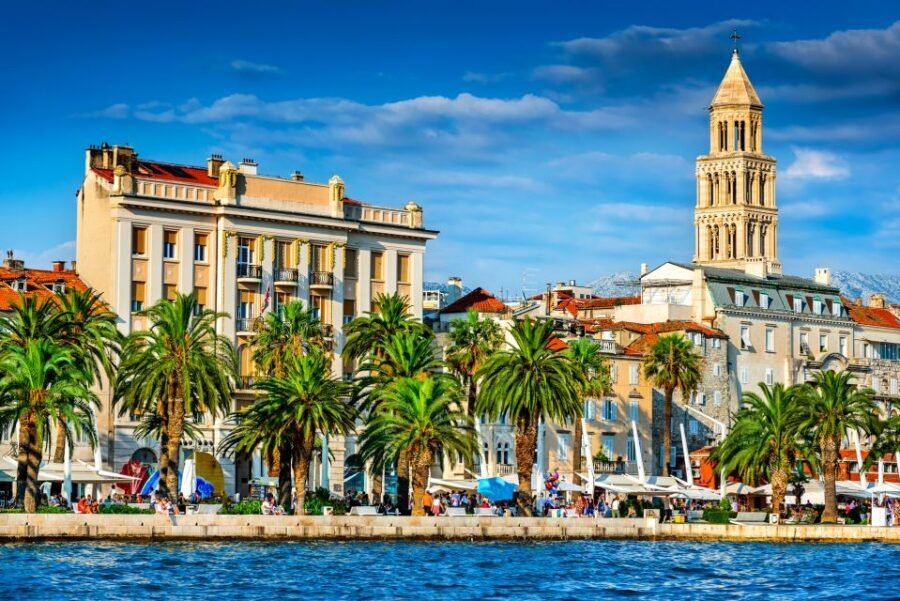
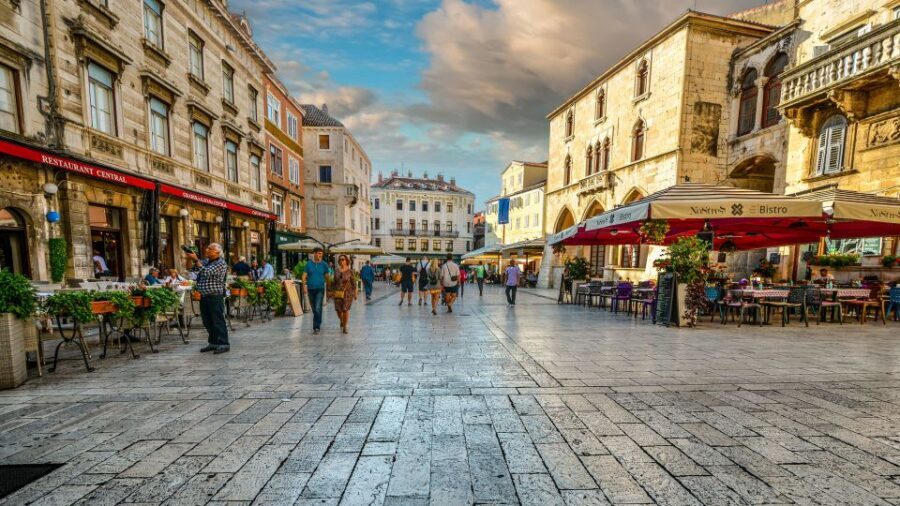
After the palace, the tour shifts from grand ruins to the city’s everyday texture. This is where Split feels like Split: narrow streets, shopfronts, cafés, and those winding pedestrian lanes that make you slow down without trying.
You’ll be walking through the narrow, picturesque streets lined with souvenir stores, but the guide’s job is to keep it from turning into a generic shopping stroll. The way the story is told matters: you’re shown how Roman palace space influenced what came later, and how the medieval part of the city grew into and around what was already built.
This section also helps you understand why the old town feels “dense” in a good way. Buildings crowd together for a reason. Streets compress and open. Squares appear like little breathing spaces. When you know the Roman starting point, you begin to read the street shapes almost like a map drawn by history.
One more bonus: the guide often adjusts where you stand and how you walk in warm weather. Some previous guides are specifically noted for watching for shade and comfort. You won’t have control over the sun, but you can control your attitude—pause when your guide suggests it, and use the short breaks to recharge.
St. Domnius Cathedral: finding the mausoleum site of Diocletian
The tour’s most “wait, that’s here?” moment is the connection to Diocletian’s mausoleum site at the Cathedral of St Doimus (often written St. Domnius). The idea is simple but powerful: the Roman emperor’s final resting area is tied into a later religious landmark, and the city kept that memory in place.
Your guide shows you the key site location within the cathedral area and explains the significance as part of Split’s bigger story. This isn’t just trivia. It helps you understand how monumental power (Roman) shifted into spiritual and civic life (medieval), while still leaving recognizable traces in the urban fabric.
I like this stop because it changes your perspective. Before this, you’re seeing architecture. After this, you’re thinking about time—how places survive when empires fall. Even if you’re not a “cathedral person,” this context makes it feel worth the effort.
If you’re the type who enjoys turning history into mental pictures, this is where it starts to click. You leave knowing what to look for on your own later—when you walk past the cathedral area again, you’ll remember the reason it matters.
UNESCO World Heritage: what you’re actually getting from the story
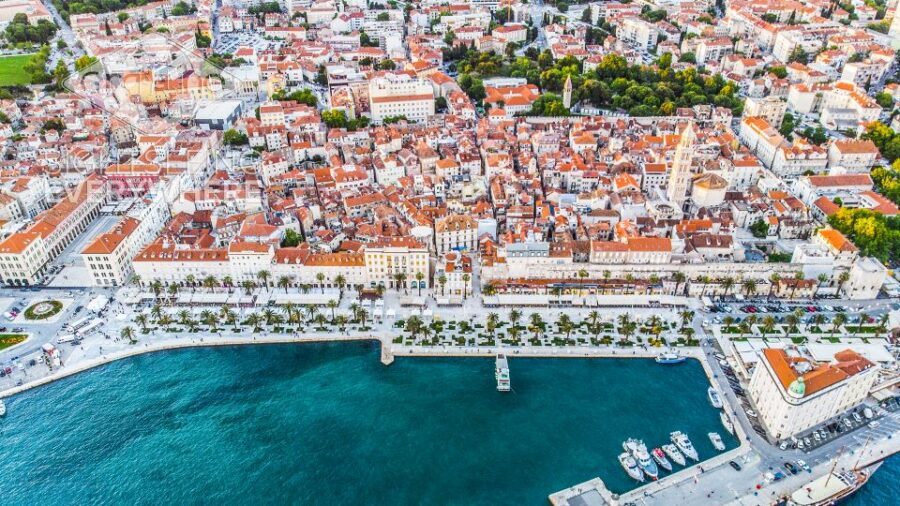
Split’s historic center is UNESCO-listed, and this walk keeps that title grounded in what you see. Instead of treating UNESCO like a badge and moving on, your guide ties the designation to specific places—Roman remains from the Diocletian palace complex, plus the medieval layers that grew around them.
That matters for value. Anyone can wander around old streets. What you pay for here is the translation layer: explanations that connect the dots between the ruins, the cathedral area, and the city’s long continuity.
The tour also keeps the tone relaxed. It’s not a high-pressure lecture. You can absorb while walking, and because it’s only around 90 minutes, you get a focused introduction rather than a marathon.
That makes it a great first old-town activity. I’d treat it like orientation for the rest of your time in Split. Once you get the Roman-to-medieval framework, everything else you choose afterward—wandering, museums, photo stops—feels easier and more meaningful.




Group pace and how 90 minutes plays out on the ground
The advertised duration is about 90 minutes. That’s long enough to cover the core arc—palace area, narrow old streets, and the cathedral connection—but short enough that you’re not trapped doing this while your feet demand mercy.
In practice, the experience can stretch if your guide has extra material or if the group has good questions. That’s a sign the guide is actually paying attention to people, not running a robotic checklist. One of the most praised traits across guides is the ability to tailor commentary based on what the group cares about.
Pacing is also where small-group touring helps. You’re not shouting over big crowds. You can hear your guide, ask follow-ups, and stay present in what you’re seeing rather than rushing to the next stop.
Two more on-the-ground notes:
- This tour is not wheelchair accessible, so it’s best for people who can handle older city streets.
- Pets aren’t allowed, so the group dynamic stays calm.
Price and value: why $29 can make sense here
At about $29 per person for a 1.5-hour small-group guided walk, this is priced in the category of “less money than a museum, more value than a casual stroll.” The big part of what you’re paying for is the licensed local guide and the way they connect the sites.
Entrance fees are not included, and that’s important to understand. Your guide can still show you plenty from the outside and explain what matters. If you decide to add monument entrances, you’ll likely pay extra—so plan for optional costs rather than surprise expenses.
Is it worth it? For me, yes—when a tour includes a strong narrative. Here, the palace ruins plus the St Doimus mausoleum connection gives you two high-impact anchors, and then the guide uses the surrounding lanes and squares to connect them. That’s more than “see the sights.” It’s a structured understanding you can carry with you.
What to bring (and what to expect when you arrive)
Bring comfortable shoes. That’s not a generic instruction; it’s the difference between enjoying the old streets and counting minutes until you can sit down.
Also:
- Plan to check in about 15 minutes early at the Riva address so you start on time.
- The tour runs in English.
- Children must be accompanied by an adult, so it’s family-friendly with that setup.
Weather tip: Split can be warm. Even if you’re not overheating, you’ll walk more comfortably if you treat the tour as a gentle rhythm—short pauses, quick water breaks, and listening to your guide if they suggest shade.
When this tour is the best fit for you
This is a strong match if you:
- Want a first look at Split that explains why the city looks the way it does
- Like Roman and medieval layers more than modern city facts
- Appreciate humor and personality in a guide, not just dates and names
- Prefer a guided walk that doesn’t eat your whole day
It’s less of a match if you:
- Need wheelchair access (this tour isn’t wheelchair accessible)
- Want a fully self-paced experience (this is guided, with set stops)
- Don’t enjoy walking on older streets
Should you book this Split Old Town walking tour?
Yes, if you want an efficient, story-led introduction to Split’s UNESCO Old City. For the money, you get a licensed guide and the two biggest “anchors” that make sense of the rest: the Diocletian Palace ruins and the St Doimus mausoleum connection. The small-group feel and the guide quality—often with humor and real local context—turn it from a walk through pretty streets into a clear understanding of how Split formed.
If you’re comfortable walking uneven old streets and you’re okay with entrance fees being optional, book it early in your trip. It’ll make everything you do after feel easier to place.
FAQ
How long is the Old Town Split walking tour?
It’s about 90 minutes (1.5 hours).
Where does the tour meet in Split?
The meeting point is the local supplier’s office on the Riva promenade, Obala Hrvatskog narodnog preporoda 21, 21000 Split, Croatia. Look for the local supplier’s sign and staff in matching t-shirts.
What language is the guide?
The live tour guide is in English.
Are entrance fees included?
No. Entrance fees to monuments are optional, so you should expect they are not included in the price.
Is the tour wheelchair accessible?
No, the tour is not wheelchair accessible.
Can children join the tour?
Yes, but children must be accompanied by an adult.
Can I get a refund if I cancel?
Yes. You can cancel up to 24 hours in advance for a full refund.
Is there a pay later option?
Yes. You can reserve now and pay later, keeping your plans flexible. You pay nothing today.