REVIEW · TROGIR TOURS
Best of Split & Trogir: Private VIP Tour with Local Guide
Book on Viator →Operated by Discovery tours · Bookable on Viator
Two towns, one ancient spine of stone. This private VIP day tour strings together the best stops in Split and Trogir with a local guide who helps you read what you’re looking at. You get the big monuments, but also the little explanations that make the place feel human instead of just impressive.
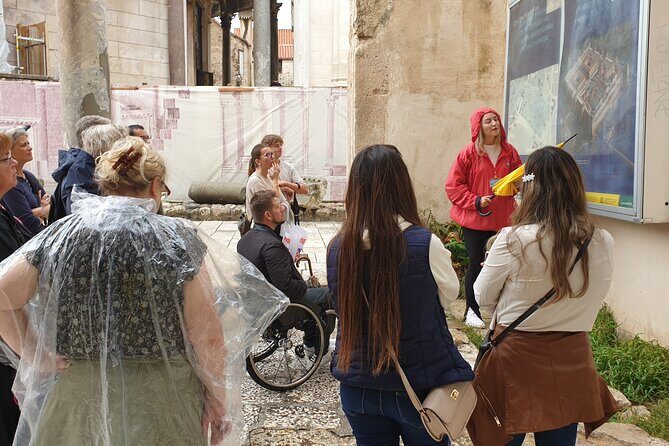
I like the pace: about six hours that still gives real time at each highlight. I also love the practical VIP setup, including pickup and a private group so you’re not getting pulled apart in a mass of strangers.
One thing to keep in mind: several key sights list admission as not included, like Diocletian’s substructures and major Trogir monuments. That’s not a dealbreaker, but it does mean your total day cost may run a bit higher than the headline price.
In This Review
- Key Highlights Worth Booking
- How This VIP Split-to-Trogir Tour Keeps the Day on Track
- Diocletian’s Palace: Peristyle First, Then Read the City Like a Map
- St. Domnius Cathedral: A Cathedral That Survived the Calendar
- Grgur Ninski and the Roman-to-Medieval Story Mix
- The Temple of Jupiter Inside the Palace Zone
- Under Diocletian’s Palace: The Substructures and Cellars
- Trogir’s Central Square: A Venetian-Style Old Town in Miniature
- Loggia, Justice Relief, and St. Lawrence Cathedral
- Kamerlengo Fortress (Kula Karmelengo): Views That Explain Why Trogir Mattered
- Town Loggia and Cipiko Palace: Civic Pride Meets Noble Power
- Price and Value: What $228.78 Buys You in Real Terms
- Guides and Style: Why the Explanations Matter Here
- Who This Tour Suits Best
- Should You Book This Private VIP Day?
- FAQ
- How long is the Best of Split & Trogir private VIP tour?
- Is this tour private or shared with other people?
- Does the tour offer pickup in Split?
- What language is the tour offered in?
- Do I get a mobile ticket?
- Are admission tickets included for every stop?
- What are the main sights included in Split?
- What are the main sights included in Trogir?
- Are service animals allowed?
- What is the cancellation window?
Key Highlights Worth Booking
- Private group time with a local guide, so questions and photos don’t get rushed.
- Smart 15-minute stop blocks that keep you moving without feeling like a drive-by tour.
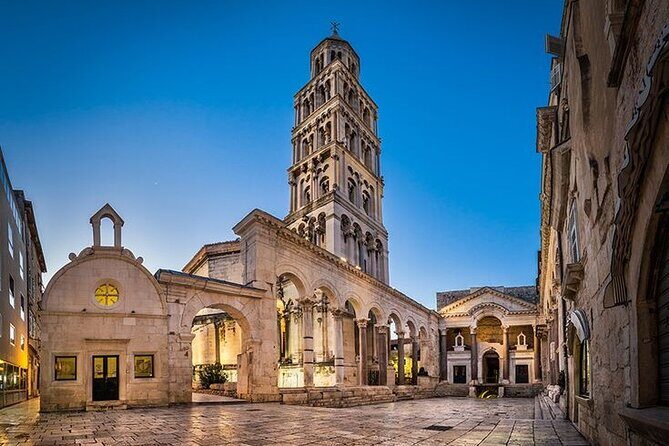
- Diocletian’s Palace core sights, including the Peristyle court and the Cathedral of Saint Domnius.
- Trogir’s UNESCO old-town circuit, built around a central square and Venetian-era details.
- Icon moments in Split, like Grgur Ninski and the long-gone Roman Temple of Jupiter.
- Fortress views from Karmelengo, plus noble-palace architecture like Cipiko Palace.
How This VIP Split-to-Trogir Tour Keeps the Day on Track
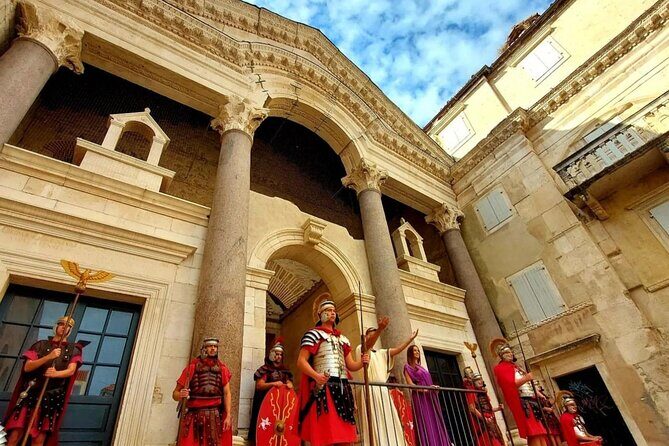
This is the kind of tour that works because it’s built around movement with meaning. You’re not just walking from photo spot to photo spot. The route is designed so one stop naturally leads to the next, starting in Split’s historic core and then swinging to Trogir for its compact old town.
The tour runs about six hours. That’s long enough to cover the “greatest hits,” but still short enough that you’re not stuck in one place too long when crowds build. You’ll see that timing matters most in two places: inside Diocletian’s Palace and in Trogir’s tight lanes, where foot traffic can feel like a slow-moving puzzle.
With pickup offered and a private group setup, you also avoid the worst part of planning: figuring out how to get everyone together and where you should start. And since the tour is offered in English with a mobile ticket, you’ll spend less energy on logistics and more time on the sights.
If you’re planning this day during peak season, I’d call the pacing a big part of the value. You get a guided path through places that are popular for a reason, without turning the day into constant line-standing.
You can also read our reviews of more guided tours in Split

Diocletian’s Palace: Peristyle First, Then Read the City Like a Map
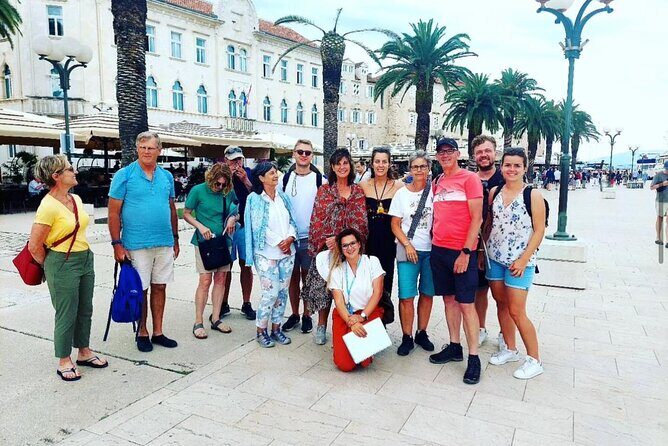
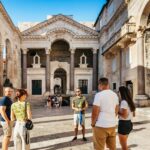
Your tour kicks off in the palace heart at the Peristyle. This rectangular open court sits at the crossroad of two main roads inside Diocletian’s Palace. Think of it as the palace’s “living room,” an open space framed by columns meant to function as a center point for movement and civic life.
What I like about starting here is how quickly it gives you orientation. Once you understand the palace court, you can start recognizing patterns: where corridors lead, how spaces connect, and why certain monuments are grouped where they are. It’s easier to feel the logic of the complex rather than treating it like an endless set of ruins.
The Peristyle stop also includes a free admission ticket, which is a nice win. It lets you spend your energy on observation instead of checking payment rules on-site.
St. Domnius Cathedral: A Cathedral That Survived the Calendar
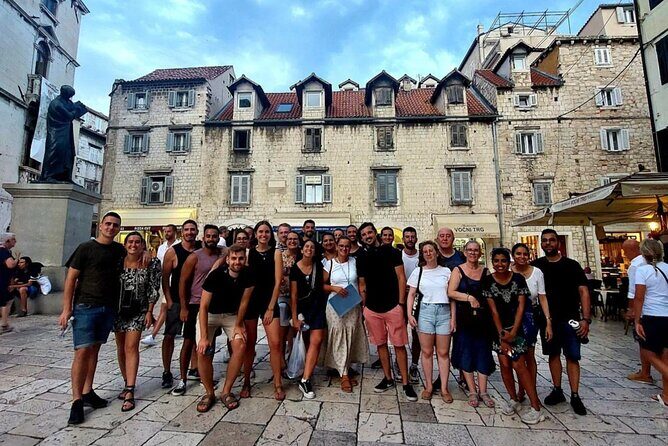
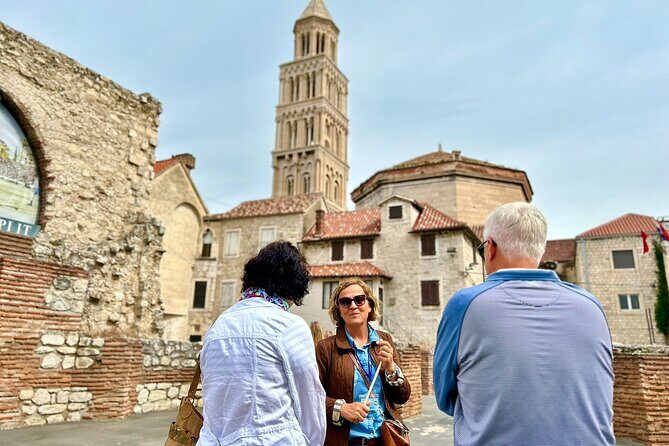
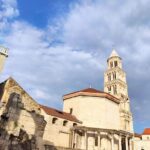
Next comes the Cathedral of Saint Domnius, consecrated around the turn of the 7th century AD. It’s regarded as the oldest Catholic cathedral in the world that remains in use in its original structure with far less renovation than you often see elsewhere. (The bell tower dates from the 12th century, which is a useful reminder that even “ancient” places usually carry layers of time.)
This is one of those stops where the guide’s explanations matter. You’re looking at a living building, not just a monument behind glass. You’ll get a sense of why this matters: a structure that stayed relevant, kept its role, and still anchors daily life in Split.
You’ll likely appreciate the contrast here too. You go from palace court geometry (very “planned”) to a cathedral that has worn centuries like a second skin.
Grgur Ninski and the Roman-to-Medieval Story Mix
Then you hit one of Split’s most famous statue moments: the Grgur Ninski statue, made by Ivan Meštrović. The statue is tall, and the toe gets special attention. There’s a popular superstition that rubbing the toe brings good luck. The toe is worn smooth and shiny because lots of hands have done exactly that over time.
This is a quick stop, but it’s more than a gimmick. It shows how people connect with history in real ways. Even if you’re not chasing the superstition, you’re watching a modern ritual grow around an older cultural thread.
And with this stop marked as free, it’s also a nice pocket of value in the schedule.
The Temple of Jupiter Inside the Palace Zone
After that, you step into the Temple of Jupiter (Jupiterov hram). It’s located in the western part of Diocletian’s Palace, near the Peristyle. The building was constructed between 295 and 305 during the palace’s construction era, dedicated to the Roman god Jupiter.
What makes this stop interesting is the location. You’re not wandering across a separate archaeological park. You’re inside the same imperial complex, where Roman religion and daily palace life overlap in physical space. It’s a great moment to see how the “palace” was never just one thing.
This is also a good stop for photos, because the setting helps you frame the structure against the palace surroundings rather than isolating it in a blank way.
You can also read our reviews of more private tours in Split




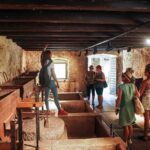
Under Diocletian’s Palace: The Substructures and Cellars
One of the big-ticket themes on this tour is what sits below the palace surface: the Diocletian Palace Substructures, sometimes called the basement halls. Located at the southern end of the palace complex, this area once supported the private apartments of Emperor Diocletian and is described as one of the best preserved ancient complexes of its kind.
This is also the place where you should plan your budget expectations. The admission ticket for this stop is listed as not included. If you’re trying to keep your spending tight, consider it as an optional add-on you’ll want to pay for to get the full picture of Diocletian’s world.
Why this stop is worth it: it changes the way you think about the palace above. Without the lower spaces, the palace can feel like a set of stones you walk through. With the substructures, you start seeing the machine behind the show: storage, support spaces, and the practical engineering needed to run an imperial complex.
You’ll get about 15 minutes at this stop. For something this dense, that’s enough time to understand the layout and still have the guide point out what to notice.
Trogir’s Central Square: A Venetian-Style Old Town in Miniature
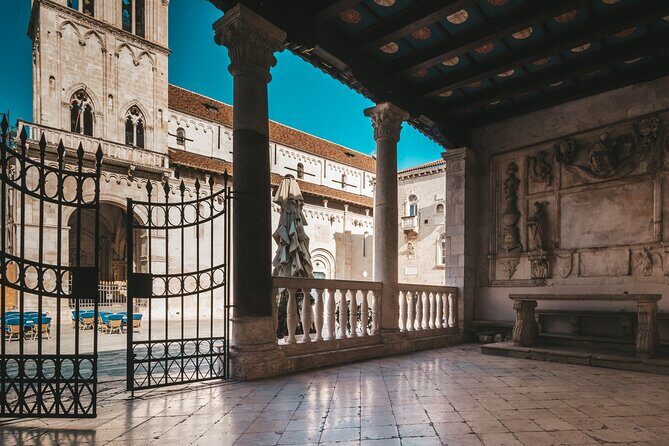
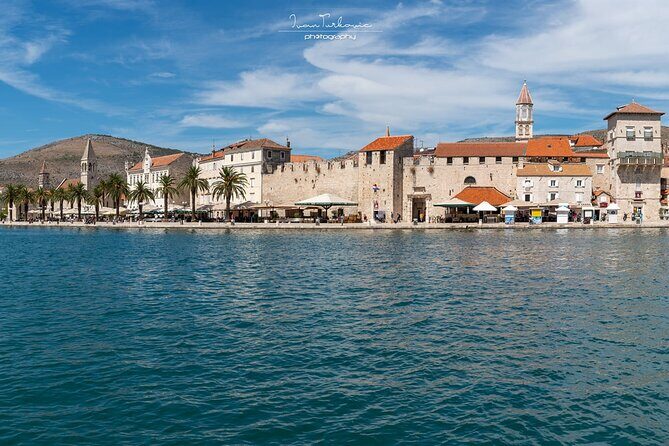
Then the tour shifts to Trogir, where the pacing continues in a smart way. The first Trogir stop is the Central Square, also called John Paul II Square, the main square of the old town. Trogir is a charming port city on the Adriatic, and its old town is included in the UNESCO list of monuments.
What you feel right away in Trogir is a calmer rhythm compared with Split’s palace zone. The old town is smaller, and the architecture reads more like a walkable museum street grid.
This central square stop includes free admission, so it’s a low-cost way to start “reading” the town. The square frames the bigger monuments and helps you orient before you go deeper.
Loggia, Justice Relief, and St. Lawrence Cathedral
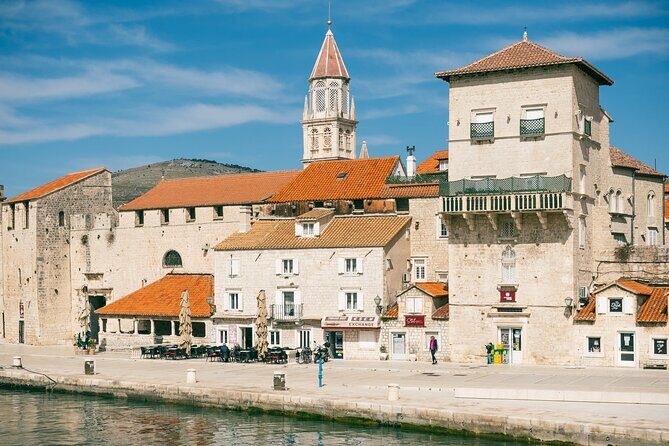
From the central square, you’ll see details like the Loggia, opposite the Cathedral. The Loggia used to serve as a public courtroom and still carries sculptural evidence of civic life. You may notice six pillars with capitals and relief work on the wall, though there can be limited visibility in summer because of nearby setups like a coffee bar.
One relief called The Relief of Justice made by Nicholas Florentino is a specific point the tour highlights. Even if you only catch parts of it from street level, the guide’s framing helps you connect the artwork to how the town worked.
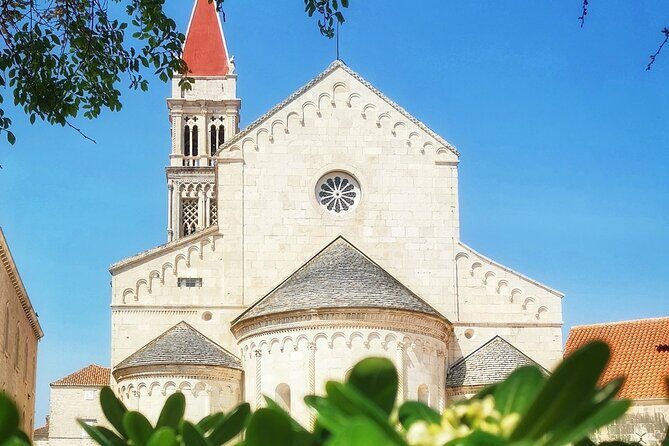
Next is Saint Lawrence’s Cathedral (Katedrala Sv. Lovre), a Roman Catholic triple-naved basilica built in a Romanesque-Gothic style. Because construction lasted centuries, the building illustrates multiple styles that succeeded each other in Dalmatia, which is a useful way to understand why architecture in the region often feels like layered storytelling.
Admission for the cathedral is listed as not included, so again: budget for that if you want to step inside to get the full impact.
Kamerlengo Fortress (Kula Karmelengo): Views That Explain Why Trogir Mattered
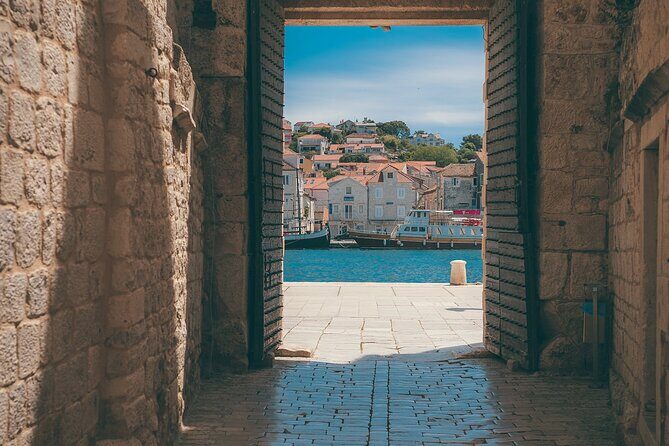
After the cathedral, the route climbs (in spirit, and likely in steps) to Kula Karmelengo, also called Kamerlengo Fortress. Built in the 15th century during Venetian rule, it was designed to protect Trogir from naval attacks. Today, it’s still a coastal landmark, and the payoff is the view over the old town, the marina, and nearby islands.
Admission is listed as not included, but this is the stop where I think the cost often feels more like a buy because you get an instant context reset. From above, you understand why a port town needed defenses and why Venice cared enough to strengthen it.
You’ll only get around 15 minutes here, so if you want the best photos, plan your shot early and let the guide point you to the angle that shows the town’s structure.
Town Loggia and Cipiko Palace: Civic Pride Meets Noble Power
Back in town, you’ll pass by Trogir’s Town Loggia, the medieval public meeting place where decisions were announced and legal matters discussed. It’s a reminder that towns aren’t just “pretty.” They’re places where governance happened, day after day, long before modern paperwork.
Then comes Palace Cipiko (Čipiko Palace), the largest residential palace in Trogir and an example of Gothic-Renaissance architecture. It belonged to the influential Čipiko family, and it showcases the wealth and power of Trogir’s noble past.
Admission for Cipiko Palace is listed as not included. If you enjoy architecture, this is one of the stops where stepping inside (if possible within the tour structure) can help you see the scale of the wealth rather than only imagining it from outside.
Even without going in, the guide’s explanations should help you connect how civic buildings and noble residences sit side by side, showing how different social roles shaped the same streets.
Price and Value: What $228.78 Buys You in Real Terms
The tour price is $228.78 per person for about six hours. On paper, that can look high if you compare it to buying tickets on your own. But in practice, this price is doing a few jobs:
First, it buys you a private, local guided route across two historic towns. Split’s Diocletian’s Palace can be confusing if you don’t know what to look for. Trogir’s compact lanes can also scramble your sense of direction. A guide helps you connect the dots quickly.
Second, it buys time. Eight highlight stops in six hours is tight. The structure suggests you’ll spend your time where it counts, not wandering while deciding where to go next.
Third, it helps with crowd friction. One of the big practical perks of a private guide is that you don’t just “stand in the crowd.” You get guidance on where to move and what to focus on so your photos and your understanding both improve.
One last value note: several stops include free admission tickets (like the Peristyle and Grgur Ninski, plus parts of Trogir’s square and loggia). Others list admission as not included. So your real cost depends on what you choose to pay for while you’re there.
If you want a clean, planned day with less stress, the pricing starts to make sense.
Guides and Style: Why the Explanations Matter Here
The best part of these historic-day tours is rarely the monument itself. It’s what makes you look at it differently.
This tour is led by local guides who bring not just details, but personal context. I’d specifically watch for guides like Kristina, described as a native who keeps traditions alive and adds personal stories that make the route feel lived-in rather than textbook-only. Another guide you may encounter is Andrea, who helps you handle crowds with ease and can shape the flow so you’re not stuck in the worst pockets of foot traffic, even starting with Trogir when the plan allows.
In plain terms: you’ll get more than descriptions. You’ll get guidance on what to notice so the palace and the old-town streets stick in your memory after the day ends.
Who This Tour Suits Best
This is a strong fit if you:
- Want Split and Trogir in one day without trying to manage two schedules.
- Like history but also want it explained clearly, in everyday language.
- Prefer a private group experience with pickup and a focused route.
- Are willing to pay a bit for guidance and plan for some sights where admission is not included.
It may feel less ideal if you’re the type who loves long, free wandering. This tour is structured, paced, and timed. You’ll see a lot, but you won’t have hours to sit in one place and do slow drifting.
Should You Book This Private VIP Day?
If you want an efficient, high-impact day that links the Roman spine of Split with the UNESCO old town of Trogir, this tour is an easy yes. The route makes sense, the stops are well-chosen, and the private format helps you move through popular areas without wasting the day on chaos.
I’d especially book it if you value guidance. Diocletian’s Palace is famous, but it can also be mentally tangled without someone to point out the connections. Trogir’s charm is real, but it gets even better when you understand what buildings were for, who they belonged to, and why the defenses were necessary.
If you’re strict about admissions costs, read the list of stops carefully since some are not included. But if you’re happy planning a few ticket add-ons, you’ll get a lot of “wow” per hour.
FAQ
How long is the Best of Split & Trogir private VIP tour?
It’s about 6 hours.
Is this tour private or shared with other people?
It’s private. Only your group participates.
Does the tour offer pickup in Split?
Yes, pickup is offered.
What language is the tour offered in?
It’s offered in English.
Do I get a mobile ticket?
Yes, a mobile ticket is included.
Are admission tickets included for every stop?
Not all stops. Some are marked as free (like the Peristyle and Grgur Ninski). Others list admission as not included (such as Diocletian Palace Substructures, Saint Lawrence’s Cathedral, Kula Karmelengo, and Palace Cipiko).
What are the main sights included in Split?
You’ll visit the Peristyle of Diocletian’s Palace, the Cathedral of Saint Domnius, Grgur Ninski Statue, the Temple of Jupiter, and Diocletian Palace Substructures.
What are the main sights included in Trogir?
You’ll see the Central Square, the Cathedral of Saint Lawrence, Kula Karmelengo (Kamerlengo Fortress), the Town Loggia, and Palace Cipiko.
Are service animals allowed?
Yes, service animals are allowed.
What is the cancellation window?
Free cancellation is available if you cancel up to 24 hours in advance for a full refund.