REVIEW · WALKING TOURS
Split: Old Town Guided Evening Walking Tour
Book on GetYourGuide →Operated by popular tours · Bookable on GetYourGuide
Split’s Old Town at dusk is a whole different world. This guided evening walk turns Diocletian’s Palace into a city layout you can actually picture, not just a pile of old stones. You also get a close look at key landmarks like Peristyle Square and the quieter spots below street level.
I especially like how the pace stays relaxed while you’re moving through the UNESCO World Heritage site. I also like that the guide points out the big-name sights (Cathedral of St. Duje, plus the Temple of St. Jupiter) and then connects them to how this area worked as part of the ancient Roman Empire.
One thing to watch: the meeting point can be easy to miss if you rely on a map. Bring your attention to the port area and look for the big red SPLIT sign and the guide holding the My Special Tour sign.
In This Review
- Key highlights worth planning around
- The real payoff: seeing Diocletian’s Palace when the streets cool off
- Meeting at Split Port: find the big red SPLIT sign first
- The 70-minute flow through Split’s “special old part”
- Entering Diocletian’s Palace like a map, not a maze
- Peristyle Square: the stop that helps everything make sense
- Cathedral of St. Duje: where Roman-era spaces meet later Split
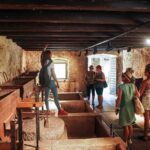
- Underground cellars: the cool break you didn’t know you needed
- Temple of St. Jupiter: a small stop with big interpretive value
- Jewish heritage info: the tour adapts when groups are small
- Price and value: why $20 can still feel like a bargain
- Who should book this evening walking tour
- Quick practical tips to make the most of your 70 minutes
- Should you book the Split Old Town Guided Evening Walking Tour?
- FAQ
- How long is the Split Old Town Guided Evening Walking Tour?
- What sites will the tour cover?
- How much does the tour cost?
- What language is the tour offered in?
- Where do I meet my guide?
- Is hotel pickup included?
- Is this tour good for hot weather?
- Can I reserve now and pay later?
- What’s the cancellation policy?
Key highlights worth planning around

- 70 minutes that fits well into an evening schedule without rushing you through the old streets
- Diocletian’s Palace as your main storyline, covering how a fortress became part of the living city
- Peristyle Square and top central landmarks you can return to later with better context
- Underground cellars for a cool, atmospheric change of pace
- English-only guiding for straightforward explanations as you walk
- Evening timing that helps you avoid the hottest part of Split’s summer
The real payoff: seeing Diocletian’s Palace when the streets cool off

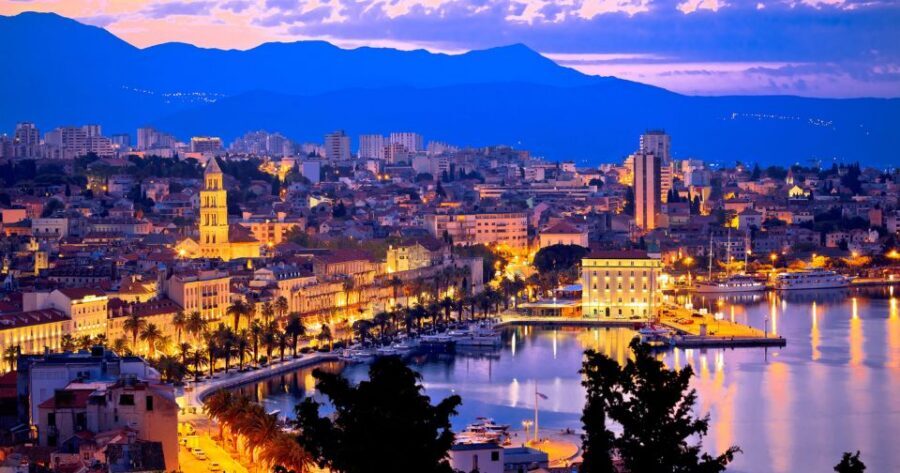
An evening walk in Split is practical. The old town streets can get intense in summer, so the timing here is built for comfort, not just good vibes. You’re still touring a UNESCO World Heritage site, but you’ll be doing it at a pace that feels more human.
What I like most is that the tour doesn’t treat Diocletian’s Palace like a museum stop. Instead, it frames it as a 1,700-year-old system that later became woven into Split’s everyday life. That mental shift is what makes the rest of the walk click: you stop seeing random alleys and start seeing a plan.
At the same time, you should go in expecting a walk, not a long sit-down lecture. This is only 70 minutes, so the guide will focus on key points and routes through the “special old part of Split.” If you want extended time at every photo spot, you’ll have to add some DIY wandering after.
You can also read our reviews of more walking tours in Split


Meeting at Split Port: find the big red SPLIT sign first
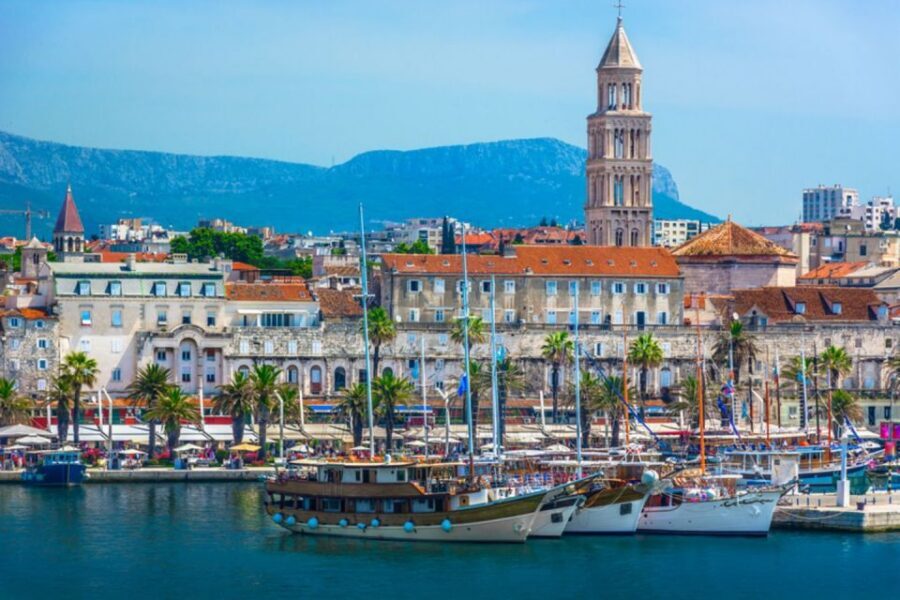
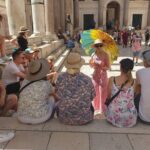
The success of any short walking tour is simply finding the start. Your meeting point is at Split port, Trg Braće Radić, right in front of the big red SPLIT sign. Your guide should hold a sign reading My Special Tour.
Here’s my practical tip: don’t guess. Stand near the SPLIT sign and scan for the red sign and the guide’s marker. If you’re coming from inside the old town, give yourself extra time so you’re not sprinting the last blocks. The tour ends back at the same meeting point, so you’re not stuck figuring out a different drop-off.
Also, check that you’re orienting to the correct port-side area. There’s at least one known problem where maps can send people off course, and in a tight 70-minute experience, being late can mean missing the start.
The 70-minute flow through Split’s “special old part”

This tour is built around movement. You’ll spend your time strolling through streets, squares, and the grand scale of Diocletian’s Palace, with the guide explaining what you’re seeing as you go.
The stops you can expect include:
- Diocletian’s Palace / Diocletian’s Place
- Peristyle Square
- Underground cellars
- Temple of St. Jupiter
- Cathedral of St. Duje
- Plus additional viewpoints and layout context in the old town
Because the time is capped, the tour works best if you keep a light mental checklist. Watch for what the guide points out, then afterward you can return on your own to any place that really grabs you.
And don’t underestimate how much you learn from orientation alone. Roman-era architecture can look confusing until someone shows you how the spaces relate. With a guide, you’ll leave understanding what areas are connected and what each major stop likely meant in its original setting.
Entering Diocletian’s Palace like a map, not a maze
Diocletian’s Palace is the heart of the experience, and the tour uses it as the anchor. Even if you’ve seen photos, the palace becomes easier to read when you’re walking through the same streets that grew around it.
The guide helps you “travel back in time” to the ancient Roman Empire by explaining how this palace became part of Split. That’s the key story: this isn’t just ruins at a distance. It’s a built environment that turned into city fabric.
What to look for as you move through:
- The grand feeling of the palace layout as you cross through major open spaces
- The way the old structure influences street directions and building placements around you
- Any architectural features the guide calls out as you pass them
A possible downside is that if you’re hoping for heavy archaeology details at every corner, you may want more time. This walk is focused and time-boxed. But it’s a smart first tour because it gives you a framework for the rest of your day in Split.
Peristyle Square: the stop that helps everything make sense
Peristyle Square is the kind of landmark that instantly gives you scale. It’s also one of the stops that makes the palace’s “big picture” feel real.
When you stand in places like this with a guide, you’re not just looking at a square. You’re learning why spaces like this mattered in the palace complex and how the setting fits into the broader world of Roman power and design.
Also, the evening timing matters here. Open-air squares feel different after the hottest hours, and you’ll likely appreciate the geometry more when the light is softer and you’re not sweating through explanations.
If you’re the type who loves taking photos, this is one of your best opportunities. Just don’t block the walk. Keep moving so you can hear the guide’s next point.
You can also read our reviews of more guided tours in Split





Cathedral of St. Duje: where Roman-era spaces meet later Split
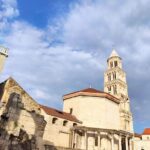
The tour includes the Cathedral of St. Duje, another major anchor point. Even without extra time inside, just seeing the cathedral in relation to the palace environment can help you understand how Split layered centuries on top of each other.
What I find useful about including a cathedral stop is that it shifts your attention from the Roman world to what followed. The old town isn’t frozen in time. It keeps changing, and the guide’s job is to show you those connections while you’re still in walking distance.
This also makes the tour more satisfying if you’re not a hardcore Roman-history person. You still get the big Roman context through the palace story, but the stop at the cathedral gives you a familiar “present-day landmark” feeling, so you don’t end the walk feeling like you only got ancient concepts.
Underground cellars: the cool break you didn’t know you needed
Then you get a different texture with the underground cellars. Even if you’re not sure what you’ll see down there, this kind of stop adds variety right in the middle of an evening walk.
It also helps physically. As you move through old stone streets, you’ll notice how much comfort matters. A cellar space tends to feel cooler and darker than the outside corridors, so it breaks the rhythm of sun-exposed walking.
The value here is atmosphere plus context. Cellars are often where a city shows you how people stored, used, and managed spaces beyond the main surfaces. With a guide, you’re more likely to notice details instead of just passing through as a quick “photo moment.”
Temple of St. Jupiter: a small stop with big interpretive value
The Temple of St. Jupiter is one of the named points on the walk. Even if you don’t immediately connect the dots when you first arrive, the guide’s commentary helps you place it within the larger palace and Roman story.
This is the type of stop that makes a short tour worth it. Without explanation, these kinds of landmarks can feel like “yet another ancient wall.” With context, you start to see why it’s significant and how it fits into the route you’re walking.
If you’re the kind of person who likes to ask questions, this is a good time to do it. You’ll usually get clearer answers when you’re standing next to the exact structure being discussed.
Jewish heritage info: the tour adapts when groups are small
One of the nicest surprises you might get is customization around heritage topics. A guide named Duje is noted for providing a great overview of Split and for tailoring the walk to add information about the Jewish heritage of the city when the group size allows.
You can treat that as a useful signal: if your group is small, you’re more likely to get personal attention and extra context. Even if Jewish heritage isn’t the focus of the fixed route every time, it’s still worth knowing that the guide can go beyond the standard highlights.
My advice: if you have specific interests, bring them into the conversation early (in a friendly way). The tour is only 70 minutes, so quick, clear questions work best.
Price and value: why $20 can still feel like a bargain
At $20 per person, this is priced like a straightforward guided walk. You get exactly what’s listed: a walking tour and a guide. There’s no hotel pickup included, and that matters—so plan to meet at Split port on your own.
That said, 70 minutes with a local guide in a UNESCO World Heritage site is the core value. The guide helps you translate architecture into understanding. You’re not just collecting stamps; you’re learning how the palace became part of the city, and you see named highlights like Peristyle Square, underground cellars, and the Cathedral of St. Duje.
If you compare it to spending the same time wandering without context, the guided portion is what makes the money feel justified. It’s also a good “first evening” activity. After this, you’ll know where the major spaces are and what to look for as you keep exploring on your own.
Who should book this evening walking tour
Book it if:
- You want a light but meaningful introduction to Split’s old town and Diocletian’s Palace
- You prefer touring in the cooler evening hours
- You like structured walking routes where someone else handles the order of stops
- You’ll appreciate learning the palace layout and major landmarks without needing museum-level time
Skip it or consider something longer if:
- You need lots of time for inside visits or long explanations at each stop
- You’re expecting a full-day program with free time built into the tour itself
- You’re relying on maps for meeting points and can’t spare extra minutes to confirm you’re at the SPLIT sign
Quick practical tips to make the most of your 70 minutes
- Wear shoes you can walk in for a full 70-minute loop through historic streets. Old stone can be uneven.
- Bring a light layer. Evening air can feel nicer after heat, but old streets can get breezy.
- Take photos, but don’t slow the line. This tour is timed, and the good details come with moving attention.
- If you care about a particular heritage angle, ask early. Small-group customization can happen.
Should you book the Split Old Town Guided Evening Walking Tour?
If you’re short on time and you want the quickest path to understanding Diocletian’s Palace, I think yes. This tour is a focused way to learn the layout, hit the big sights (Peristyle Square, Cathedral of St. Duje), and add variety with underground cellars—done at an evening hour that helps you stay comfortable.
Just be strict about meeting point accuracy. Go to Split port, find the big red SPLIT sign, and look for the guide holding the My Special Tour sign. If you do that, you’ll start on time and get the full benefit of this compact, well-paced old town introduction.
FAQ
How long is the Split Old Town Guided Evening Walking Tour?
It lasts about 70 minutes.
What sites will the tour cover?
You’ll see Diocletian’s Palace (Diocletian’s Place), Peristyle Square, underground cellars, the Temple of St. Jupiter, the Cathedral of St. Duje, and other areas in Split’s old town.
How much does the tour cost?
The price is $20 per person.
What language is the tour offered in?
The tour is conducted in English.
Where do I meet my guide?
Meet at Split port, Trg Braće Radić. You’ll find the meeting spot in front of the big red sign marked SPLIT. Your guide will have a sign that says My Special Tour.
Is hotel pickup included?
No. Hotel pickup and drop off are not included.
Is this tour good for hot weather?
Yes. It’s described as a good option for avoiding hot summer temperatures since it’s an evening walk.
Can I reserve now and pay later?
Yes. It offers Reserve & Pay Later, meaning you can book your spot and pay nothing today.
What’s the cancellation policy?
You can cancel up to 24 hours in advance for a full refund.