REVIEW · WALKING TOURS
Split highlights – Evening walking tour
Book on Viator →Operated by TEMPER TRAVEL · Bookable on Viator
Split at night hits different. This evening walking tour connects Diocletian’s world with modern Split life, all at a human pace. I especially like the way you start at the Golden Gate and then move through the palace heart at dusk, plus the final payoff over the city from the Marjan area. One thing to consider: the palace can get busy in the evening, so you’ll want to be comfortable standing in crowds while the story keeps flowing.
What makes this tour work is the mix of big-name landmarks and real streets you can still use after the walk. You’ll also get local perspective from guides such as Bosko Papic, Pavle, or Luka, who often share practical advice (including restaurant tips) alongside the history. It’s a small group experience with an English-speaking licensed local guide, and the total time stays tight—about 1 hour 30 minutes to 2 hours—so it’s easy to fit into your first night.
In This Review
- Why Diocletian’s Palace Looks Better at 7:00 pm
- Golden Gate: Starting with the Palace’s Entrance Drama
- The Peristyle: Where the Palace Feels Like a Real Place
- St. Domnius Cathedral and the Bell Tower: What’s Free vs Not
- Vestibule and Klapa Singing: Hearing Split, Not Just Seeing It
- Pjaca and Prokurative: Split’s Squares in Everyday Use
- Riva Harbor and the Marjan Finish: The View That Closes the Loop
- Small Group Size and Local Guidance: What You’re Paying For
- Admissions and Expectations: Know What’s Included Early
- When This Tour Works Best for You
- Should You Book This Evening Walk in Split?
- FAQ
- What time does the Split evening tour start?
- How long is the tour?
- Where do I meet the guide?
- Where does the tour end?
- Is the tour offered in English?
- Is there a mobile ticket?
- Are admissions included?
- How big is the group?
- What’s the cancellation policy?
- Does the tour run in bad weather?
Why Diocletian’s Palace Looks Better at 7:00 pm
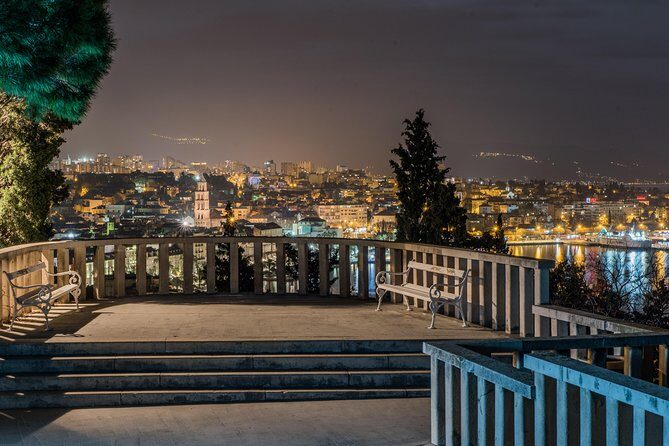
I like this time slot because the palace shifts mood when the sun drops. By the evening, the light softens the stone, and you’re not just staring at ruins—you’re seeing the spaces as they function today: courtyards, passageways, squares, and viewpoints that people actually use.
The pace is also friendly. You stop often, you get enough time to look around (not just snap a photo and move on), and you end with a viewpoint rather than a dead finish inside the palace maze. If you’re the kind of person who needs orientation fast (and maybe wants to beat jet lag), this kind of structured evening walk can help you get your bearings fast.
Golden Gate: Starting with the Palace’s Entrance Drama
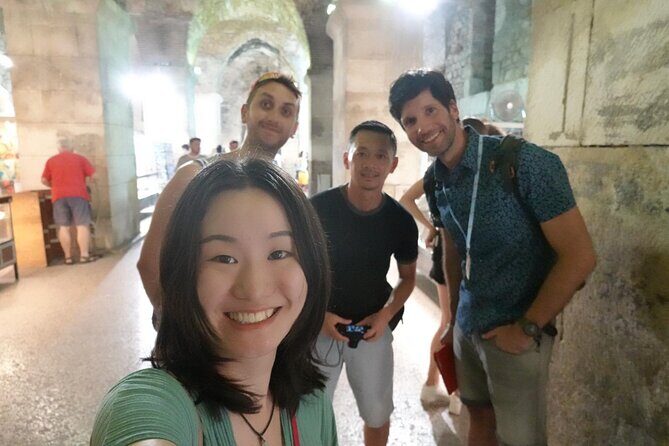
You meet at the Golden Gate (Dioklecijanova 7). It’s a strong opener because it’s the moment you can picture the emperor arriving—this is the “main palace gates” energy, not a side alley.
The story point here is simple but effective: Emperor Diocletian entered these main gates when he retired, then basically stayed in the world he created. That framing gives you a clear mental anchor for everything that comes next. Nearby, you’ll also spot the statue of Croatian bishop Grgur, noted here as a good-luck landmark for passengers—small detail, but it makes the stop feel personal instead of purely academic.
Practical note: the first minutes can feel like a warm-up sprint if you arrive late. If you want an easy start, aim to be at the meeting point a few minutes early so you’re not squeezing in while everyone’s already listening.
You can also read our reviews of more walking tours in Split

The Peristyle: Where the Palace Feels Like a Real Place
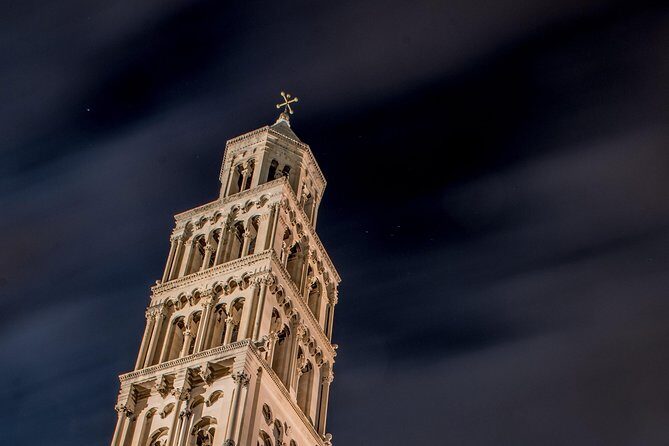
Next comes the Peristyle of Diocletian’s Palace, described as the geographical and spiritual center of the complex. This is one of those spaces where the architecture does half the explaining. Even if you only know a little Roman-era context, you can still feel why people would gather here—open space, dramatic edges, and sightlines that pull your attention.
You’re also told about a centuries-spanning connection to older times: the Peristyle is guarded by a sphinx that’s said to be around 3,500 years old. That’s the kind of detail that turns a square from a “stop on the list” into a moment you’ll remember later.
A small drawback: with the crowds, it can be harder to fully appreciate scale in peak evening hours. You might get your best view by taking a second to step back and look at the square from different angles, even if the group is urging forward.
St. Domnius Cathedral and the Bell Tower: What’s Free vs Not
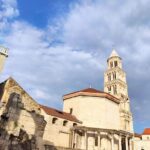
The tour then heads to Cathedral of Saint Domnius, once the mausoleum of Emperor Diocletian. That’s a big claim, but it’s also why this stop matters: you’re stepping into a building that links Roman power to later religious life.
Here’s what you should plan for: the cathedral stop is clearly identified as having admissions not included. That means you’ll still get time to see it, but if you want entry to the bell tower (or areas that require a paid ticket), you’ll need to pay on your own.
If you’re the type who likes to understand a site fully, this is the moment to decide whether you’re doing paid entry now or saving it for later. Either choice is fine—the tour still gives context for what you’re seeing.
Vestibule and Klapa Singing: Hearing Split, Not Just Seeing It
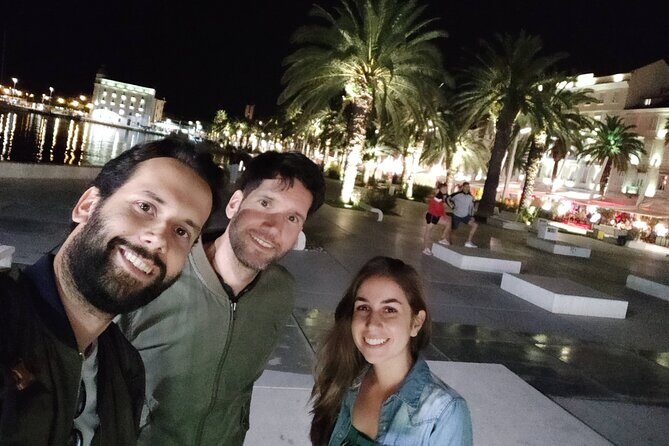
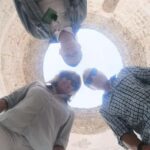
One of the more memorable elements is the Vestibulum of Diocletian’s Palace—a round hallway that connects you to the emperor’s chambers. The tour frames this as a special listening stop too: you can hear local klapa singing here.
Even if you don’t catch singing every second (street sound varies with timing), the concept is great: you’re learning the palace through sensory cues, not only by looking at stones. It’s the kind of experience that helps the palace feel less like an exhibit and more like living city infrastructure.
Time-wise, it’s a short stop, so keep your camera ready but don’t let it replace your ears and your eyes on the space itself. This is where “how it feels” matters more than “what landmark is next.”
Pjaca and Prokurative: Split’s Squares in Everyday Use
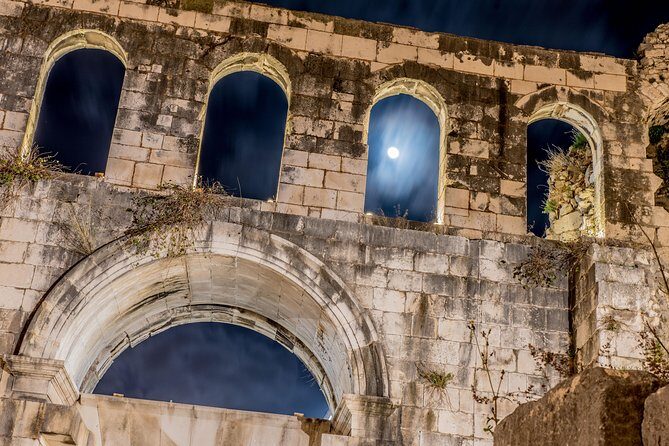
After the palace interior spaces, you shift into Pjaca. This is framed as the central stage of city life where citizens rest, meet, and talk about what matters—football specifically comes up here. That’s a fun way to get modern energy into the Roman narrative.
Then you go to Prokurative, also known as Republic Square, compared here to Venice’s St. Mark’s Square in style and layout. What you’ll likely notice is the open-south-side feel and the harbor views to the south. This is a good breather stop: you can look outward, orient yourself toward the waterfront, and reset before the final push.
One practical consideration: squares are easy to photograph but harder to navigate in crowds. If your focus is photos, aim for two or three solid angles and then put your phone away so you can keep moving with the group.
You can also read our reviews of more evening experiences in Split





Riva Harbor and the Marjan Finish: The View That Closes the Loop
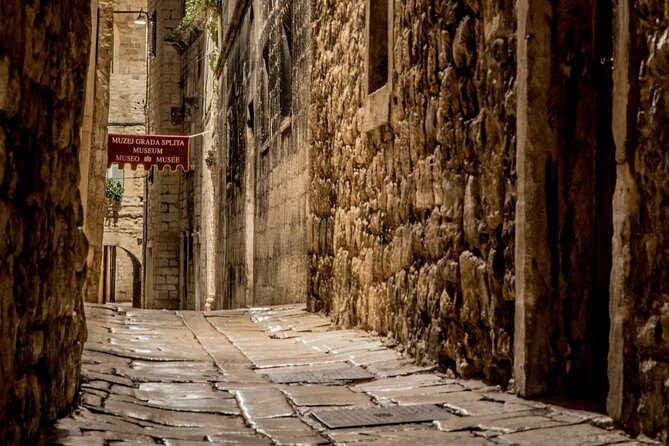
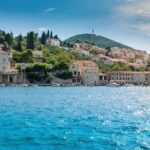
Next is the Riva Harbor promenade—Split’s living room and main everyday public stage. This is where the city rhythm takes over completely. You’ll walk through the part of Split that feels like a constant show: people strolling, shops and cafés around, and that easy waterfront energy that makes you want to stay a little longer.
The tour then ends at Prva Vidilica Na Marjanu, the viewpoint terrace reached by about 15 minutes on foot from the old town area. The payoff is described as the perfect way to end, with a view where you can see all of Split “at your palm.” That ending matters because it turns your earlier architecture focus into a bigger city picture.
If you’re deciding what shoes to wear: wear something comfortable here. The walking is not huge, but you’re finishing with a viewpoint climb-by-foot energy, and smooth footing helps.
Small Group Size and Local Guidance: What You’re Paying For
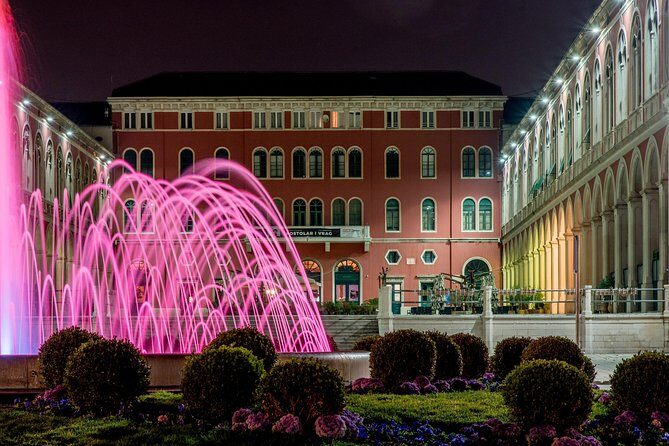
At $39.74 per person, this tour isn’t trying to be a bargain spectacle. The value comes from the combination of timing, pacing, and an English-speaking licensed local guide who can connect dots you’d miss on your own.
A key detail: the group maximum is 8 travelers. Smaller groups make a difference in a place like Diocletian’s Palace, where crowds can turn “wandering” into a frustrating stop-and-go. Here, you’re more likely to keep moving with purpose, ask questions without shouting, and hear the stories clearly.
Also, you’re getting a guide who doesn’t just recite facts. In the standout feedback, guides like Bosko Papic, Pavle, and Luka are praised for bringing Split to life, sharing anecdotes, and even offering restaurant tips. That local usability is often what you’re really buying—help beyond the monuments.
Admissions and Expectations: Know What’s Included Early
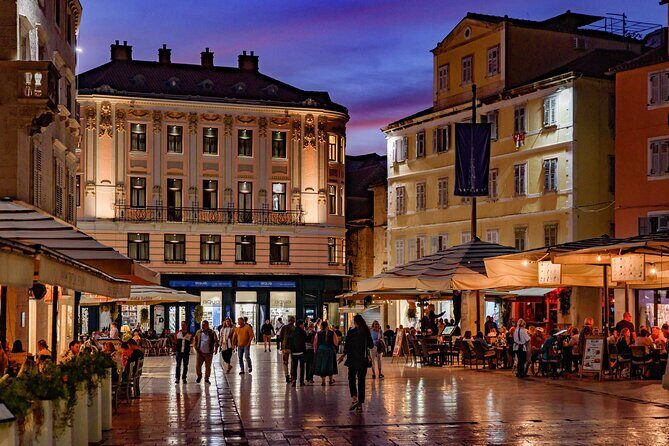
Most stops are clearly marked as admission-free, including the Golden Gate, the Peristyle, and the main squares and promenade stops. The cathedral area is the notable exception: Cathedral of Saint Domnius is listed as not included for admission.
So your planning should be simple:
- Expect free viewing at most stops.
- Have a little extra budget in mind for anything inside the cathedral/bell tower area if you choose to go in.
This is one of those tours where you’ll still enjoy the experience even if you skip any paid entry, because the guide’s context is built for understanding from the outside and inside viewpoints.
When This Tour Works Best for You
This evening format is especially smart if:
- You’re new to Split and want a fast orientation route.
- You prefer guided storytelling over downloading a bunch of audio apps.
- You want your city highlights grouped into one tight evening plan.
- You like walking but don’t want a long all-day trek.
It’s also a good match if you want to reduce decision fatigue. Diocletian’s Palace can feel like a maze once you’re inside. Having a guided path through the palace’s main nodes and then out to the waterfront and viewpoint helps you stop overthinking.
If your priority is quiet, solitude, or slow museum-style pacing, this might be trickier. The palace can get crowded at night, and the walk includes popular areas like Riva and Prokurative.
Should You Book This Evening Walk in Split?
I’d book it if you want a well-timed, guided route that links Diocletian’s Palace to modern Split life, with a strong viewpoint ending. The small group size and the emphasis on local guidance (including restaurant recommendations from guides such as Bosko Papic, Pavle, and Luka) make it feel more useful than “just seeing sights.”
Skip or reconsider if you hate crowds or you get stressed when you can’t move freely in busy stone corridors. Also, if paid cathedral entry is a must for you, budget a bit extra since that admission isn’t included.
If your schedule is tight and you want the best chance of seeing the palace and the views without getting lost, this is a very practical pick.
FAQ
What time does the Split evening tour start?
It starts at 7:00 pm.
How long is the tour?
Plan on about 1 hour 30 minutes to 2 hours.
Where do I meet the guide?
You meet at the Golden Gate area at Dioklecijanova 7, 21000, Split.
Where does the tour end?
It ends at the fountain at the beginning of the Riva promenade area (Vodoskok, Trg Franje Tuđmana, 21000, Split).
Is the tour offered in English?
Yes, it’s offered in English.
Is there a mobile ticket?
Yes, the tour uses a mobile ticket.
Are admissions included?
Most stops are free of charge, but admission for the Cathedral of Saint Domnius is not included.
How big is the group?
The tour has a maximum of 8 travelers.
What’s the cancellation policy?
You can cancel for a full refund up to 24 hours before the experience’s start time.
Does the tour run in bad weather?
It requires good weather. If it’s canceled due to poor weather, you’ll be offered a different date or a full refund.