REVIEW · WALKING TOURS
Split: Guided Walking Tour in English
Book on GetYourGuide →Operated by Tours In Croatia · Bookable on GetYourGuide
Split’s old streets pull you in fast. This English walking tour takes you into the UNESCO-listed Diocletian’s Palace and helps you understand why the city still feels alive inside those walls. Two things I especially like are the local guide storytelling and the way the route turns confusing stone alleys into a clear sense of place.
The main thing to consider: this is a walk-heavy tour and it isn’t wheelchair accessible, plus entrance fees aren’t included for churches and museums—your guide can point you where to go, but you’ll buy tickets separately.
In This Review
- Key things to love on this Split walking tour
- Stepping Off at Gray Line and Into Split’s Real Center
- Why Diocletian’s Palace Is the Story of Split
- Walking the Maze: How the Streets Help You Read the City
- The Peristyle Court: Where Layout Equals Power
- Imperial Apartments and the Mausoleum: Seeing the Palace as a System
- Medieval Extensions: When the Roman Base Gets a New Roof
- Locals Still Living Here: The Most Human Detail
- Pace, Group Feel, and What 90 Minutes Actually Gives You
- Entrance Fees: What You’ll Pay for Separately
- Value Check: Is $29 Worth It?
- Who This Tour Fits Best
- Should You Book This Guided Walking Tour in Split?
- FAQ
- How long is the Split walking tour?
- Where do I meet for the tour?
- Is the tour offered in English?
- What’s included in the price?
- Are entrance fees included?
- Is this tour wheelchair accessible?
- Are pets allowed?
- Are children allowed to join?
Key things to love on this Split walking tour

- Diocletian’s Palace, explained in human terms so you know what you’re looking at
- The Peristyle and how the palace was organized around imperial power
- Narrow stone lanes and medieval additions showing how the city grew
- Local culture and everyday life inside ancient walls
- English guides who answer questions and share practical ideas, including food recommendations
Stepping Off at Gray Line and Into Split’s Real Center

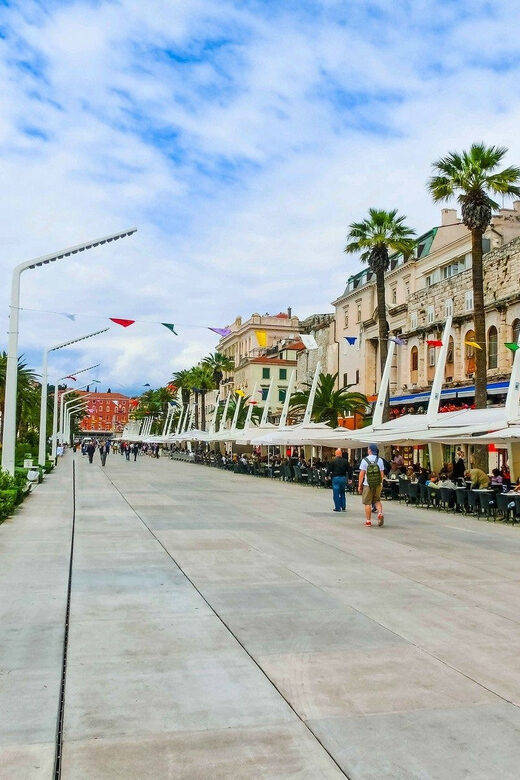
The tour starts at the Gray Line office on Obala Hrvatskog narodnog preporoda 21. It’s a convenient meeting spot because you’re already positioned for an easy transition from modern Split into the historic center.
From the first minutes, you’ll notice the pacing the guide uses. It’s not a rush-through. It’s more like getting your bearings fast—then learning what those old stone blocks mean. For a first visit, that matters, because Split can feel layered and confusing until someone maps it out for you.
Also, don’t ignore the small “practical” advantage here: you’re paying for an English-speaking guide and the structure of a route. At $29 per person for a 90-minute walk with taxes/VAT included, you’re buying time saved and context gained, not just a stroll.
You can also read our reviews of more walking tours in Split


Why Diocletian’s Palace Is the Story of Split
The heart of the experience is the UNESCO World Heritage Site of Diocletian’s Palace—built for the Roman emperor Diocletian. Your guide helps you see it as more than an impressive ruin. You’ll understand how a Roman palace became the foundation for the city that grew outward and inward over centuries.
One of the best parts is how the tour connects dates to physical space. You’ll hear about the city’s roughly 1,700-year-old history while you’re standing in the places where the story happened. That connection—time in your head, sights in your view—makes the whole place click.
And Split’s not “dead museum energy.” You’ll also get a sense of local lifestyle, including the fact that people still live within the palace walls. That detail changes how you look at everything: it’s not only about emperors and empires. It’s also about daily life continuing through ancient architecture.
Walking the Maze: How the Streets Help You Read the City
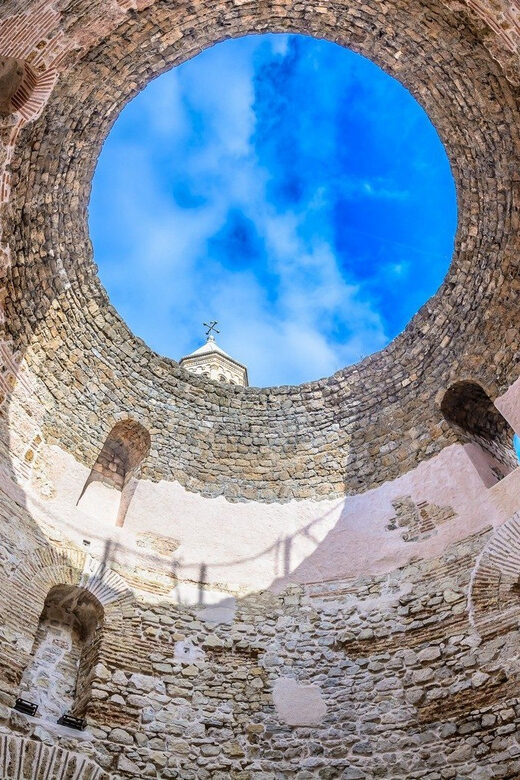
A big part of the tour is simply moving through the maze of narrow stone streets. Your guide uses the alley pattern and building shapes to explain what came first, what came later, and how medieval extensions grew around the earlier palace structure.
This is where a guided walk earns its keep. Without a guide, you might admire buildings and take photos. With a guide, you start to recognize why certain sections feel enclosed, why some spaces seem designed for movement, and how the city’s layout reflects its layered past.
You’ll also learn how Split grew around Diocletian’s Palace, instead of being treated as a separate topic. That’s a key distinction. The palace isn’t just “a big thing you visit.” It’s the gravitational center of the whole old town.
The Peristyle Court: Where Layout Equals Power
One of the palace highlights you’ll focus on is the monumental court of the Peristyle. This space matters because it helped provide access to major areas tied to imperial life—specifically the imperial apartments and the mausoleum.
What I like about how this part is taught is that you’re not just hearing facts. You’re learning the logic of the site. Once you understand that the palace was organized to connect key spaces, the architecture becomes easier to picture even if not everything survives in full.
The Peristyle is also a good moment to slow down. You’ll have enough time to take in the scale and notice details at walking speed—where shadows land, where walls shape movement, and why certain areas feel ceremonial.
Imperial Apartments and the Mausoleum: Seeing the Palace as a System
After the Peristyle, you’ll connect the dots to the imperial apartments and the mausoleum. The tour framing helps you understand how these parts fit together, rather than treating them as scattered stops.
This is a practical lesson in reading history on-site. You’re learning how the palace functioned: access routes, relationships between spaces, and the way power concentrated in specific areas. Even if you’re not a Roman-history fanatic, the site’s “system” becomes obvious once your guide explains it in order.
Also, it’s worth paying attention to how the guide handles questions. The tone coming through from guides like Petra and Gabrijela is that they’ll answer what you ask and then use your question to clarify something else. If you’re the type who likes to understand the why behind the wow, you’ll probably enjoy that style.
You can also read our reviews of more guided tours in Split





Medieval Extensions: When the Roman Base Gets a New Roof
A lot of Split’s charm comes from the mix: Roman foundations plus later medieval buildings and modifications. During your walk, you’ll hear how later additions grew from the original palace footprint, creating a living city that kept evolving.
This part is valuable because it explains why the architecture can feel like it belongs to multiple eras at once. You’re not seeing a single moment frozen in time. You’re seeing a place that kept getting used, repaired, expanded, and adapted.
In practical terms, this helps you explore after the tour. When you walk away, you’ll have a mental map for why certain areas look older, why others look more “town-like,” and how the palace’s presence shaped the city’s growth.
Locals Still Living Here: The Most Human Detail
One of the tour’s strongest themes is that people still live within the palace walls. That detail can sound like a line in a brochure, but on the ground it hits differently.
When a place is still inhabited, you notice smaller things: the way spaces feel lived-in rather than only monumental, the everyday rhythm alongside the ancient structure. It turns Diocletian’s Palace from a single attraction into a neighborhood layered onto history.
This is also where the “local culture” piece comes through. You’re not only hearing dates. You’re learning customs and traditions, plus a sense of how locals think about the city. Guides are often good at adding practical extras, and people have highlighted recommendations for food as part of that broader local knowledge.
Pace, Group Feel, and What 90 Minutes Actually Gives You
The tour runs about 90 minutes. That’s long enough to create a narrative, but short enough that you don’t end up drained after a full day of sightseeing.
Group size can vary. On some departures, it may be small—so if you’re lucky, you’ll get more personal attention and more room to ask questions. Even if the group is larger, the format is still built around moving together at a manageable walking pace.
One more heads-up: this isn’t wheelchair accessible, and it’s not framed for anyone who needs step-free routes. If you have mobility concerns, plan carefully and consider a different kind of sightseeing day.
Entrance Fees: What You’ll Pay for Separately
Churches and museums aren’t automatically included. What that means for you is simple: expect the tour to show you where things are and how they connect to the palace story, but if you want to go inside a church or museum, you’ll need to purchase tickets separately.
The guide will help you with the details and where to buy tickets. I like this approach because you can decide on the spot what fits your interests and energy. Use the tour to understand the context first, then choose interiors later at your own pace.
Value Check: Is $29 Worth It?
At $29 per person for a 90-minute English guided walk with taxes/VAT included, this tour is a strong value for a couple of reasons.
First, you’re buying interpretation. Split’s historic center is dense. A guide helps you turn it from a set of pretty streets into a story with clear landmarks and relationships. That saves time and reduces the “wait, what am I looking at?” moments.
Second, you’re paying for local perspective. Guides including Gabrijela and Petra have been praised for strong English and local knowledge, plus a fun, engaging delivery. When a guide can explain history and also talk about local customs, you get more than facts—you get understanding.
Finally, the short duration lowers risk. If you’re tired, 90 minutes is manageable. If you’re hooked, you’ll walk away ready to explore more on your own.
Who This Tour Fits Best
This walking tour is ideal if you want a smart introduction to Split’s historic core without spending your day sorting out chronology and architecture alone. If you like Roman sites but also care about how people live today, you’ll likely enjoy the way the tour connects the palace to modern life.
It’s also a good fit for first-timers. The tour gives you a framework to explore independently afterward—especially because you’ll walk through the places that explain how Split developed.
If you need wheelchair access or step-free routes, this one likely won’t work, since it’s not wheelchair accessible.
Should You Book This Guided Walking Tour in Split?
I’d book it if you want the most efficient path to understanding Diocletian’s Palace and how Split grew around it. For $29, you get a guided, English explanation plus a walk that helps you read the city while you’re still oriented enough to enjoy it.
Skip it or plan differently if entrances matter most to you and you don’t like paying extra for churches or museums later. Also pass if mobility is an issue, since the tour isn’t wheelchair accessible.
If you’re aiming for an easy first day in Split—learning the story, walking key areas, and then wandering with confidence afterward—this guided walk is a very solid choice.
FAQ
How long is the Split walking tour?
The tour lasts about 90 minutes.
Where do I meet for the tour?
Meet at the Gray Line office at Obala Hrvatskog narodnog preporoda 21, Split.
Is the tour offered in English?
Yes, the tour is conducted in English with a live tour guide.
What’s included in the price?
The price includes the 1.5 hour walking tour, an English-speaking guide, and all taxes and VAT.
Are entrance fees included?
No. Entrance fees for churches and museums are not included, though your guide can help with ticket details and where to purchase them.
Is this tour wheelchair accessible?
No, this tour is not wheelchair accessible.
Are pets allowed?
No, pets are not allowed on this tour.
Are children allowed to join?
Children must be accompanied by an adult, and unaccompanied minors are not allowed.