REVIEW · DIOCLETIAN'S PALACE
Split: 1.5-Hour Walking Tour and Diocletian’s Palace
Book on GetYourGuide →Operated by www.south-tours.com · Bookable on GetYourGuide
Rome lives inside Split’s walls. This guided walk turns Diocletian’s Palace cellars and Saint Domnius Cathedral into a clear, on-foot story, with stops that show how Roman Split overlaps later eras too. You’ll move through the old town maze, from gates and squares to viewpoints over Marjan Hill, and you’ll hear how everyday life fits right into these ancient streets.
I especially like that the tour mixes big monuments with local rhythm. You don’t just stare at stones; you learn how the palace works as a neighborhood, including the route down to the palace’s underground spaces. One drawback to plan for: this is a real walking tour, and it’s not recommended for limited mobility.
In This Review
- Key Things to Know Before You Go
- Entering Split Old Town Like a Local
- A note on timing
- Golden Gate to People’s Square: Getting Your Bearings Fast
- A Game of Thrones angle (with context)
- Fruit Square and the Riva: Old Trade Routes, Modern Walks
- Why this pairing works
- Diocletian’s Palace: From South Gate to the Main Palace Square
- The architectural mix you’ll actually notice
- The Peristyle and the Black-Granite Sphinx
- Drawback to consider here
- South Gate Down: The Roman Era Cellars
- What to watch for
- Cathedral of Saint Domnius: Split’s Oldest Catholic Landmark
- Practical tip for this stop
- Vestibul Photo Stop and Palace-Exit Energy
- Price and Value: Why $41 Can Make Sense
- Who This Tour Fits Best (and Who Should Skip It)
- Should You Book This Split Walking Tour?
- FAQ
- How long is the Split walking tour?
- How much does the tour cost?
- What’s included in the price?
- Are entrance fees included?
- What languages are offered?
- Where do we meet?
- Is the tour suitable for people with mobility impairments?
- Is there free cancellation?
Key Things to Know Before You Go
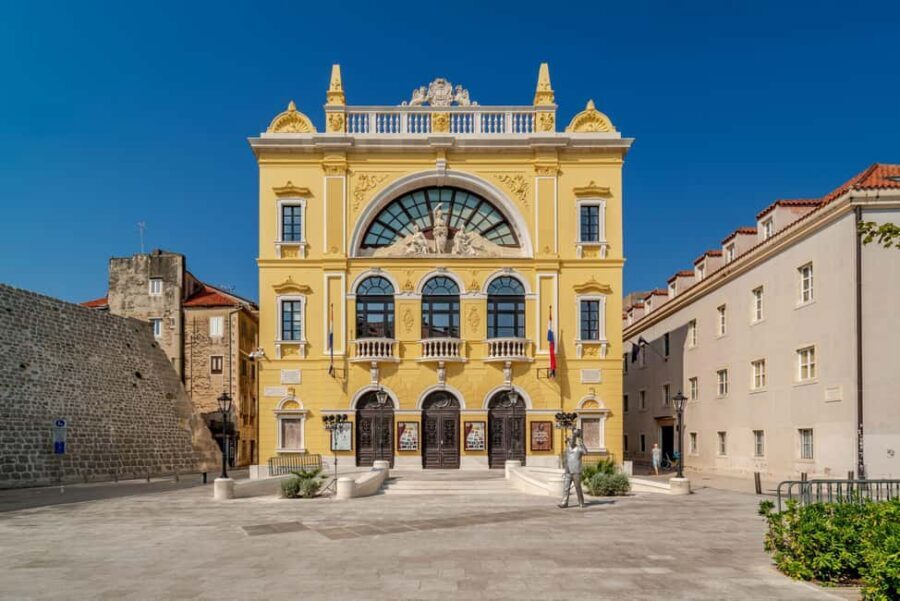
- Roman palace cellars: you get underground views that most quick stops skip.
- Saint Domnius Cathedral: a must-see if you want the oldest Catholic church landmark in the world.
- Multi-era architecture: Roman walls, plus later buildings, all tangled in one compact area.
- Gate-to-gate wayfinding: Golden Gate, North Gate, West Gate, and the main palace square help you navigate.
- Local lifestyle stops: squares, promenade time, and everyday city texture, not just monuments.
- Strong guide storytelling: guides named Sandra, Ana, Ivan, Jelena, and Ana/Iva show up in the feedback for adding extra context and small anecdotes.
Entering Split Old Town Like a Local
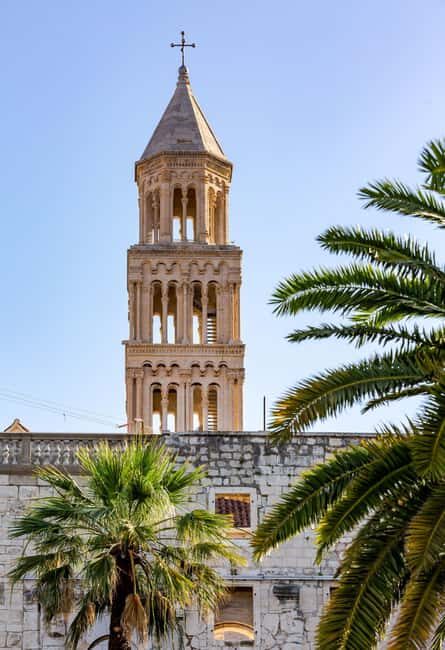
Split has a special trick: the “old town” isn’t a museum shell. People live here, shop here, and hang out here, all inside a Roman palace complex that has been reused for centuries. That’s why this kind of tour is so helpful. In 90 minutes to 2 hours, you get a mental map of where things are, and you learn what you’re actually looking at instead of just collecting photos.
This walk starts with the goal of getting you oriented early. If you’re landing in Split with only a day (or only a morning/evening), you’ll appreciate that the route connects major palace landmarks to the surrounding old town streets. You’re not trudging in random loops. You’re moving along a line that makes the city’s layout click.
You can also read our reviews of more walking tours in Split

A note on timing
The tour lasts 1.5 to 2 hours, which is a sweet spot. It’s long enough to understand Diocletian’s Palace and old town streets, short enough that you can still eat, wander, or hit another activity afterward. If you have flexibility, many visitors find that the earlier or later parts of the day feel easier on the legs and on patience.
Golden Gate to People’s Square: Getting Your Bearings Fast
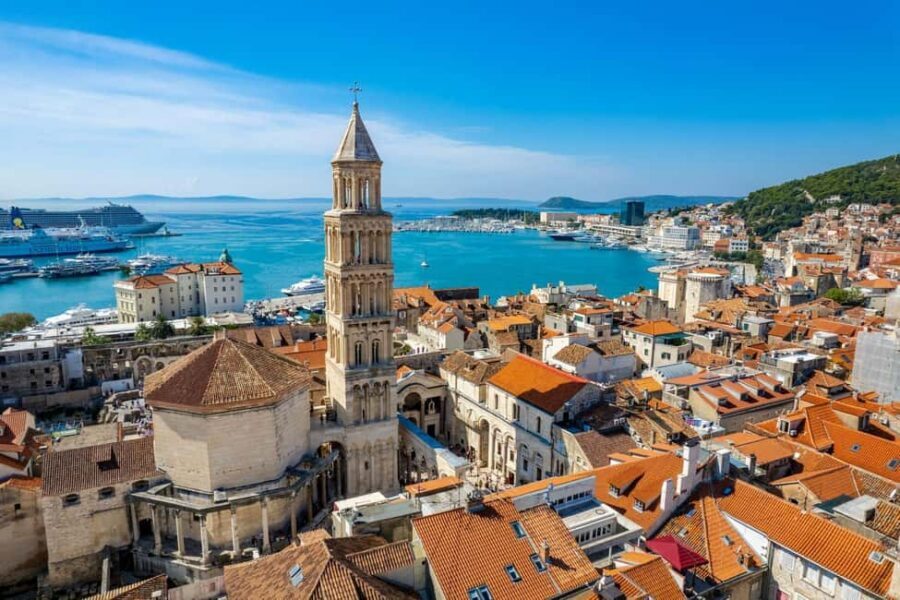
The first big win of this tour is how it teaches the city through gates and squares. You begin at an orientation point that may vary by booking option, then you work your way toward key public spaces.
Golden Gate is your first signal that Split is a Roman story first, modern city second. From there, the walking route keeps pulling you toward the heart of old town movement: People’s Square and other open-air nodes where you can pause, look around, and then keep going.
At People’s Square, you’re really learning how Split’s center breathes. It’s a useful stop because it breaks up the palace-wall focus and reminds you that the palace isn’t “over there.” It’s woven into the life of the streets around it.
A Game of Thrones angle (with context)
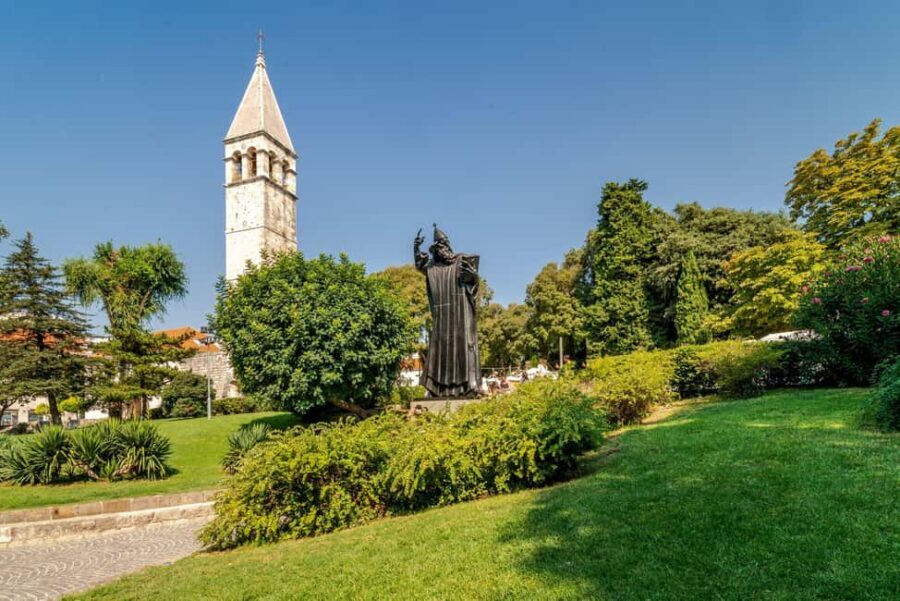
The route can include a stop near the Game of Thrones Museum area. Even if you’re not chasing TV locations, it works as a modern reference point. You’ll likely hear how pop-culture has layered itself onto the same stones you’re learning about, which helps you connect the city as it exists today.
The best part is that a good guide doesn’t treat it as trivia. Instead, they use it to point out what’s real in the architecture and what’s just modern attention.
Fruit Square and the Riva: Old Trade Routes, Modern Walks
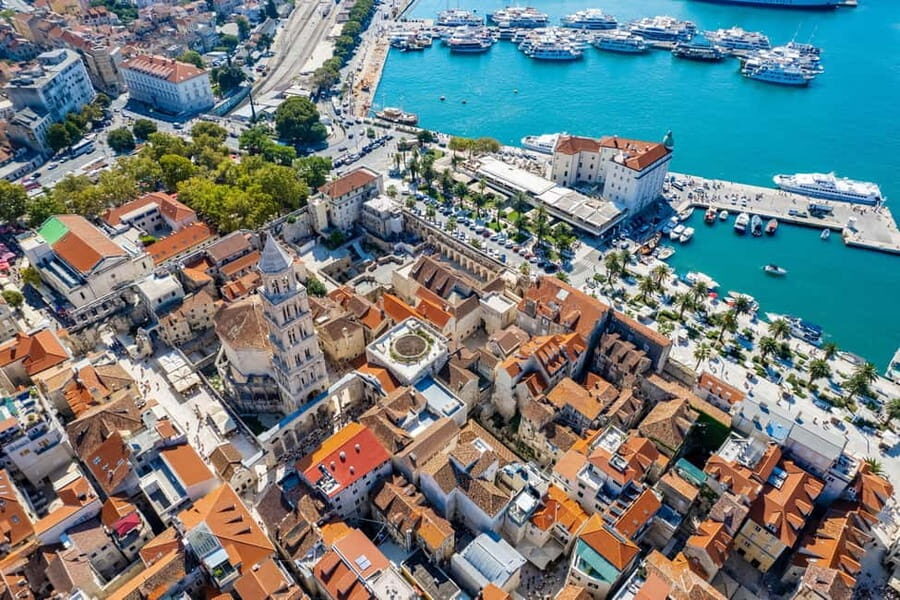
One of my favorite stops on this route is Voćni Trg (Fruit Square). This isn’t just a cute name. It points you to the place where the old fruit market once sat, and it helps you understand how public squares were built for daily exchange. The palace was empire-grade engineering, but the people living inside needed basic routines—market, water, storage, movement.
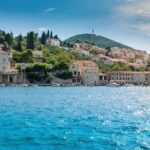
From fruit-square energy, you transition toward Riva, the waterfront promenade. This is where the tour stops being only about architecture and starts being about the feel of Split. You get panoramic views of Marjan Hill from the promenade, which gives you a natural “reset” for your eyes after all the tight alleys and stone details.




Why this pairing works
Markets and waterfronts explain why the palace mattered. Control the roads and the movement, and you control the city’s lifeblood. Once you’ve seen the palace from the inside, the waterfront views make more sense. You understand how the Roman complex links to the coastline and to day-to-day life.
Diocletian’s Palace: From South Gate to the Main Palace Square
Now for the main event: Diocletian’s Palace. Built for the Roman Emperor Diocletian at the turn of the 4th century AD, the palace is a massive statement of power that later became a working city core. The tour route takes you through key passage points, starting around the South Gate, then moving through the palace grounds toward the central areas.
The palace walk is designed to give you a sense of structure. You’re not just wandering. You’re following a guided path that highlights:
- the palace’s internal streets
- the main palace spaces
- other gateway points such as North Gate and West Gate
- the way the grounds connect to the surrounding town
If you’ve ever visited a big Roman site and felt lost in the scale, this tour helps you avoid that. Even if you’re not an architecture buff, you’ll come away with the confidence to navigate independently.
The architectural mix you’ll actually notice
The palace and surrounding old town show a real timeline. You’ll see how Roman elements remain, but you’ll also notice more recent buildings, including 20th-century architecture mixed into the same scene. That blend is part of Split’s charm. It’s not a single-era fantasy. It’s a living city that has kept changing.
This is also where those guide stories matter. Guides such as Sandra and Ana are often praised for adding small anecdotes that help you picture how people once used these spaces. Even when the stone didn’t move, daily life did.
The Peristyle and the Black-Granite Sphinx
The tour reaches the Peristil (Peristyle), the palace’s monumental heart. This is where the Roman grandeur becomes most obvious. It’s open enough that you can step back and take it in, but detailed enough that you’ll still want to look closely.
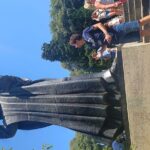
One of the most memorable details mentioned on the tour is the presence of the Peristyle’s black-granite Egyptian sphinx—described as the last remaining Egyptian sphinx in black granite. Whether you’re a “big statues” person or not, it’s a striking clue that Rome was never only local. Even here, far from Egypt, the empire carried symbols across borders.
The Peristyle stop is also a turning point in the tour rhythm. Up to now, you’ve been moving through streets and gates. In the Peristyle, you slow down. You take in scale, symmetry, and the palace’s ceremonial vibe.
Drawback to consider here
Because it’s a highlight, it can feel busy depending on the time of day and season. If the group timing means you arrive during peak foot traffic, you might have slightly less breathing room for photos. The best move is to focus on listening first, then photograph once the guide points out the key angles.
South Gate Down: The Roman Era Cellars
This tour earns its value most strongly with one thing: the time spent in the cellars of the Roman era Diocletian’s Palace. Many Split walks stop at the showy parts—courtyards, gates, views. This route adds the underworld angle: you go down and see how the palace stored, worked, and functioned below street level.
The cellars are where history feels physical. You’re not just looking at carved stone. You’re standing inside the older logic of the place: storage, access, and the practical engineering that made a palace-city actually operate.
What to watch for
Since these are underground spaces, come prepared for:
- cooler air than the street (great if you’re visiting in warm months)
- darker lighting (so your phone camera might need a steady hand)
- uneven or wet surfaces depending on conditions
If you like your monuments with context—why something was built, not just what it looks like—this cellar portion is the piece that sticks with you.
Cathedral of Saint Domnius: Split’s Oldest Catholic Landmark
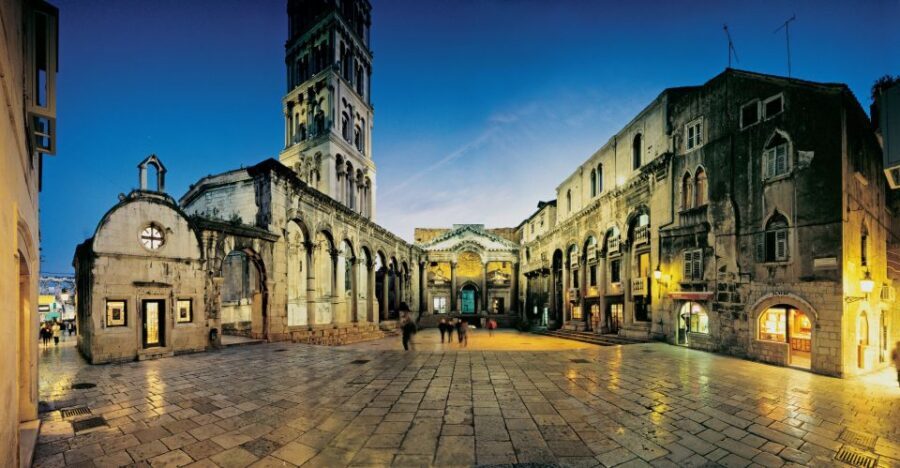
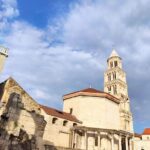
Next up is the Cathedral of Saint Domnius. This is the stop that turns the tour from Roman engineering to religious and civic continuity. The cathedral is formed from an Imperial Roman mausoleum, which is a huge concept in plain terms: later faith and later architecture reused an earlier Roman core.
The tour highlight also stresses that Saint Domnius is considered the oldest Catholic cathedral in the world. Even if you don’t keep a mental list of such superlatives, the point is this: you’re seeing a site where centuries layered onto a foundation that was already sacred.
Practical tip for this stop
If you’re short on time in Split, don’t assume you can replace this stop with another church visit later. The combination of Roman mausoleum origin plus Saint Domnius identity makes it uniquely connected to Split’s palace story. It’s not just another pretty interior. It’s an origin story that physically sits under the cathedral’s later role.
Vestibul Photo Stop and Palace-Exit Energy

After the cathedral visit, the route includes a Vestibul photo stop. Even if you don’t spend a long time here, it’s useful. It helps you frame what you just learned as you continue walking through the palace complex.
This section also matters because it sets you up for the final leg back. By now, you’ll have enough landmarks in your head that returning through the old town feels easier. You start recognizing turns and sightlines instead of relying on memory tricks.
Guides such as Ivan and Jelena are especially noted for making the tour feel organized without rushing. That balance is key in a place like Split, where a tight schedule can make you feel like you’re sprinting through history.
Price and Value: Why $41 Can Make Sense
At $41 per person for 1.5 to 2 hours, this tour is priced in the range you’d expect for a guided historic walk. Entrance fees are not included, and you’ll also want to budget for food and beverages separately.
So where’s the value?
- You’re buying structure. In Split, the palace and old town layout can be confusing if you try it solo. The tour gives you a guided route tied to major gateways, squares, and cathedral/palace points.
- You’re paying for the cellar access. Even if you love Roman ruins, going into palace cellars is not the same as staring at an exterior wall. Underground spaces change your understanding.
- You’re paying for interpretation. The best guides—like Sandra, Anna/Ana, Ivan, and Jelena—tend to use anecdotes and local perspective so the site feels like a story you can retell, not just facts you forget.
If your trip is tight and you want one solid “orientation + highlights” experience, this price can be fair. If you already know you only want postcard views and you don’t care about Roman cellars or the cathedral origin, then you might decide to DIY.
Who This Tour Fits Best (and Who Should Skip It)
This experience is a good match if you want:
- a guided way to understand Diocletian’s Palace without getting lost
- the mix of Roman and later architectural layers
- a walk that includes both monuments and neighborhood-feeling squares
- strong viewpoint time at Riva for Marjan Hill
You should skip or reconsider if:
- you have mobility limitations or struggle on uneven stone surfaces
- you dislike guided walking tours and prefer long independent wandering
- you only have interest in one small slice (for example, only views or only churches)
If you’re traveling with family, it can work, but think about kids’ attention span and walking tolerance. The duration isn’t huge, yet it is still a real walk with multiple landmark transitions.
Should You Book This Split Walking Tour?
I’d book it if you want your Split day to start with confidence. This route connects the palace’s key spaces, adds the standout cellar component, and finishes with waterfront views that make the city feel human. At $41 with a 90-minute to 2-hour time window, it’s a strong value when you’re trying to make the most of limited time.
I’d pass if you already feel comfortable navigating Split’s old town on your own, or if you’re not interested in the cathedral/mausoleum connection and the cellars. In those cases, you could build a cheaper DIY plan.
FAQ
How long is the Split walking tour?
It runs about 90 minutes to 2 hours.
How much does the tour cost?
The price is listed as $41 per person.
What’s included in the price?
You get a live guide for the tour (about 1.5 to 2 hours).
Are entrance fees included?
No. Entrance fees are not included, and food and beverages aren’t included either.
What languages are offered?
The tour is available in English and Spanish.
Where do we meet?
The meeting point may vary depending on the option booked.
Is the tour suitable for people with mobility impairments?
No. It’s not recommended for people with limited mobility and is not suitable for mobility impairments.
Is there free cancellation?
Yes, you can cancel up to 24 hours in advance for a full refund.