REVIEW · PRIVATE
Private Walks & Storytelling – the best small group tour in Split
Book on Viator →Operated by Walking tours with The Storyteller Croatia · Bookable on Viator
One street at a time, Split makes sense fast. This private small-group walk mixes licensed storytelling with the places that locals actually use, from the Riva promenade to Diocletian’s Palace. You get a route that feels curated, but still customizable to your interests. One heads-up: a couple of major sights on the route have admission fees not included, so check what you’d like to pay for.
I especially like how the guide ties Roman bones to modern life, so you’re not just looking at stones. The stop plan also keeps moving between waterfront mood, palace structure, and neighborhood streets like Let Me Pass (Pusti me da prodjem). A good consideration: it’s a walking experience in good weather, and the pace may be slower than big-group tours because the whole point is the stories.
In This Review
- Key points before you go
- Private Split Walk With Storytelling You Can Use
- What you’re really booking
- Price and Value: $238.34 Per Group Can Be a Bargain
- Where You Start: Brass Gate (Porta Aenea)
- Walking Route: 10 Stops From Riva Life to Grgur Ninski
- Stop 1: Riva Harbor (the slow life on the water)
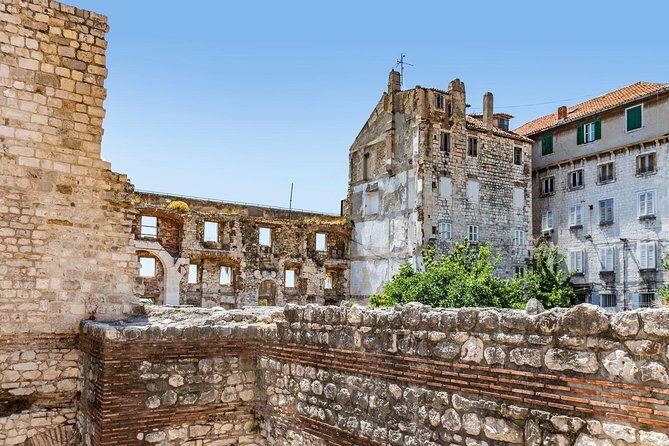
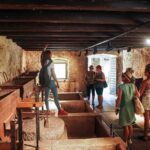
- Stop 2: Diocletian Palace Substructures (walking under time)
- Stop 3: Peristyle of Diocletian’s Palace (the imperial square)
- Stop 4: Cathedral of Saint Domnius (a bell tower you can’t miss)
- Stop 5: Temple of Jupiter (Roman emperor-to-god connection)
- Stop 6: Let Me Pass Street (Pusti me da prodjem)
- Stop 7: Narodni Trg (the “new old town” edge)
- Stop 8: Nadalina cokolada (chocolate + story)
- Stop 9: Golden Gate (Porta Aurea) and Roman strategy
- Stop 10: Grgur Ninski statue (wish and goodbye)
- The Guide Factor: Why This Tour Feels Personal
- What Makes It Different From a Basic Palace Tour
- Practical Tips So the Walk Works for You
- Who This Tour Best Fits
- Should You Book This Split Storytelling Walk?
- FAQ
- How long is the Private Walks & Storytelling tour in Split?
- How much does the tour cost and what is the group size?
- What language is the tour offered in?
- Where does the tour start and where can it end?
- Are entrance tickets included?
- What’s the meeting point address?
- Does the tour run in any weather?
Key points before you go
- Small group size (up to 10) keeps questions easy and the tour feel personal
- A licensed storyteller/history interpreter connects folklore, Roman design, and today’s Split
- You visit both waterfront life and the substructures under Diocletian’s Palace
- Several stops include tickets or samples, but some entrances are not included
- The route can end where you prefer, as long as you tell the guide at the start
- Ending at Grgur Ninski includes a local-style wish tradition at the statue
Private Split Walk With Storytelling You Can Use
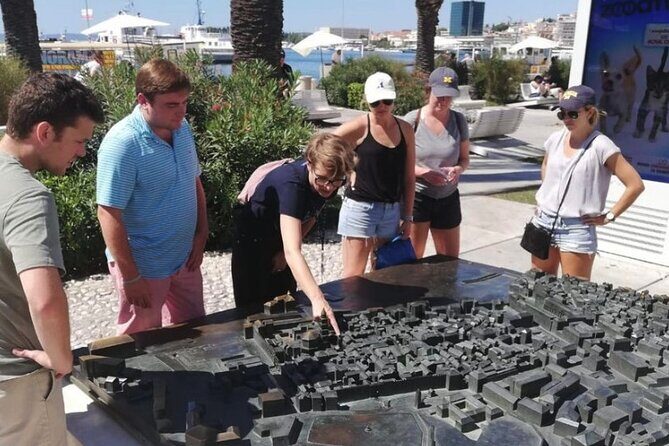
Split can be confusing at first. You’ll see walls that look ancient, streets that look medieval, and everyday life happening as if none of it is history. This walk helps you put the city in order without turning it into a lecture.
The biggest reason it works is the guide: a local expert, plus a licensed tourist guide who’s also a certified history interpreter. That matters because you’re not just hearing dates. You’re getting explanations tied to what you can see in front of you—then tied again to how people in Split live now.
The second reason I like it is the tone. It’s not frantic sightseeing. You slow down on purpose. You hear the idea of pomalo—take it easy—and you feel how Split’s pace shapes daily routines, especially along the Riva and inside the palace streets.
You can also read our reviews of more private tours in Split

What you’re really booking
For $238.34 per group (up to 10), you’re not paying just for access to landmarks. You’re paying for:
- a local guide who can answer your questions on the spot
- a route that blends waterfront, palace, and neighborhood corners
- practical recommendations during the walk (coffee, food, what to see next)
Price and Value: $238.34 Per Group Can Be a Bargain
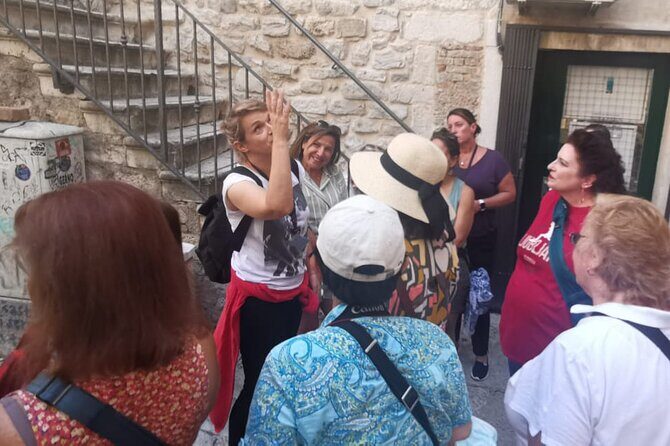
On paper, $238.34 sounds like a “private tour” price tag. The value comes from the group size cap: up to 10 people means it’s often cheaper per person than you’d expect if you’re traveling with friends or family.
The duration also helps. You’re looking at roughly 1 hour to 1 hour 40 minutes, so you’re not locking up half your day. And since the guide includes recommendations for food and what to do afterward, this tour can save you time—and missteps—later.
Here’s the balanced part: some entrances are not included (more on that below). If your group plans to go inside every place that costs extra, you’ll want to budget a bit more. If you only want the included moments (and enjoy the storytelling outside), you can keep costs controlled.
Where You Start: Brass Gate (Porta Aenea)

Your tour begins at Brass Gate (Porta Aenea), Obala Hrvatskog narodnog preporoda 22, Split. Starting at the palace’s edge is a smart move. It frames what you’ll see next: Diocletian’s world first, then the city that grew outward around it.
You’ll also get a mobile ticket, which simplifies check-in. The tour is in English, and it runs daily within the listed opening window (8:00 AM to 9:00 PM). It’s designed for most travelers, and the group limit stays at maximum 10.
A practical tip: if you want photos, pick a group spot near the front at the start. Once you get into narrow lanes and substructures, moving for photos can slow the group.
Walking Route: 10 Stops From Riva Life to Grgur Ninski
This is a loop that balances atmosphere and architecture. You’ll move from modern waterfront energy to the palace interior, then back toward newer city streets. Some stops are short, but they’re chosen for contrast—so Split doesn’t blur together.



Stop 1: Riva Harbor (the slow life on the water)
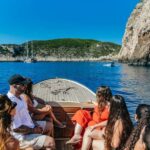
You start on the Riva Harbor, the kind of place where people don’t rush. Expect a local rhythm: coffee, conversation, and sea views working together like daily theater. The guide uses this as the emotional doorway into Split.
From here, you wander toward the old town and Diocletian’s Palace, with an emphasis on how locals live among Roman walls. The storytelling point is clever: you see practical details—like how ordinary life can sit right beside ancient structure—and the city stops feeling like a museum.
Ticket note: this stop includes an admission ticket.
Stop 2: Diocletian Palace Substructures (walking under time)
Next you step into the substructures—the basements under the palace. This is one of those places where even a short visit feels different, because you’re literally closer to the original build.
The guide frames the walls as traces of work and trade, not just ruins. That changes how you look. Instead of “what’s broken,” you think “what function it had.”
Ticket note: substructures admission is free on this route.
Stop 3: Peristyle of Diocletian’s Palace (the imperial square)
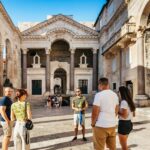
You come up into the open space at the Peristyle—the palace’s grand square. This is where the city’s Roman logic shows clearly: open space, symmetry, and a sense of control over movement.
The guide connects traditional and modern Split through stories, using the slow-way-of-life idea (pomalo) as a bridge between eras. You’ll get context for why the palace still shapes how people experience Split.
Ticket note: this stop includes an admission ticket.
Stop 4: Cathedral of Saint Domnius (a bell tower you can’t miss)
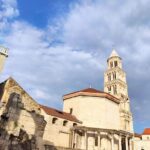
On the Peristyle square, the tall bell tower is almost impossible to avoid visually. Behind that landmark sits the Cathedral of Saint Domnius, described as one of the smallest and oldest cathedrals in the world.
You’ll get a close look without turning the stop into a long museum-style visit. It’s more about location and meaning: how this religious site functions inside a palace core.
Ticket note: admission here is not included.
Stop 5: Temple of Jupiter (Roman emperor-to-god connection)
Then you head back through the palace substructures area toward the Temple of Jupiter. The guide focuses on why it was placed as it was—linking Diocletian with Jupiter, the Roman sky-and-thunder king.
A key detail you’ll hear: during the Middle Ages, the temple was converted into a baptistery dedicated to St. John the Baptist. That moment of change is why this stop works. You’re watching layers of belief rewrite the same stone space.
Ticket note: admission is not included.
Stop 6: Let Me Pass Street (Pusti me da prodjem)
This is a tiny detour with a big payoff. You walk through Let Me Pass (Pusti me da prodjem) Street, often described as the narrowest street in town. It sits between the ancient temple and a medieval building that’s now a hotel.
Because it’s short (just a couple of minutes), it doesn’t feel like filler. It’s the kind of detail that makes you remember Split later—how old and new squeeze together, literally.
Ticket note: free.
Stop 7: Narodni Trg (the “new old town” edge)
When life outgrew the palace walls, Split expanded westward. Narodni Trg is part of that shift: the “new old town,” where northern and southern influences mix in stone.
The guide uses this stop to show layered growth. You’re not only learning about what happened; you’re learning how to read the city by noticing style changes between streets.
Ticket note: free.
Stop 8: Nadalina cokolada (chocolate + story)
Then you get a satisfying reset: a stop at Nadalina cokolada. The tour includes samples of locally flavored chocolate, and the guide shares stories tied to food production.
This is more useful than it sounds. Food stops help you slow down and recharge, and they also give you a sense of what local taste means in Split right now, not just centuries ago.
Ticket note: admission included here.
Stop 9: Golden Gate (Porta Aurea) and Roman strategy
You finish the palace-era route with the Golden Gate (Porta Aurea)—one of the four main Roman gates into Diocletian’s Palace. The guide ties it to the road north toward Salona, the Roman province capital and Diocletian’s birthplace.
You’ll also hear about antique military strategy in how the palace was laid out, plus see nearby hidden buildings.
Ticket note: free.
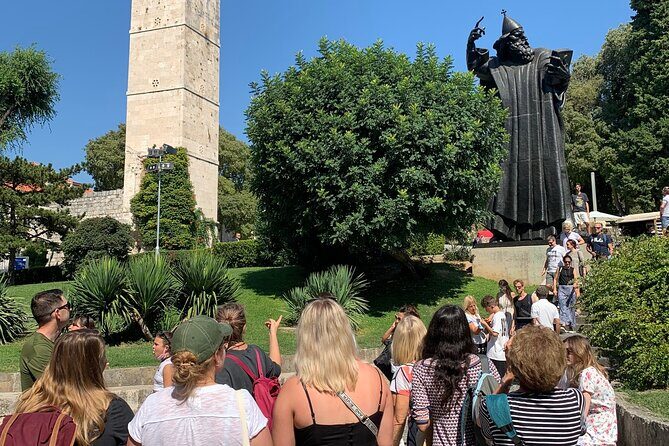
Stop 10: Grgur Ninski statue (wish and goodbye)
The tour ends at the sculpture of Grgur Ninski. You’ll be surrounded by the meeting of eras: a 4th-century antique wall, 20th-century art, and present-day life.
There’s a local tradition here: you respect it, then make a wish before you go. It’s a simple ending, but it gives the walk closure.
Ticket note: admission included here.
The Guide Factor: Why This Tour Feels Personal
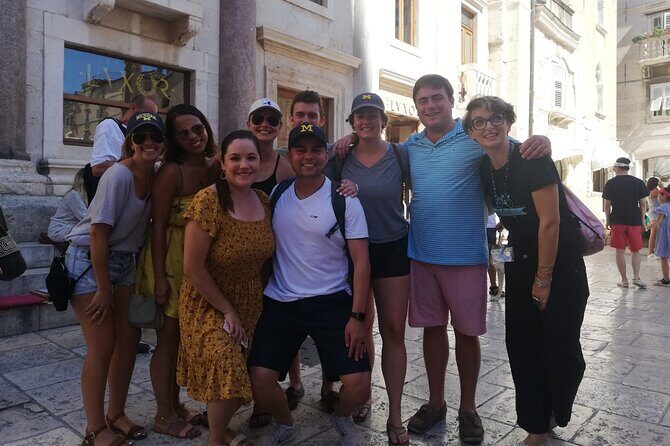
The tour is designed around conversation, not just narration. In guides who have led this walk—like Mirjana—you’ll typically see the same strengths: quick responsiveness, tailoring to mixed-age groups, and weaving old stories into the streets you’re standing on.
This matters if your group includes teens, adults, or people who want different kinds of info. The format supports shifting focus: history for one person, folklore for another, and practical guidance for everyone.
One more plus from the guide style: you can ask for food and coffee ideas in the middle of the walk. That’s the kind of recommendation you actually use, because it’s timed to where you are in town.
What Makes It Different From a Basic Palace Tour
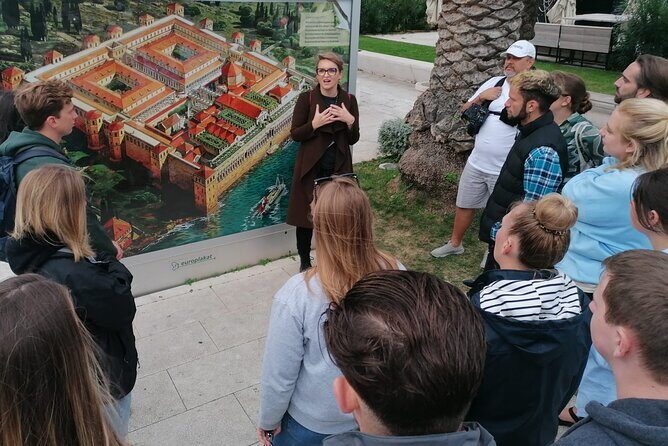
Many Split tours hit the big highlights and race to the next photo spot. This one slows down and uses variety to keep you engaged.
You’re not only seeing:
- waterfront life on the Riva
- Roman-scale architecture inside the palace walls
- substructures and converted sacred spaces
You’re also getting the story glue. The guide explains how the city’s built form affects everyday movement and how people interpret old places through modern routines and sayings like pomalo.
That storytelling approach is why the tour can work even if you’ve never studied Roman history.
Practical Tips So the Walk Works for You
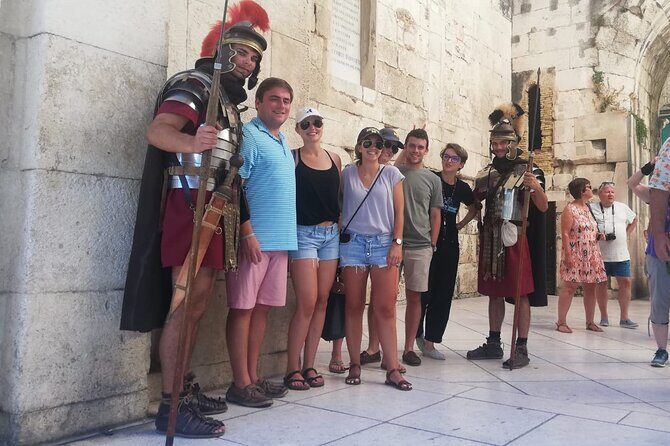
A few things you can plan around:
- Comfortable shoes help. You’re moving for about 1–1.5 hours, with some steps and uneven historic surfaces.
- Ask what you want more of at the start. The tour is private and customizable, and the ending point can be adjusted too.
- Budget for the non-included entrances if your group wants to go all-in at Saint Domnius Cathedral and the Temple of Jupiter.
- If you’re sensitive to crowds, remember the group limit is capped at 10, which usually makes navigation easier than larger walks.
Who This Tour Best Fits
This is a strong pick if you:
- want a first-time orientation to Split’s layout (palace core + modern city growth)
- like stories that connect buildings to real culture
- travel with a group small enough to keep questions flowing
It’s also a smart choice if you’re the type who likes to return later and read the city with new context. After a walk like this, you’ll notice details without needing a guide next time.
Should You Book This Split Storytelling Walk?
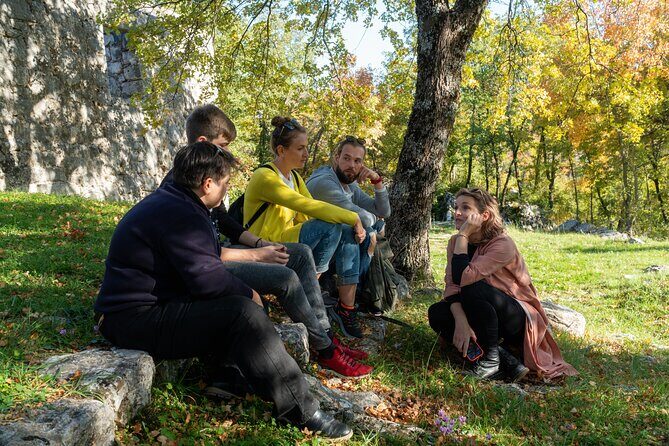
Book it if your goal is to understand Split beyond postcards. You’re paying for a local, licensed storyteller who can connect Diocletian’s Palace to present-day life and keep the pace friendly for mixed groups.
Skip it (or consider alternatives) if you want a fast, checklist-style tour with all major entrances included. Since some attractions on the route list admission as not included, you’ll want to plan your expectations and budget.
If you’re traveling soon and you’re the kind of person who enjoys hearing why a place looks the way it does, this is one of the easiest ways to get your bearings fast and start enjoying the city on day one.
FAQ
How long is the Private Walks & Storytelling tour in Split?
It lasts about 1 hour to 1 hour 40 minutes.
How much does the tour cost and what is the group size?
The price is $238.34 per group, for up to 10 travelers.
What language is the tour offered in?
The tour is offered in English.
Where does the tour start and where can it end?
The tour starts at Brass Gate (Porta Aenea). It can end at Ul. Stari pazar 9, or you can request a different ending location if you tell the guide at the beginning.
Are entrance tickets included?
Some stops include admission tickets, some are free, and some are listed as not included (notably the Cathedral of Saint Domnius and the Temple of Jupiter).
What’s the meeting point address?
Start is at Brass Gate (Porta Aenea), Obala Hrvatskog narodnog preporoda 22, 21000 Split, Croatia.
Does the tour run in any weather?
It requires good weather. If it’s canceled due to poor weather, you’ll be offered a different date or a full refund.