REVIEW · DIOCLETIAN'S PALACE
YOUR BEST PRIVATE TOUR – amazing Split and Diocletian’s palace
Book on Viator →Operated by Private Tour Guides Split, Hvar, Dubrovnik - Olynta Phos · Bookable on Viator
Split’s best views arrive before the crowds.
This private morning tour strings together Split’s UNESCO Old Town and Diocletian’s Palace in a logical, walkable route, with a guide who explains what you’re looking at so you can skip flipping through a guidebook. I especially like the early start (better light, fewer people) and the way the stories make the palace feel like a real place, not just ruins. One practical downside: while many stops are free, entrance fees are not included, and at least one key area (the palace substructures) is listed as not included.
At $124.34 per person for about 1 hour 50 minutes to 2 hours 10 minutes, it’s a fair deal when you want a tight, high-impact route through the Old Town without getting lost. You’ll meet at Luka Split and typically end right back there, and you can also arrange pickup only if you’re staying in Old Town Split (or you’ll be picked up at the cruise dock).
In This Review
- Key highlights you will feel right away
- Start at Riva Harbor: morning light and a fast sense of place
- Walking into Diocletian’s Palace through the Southern gate
- Palace substructures: the basements that explain how power worked
- The Peristyle and Vestibulum: the center where time layers overlap
- Gates and street geometry: Golden Gate, Silver Gate, and Decumanus
- Nadalina cokolada: a sweet local break that actually fits the pace
- Grgur Ninski, Narodni Trg, Fruit’s Square, and Prokurative
- Split Synagogue and the Jewish ghetto: a quieter stop with real weight
- Price and timing: is $124.34 per person worth it?
- Should you book this private Split tour?
- FAQ
- How long is the Split and Diocletian’s Palace private tour?
- Is this tour private or shared with other people?
- What language is the tour offered in?
- Where do we meet for the tour?
- Do you offer pickup from hotels or the cruise port?
- Are entrance fees included in the price?
- Is the chocolate stop included?
- Can I get a full refund if I cancel?
Key highlights you will feel right away
- Start at Riva Harbor for an easier first look at Split’s layout
- Diocletian’s Palace on foot with a guide’s clear explanations, not a lecture
- Basements and substructures that turn Roman architecture into a human story
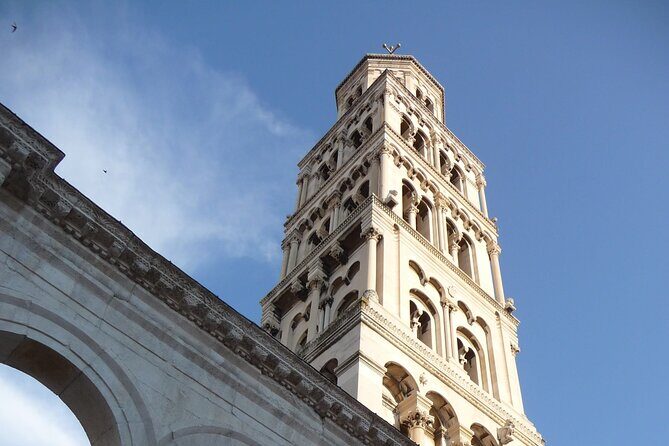
- Cathedral + palace time layers around the Peristyle and central square
- A real local stop at Nadalina cokolada for sweet tastings
- Jewish ghetto context at the Split Synagogue inside the historic core
Start at Riva Harbor: morning light and a fast sense of place
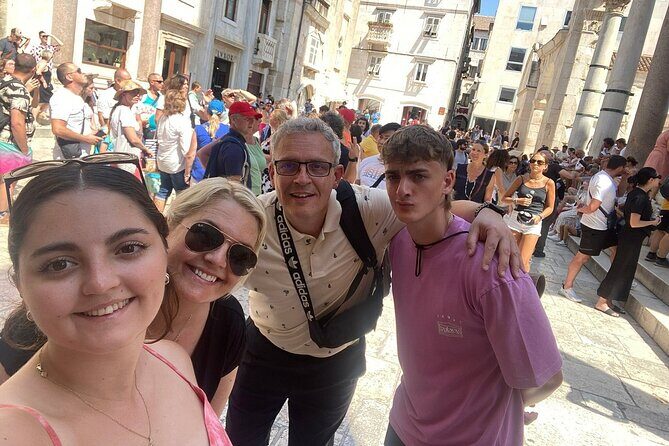
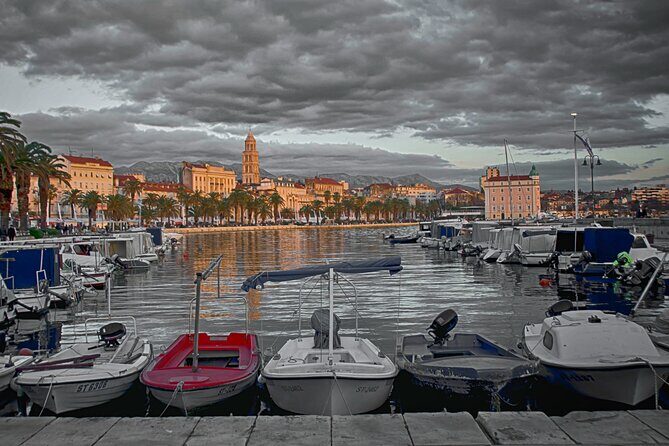
The tour begins at the Riva, Split’s famous coastal promenade—the city’s living room. The first stretch matters because it helps you place everything that comes next. A good guide will orient you with a quick picture of Croatia and Split, then point your eyes toward the right “targets” as you move through the Old Town.
I like that this isn’t a random wander. The pacing is built to work as a tight loop: you start along the waterfront, then head directly into the palace area and work through gates, squares, and lanes with purpose. If you’re the type who loves photos, the morning start gives you calmer streets and softer light around the stone.
Practical note: this is still a walking tour in old stone streets. Wear shoes you can walk in for almost the whole time, and if you’re sensitive to sun, bring water and a hat.
You can also read our reviews of more private tours in Split



Walking into Diocletian’s Palace through the Southern gate
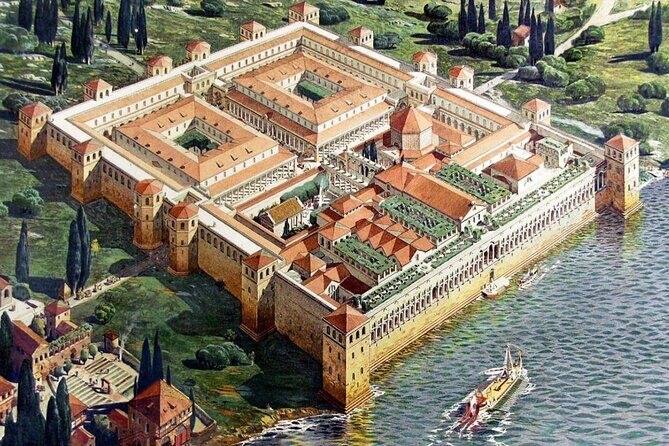
After that quick orientation, you step into one of the best preserved Roman monuments from the 4th century. You enter through the Southern gate, which sets the tone: you’re not just sightseeing outside—you’re moving inside an emperor’s design.
Diocletian’s Palace is a rare thing in Europe: an imperial Roman setting that later became the medieval city of Split. That means you see multiple eras all in one footprint. I like how the guide keeps it straight: first what the palace was meant to do, then how centuries of change built new life on top of it.
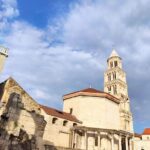
As you walk the main parts, you’ll also get to see the cathedral connection inside the palace complex. The highlights specifically call out the world’s oldest cathedral, so you’re not just moving past an interesting church—you’re encountering one of Split’s most significant landmarks right where the palace city evolved.
A small detail with big payoff: the tour is private, so you can ask questions as you go. Some guides mentioned by name in feedback—like Matt, Peter, and Stella—are praised for answering questions smoothly without rushing you along.
Palace substructures: the basements that explain how power worked
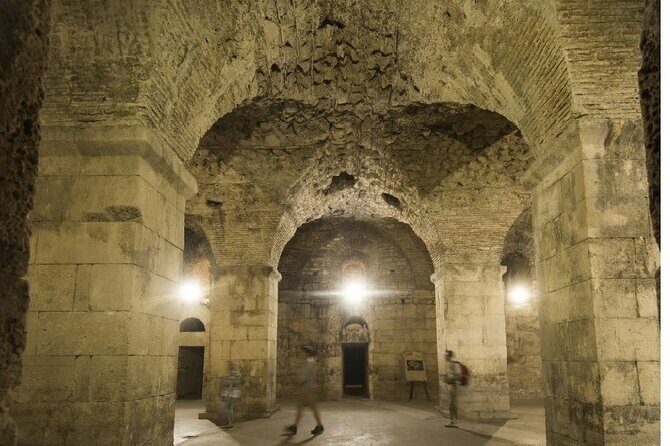
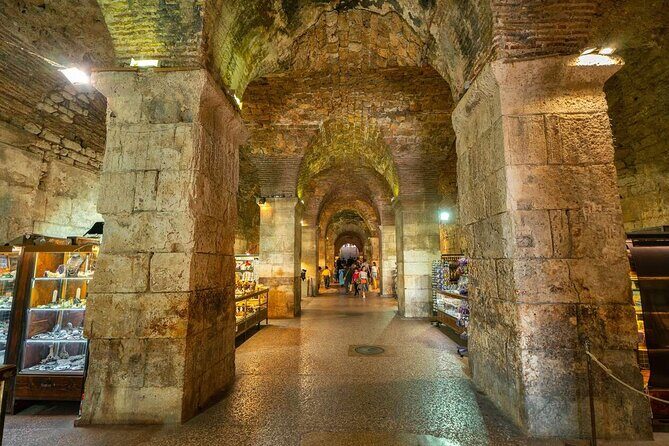
From the Riva, you transition to the palace substructures through the Bronze gate. This part is different in feel. Basements and lower levels give you a new scale for the palace—suddenly the stonework isn’t just decoration; it’s part of how Diocletian’s life and the palace economy worked.
You’ll spend around 30 minutes here, learning about how Diocletian rose to emperor, how he ruled, and why his years ended with abdication and retirement. The tour also points out the palace’s construction logic—its architectural concept—and even references the precious stone from Brac used in building. That’s the kind of detail that makes later street-level sights make more sense.
There is one key drawback to flag: this stop is marked admission ticket not included. Even if you find other parts free, this is the one area you should plan for additional costs. If you’re trying to keep the budget tight, ask what entrance fee applies for the substructures when you book, so you aren’t surprised on the day.
The Peristyle and Vestibulum: the center where time layers overlap
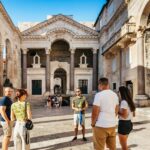
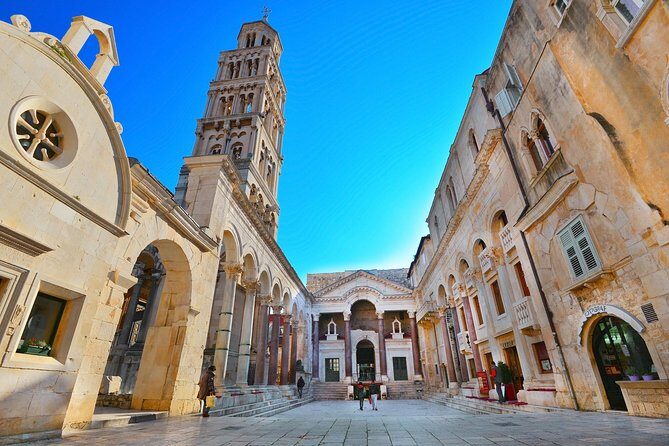
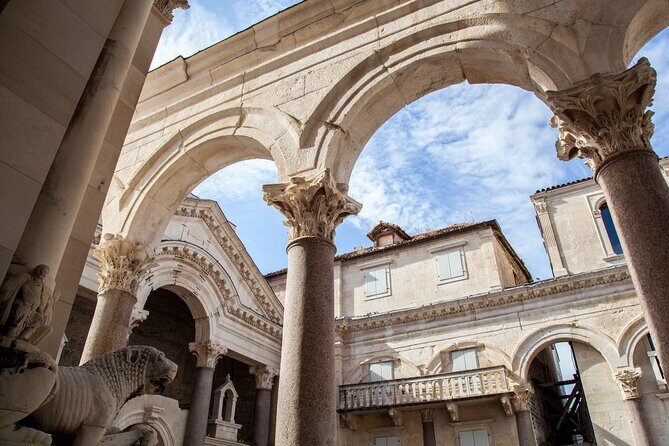
Next comes the Peristyle, the palace’s central square. This is one of those spaces where you can feel the city’s long timeline. The tour highlights how you’re surrounded by architectural styles and monuments spanning ancient Egyptian, Roman, different medieval styles, and later additions.
The Peristyle is also where you start noticing how people lived. The space behaves like a crossroads: it’s open enough to orient you, and layered enough that every turn tells a story. If you’re the kind of person who likes understanding why buildings exist, this is a good moment to slow down and let the guide connect the dots.
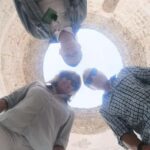
After that, you visit the Vestibulum, a circular building that served as a lounge and entrance to Diocletian’s private chambers. Here’s a fun bonus mentioned in the tour description: sometimes you might catch Dalmatian klape singing in this area. That’s not guaranteed, but it’s exactly the kind of atmospheric moment that turns a history stop into something you can actually remember.
Again, the cathedral is a major theme. The highlight set points to it as a must-see within the palace complex, and guides often build their explanations around what it replaced and how the palace-city transformation unfolded.
Gates and street geometry: Golden Gate, Silver Gate, and Decumanus
Split’s Old Town can feel like a maze until you learn the rules. This tour tries to teach the rules fast.
You’ll pass the Eastern (Silver) gate, described as the start of the main Decumanus street. Then you reach the Golden gate, which the tour description explains in a very practical way: it’s part of a defensive idea called a people trap gate concept. In plain terms, the gate design forces movement into a constrained flow—useful when you’re thinking like an ancient defender, not a modern tourist.
You’ll also hear how Roman streets like Cardo and Decumanus shaped movement, and the route to Salona, the ancient Roman capital town. And there’s a key historical thread: the tour explains that Salona’s importance fed into Split’s development in the 7th century, and invaders from the north helped push Salona into decline—one reason the palace’s Roman structure got converted into the medieval city layout you walk today.
If you enjoy city logic—how towns grew from road grids and strategic gates—this section is the one you’ll appreciate most.




Nadalina cokolada: a sweet local break that actually fits the pace
About mid-walk, you stop at Nadalina cokolada for a treat. The tour description calls it included, with a couple of sweet tastings featuring Mediterranean fruit and herbal flavors.
This matters more than it sounds. After stone, stairs, and tight corridors, a short break resets your legs and keeps the tour from turning into pure endurance. In feedback, people also praised chocolate as a highlight inside the palace walls area, which fits the idea that the tour is designed for small, well-timed moments.
One important consideration: the chocolate shop is listed as closed on Sundays, and the tour notes you’ll have to skip it on that day. If your dates fall on Sunday, don’t assume you’ll get the treat—plan for a different short pause instead (and if you’re booking, check what your guide will swap in).
Grgur Ninski, Narodni Trg, Fruit’s Square, and Prokurative
After you’ve wrapped the palace core and its immediate logic, the tour moves into the medieval street and square system that grew up around it.
You’ll meet the Grgur Ninski statue, the large figure of the famous Croatian archbishop from the 10th century, created by Ivan Mestrovic. It’s an easy landmark to spot, and it also gives you a break from Roman stonework—like switching from one chapter to the next without losing the plot.
Then you’ll stand at Narodni Trg, the main medieval square. Expect views of the city hall building and palaces around it. A short stop here is ideal because squares are where you naturally catch your breath and re-sync your bearings.
Next is Fruit’s Square (Trg Brace Radic), a former market place, where a statue of Marko Marulic stands. Marulic is described as a prominent Croatian poet and humanist from the 15th century, and the tour treats this square as the second key market square of medieval Split—so it’s not random. You’re learning how commerce and culture fed the city’s daily rhythm.
Finally, you reach Prokurative Square, described as an open space framed by neo-Renaissance buildings and compared to St. Mark’s Square in Venice. The comparison helps your brain build a picture: elegant edges around a central public area, good for a last quick look and a final photo.
Split Synagogue and the Jewish ghetto: a quieter stop with real weight
The Split Synagogue visit takes you into the 16th-century–medieval Jewish ghetto. This stop is only around 15 minutes, but it’s meaningful because it broadens the story of Split beyond Romans and medieval Christians.
The tour description also notes that if you’re interested in visiting, this synagogue is the 3rd oldest operating synagogue in Europe in Split. So even in a short time window, you’re pointed toward a major cultural landmark.
I like that this keeps the tour balanced. Diocletian’s Palace is the headline, but Split isn’t only Roman. The synagogue stop helps you understand that the Old Town was shaped by multiple communities over time.
Price and timing: is $124.34 per person worth it?
Here’s how I’d judge the value. You’re paying $124.34 per person for a private walk of roughly 1 hour 50 minutes to 2 hours 10 minutes, with a flexible licensed guide and a route that hits the most important palace and Old Town anchors.
You get a lot because:
- The route covers big “anchor moments” in a short span: palace entry, main complex, substructures, central square, gates, then squares and a major cultural stop.
- The tour includes a local treat at Nadalina cokolada (with the Sunday exception).
- Many stops are marked free admission, and only specific areas (notably the substructures stop) are flagged as not included.
In other words, this isn’t priced like a slow museum day. It’s priced like a guided shortcut through the most important places—plus context so you don’t feel like you’re just collecting stamps.
One more value signal: feedback includes specific praise for guides tailoring pace and answering questions—people mention guides like Milos, Lily, Miranaja, Boran, Gita, Natasa, and Gythe (and dog Mala) for making the stories click. That kind of guide-to-guide variation matters in a small private tour.
Balanced caution: there’s at least one low-star story about a tour feeling shorter than planned. The real lesson for you is simple: confirm expectations for how long you want to spend on the palace substructures versus the street-and-square portion, and speak up early if you want extra time in one spot.
Should you book this private Split tour?
Book it if you want the smartest way to see Diocletian’s Palace and the layered Old Town without getting tangled in street names and gate geometry. This works especially well for couples, families with older kids, and anyone who likes architecture plus clear explanations. A private format is also a big win when you’re curious and want questions answered as you walk.
Skip it (or at least adjust expectations) if you hate walking, or you’re expecting all entrance fees to be fully included. The tour is built around a mix of free and paid elements, and the substructures are the one area called out as not included.
If you like your history with concrete details—Roman streets, defensive gate ideas, stone sources from Brac, and the way Salona’s decline shaped Split—this is one of the better ways to spend a morning in Split.
FAQ
How long is the Split and Diocletian’s Palace private tour?
It runs about 1 hour 50 minutes to 2 hours 10 minutes.
Is this tour private or shared with other people?
It’s private. Only your group participates.
What language is the tour offered in?
The tour is offered in English.
Where do we meet for the tour?
The start point is Luka Split, Obala kneza Domagoja 7, 21000 Split, Croatia.
Do you offer pickup from hotels or the cruise port?
Pickup is available only if you’re staying in Old Town Split. If you’re coming by cruise ship, pickup is at the port at the cruise ship dock exit gate.
Are entrance fees included in the price?
No. Entrance fees are not included. The palace substructures stop specifically lists admission ticket as not included.
Is the chocolate stop included?
Yes, Nadalina cokolada is included as a treat stop. It is unfortunately closed on Sundays, so you’ll need to skip it then.
Can I get a full refund if I cancel?
Yes. You can cancel up to 24 hours in advance for a full refund. If you cancel less than 24 hours before the start time, the amount paid is not refunded.