REVIEW · CITY TOURS
Split Quest Experience: Discover the City
Book on Viator →Operated by Questo · Bookable on Viator
A phone-led mystery in Split. This city quest turns a walk through a 1700-year-old town into a story trail, with exact directions on your phone and a built-in game about one of the greatest Roman emperors. I especially like the mix of famous landmarks and everyday lanes where you actually feel the city’s rhythm, not just the postcard stuff. One catch: it’s 100% self-guided, so if you dislike apps or you forget to charge your phone, you’ll feel it fast.
The route takes about 1 hour 30 minutes to 2 hours, and it’s laid out as a sequence of short stops (around 7 minutes each) from Sustipanski Park to the Peristil area. It’s also built for flexibility: you can pause, take breaks, and continue at your own pace, while staying outdoors and away from the worst crowd crush. You buy a ticket per person for the best experience, but multiple people can share a single phone.
In This Review
- Quick hits for Split Quest Experience
- Why this Split quest feels different than a standard sightseeing tour
- Price and value: about $6 for 2 hours of Roman-meets-street storytelling
- From Sustipanski Park to the Peristil: what each stop is really for
- Stop 1: Sustipanski Park (Sjaš svijetliš svemiriš me)
- Stop 2: Obala kneza Branimira
- Stop 3: Matejuška
- Stop 4: Neretvanska ulica
- Stop 5: Prva voda (Ul. kralja Tomislava 2)
- Stop 6: Statue of Gregory of Nin
- Stop 7: Marulićeva ulica
- Stop 8: Statue of Marko Marulić
- Stop 9: Diocletian’s Palace (Ul. Iza Vestibula 3)
- Stop 10: The Iron Gate / Eastern Gate (Porta Orientalis)
- Stop 11: Papalić Palace (Papalićeva ulica)
- Stop 12: The Head on the Wall (Dominisova ulica)
- Stop 13: Jupiter’s Temple
- Stop 14: Vestibul / the grand entrance feel (ending near Peristil)
- The Questo app experience: the good, the not-so-good, and how to set yourself up
- Crowd-smart walking: why the route design helps
- What kind of traveler should book this?
- Should you book Split Quest Experience?
- FAQ
- How long is Split Quest Experience?
- Where does the experience start?
- Where does it end?
- What is included with the ticket?
- Do I need the Questo app?
- Is there a live tour guide?
- Can a group share one phone?
- Are there ticketed admissions at each stop?
- What are the opening hours?
- What is the cancellation policy?
Quick hits for Split Quest Experience
- Phone directions between checkpoints keep you moving without guessing the turns
- Self-guided, open-air pacing helps you avoid dense crowds
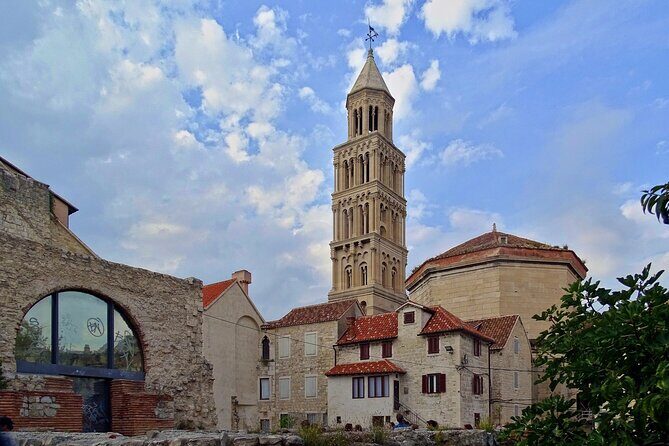
- Diocletian’s Palace landmarks show up in multiple ways, not just one big stop
- Sea-front and local street scenes balance the Roman monuments
- Short time commitment makes it easy to fit into any Split day
- Mobile ticket + 24/7 support means you’re not stuck if something goes sideways
Why this Split quest feels different than a standard sightseeing tour
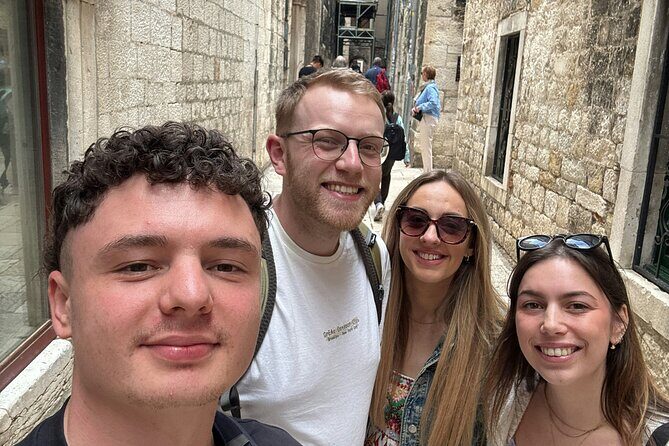
This isn’t a guided walking tour where a person talks at you the whole time. Instead, you play a city exploration game on your phone (Questo app), and the story unfolds as you reach each location. The idea is simple: you’re solving a mystery, you get directed to the next spot, and history becomes something you uncover step by step.
I like this format for a place like Split because the city is built for wandering. You can move from sea views to stone corridors to small streets without it turning into a “museum shuffle.” You’re also in charge of your pace, which matters in summer when your energy level is a real travel variable.
The biggest downside is also the obvious one: you’re depending on your phone. If you’re the type who wants a human guide to correct you when you turn the wrong way, this setup may feel irritating. And if your battery is low, you’ll want to fix that before you leave your hotel.
You can also read our reviews of more city tours in Split



Price and value: about $6 for 2 hours of Roman-meets-street storytelling
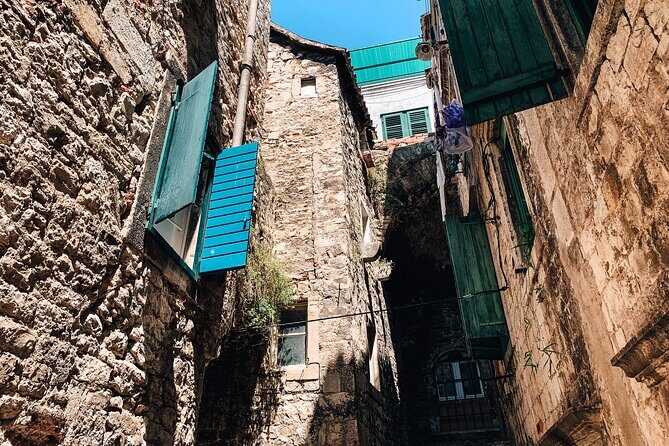
At $5.97 per person, this sits in the “low-stakes add-on” category. You’re not paying for a live guide, you’re paying for the game, the route, and the convenience of turn-by-turn directions on your phone.
For that money, you get:
- A pre-built storyline and directions delivered through the app
- A route that mixes scenic and monumental stops
- Enough time to cover a meaningful chunk of Split without turning the day into a full-on project
That value gets even better if you’re traveling in a group. There are group discounts, and the experience is private for your group, meaning it’s not a big mixed crowd. You still walk a lot on your own, but the “guidance” part comes from the app.
If you’re expecting someone holding a microphone, don’t. If you’re okay with a phone-led adventure, the cost is easy to justify.
From Sustipanski Park to the Peristil: what each stop is really for
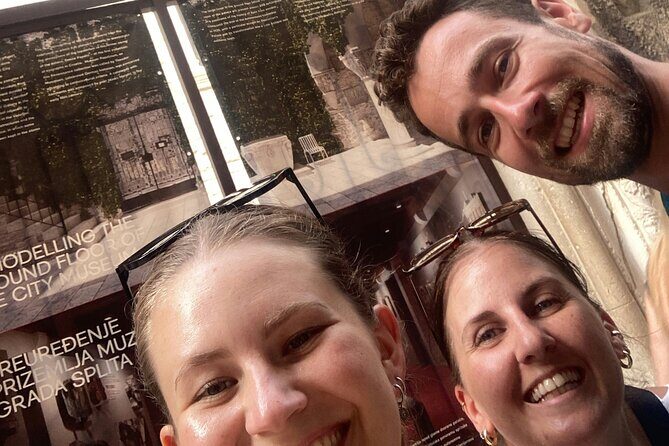
You’ll start at Sustipanski put near the first checkpoint label (Sjaš svijetliš svemiriš me). The beauty of the opening stretch is that you ease into Split with a calm, scenic start rather than jumping straight into stone crowds.
Stop 1: Sustipanski Park (Sjaš svijetliš svemiriš me)
Sustipanski Park is your “exhale” moment. It’s known for lush greenery, walking paths, and benches with sea views. This is a good place to reset before you start collecting the Roman clues, and it’s also a pleasant warm-up if your legs are still waking up.
Practical note: this part is outdoor and easy to enjoy even if you’ve got limited time. You’re not boxed in like you would be at the biggest monument entrances.
Stop 2: Obala kneza Branimira
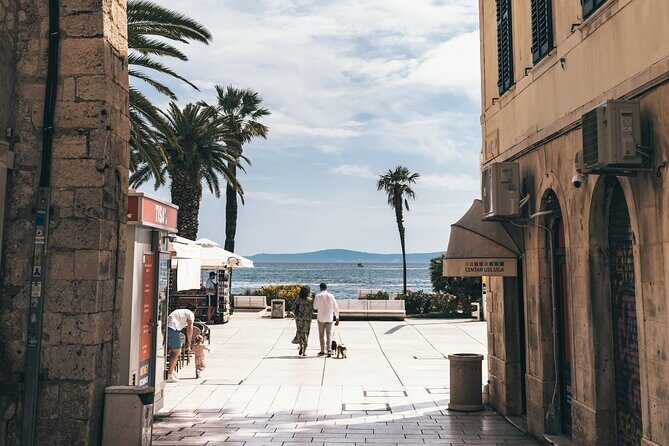
Next comes Obala kneza Branimira, a waterfront promenade. Think of it as your “movement and views” zone—time where you can keep walking and let the coastline do its job.
Since you can spend as much time as you wish until you follow the next directions, I’d use this stretch to:
- watch the water and ships move
- snap photos without rushing
- get your bearings for later in the old center




Stop 3: Matejuška
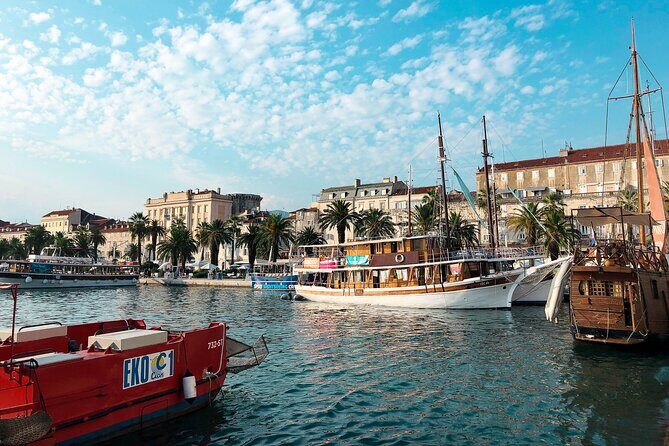
Then you reach Matejuška, a small fishing harbor and marina with a traditional, local feel. This is the point where Split stops being only monuments and starts being real daily life: boats, working waterfront energy, and a calmer vibe than the center.
If you like cities where history sits next to normal routines, this is one of the better mood-shifters on the route.
Stop 4: Neretvanska ulica
Now you’re into Neretvanska ulica, a street that mixes residential buildings with shops and restaurants. This stop matters because it reminds you that Diocletian’s Palace isn’t the only story in town. The game uses these transitions to keep you from living in a monument bubble.
A small tip: slow down here. It’s tempting to speed through when you’re excited about the Roman sites later, but the local street texture is part of what makes Split feel like Split.
Stop 5: Prva voda (Ul. kralja Tomislava 2)
At Ul. kralja Tomislava 2, you’ll find the Weird Fountain, locally known as Prva voda. This is one of those stops that proves the game isn’t only about big-ticket history.
Why it’s worth it: quirky details like this help the whole walk feel playful and human, not like you’re speed-running a checklist. Also, fountains are an easy break point when you need shade or a quick photo stop.
Stop 6: Statue of Gregory of Nin
Then it’s up a gear with the Gregory of Nin Statue. It’s a prominent historical monument created by Croatian sculptor Ivan Meštrović, erected in 1929.
This stop is valuable because you get a clear landmark moment before you enter the deeper layers of Diocletian’s Palace area. In a city with lots of stone, anchor points help you remember where you are.
Stop 7: Marulićeva ulica
Marulićeva ulica takes you along a street named for Marko Marulić, a Renaissance poet and author from Split often called the father of Croatian literature. This gives your walk cultural depth without forcing you into a museum ticket.
Even if you don’t know his work, the street context helps you understand how Split honors its thinkers alongside its Roman legacy.
Stop 8: Statue of Marko Marulić
Right after that, you see the Marko Marulić Statue. It’s another clear, readable landmark. I like these “human-scale” monuments in between Roman ruins—they keep the route from feeling like it’s only about stone and centuries.
Stop 9: Diocletian’s Palace (Ul. Iza Vestibula 3)
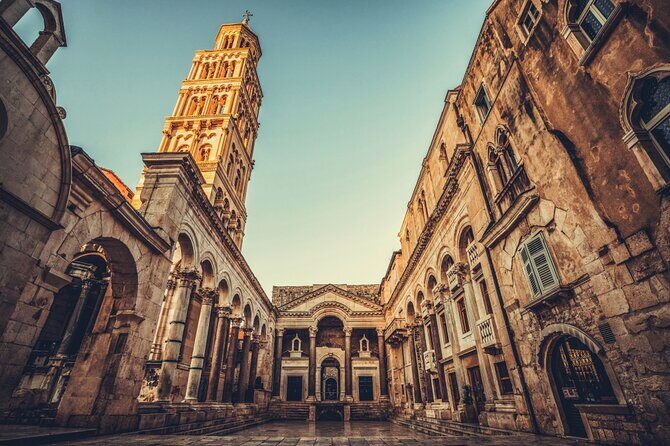
Now you hit the big one: Diocletian’s Palace. The palace site shows a combination of architectural styles, including Roman, Hellenistic, and Byzantine elements. You’ll see preserved walls, gates, columns, courtyards, and more.
This is where the story angle makes sense. You aren’t just looking at “old buildings.” The game framing pushes you to notice details you might otherwise walk past.
Stop 10: The Iron Gate / Eastern Gate (Porta Orientalis)
Next is the Iron Gate, also known locally as Porta Orientalis or the Eastern Gate. Diocletian’s Palace has four main entrances, and this is one of them.
Why this stop is worth the tiny time: gates are where you feel how a place was designed to control movement. Even if you don’t geek out on architecture, seeing an entrance in the context of the palace makes the whole complex easier to understand.
Stop 11: Papalić Palace (Papalićeva ulica)
Then you’ll reach the Large Papalić Palace (Velika Papalićeva palača). It’s an 18th-century building and a notable example of Baroque architecture.
This stop balances the earlier Roman focus. It’s a reminder that Split didn’t stop evolving after the Roman era. If you want variety in one walk, this is part of why the route works.
Stop 12: The Head on the Wall (Dominisova ulica)
At Dominisova ulica, look for The Head on the Wall (Glava na Zidu). This sculpture is attached to a building wall and shows a human head.
This is another good “slow down” moment. Weird, small public art is often what you remember later, even when the big monuments blur together in memory.
Stop 13: Jupiter’s Temple
Then the route heads to Jupiter’s Temple, also known as Hram Jupitera. It’s a Roman temple built in the 3rd century AD, during the construction of Diocletian’s Palace.
This is one of the most direct Roman history stops on the route. If you want proof that you’re in a living Roman layer, this is where it shows.
Stop 14: Vestibul / the grand entrance feel (ending near Peristil)
The final checkpoint is Vestibul, an ancient vestibule or entrance hall that served as a central grand entrance to the palace, leading toward the emperor’s residential quarters. Your endpoint is the Peristil area.
This closing “entrance hall” concept helps the walk land with a sense of finality. It also pairs well with the game’s mystery theme: you end at a space that feels like it belongs to authority and power.
The Questo app experience: the good, the not-so-good, and how to set yourself up
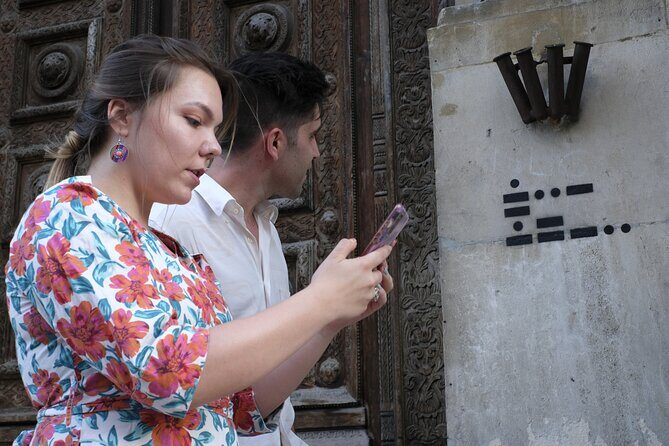
This quest runs through the Questo app. After booking, you receive an email with instructions to download and play. You’ll need to create an account using the same email you used to purchase the ticket, and you’ll want the app ready before you start walking.
Here’s what makes the app format work:
- You get exact directions from stop to stop, so you’re not doing map-guessing
- It’s flexible, so you can stop for breaks without abandoning the route
- It’s set up so the story and location clues travel together
Here’s what to watch:
- You need a charged phone. Bring a power bank if you’re out all day in Split.
- If you struggle with apps or you hate relying on screens while walking, this is where you’ll feel frustrated.
- You should treat it like a self-guided game, not a human-led tour. That mismatch is usually where disappointment comes from.
Also, it’s worth noting that the experience is described as private for your group. So even if you’re sharing a phone, the walk is still only for your group—not a large group shuffle.
Crowd-smart walking: why the route design helps
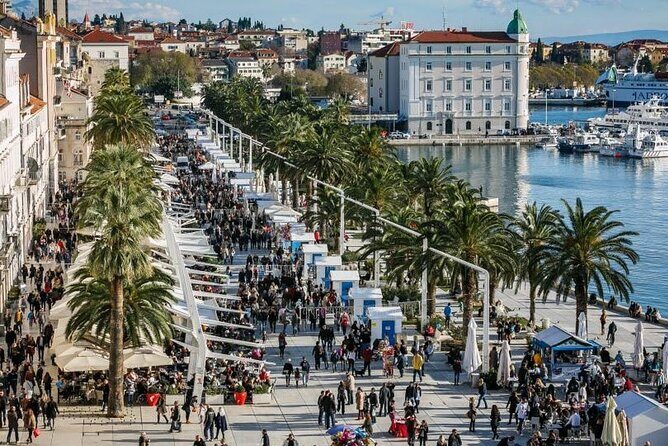
A key promise here is that you’ll be in open air and avoid heavy crowd crush. That matters because Split can get packed, especially near Diocletian’s Palace.
With a self-guided format, you can time your own pace. If you arrive a bit early or linger at a waterfront stop, you can often avoid the worst congestion at the palace entrances. Since each checkpoint is around 7 minutes, you’re never stuck wandering for ages looking for the next clue.
You should still expect walking on uneven old-city surfaces and stone areas near the palace. Bring comfy shoes and treat the day like a walking loop, not a museum visit.
What kind of traveler should book this?
This is best for you if:
- You like city games, scavenger hunts, or story-based walking routes
- You want a 2-hour plan that still leaves room for breaks
- You enjoy mixing Roman landmarks with normal street life
It’s less ideal if:
- You want a live guide to explain everything out loud
- You dislike phone-based navigation
- You’re traveling with a low-battery or low-tech setup
It also works well for couples, solo travelers, and small groups who can coordinate around a shared phone if needed. Just remember: the experience recommends each user buys their own ticket for the optimal setup, even though sharing is possible.
Should you book Split Quest Experience?
I’d book it if you want something practical and budget-friendly that still feels like you’re doing more than just sightseeing. The blend of Sustipanski Park, the waterfront, and the Diocletian’s Palace zone makes the route feel varied, and the phone directions reduce decision fatigue when you’re in a maze of stone streets.
Skip it if you’re the type who gets annoyed by apps or you need a human to keep you on track. In a city as walkable as Split, the route can still be great—but this one is built to run through the phone.
My rule of thumb: if you can handle a charged phone and you’re open to a self-guided “solve the story” format, this is a smart way to spend a couple hours in Split.
FAQ
How long is Split Quest Experience?
The experience runs about 1 hour 30 minutes to 2 hours.
Where does the experience start?
You start at Sustipanski put, 21000 Split, near the first checkpoint label (Sjaš svijetliš svemiriš me).
Where does it end?
It ends at the Peristil area (Peristil ul., 21000 Split). You reach the final stop by following directions from the app.
What is included with the ticket?
You get a city exploration game on your phone (Questo app), a mobile ticket, flexibility to start and continue at your own pace, and 24/7 customer support.
Do I need the Questo app?
Yes. You must download the Questo app, create an account using the same email you used for the purchase, and open the app to follow directions.
Is there a live tour guide?
No. This is self-guided through the app.
Can a group share one phone?
Yes. The experience recommends each user purchase a ticket for the optimal experience, but several people can share a phone.
Are there ticketed admissions at each stop?
The stops listed for the experience show admission ticket free.
What are the opening hours?
It runs daily from 8:00 AM to 6:00 PM.
What is the cancellation policy?
You can cancel for a full refund if you cancel up to 24 hours in advance of the experience start time. If you cancel less than 24 hours before, the amount paid is not refunded.
If you want, tell me your travel month and whether you’re doing Diocletian’s Palace as a separate visit. I can suggest the best time slot to do this so you don’t end up dodging the biggest crowds.