REVIEW · CITY TOURS
City Bike Tour of Split
Book on Viator →Operated by Red Adventures Croatia · Bookable on Viator
Three hours on a bike makes Split feel bigger. This small-group ride connects Diocletian’s Palace and Marjan Park with a route that mixes stone history, seaside promenades, and real local neighborhoods. I like how you cover a lot without racing, and you get a guide who explains what you’re seeing in plain English.
What I especially like is the personal feel. With a max group size of 15, guides can keep an eye on everyone, and you’re not just pedaling through checkpoints. The tour runs with local English-speaking guides, and I’ve seen how much guests enjoy them—people mention guides like Egor, Eva, Ivana, Yvonne, and Darla by name, and they consistently point out strong city knowledge plus helpful, practical tips.
There is one big consideration: the ride includes a stiff uphill stretch around Marjan Hill. If you’re unsure about hills or you don’t love heights, consider asking for an e-bike option (many guides do this as an upgrade), because several people call the climb tough even when they’re reasonably fit.
In This Review
- Key things that make this Split bike tour worth your time
- Why cycling Split is such a smart use of your time
- Meeting at Ul. kralja Zvonimira and getting rolling with a quality bike
- Riva promenade + Diocletian’s Palace walls: the postcard view, but close-up
- Croatian National Theatre and old-town life in motion
- Fritula stop, Olympic medals, and Poljud stadium vibes
- Marjan Park ride: the uphill challenge and the viewpoint payoff
- Varos narrow streets and the Sustipan finish
- How hard is the ride, really (and should you pick an e-bike)?
- Price and value: does $53.95 make sense for this route?
- Who should book this Split bike tour, and who might not
- Should you book? My practical take
- FAQ
- How long is the City Bike Tour of Split?
- What’s included in the price?
- Where does the tour start?
- Do I need to bring food or drinks?
- Is the tour suitable for kids?
- What fitness level do I need?
- Is this tour weather-dependent?
Key things that make this Split bike tour worth your time
- Small-group size (max 15) for safer navigation and a more personal guide experience
- Bikes and helmets included, so you can show up and go
- Diocletian’s Palace + Riva in one sweep, with classic Split contrasts: sea now, Roman walls then
- Marjan Park for the “above the city” views, with pine forest shade to break up the heat
- Varos and Sustipan for tighter streets and a more everyday side of Split, not just monuments
Why cycling Split is such a smart use of your time
Split can be packed with stops. Walking can work, but it’s slow—especially when you want both the old city core and Marjan’s viewpoints. This tour solves that by using a bike to link the areas in a few hours, so you spend less time transferring and more time looking at the details.
You’re also not stuck with only one type of scenery. You get the seaside promenade vibe along Riva, then you move into the historic core near Diocletian’s Palace. Later the tour turns greener, with the Marjan Hill climb and park ride. That shift is part of the fun: you’re seeing how Split changes from stone city to pine-and-view landscape in a single afternoon.
You can also read our reviews of more cycling tours in Split
Meeting at Ul. kralja Zvonimira and getting rolling with a quality bike
You meet at Ul. kralja Zvonimira 8, in central Split, and the tour ends back at the same spot. Your ticket is mobile, which helps if you’re juggling phone photos all day anyway.
Once you arrive, the process is straightforward: you pick up your bike and helmet and set off with your local English-speaking guide. The bike quality is specifically called out as high quality, and that matters more than people think. In a tour that includes some uphill, a bike that feels stable and easy to steer makes the whole experience less stressful.
One practical tip: if you’re even slightly unsure about sizing, advise passenger height at booking. Proper fit can mean the difference between a comfortable ride and constantly adjusting your posture.
Riva promenade + Diocletian’s Palace walls: the postcard view, but close-up
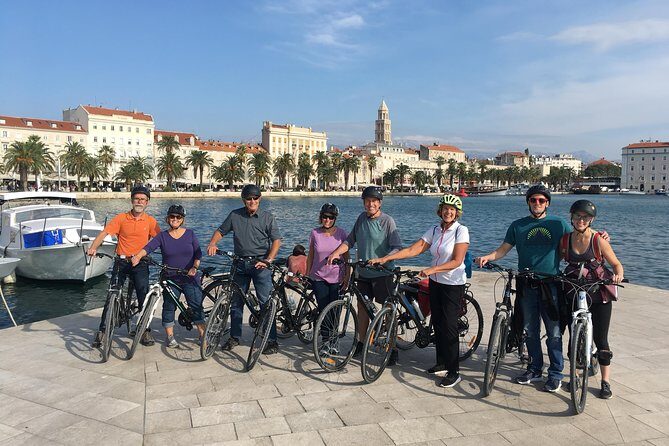
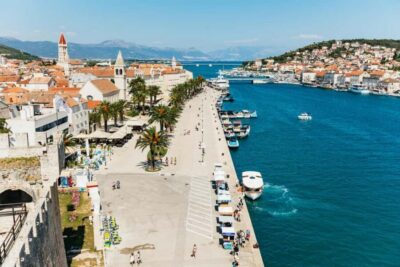
Early on, you cycle along the harbor area and pass the main green market before reaching Riva, the famous seaside promenade. This part works well because it’s a visual warm-up. You’re on the water side with that classic Split rhythm, and your guide helps you connect what you see with what the place used to be.
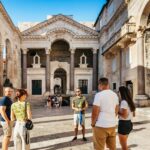
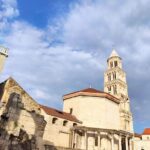
When you ride up to Riva with Diocletian’s Palace walls on the other side, you get an instant sense of scale. The walls are described as about 1700 years old, and the feel is different from seeing them from a distance. By bike, you move along the long stretch and take it in gradually, instead of snapping one quick photo and moving on.
What you’ll probably notice most: the contrast. Sea on one side, huge stone fortifications on the other. That duality is basically Split in a nutshell, and this is one of the best ways to understand it fast.
Croatian National Theatre and old-town life in motion
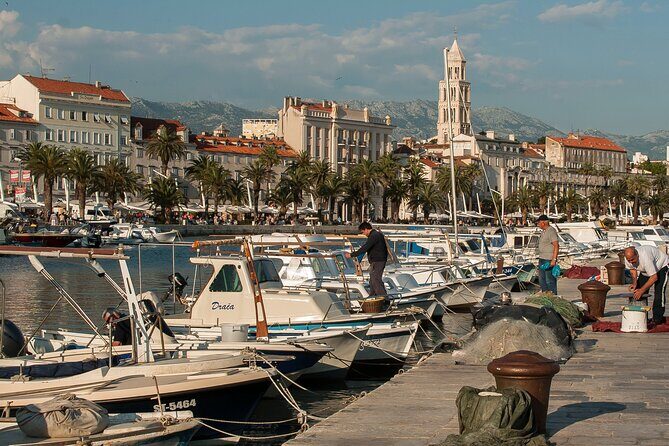
After the Riva segment, the route continues through old town. Here the tour shifts from major landmark viewing to street-level context—busy daily life, markets, and layers of different eras.
You pass by the fish market area and then the Croatian National Theatre. Even if you don’t go inside, the ride positions you so you can read the neighborhood around these buildings. One of the values of biking is the speed is controlled: you can look up at facades and down at street details without getting stuck in long detours.
You also cycle past Ottoman-time fortifications. That’s a helpful reminder that Split isn’t only Roman-era. The city wears multiple histories in different corners, and moving through the streets helps those time periods feel connected rather than like isolated facts.
A small note on comfort: in tight old-town sections, the sound can get swallowed by the street noise. If you’re sensitive to hearing the guide, keep close to the front or ask your guide to repeat key points when you miss them.
Fritula stop, Olympic medals, and Poljud stadium vibes
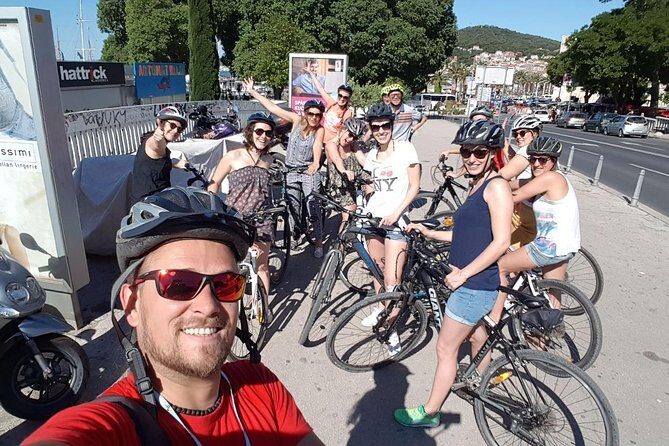
One of the fun stops is around Prodaja Fritula, where the tour blends food culture, sports stories, and local pride. Even if you’re not a football fanatic, this kind of stop adds texture—because it’s about what locals talk about, not just what tourists photograph.
You’ll hear about Split’s sports reputation, including the fact that the city has the biggest number of Olympic medals per capita. Then you move into the passion-and-football story and pass by Poljud Stadium.
Why this matters: people often visit Split only for architecture. This stop gives you a way to understand the city’s energy. Split has a serious fan culture and a sporty identity, and slipping that into a cycling afternoon keeps the tour from feeling like a history lecture on wheels.
You can also read our reviews of more city tours in Split

Marjan Park ride: the uphill challenge and the viewpoint payoff
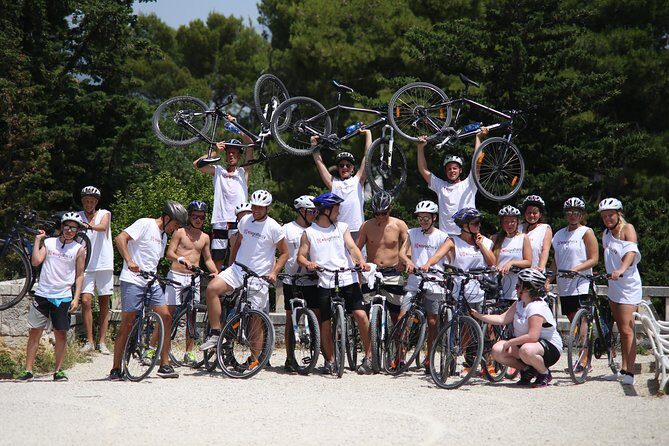
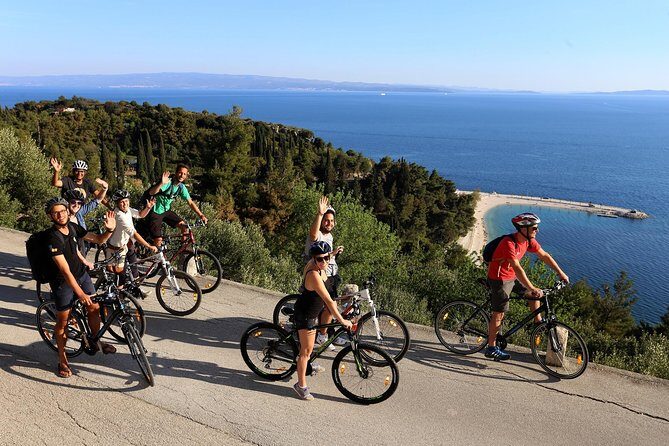
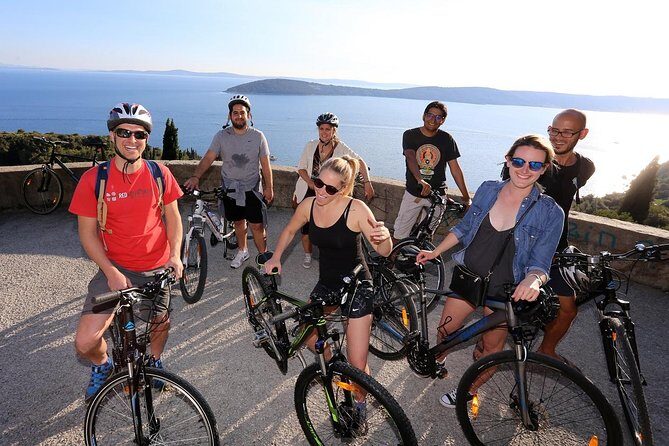
Then comes the heart of the “wow” portion—Marjan Park. The route takes you up Marjan Hill and into a park setting with pine forest shade. Reviews and feedback consistently point to Marjan as a favorite part, mainly because it changes the mood fast.
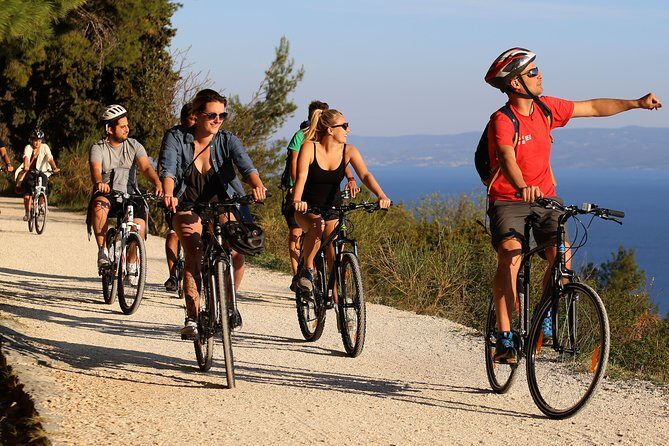
You’re not just riding through green space. You’re climbing into a viewpoint corridor where the city opens up around you—marina, beaches, islands, and the surrounding hills. That’s the kind of perspective you can’t really recreate by staying in the old town streets.
Yes, you should expect uphill. More than one person calls the climb tough but worth it, and some mention a long, challenging ascent. If you choose a regular bike and hills aren’t your thing, you’ll feel it. If you choose an e-bike, the effort drops dramatically and the whole experience becomes more about sightseeing than endurance.
One more practical detail: the downhill sections can be surprisingly fun. Some guests describe long stretches where you’re not doing much pedaling on the way down, which means you still get a workout, but you also get relief.
Varos narrow streets and the Sustipan finish
After Marjan, the tour transitions back toward the older, more compact neighborhood feel—Varos. This part is about daily life in the past. The route takes you through narrow streets where farmers, fishermen, and working-class residents used to live in very dense quarters.
That shift is valuable because it balances the tour. You start with monumental walls and major sites, then you see the city from above, and finally you return to street scale. It’s easier to understand what kind of city Split used to be—crowded, practical, and built for people who lived and worked right in the middle of it.
Your final stop is Sustipan. The description you’re given ends mid-sentence, so I won’t pretend you’ll get a specific monument explained there. But as a ride ending, Sustipan works as a transition zone—so you finish with a neighborhood feel before looping back to the starting point.
How hard is the ride, really (and should you pick an e-bike)?
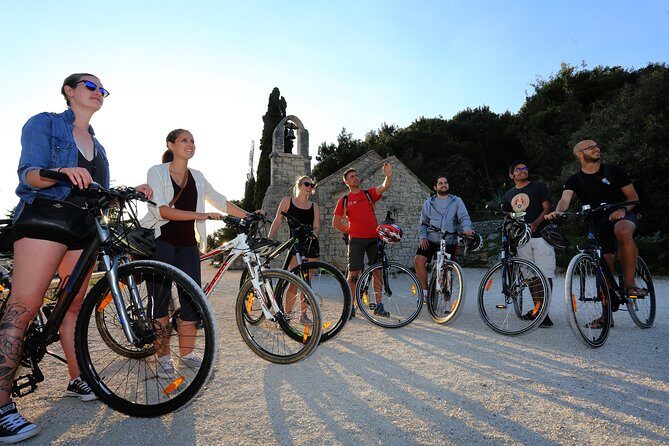
The tour is described as moderate physical fitness, and that’s fair. But “moderate” can mean different things depending on your comfort level with hills. Multiple comments highlight a lot of uphill, plus a long climb toward the Marjan area.
If you’re used to hills or you ride often, a regular bike may feel okay. If you don’t ride much, don’t want to struggle, or you’re not sure about heights, an e-bike upgrade can turn the tour into something far more enjoyable. The key is not age or fitness bragging rights—it’s how you want the experience to feel: steady effort vs. mostly sightseeing.
A couple of extra practical notes from what you’ll experience on the ground:
- The group moves together, so you’ll want to pedal consistently enough to stay with the pace.
- Guides generally slow down for people who need it, but you still shouldn’t plan on making this a gentle stroll. It’s a bike tour, with real terrain.
- If you’re prone to feeling overwhelmed in steep areas, it’s smart to choose your bike option early and mention it to your guide before you start moving.
Price and value: does $53.95 make sense for this route?
At $53.95 per person, you’re paying for three things: time efficiency, guided storytelling, and included equipment. That’s the value equation.
If you tried to DIY this, you’d still need a bike rental, a helmet (or your own), and a lot of navigation effort to cover Riva, the palace zone, the theatre area, plus Marjan. The tour saves you the planning headache and compresses the highlights into a single block of time.
You also get included essentials: an English-speaking local guide, a quality bike, and a helmet. That alone makes the price easier to justify, because bike rentals in tourist areas can add up quickly once you factor in helmet costs and possible deposit hassles.
The other value factor is how the tour uses your “few hours.” It’s not trying to replace a whole day of walking museums. It’s built for a shorter window when you want a guided overview plus a real view payoff from Marjan.
One cost you should plan for: food and drinks are not included. Bring water and consider a snack plan for after the ride.
Who should book this Split bike tour, and who might not
I think this tour fits best if you want:
- A fast, organized way to see Split’s big highlights without cramming every street by foot
- A guide who explains what you’re looking at, including history and local culture
- A mix of monuments, neighborhoods, and a park viewpoint
It might be less ideal if:
- You dislike hills and don’t want the workout (especially around Marjan)
- You need guaranteed quiet listening time—old town streets can make it harder to hear every detail
- You’re expecting a fully flat, easy ride with no elevation change
If you’re traveling with limited time but still want the city to feel three-dimensional, this is a strong bet. And if you do Marjan on an e-bike, you get most of the reward with far less strain.
Should you book? My practical take
Book it if you want a guided overview that feels active but not chaotic—and you’re happy to trade some comfort for better views. The combination of Riva + Diocletian’s Palace and the Marjan viewpoint climb is hard to beat for a half-day plan.
If you’re worried about the uphill portion, don’t pretend it won’t matter. Plan for it. Choose the bike option that matches your comfort, and you’ll likely end up thinking this was one of the smartest afternoons you spent in Split.
FAQ
How long is the City Bike Tour of Split?
The ride lasts about 3 hours to 3 hours 30 minutes.
What’s included in the price?
You get a local English-speaking guide, a high-quality bike, and a helmet.
Where does the tour start?
You meet at Ul. kralja Zvonimira 8, 21000, Split, Croatia, and you return to the same meeting point.
Do I need to bring food or drinks?
Food and drinks are not included, so you should plan to buy or bring what you need.
Is the tour suitable for kids?
Children must be accompanied by an adult.
What fitness level do I need?
You should have a moderate physical fitness level. The route includes uphill riding, especially around the Marjan area.
Is this tour weather-dependent?
Yes. The experience requires good weather. If it’s canceled due to poor weather, you’ll be offered a different date or a full refund.