REVIEW · EVENING EXPERIENCES
Split: Magical Evening Sightseeing Private Tour
Book on GetYourGuide →Operated by Marina Mariposa Travel · Bookable on GetYourGuide
Split at night feels like a time machine. This private evening walking tour threads together Roman power, medieval street life, and waterfront relaxation in just two hours. I love how it focuses on Diocletian’s Palace and the cathedral area, and how the guide keeps the pace moving while still giving you moments to absorb what you’re seeing. One thing to plan for: the cathedral and some buildings may be closed at this hour, so you’ll often get great views rather than inside access.
You’ll start with a quick look at Riva, then step into the Diocletian’s Palace complex, including well-preserved cellars and the walk up toward the Peristyle and Jupiter Temple. From there, you’ll photograph key landmarks, like the Cathedral of St. Domnius and the Golden Gate, then continue through the town’s squares and market-side streets that come alive in summer evenings. The big drawback is timing: late-day closures can limit interiors, so it’s smart to keep your expectations flexible.
This is a private tour, so you can set the tempo based on what you care about most—architecture, photos, or just getting your bearings fast in Dalmatia’s main city. It’s also wheelchair accessible, and if steps are a problem, they can be avoided. If you want a quick, high-impact introduction to Split’s old town without a long day plan, this is a strong fit.
In This Review
- Key highlights to know before you go
- Why Split’s evening walking tour works (especially in summer)
- Starting at the Diocletian’s Palace cellars: where the tour begins
- Inside the palace story: Peristyle and the Jupiter Temple area
- St. Domnius and the reality of closing hours
- Golden Gate, People’s Square, and the Piazza effect
- Fruit Square: a practical stop for evening texture
- Finishing on Riva: turning a tour into a real dinner plan
- Price and value: what $129 gets you for a private group
- Who should book this tour (and who should skip it)
- Tips to get the most out of your 2 hours
- Should you book this Magical Evening Sightseeing Private Tour?
- FAQ
- How long is the Split Magical Evening sightseeing tour?
- Where is the meeting point?
- What’s included in the price?
- What languages are available for the live tour guide?
- Is the tour private?
- Is the tour wheelchair accessible?
- What is the cancellation policy?
Key highlights to know before you go
- Diocletian’s Palace cellars and upstairs viewpoints: you’ll see both the underground and the grand Roman spaces tied to the palace layout.
- St. Domnius area, with realistic timing: you’ll get photo-time and context even if the cathedral is closed.
- Golden Gate and the Venetian-era Piazza: small photo stops that add up to a real sense of how Split changed.
- Fruit Square pacing: you’ll spend time in a lively square area that suits evening wandering.
- Riva finish for dinner plans: end right on the waterfront where restaurants and cafes are easy to choose.
- Private means flexible: your guide can adjust pace and interests while keeping the tour tight at 2 hours.
Why Split’s evening walking tour works (especially in summer)
Split’s old town compresses a lot of eras into one walkable area. In the evening, that density becomes a benefit: the streets slow down just enough for you to connect landmarks you’d otherwise only see as names on a map. This tour is built around that idea, shifting from Roman architecture to medieval streets and then finishing with the modern Mediterranean “after-hours” vibe along Riva.
If you’re arriving in Split and want to understand the layout quickly, evenings are ideal. You get daylight energy for photos early on, then a warmer mood for the palace and squares. And because you’re moving as a private group, you’re not stuck waiting for a slowest-walker or pulled along by the fastest one.
Just keep one timing reality in your head: late-evening hours can affect what’s open. The cathedral is specifically noted as likely closed during the tour, so you should mentally pack for an exterior-first experience there.
You can also read our reviews of more private tours in Split


Starting at the Diocletian’s Palace cellars: where the tour begins
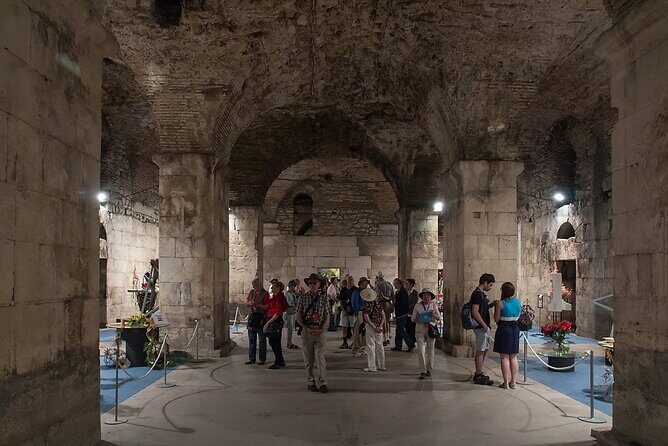
The tour meets at the entrance to the cellars of Diocletian’s Palace, on Obala Hrvatskog narodnog preporoda 23. This is a great way to start because you’re anchored in the palace itself from minute one. Instead of treating the palace like a “sight you pass by,” you’re immediately in the world of Roman construction and daily function.
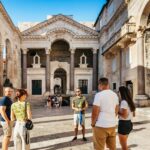
From this starting point, the guide takes you forward to the Diocletian’s Palace visit portion, guided for about an hour. You’ll cover the well-preserved cellars—an area that often feels more tangible than the postcard views. Then you move up the stairs toward the Peristyle and the Jupiter Temple area. That vertical movement matters: it helps you understand how Roman power is staged, from storage and infrastructure below to ceremonial space above.
Practical tip: wear comfortable shoes. Even with a “walking tour” label, this area includes stairs and uneven stone surfaces. If you need step-free options, they can be avoided, but you should still plan for some time on old-town surfaces.
Inside the palace story: Peristyle and the Jupiter Temple area
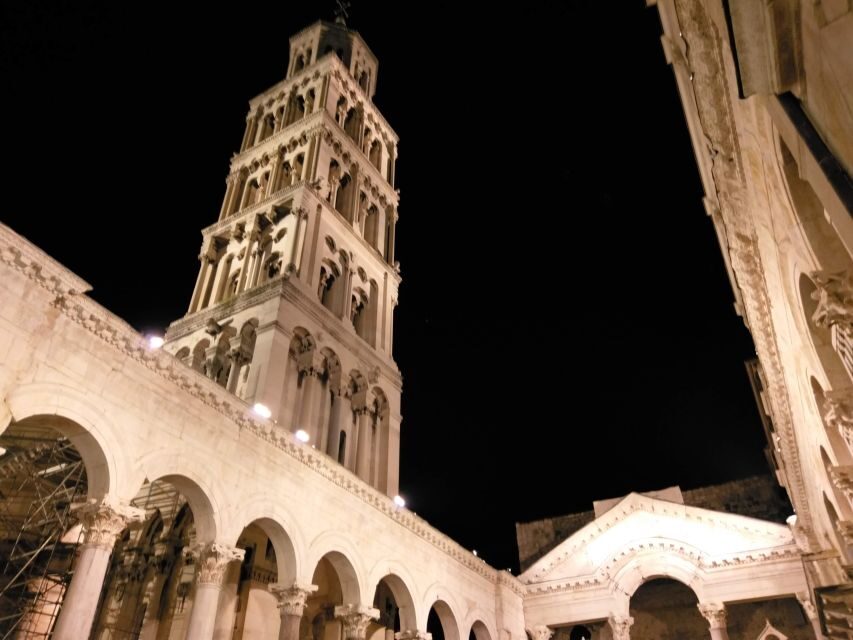
What I like about spending dedicated time here is that it turns a complicated site into an understandable route. You’re not just looking at walls; you’re learning how the palace is organized and why certain spaces feel important.
After the cellars, the climb up to the Peristyle and the Jupiter Temple gives you the “oh, this is why the palace is famous” feeling. The Peristyle area is a natural focal point in the complex, and the mention of the Jupiter Temple keeps the visit tied to the Roman religious and political framework behind the architecture.
This is also where a good guide can make the difference. In particular, a guide like Zrinka has been highlighted for a well-judged pace through the palace and surrounding areas. If you get that kind of guide, you’ll likely enjoy the flow: enough time to look closely, without long stops that eat up your two-hour window.
St. Domnius and the reality of closing hours
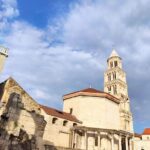
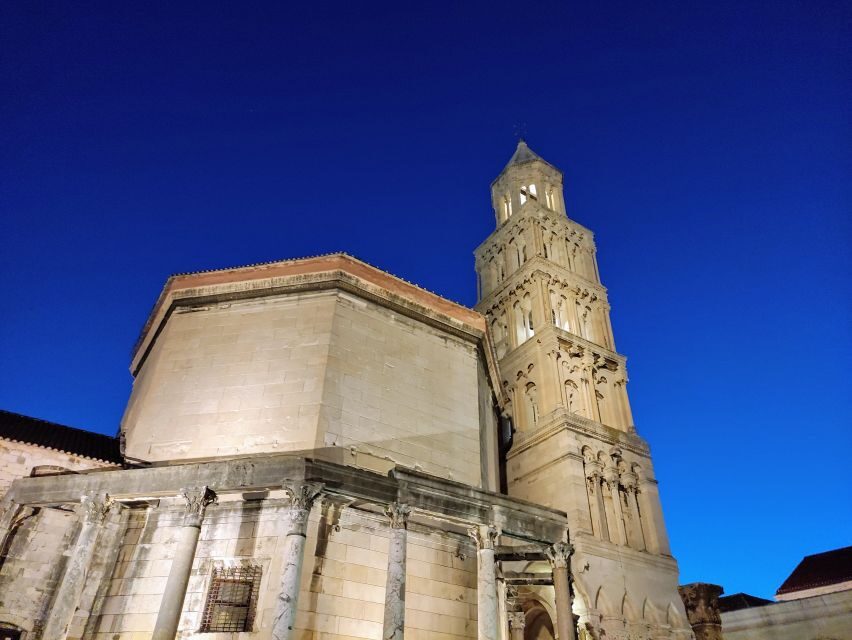
You’ll pause at the Cathedral of St. Domnius (also known as St. Duje) with photo time and guidance. This spot is special because it’s tied to Diocletian’s story: it was originally the mausoleum of Diocletian, and it’s described as being among the oldest cathedrals in the world.
That said, the tour is explicitly set up with the expectation that the cathedral may be closed during the walk. Another review experience also pointed out a late-hour limit: you may see more from the outside than inside.
So how do you get the most value anyway? Focus on what you can control:
- Use the guided context so the façade and setting make sense.
- Take your photos.
- Treat it as a landmark stop that connects Roman origins to the medieval city layer.
Golden Gate, People’s Square, and the Piazza effect
After the cathedral area, the route includes photo time at the Golden Gate. Even if you keep this to a quick look, it’s a useful contrast point. The palace lets you experience Roman engineering, and the Golden Gate helps you connect that scale to the city’s later identity.
Next comes People’s Square, known as Piazza from the period of Venetian rule. This is where the tour goes beyond “Roman only” and starts showing you how Split shifted over time. A square is more than a location; it’s a stage for civic life. In the evening, that stage feels more real because you’re seeing how people actually move through these spaces when the day heats up and the town starts entertaining.
The guided portion here is short, so you won’t get a long lecture. Instead, you’ll get the key context that helps you read what you’re seeing in front of you: who influenced the space, and why the square’s identity is tied to that era.
You can also read our reviews of more evening experiences in Split





Fruit Square: a practical stop for evening texture
A short stop at Fruit Square rounds out the walk into something that feels like a lived-in town rather than a sequence of monuments. You’ll have time to visit this area and get a feel for the kinds of street corners and neighborhood spaces that shape evening wandering.
Why it matters: after you’ve seen the heavy architectural anchors—palace, cathedral area, gates—Fruit Square gives your eyes and feet a breather. It also helps you understand the “in-between” spaces that you would miss if you only followed a museum-style checklist.
If you’re the type who likes to photograph street scenes and small details, this stop can be a good payoff because it usually feels less formal than the palace perimeter.
Finishing on Riva: turning a tour into a real dinner plan
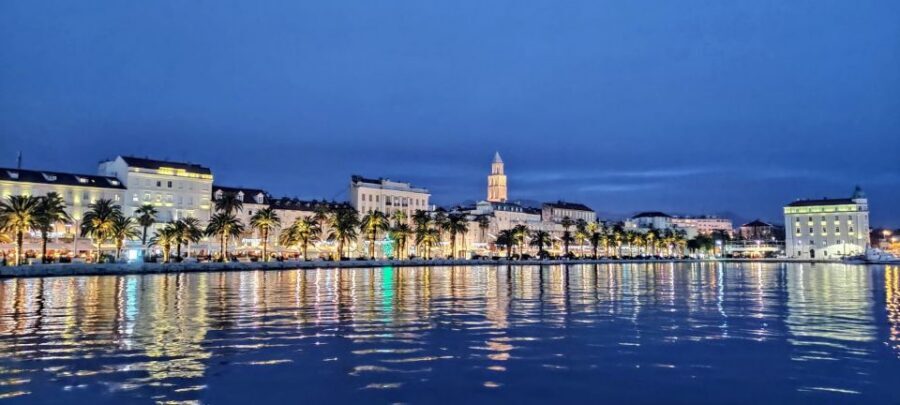
The tour ends back near the starting area, and you’ll also finish sightseeing on Riva, Split’s waterfront. This matters because you’re not stuck figuring out where to go next while you’re still thinking about Roman ruins and cathedral stories.
Riva is lined with places to eat and drink, with plenty of restaurants and cafes nearby. The tour format helps here: your guide can recommend options that make sense for where you are and what you’ve just been walking through. In one standout experience, the guide specifically shared restaurant recommendations, which is exactly the kind of practical bonus that turns a good walk into a complete evening.
Tip: if you want a calm meal, ask your guide for the best nearby option for your preferred vibe. If you want something quick, ask for the closest choice. When you’re ending at the waterfront, you can afford to be a little picky.
Price and value: what $129 gets you for a private group
The price is $129 per group, up to 20 people, for a 2-hour private tour. That pricing structure is the main reason this is good value. In many cities, private tours get expensive fast. Here, the “per group” setup means your cost per person drops as your group size increases.
Even if you’re just two or four people, the key value isn’t only the guide—it’s the route design. Two hours is long enough to get real coverage of Diocletian’s Palace, the cathedral area, and the major squares, without dragging you into a half-day project. You also save decision fatigue: someone else has already mapped the sequence so you don’t waste time backtracking.
Also note what’s included and what isn’t. You get a licensed guide, but entrance fees to the cathedral and Diocletian’s Palace are not included. That doesn’t make the tour worse—it just means you should budget for it separately if you expect to go inside where entry is required.
Who should book this tour (and who should skip it)
This tour fits you best if you want:
- A focused first introduction to Split’s old town in a short timeframe.
- A private format where you can adjust pace and interests.
- A blend of Roman highlights and later-city context through squares and gateways.
- An evening plan that ends where you can easily continue with dinner.
It might not fit as well if you:
- Only care about interior access at specific monuments. Since the cathedral is likely closed, and some buildings may be view-only at late hours, you should expect limited inside time.
- Need step-free movement everywhere without compromise. The tour is wheelchair accessible and steps can be avoided if necessary, but old-town stone surfaces and route constraints can still be a factor.
Tips to get the most out of your 2 hours
- Wear comfortable shoes and plan for stone streets and stairs that might be part of the palace flow.
- Bring a photo-ready mindset: several stops are positioned around photo time, not long sit-down viewing.
- Ask the guide for restaurant direction at the end. That practical local advice can be as valuable as the landmarks.
- Keep cathedral expectations flexible. The tour is likely to be closed there, so use the stop for context and exterior photos.
- Use the private nature: if you’re into one specific area (palace architecture or square life), tell your guide and adjust the pacing.
Should you book this Magical Evening Sightseeing Private Tour?
I’d book it if you’re in Split for a short stay and want a tight, well-sequenced overview of the city’s layered identity. The combination of Diocletian’s Palace (cellars, Peristyle, Jupiter Temple area), the St. Domnius connection, and the shift into Venetian-era squares plus Riva dinner-ready location is exactly the kind of evening value that makes a city feel understandable fast.
I wouldn’t book it expecting lots of guaranteed interior time at late hours. But if you’re happy with great exterior views, a guided route, and a comfortable pace, it’s a smart, cost-effective way to spend an evening in Split.
FAQ
How long is the Split Magical Evening sightseeing tour?
It runs for about 2 hours.
Where is the meeting point?
Meet in front of the entrance to the cellars of Diocletian’s Palace, at Obala Hrvatskog narodnog preporoda 23, 21000 Split.
What’s included in the price?
You get a licensed guide. Entrance fees to the Cathedral of St. Domnius and Diocletian’s Palace are not included.
What languages are available for the live tour guide?
The guide speaks French, English, and Croatian.
Is the tour private?
Yes, it’s a private group.
Is the tour wheelchair accessible?
Yes, it’s listed as wheelchair accessible, and steps can be avoided if necessary.
What is the cancellation policy?
You can cancel up to 24 hours in advance for a full refund.