REVIEW · PRIVATE
Private Electric Rickshaw Tour of Split
Book on Viator →Operated by Riksa Tour Split · Bookable on Viator
Split feels easier when you glide. This private electric rickshaw tour lets you cover big sights fast, without the stair-and-side-street grind, and still stop for real look-and-learn moments. You’ll roll past the harbor, key gates of Diocletian’s Palace, and out toward Marjan Forest Park for sea views and beach time.
I love the way this tour balances easy riding with short, meaningful stops. Two things I especially like are the chance to ask your driver-guide questions as you go, and the route flexibility between a city-focused loop and a longer run that reaches park viewpoints and beaches.
One possible drawback: Split’s top spots are weather dependent. If conditions are rough, you’ll want to be ready for changes, because the experience requires good weather and timing.
In This Review
- Key highlights worth clocking
- Why an electric rickshaw works in Split
- Private tour flow: what you’re really paying for
- From Model of Palace to the Riva Harbor waterfront
- Prokurative: the Venetian connection in one square
- Croatian National Theater: a photo stop with context
- Diocletian’s Palace gates: Golden, Silver, Bronze
- Grgur Ninski statue: quick humor and a local tradition
- Underground palace substructures: why the “under” matters
- Matejuška Fishing Harbor: sea life and the fish-market vibe
- Sustipan: fort walls and a calm viewpoint
- Marjan Forest Park: nature plus city views, not a detour
- Meštrović Gallery in Marjan: art in a villa setting
- Obojena Svjetlost, Kašjuni, Bene Beach: sea color and easy decompression
- Price and value: what $46.10 gets you in real time
- Pace, comfort, and practical tips that actually help
- Who should book this Split electric rickshaw tour
- Should you book?
- FAQ
- How long is the Private Electric Rickshaw Tour of Split?
- What are the main stops you’ll see during the tour?
- Is this tour private?
- Is there any included admission or food?
- Where does the tour start and end?
- Is good weather required?
Key highlights worth clocking

- Private electric rickshaw through Split’s tight streets: You won’t get stuck pacing alone with a map app.
- Diocletian’s Palace gate circuit: Golden Gate, Silver Gate, and the major bronze entrances—plus quick context that helps you “see” the palace.
- Marjan Forest Park stops with real scenery: Parks, viewpoints, and an art stop that breaks up the old-town focus.
- Beach time on longer tours: Kašjuni and Bene Beach, including a free drink on the largest tour.
- Driver-guide Q&A, not a lecture: Good for picky travelers who want answers, not just photos.
Why an electric rickshaw works in Split
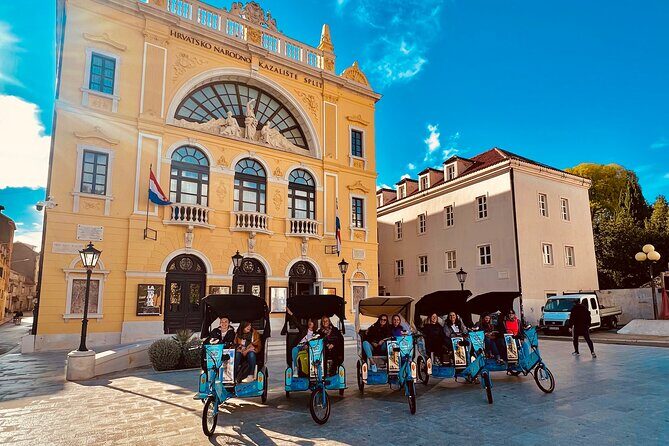
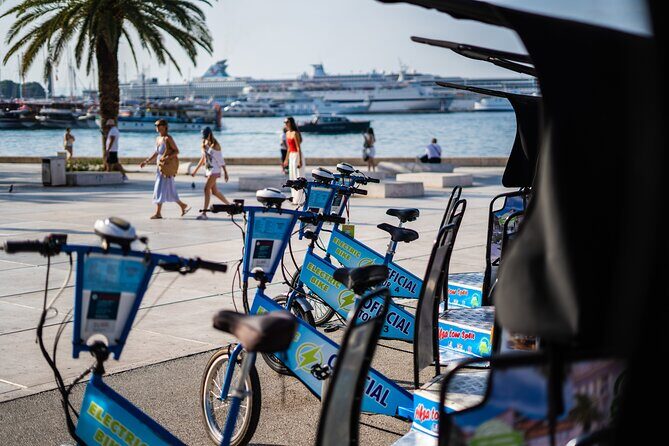
Split’s old town is gorgeous, but it can also be annoying on foot. Streets twist, slopes sneak up, and you can end up spending half the day walking between “must-sees” that are closer together than they feel. A private electric rickshaw solves that. You get motion without stress, plus the freedom to pause where your eyes land.
What makes it work well is the rhythm. You aren’t stuck in one long sit. You’ll ride between standout spots, then step out briefly to look around and reset your bearings. It’s a smart match for first-time visitors who want context and a solid hit list, and for repeat visitors who just want a faster way to connect the dots.
Electric also matters here. You’re moving through a compact historic area with less noise and less effort than traditional touring. It’s not a theme park ride. It’s a practical way to cover ground while you keep your energy for photos, viewpoints, and a relaxed wander when you want it.
You can also read our reviews of more private tours in Split



Private tour flow: what you’re really paying for
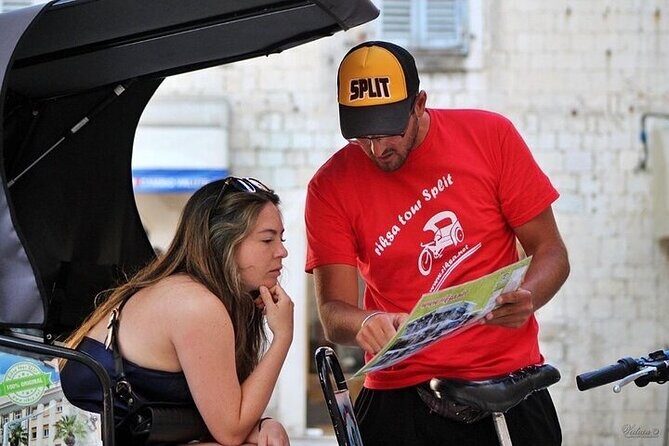
The price is about $46.10 per person, and the tour is private, meaning only your group rides together. That matters more than it sounds. With a shared tour, you often lose the chance to ask the exact question you care about, like how the palace layout worked or why a specific square is so important. In a private setup, you can steer the conversation.
Your driver-guide can adjust the pace too. Based on how guests describe the experience, it’s not a “race through town” tour and it’s not slow either. There’s a middle zone that feels like a good day with a local—enough structure to avoid wasted time, but enough breathing room to enjoy the places.
Capacity is also small: each rickshaw holds 2 adults and 1 child (up to age 10). If you’re traveling as a family, it’s one of those tours that can stay comfortable and not feel cramped. For bigger groups, you’d need more than one rickshaw.
From Model of Palace to the Riva Harbor waterfront
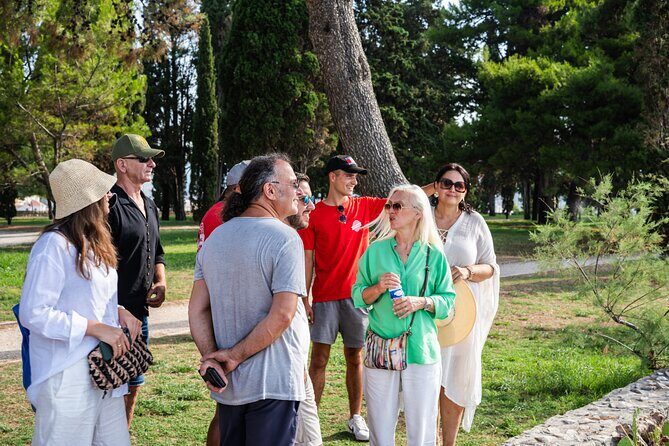
Your tour starts at Model of Palace, on Obala Lazareta 1 in Split. That’s a helpful spot because it immediately points you toward Diocletian’s Palace zone. From there, you’ll head to the waterfront side with a first major stop: the Riva Harbor.
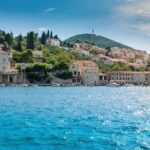
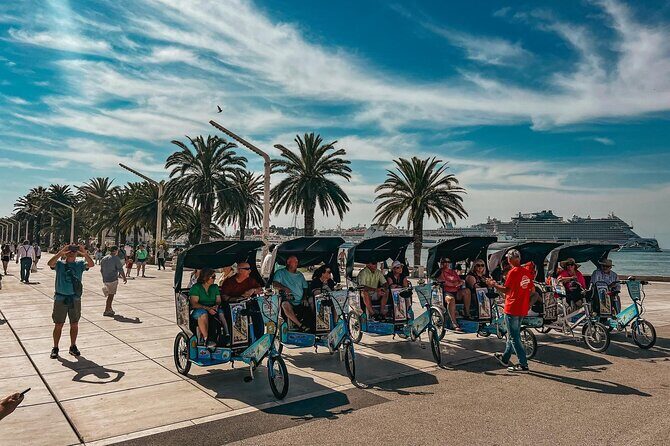
The Riva is the classic promenade along the harbor—palm-lined, restaurant and café energy nearby, and a sea view that makes your photos look like you planned your day better than you did. What I like about starting here is the orientation. Before you get buried in palace walls and gate details, you get the “big picture” of the waterfront and the historic buildings around it. It sets the tone for everything that follows.
Even if you only spend a few minutes, use that time to watch the harbor flow. You’ll notice how the city turns its face toward the Adriatic, and it helps you understand why locals built and rebuilt where they did.
Prokurative: the Venetian connection in one square
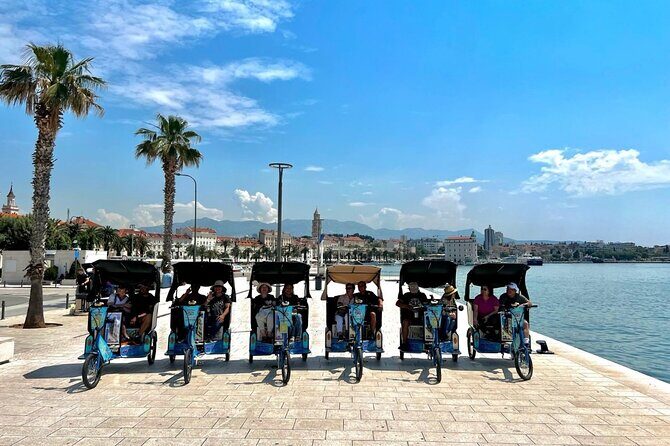
Next is Prokurative, a big open square wrapped by elegant colonnades and arched façades. This stop is short, but it’s worth it because it teaches you something you can spot later: Split’s architecture doesn’t live only in the Roman past. It’s also shaped by later influences, including Venetian style.
The name comes from the Latin procuaratio, linked to “representation,” and the layout was designed as a stage for Venetian architecture. That’s a great detail because it makes the square more than scenery. You’re looking at the city advertising its connections—social, political, cultural—without needing a museum ticket to get the message.
If you’re the type who likes “why is this here?” questions, ask your driver-guide here. You’ll get quick, clear answers that make the rest of the day click.
Croatian National Theater: a photo stop with context
The Croatian National Theater (HNK) is the kind of façade you’ll recognize even if you don’t know what it does. It has neoclassical character and a confident, time-tested presence. The theater traces back to 1893, and your stop is more than a picture moment—it’s a reminder that Split’s culture didn’t stop with Roman stones.
From a visitor perspective, this stop works as a breather. You’ve moved from palace-adjacent streets to an open, built-for-performance frontage. Even if you don’t catch a show, you’ll understand the city as a living arts center, not only a historic stage.
Don’t rush it. Stand back for a minute, then step closer to see the neoclassical detailing. Your camera will thank you.


Diocletian’s Palace gates: Golden, Silver, Bronze
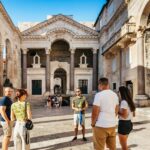
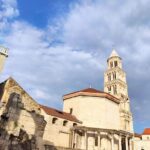
Then the day truly locks onto its star attraction: Diocletian’s Palace. Built in 304, the palace is still the city’s core structure, and the gates are your best shortcut to understanding its layout. Instead of trying to memorize a map, you follow entrances and thresholds—an approach that makes ancient architecture easier to read.
Your route takes you around the palace and highlights the gates:
- Golden Gate on the north side
It’s one of the original entrances, and the name comes from golden decorations that used to be on it. Even though those decorations are gone, the carvings and relief work show the craftsmanship and the importance of the gate.
- Eastern (Silver) Gate
On the eastern side, with a similar story: silver-colored decorations are long vanished, but the architectural detail remains.
- Brass Gate / bronze entrances on the southern side
These bronze gates include ornate reliefs with mythological scenes and figures, reflecting the Roman Empire’s message of power.
What I like about this part is the pacing. Each gate stop is brief, so you don’t get tired staring at stone. But you also get enough time to spot differences between them. After all three, you start seeing the palace as a system of entrances and movement—not just a big “old place.”
Grgur Ninski statue: quick humor and a local tradition
In front of the northern gate, you’ll find the Grgur Ninski statue (Gregory of Nin). It’s hard to miss, and it’s famous for one tradition: rubbing the big toe for good luck. The statue is about 7 meters high and was made in 1929 by sculptor Ivan Meštrović.
You don’t have to do the rubbing ritual to enjoy the stop, but it’s fun because it’s one of those small cultural habits that turns a photo moment into something a bit more meaningful. It’s also a good break while you’re surrounded by Roman-scale architecture. The statue feels human-sized in your mind, even when it’s physically huge.
Underground palace substructures: why the “under” matters
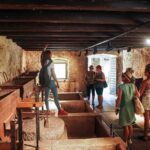
Next comes the Diocletian Palace substructures, an underground complex that historically served different functions like storage and living quarters. You’ll also notice a bronze entrance door, which helps you picture how controlled and purposeful the subterranean spaces were.
This is one of those stops that’s easy to skim past if you rush. But if you take a minute, you’ll start to understand that the palace wasn’t only for spectacle above ground. Life happened below too, and the substructures explain why the palace still feels like a city within a city.
If you like architecture explanations, this part tends to deliver because your driver-guide can connect the dots between gates you just saw and the spaces below.
Matejuška Fishing Harbor: sea life and the fish-market vibe
After the palace, you shift to a different side of Split at Matejuška Fishermen’s Port. This area feels like a working maritime neighborhood. Colorful boats, nets, and the daily seafood trade are all part of the scene.
Your stop is designed for quick immersion. In just a few minutes, you’ll get the vibe of a traditional fishing village without needing to plan a separate market day. You’ll also learn why the port area matters: it shows how Split’s waterfront economy supports daily life, not only tourism.
If the smell of the sea and fish market energy hits you, don’t panic. That’s part of the authenticity. If you’re sensitive, just keep your walk short and step away between photos.
Sustipan: fort walls and a calm viewpoint
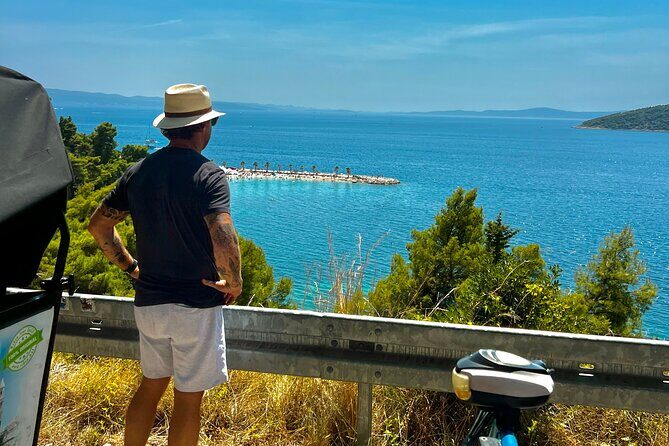
Sustipan is a rocky promontory with Adriatic views. It used to serve as a defensive point, and you can still see old stone walls and fortification remains. Today it’s a more peaceful escape from the dense city center.
This stop is a smart move. It breaks the day’s heavy concentration of Roman and historic sights with open air. You get coastline panoramas and a moment to reset. If you’re carrying a little fatigue in your legs, this stop helps, because you can stand, look, and rest while still feeling like you’re doing something scenic.
Aim for your photos here early or late in the day, if you can. The view is the reason you’re there.
Marjan Forest Park: nature plus city views, not a detour
Now you shift to Marjan Forest Park, with about a 45-minute stop and entry included. Marjan is a massive area—around 178 hectares—with pine forest, Mediterranean shrubs, and rocky sections. It’s crisscrossed with well-maintained trails, and the park is also tied to a cultural landmark: St. Nicholas Church, perched on top of the highest point.
Even if you don’t hike all the trails, the value here is “escape without leaving town.” You’re still in Split, but you get a quieter, greener feel and major views over the coast and islands.
One practical note: wear proper shoes. You’ll be off and on surfaces that are better for walking than sandals. Even with rickshaw transportation, this is still a park visit with real terrain.
Meštrović Gallery in Marjan: art in a villa setting
Inside Marjan Park, you can stop at Galerija Meštrović, the Meštrović Gallery, dedicated to sculptor Ivan Meštrović. It’s housed in a villa built by Meštrović himself, and the collection includes sculptures, drawings, and architectural designs.
This stop changes the tone of the day. You’ve been tracking gates and fortifications; now you’re looking at artistic form and style. Your guide can help you connect what you’re seeing—especially how Meštrović’s work blends neoclassical and modern elements.
Even if you’re not a “museum person,” galleries like this can still be worth it because the setting is part of the appeal. You’ll also benefit from the surrounding gardens and the panoramic outlooks tied to the park location.
Obojena Svjetlost, Kašjuni, Bene Beach: sea color and easy decompression
For beach lovers, the longer version of this tour has a sequence of stops that feels like decompression rather than sightseeing homework.
First is Obojena Svjetlost Beach in Marjan Park. The name hints at the effect: color reflections on the sea. Your stop here is brief, but it sets up the rest of the day because it gives you that “wow, that water looks different” moment.
Next: Kašjuni Beach. This spot is known for clear turquoise water, plus pebble and sand areas. It’s under pine trees, which means shade and a calmer, restful feel.
Then comes Bene Beach, which is another step toward family-friendly and relaxed. The waters are calmer and the atmosphere is friendly, and it’s also one of the tour’s included items: entry/admission is included, and on the largest tour there’s a free drink at Va Bene café.
That free drink detail is small, but it’s smart value. It turns a scenic stop into an actual break. You sit, cool down, and then you’re ready to continue instead of dragging yourself around with sun fatigue.
Price and value: what $46.10 gets you in real time
At $46.10 per person, this is not a budget throw-in. But it can be good value because you’re paying for three things at once:
- Private transportation in a compact electric rickshaw, which saves leg effort and time.
- A driver-guide who can answer questions as you ride, which turns stops into learning moments.
- Included entries at Marjan Park and Bene Beach, plus a free drink on the longest option.
If you tried to DIY this, you’d likely spend hours coordinating walking routes and reworking plans once the heat hits. With a guided route, you’re less likely to miss the palace gates that make Split make sense. You also get the “off-to-the-side” viewpoint time at Sustipan and the park day that many first-timers skip because it feels like extra work.
Also, booking timing matters. This tour regularly sells out, and it’s typically booked around 89 days in advance. If you’re set on dates, don’t wait for perfect weather that week.
Pace, comfort, and practical tips that actually help
The experience runs roughly from 30 minutes up to about 2.5 hours, depending on which route length you choose. The longer run is the one that tends to feel more special because it gives you the park and beaches, not only the palace and city center.
A few practical tips so you get the best day:
- Plan for good weather. The tour depends on it, and you’ll be offered another date or a refund if weather forces a change.
- Bring sunglasses and water. You’ll spend time outdoors at waterfronts, viewpoints, and beaches.
- If you’re the type who likes photos, slow down at the gates and viewpoints even if the stop feels short. The time is designed to be efficient, but your eyes still need a minute.
- If you’re traveling with kids, this tour’s small capacity helps keep it manageable. It’s built to fit families without turning into a big group scramble.
Who should book this Split electric rickshaw tour
This is a great fit if:
- You want a first-time Split hits day without sprinting between sights.
- You like history, but you also want explanations that make the layout clearer (especially around Diocletian’s Palace).
- You care about comfort and leg-saving transportation.
- You want a day that mixes old-town icons with Marjan Park scenery and a beach break.
It may be less ideal if you love long, independent walking days and prefer to linger on your own timetable for an hour or two per stop. The stops here are efficient by design.
Should you book?
Yes—if you want to see the big stuff in Split and still end the day feeling relaxed. The combination of private electric rickshaw, palace gate focus, and Marjan Park viewpoints plus beach time makes it a strong value for your limited hours. I’d book it early because it sells out, and I’d choose the longer run if beaches and parks are on your wish list.
If weather is decent and you want an easy way to connect Riva, Diocletian’s Palace, and Marjan into one coherent day, this tour is a smart pick.
FAQ
How long is the Private Electric Rickshaw Tour of Split?
The tour duration is flexible, roughly 30 minutes to about 2.5 hours depending on the route length you choose.
What are the main stops you’ll see during the tour?
You’ll make stops around Riva Harbor, Prokurative, the Croatian National Theater, Diocletian’s Palace and its gates (Golden, Silver, and Bronze/Brass gates), the Grgur Ninski statue, Matejuška Fishermen’s Port, Sustipan, and Marjan Park areas including Galerija Meštrović and beaches such as Kašjuni and Bene Beach.
Is this tour private?
Yes. This is a private tour/activity, and only your group participates.
Is there any included admission or food?
Marjan Forest Park and Bene Beach are included, and on the largest tour there’s a free drink at Va Bene café.
Where does the tour start and end?
The tour starts at Model of Palace, Obala Lazareta 1, 21000 Split, and it ends back at the same meeting point.
Is good weather required?
Yes. The experience requires good weather. If it’s canceled due to poor weather, you’ll be offered a different date or a full refund.