REVIEW · SPLIT
Storytelling World War II in Split Tour
Book on Viator →Operated by Ina Nikolic · Bookable on Viator
A war story that fits in your day.
This World War II in Split tour turns Split’s streets into a timeline you can see. I especially like the way Ina Nikolic connects modern-looking corners of town to what happened here—bombings, fear, and survival—using archival WWII photographs that help the history feel specific, not distant. The pace is mostly a short stop-and-listen walk, so you’re not covering huge ground.
Two things I really like: first, the guide’s storytelling is packed with detail yet stays understandable, including connections to later conflicts in the region. Second, you get to compare then-and-now in the exact places you’re standing. One possible drawback: if you want lots of nonstop walking, this tour does involve standing around during the most story-heavy stops.
Small group size keeps it personal, and the tour stays in the old center, close to the promenade. Expect a focused 2-hour experience that mixes Roman-era spaces with 20th-century events, plus photo moments that bring the city’s past into sharp focus.
In This Review
- Key things to know before you go
- A WWII Story Walk Through Split’s Ancient Heart
- Meeting Ina Nikolic at Split Riva and Starting with the War’s Spark
- Green Market Stop and the Shock of the Most Horrific Bombing
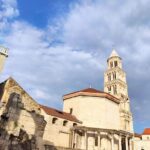
- Eastern Gate and Diocletian’s Peristyle: When Roman Walls Take on WWII
- Narodni Trg and Marmontova Ulica: Where the Main Squares Matter
- Prokurative Square: Prisons and Executions in the Center of Today
- WWII Photos, Aerial Perspective, and the Power of Seeing It
- Language, Group Size, and the Quality of Q&A
- Price and Value: What You’re Paying For at $60.01
- Practical Tips for a Smooth, Comfortable Story Walk
- Should You Book This WWII Storytelling Walk in Split?
- FAQ
- How long is the World War II in Split tour?
- Is pickup available?
- What language is the tour in?
- Where does the tour start and end?
- Is there a cost for admissions at the stops?
- What is the cancellation policy?
Key things to know before you go
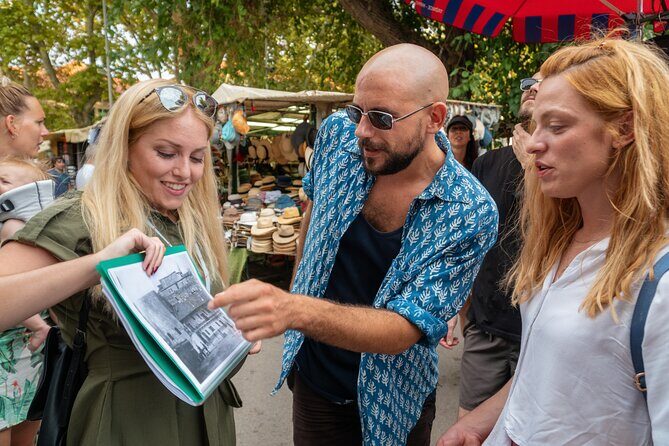
- Archival WWII photos are used during the tour, with permission from the city’s museum archive (not just generic images).
- Your guide is Ina Nikolic, a licensed local who tells the story with clear context and room for questions.
- All stops are free to view, so you’re paying for the storytelling, not entrances.
- Maximum 15 travelers means you can actually hear the details and follow the thread.
- Meeting points are flexible within the center area, with pickup offered near the port.
A WWII Story Walk Through Split’s Ancient Heart
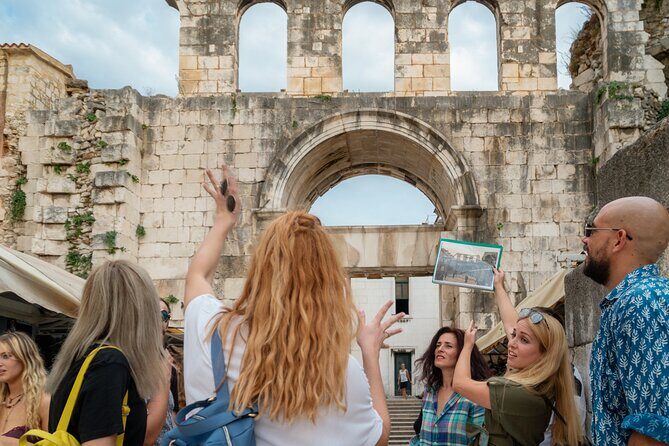
Split has layers. You walk through Diocletian’s Palace area, then a market square, then main streets—yet the tour keeps pulling your attention back to one idea: the war didn’t just happen somewhere else. It arrived in everyday places.
I like this approach because it prevents the history from becoming a lecture. You’re not memorizing dates and names in a vacuum. Instead, you’re watching the city’s shape guide the story—gates, streets, squares, and the places people used for fear, work, and punishment.
The tour also does something smart with context. Ina doesn’t treat WWII as a sealed-off chapter. She adds enough background to help you understand the wider situation, and the way later conflicts in the region echoed earlier wounds. If you’ve been reading about the war from afar, this gives you a local lens you won’t get from a museum-only visit.
And yes, it’s still Split. Even when you’re hearing hard stories, you’re learning what makes the city itself part of the timeline.
You can also read our reviews of more tours and experiences in Split.


Meeting Ina Nikolic at Split Riva and Starting with the War’s Spark
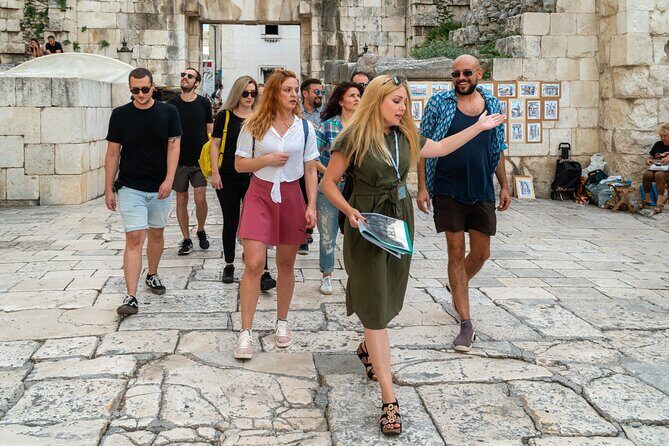
You begin at Split Riva, at Obala Hrvatskog narodnog preporoda 27. This is where the tour gets its anchor point: how the war in Split started and what changed once it reached the city.
I find the Riva start useful because it gives you orientation fast. Before you’re dropped into the deeper symbolism of gates and palace spaces, you get a clear beginning. You also learn how the city’s geography mattered—where people could see danger, where movement was possible, and why certain areas became important.
One nice detail: the meeting point is set up to work for groups, not just one exact corner. If you’re meeting a pickup, it’s also close to the port area at Trajektna luka Split (Obala kneza Domagoja).
Timing is tight in the best way. You don’t spend 20 minutes finding out what the tour is about. The story lands early, and then every next stop feels earned.
Green Market Stop and the Shock of the Most Horrific Bombing
The Green Market stop is short, but it carries weight. This is where you hear about the most horrific bombing in Split—what happened, why it mattered, and how the city experienced it in real time.
Markets are practical places. People go there to buy food, meet neighbors, and live their day. That’s why the story hits hard: this wasn’t abstract tragedy. It was the destruction of routines.
What makes this stop particularly strong is the “place-to-history” connection. You’re standing in a spot that still feels like a living public space, and then you’re asked to picture it under wartime conditions. Ina’s use of old photographs helps you do that without guessing. You can compare what the area looks like now with what it looked like then, and your brain fills in the damage with less imagination and more evidence.
If you’re the kind of visitor who hates vague horror stories, you’ll appreciate this. The tour gives you enough structure to understand the event, and enough specificity to respect the reality of it.
Eastern Gate and Diocletian’s Peristyle: When Roman Walls Take on WWII
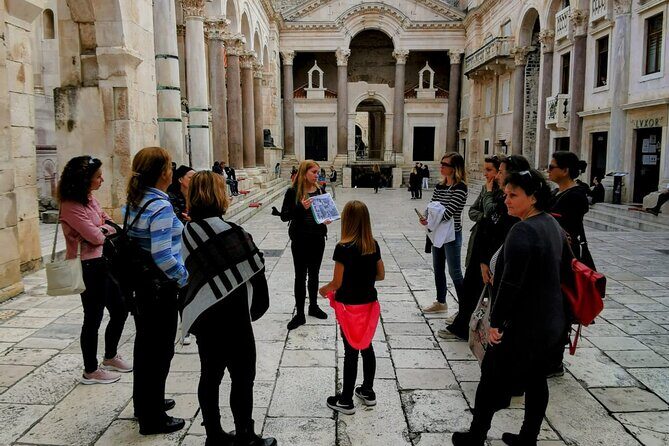
Next you move to the Eastern (Silver) Gate, an entrance point to Diocletian’s Palace from the east. It’s a quick stop, but it matters. Gates and entrances are never just architecture during wartime—they’re pressure points. Control, visibility, access, and movement all get tangled with conflict.
Then comes the Peristyle of Diocletian’s Palace. Here you learn which parts of the palace were attacked during WWII. That’s the moment the tour becomes more than a WWII walking route. It becomes a story about how a city reuses old structures when history turns violent.
I like this blend of eras because it keeps the setting grounded. You’re not bouncing between random sights. The palace connects the daily life of Split with its layered role over centuries.
Also, the peristyle area gives you space to listen. Even if you’re standing (you’ll stand more than you’d like on a typical “walk and wander” tour), the setting helps you focus. You’re hearing why these specific parts were targeted, and what that says about military needs and civilian vulnerability.
Narodni Trg and Marmontova Ulica: Where the Main Squares Matter
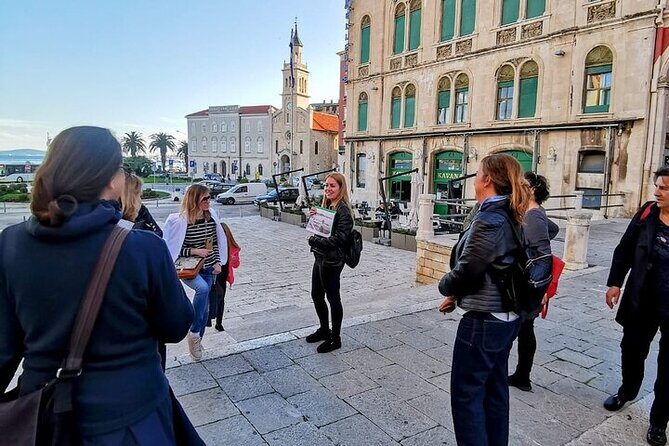
Narodni Trg is the main square of the city. This stop focuses on terrible events that took place there during the war. Squares are big-stage locations in peacetime, and in wartime they often become places of exposure—where people gather, where announcements happen, and where the city’s social rhythm becomes a liability.
Then you head to Marmontova Ulica, the main street, for a short, sharp stop. It’s another witness to what war did to the city. Even if the street looks straightforward today, your guide reframes it. You start to see it as a corridor of movement under threat.
What I appreciate about these two stops together is the pacing. You get the broad significance of the square, then the elongated story of the street. The tour creates a sense of how conflict affects both “gathering spaces” and “transit spaces.”
And if you’re the sort of person who likes to understand the human side—where people tried to keep moving, keep safe, keep working—you’ll get that here. The story stays tied to what these public places meant.



Prokurative Square: Prisons and Executions in the Center of Today
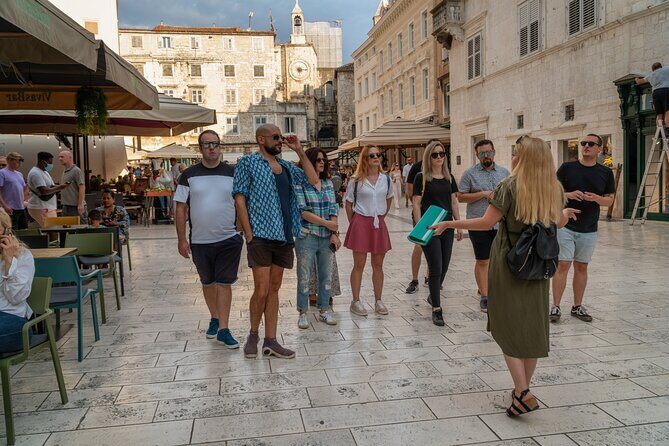
The tour ends at Trg Republike (Prokurative square), specifically at Prokurative, where you learn about prisons and executions during the war.
This is the emotionally heavy ending, and it feels appropriately placed. You’re not sent to a far museum district. You’re kept in the historical center of Split, near the promenade, where daily life continues. The contrast is part of the lesson: history doesn’t sit on a shelf. It lives under modern routines.
I found this ending especially effective because it closes the loop. Early in the tour you learn how the war arrived and what got hit. In the middle you understand the spaces that shaped civilian experience. At Prokurative, you learn what happened when power crushed people—how punishment was carried out and how it changed the city’s atmosphere.
It also helps that the tour stays near where you’ll likely be walking anyway afterward. When the tour finishes, you’re still in a convenient area to keep exploring on your own while the stories are fresh.
WWII Photos, Aerial Perspective, and the Power of Seeing It
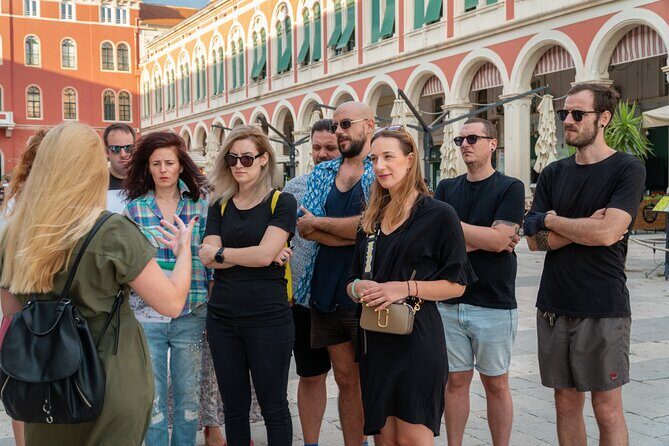
A lot of history tours say they use photos. This one gives you a reason to trust them.
You get WWII photos kept in the archive of the Museum of the City of Split, and the guide has permission to use them during the tour. That matters because it signals the images aren’t random downloads—they’re tied to local documentation.
In practice, this makes the comparisons easier. One of the best “wow” moments in this style of tour is when you realize the city hasn’t just changed physically. People’s lives changed too. The photos help you see what’s missing now, what’s still recognizable, and what used to be more central.
You also get a sense of scale. The tour includes visuals like photos and aerial maps (when provided during the storytelling) to help you understand the city’s layout during wartime. That reduces the need to imagine from scratch, and it keeps the story anchored to real geography.
If you’re a history buff, this is one of the places you’ll feel the tour is doing more than repeating basic facts. People mention the information doesn’t often show up in standard history books or online summaries—and the photo-based approach is a big reason.
Language, Group Size, and the Quality of Q&A
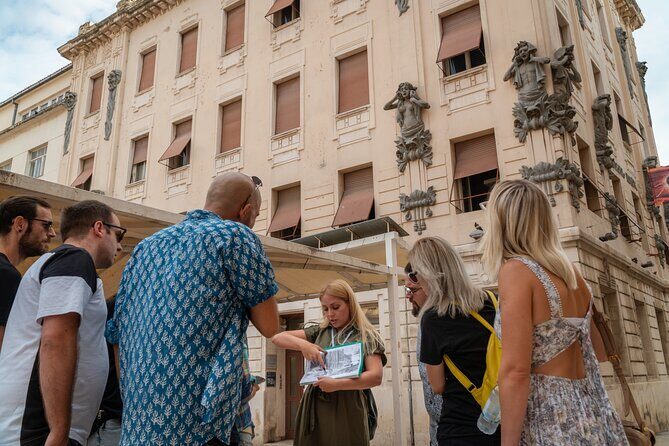
The tour is offered in English, and it runs for about 2 hours. The group size tops out at 15 travelers, which is ideal for a story-heavy format. You’re not lost in a crowd, and you can hear the details without fighting for attention.
I also like that the guide communicates clearly and stays friendly. In a tour like this, good communication isn’t a luxury—it’s what lets the story stay coherent when you’re hearing about difficult events.
If you ask questions, you’re likely to get direct answers. That’s important with WWII history in the region, because small details can change meaning. The guide can steer you toward what matters and what might be misunderstood when you only have general knowledge.
One more practical note: service animals are allowed, and the route is near public transportation. Most visitors can participate, which suggests the pace is manageable for a broad range of people.
Price and Value: What You’re Paying For at $60.01
At $60.01 per person for about 2 hours, you’re paying for a licensed local guide plus the storytelling format, not for site entry. Each stop is marked as having free admission ticket, so the cost is tied to the guided experience itself.
Where the value shows up is in three places:
1) Small group size (max 15) means you’re paying less for crowd control and more for direct attention.
2) Primary source style visuals (archival WWII photos with permission) add real depth.
3) The guide brings context and answers, including tying WWII perspective to the wider region’s later history and even specific threads like Jewish history.
If you’ve ever done a history tour that felt like it was repeating the same general paragraphs, this one aims higher. You’re not just being told that something terrible happened—you’re being told what happened in Split, in recognizable places, with evidence that makes the story feel grounded.
Also, the tour is commonly booked about 35 days in advance. That’s a hint of demand. If you want your preferred time slot, plan ahead instead of hoping for a last-minute spot.
Practical Tips for a Smooth, Comfortable Story Walk
Because you’ll spend time listening, bring expectations that match the format.
- Wear shoes you can stand in for short stretches. This isn’t a long hike, but it’s not constant strolling either.
- Stay close to the guide during the photo moments. The value is in seeing and hearing, not drifting.
- If you’re sensitive to WWII content, pace yourself. The tour builds toward heavier topics near the end at Prokurative.
- If you want the best flow, arrive a little early. Meeting at Riva is easy to get to, but you’ll want a moment to get oriented.
If you’re combining this with other Split sightseeing, think of it as a “framework tour.” Once the tour gives you the wartime map in your head, you’ll notice details on later walks you would’ve otherwise missed.
Should You Book This WWII Storytelling Walk in Split?
Book it if you want WWII history that feels local, grounded, and connected to real places. This tour is ideal for you if you like guided storytelling, you care about evidence like archival photos, and you want your guide to explain not only what happened but how it affected the city.
Skip it or consider alternatives if you hate standing around and want nonstop movement. One downside mentioned is exactly that: more standing than walking. If your ideal tour is a long route with constant motion, this may feel a bit static.
Otherwise, it’s hard to argue with the combination of a passionate licensed guide, a tight central route, and clear WWII context in English for a small group.
FAQ
How long is the World War II in Split tour?
The tour lasts about 2 hours.
Is pickup available?
Yes. Pickup is offered from Trajektna luka Split, Obala kneza Domagoja, in addition to meeting at Obala Hrvatskog narodnog preporoda 27, Split.
What language is the tour in?
It’s offered in English.
Where does the tour start and end?
It starts at Obala Hrvatskog narodnog preporoda 27, 21000 Split and ends at Trg Republike (Prokurative square).
Is there a cost for admissions at the stops?
Admission tickets for the listed stops are marked as free.
What is the cancellation policy?
You can cancel for a full refund up to 24 hours before the experience starts. If you cancel less than 24 hours before, the amount paid is not refunded.