REVIEW · GUIDED
Controversies behind Split and Croatia-Anthropologist guide
Book on Viator →Bookable on Viator
Split is louder than it looks.
This 2-hour, small-group walk turns Split’s famous sights into a street-level story about identity, power, and memory—from Diocletian’s Palace to today’s political fault lines. I especially like how the guide treats history as something locals still argue about, not something locked behind museum glass. You also get the practical bonus of seeing where everyday public life happens—promenades and squares—not just where cameras point.
What I liked most is the guide’s delivery. I found Marin to be warm, well-prepared, and quick with answers, using maps and visuals on an iPad to keep the maze of streets making sense. The tour also has a light touch—humor and the right amount of pushback—so the heavier topics don’t feel like a lecture.
One thing to consider: you’ll be on your feet for the whole experience. If you’re not great with standing in a tight group, pick a time of day with cooler weather, since the route depends on being outdoors and the pace can’t slow down too much.
In This Review
- Key things to know before you go
- Split’s City Center, Explained Through People
- 2 Hours, Max 12: The Pace and Logistics That Matter
- Diocletian’s Palace: The Controversy Behind the Most Famous Walls
- Promenades and Squares Where Public Life Turns Political
- Šperun ulica: Where the Neighborhood Story Gets Better Than the View
- Trg Franje Tuđmana: A Place Name That Still Divides
- Matejuška and the Split View: Ending With the Modern City
- Price and Value: What $35 Buys in a 2-Hour Walk
- Who This Tour Suits Best (and Who Might Not Love It)
- Should You Book This Anthropological Walk?
- FAQ
- How long is the tour?
- What language is the tour offered in?
- How big is the group?
- Where do I meet the guide?
- Where does the tour end?
- Are any admission tickets included?
- Is the ticket digital?
- Is the tour suitable for most people?
- What if the weather is bad?
- Can I cancel for a full refund?
Key things to know before you go
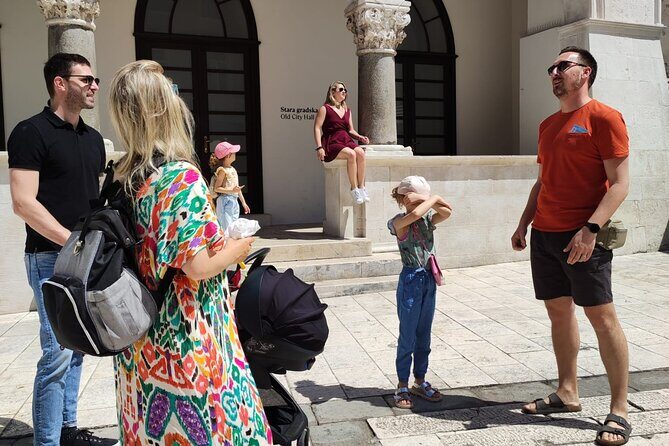
- Anthropology, not just postcards: you’ll link buildings and place names to how people think and argue today.
- Marin’s iPad maps help you track the route and the geography fast.
- Small group size (max 12) makes it easier to ask questions without losing the flow.
- Controversies get real airtime—especially around Diocletian’s Palace and later political eras.
- Two admission spots are included (so you’re not constantly pulling out your wallet mid-walk).
Split’s City Center, Explained Through People
Split can feel like a stack of centuries sitting on top of each other. This tour makes that overlap make sense by focusing on how locals use the past—sometimes proudly, sometimes angrily—to explain who they are. Instead of treating old stone as fixed truth, you’ll hear how the same place gets reinterpreted across generations.
That angle is the whole point. The walk is built around controversies and modern identity, so you come away with a sharper sense of why certain places in Split carry weight. It’s also a good reminder that history isn’t only dates—it’s arguments, traditions, and social memory.
And yes, you’ll still see the classic Split highlights. The difference is you’ll understand what’s under the surface of the view.
You can also read our reviews of more guided tours in Split


2 Hours, Max 12: The Pace and Logistics That Matter

This is a 2-hour walking tour in English, with a maximum of 12 travelers. That group size is big enough to feel social, but small enough that you’re not just a number in the back row. You’ll also have multiple tour times to fit your schedule.
You’ll start at Ul. kralja Tomislava 12, 21000 Split, and finish at Trumbićeva obala 2. The ending point is right where you can keep walking or connect to other parts of town without backtracking.
Most days, the tour is designed for people who can handle a steady walk and standing while listening. One reviewer noted standing can get tiring for some in a group of 10, so if that’s you, choose a time when you’ll feel comfortable and consider what footwear you wear.
Finally, bring a little patience for outdoor walking. The experience requires good weather, and if it’s canceled because of poor conditions, you’ll be offered a different date or a full refund.
Diocletian’s Palace: The Controversy Behind the Most Famous Walls
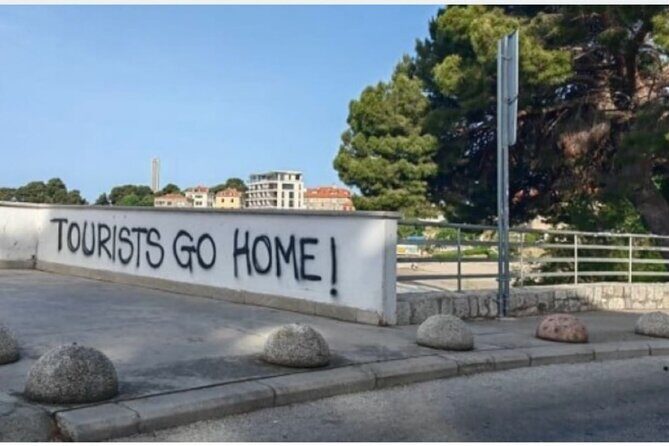
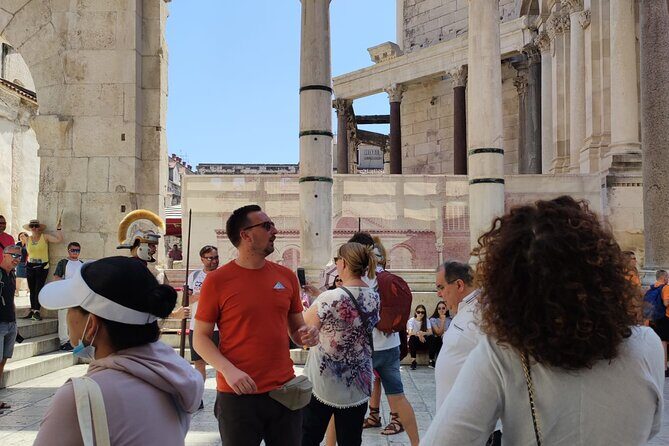
The tour begins with Palazzo di Diocleziano—the core engine of Split’s story. You’ll spend about 35 minutes here, with an admission ticket included. It’s not just a tour of impressive architecture. The focus is how this palace has been contested by locals in different historical periods.
That framing changes how you look at it. Instead of seeing the palace as a finished work of ancient engineering, you’ll watch it become a stage where different eras try to claim meaning. Even if you don’t remember every detail, you’ll leave with a sense of why this site is emotionally charged.
If you’re the kind of traveler who likes to connect art and politics, this stop is your anchor. It also sets up the rest of the walk, because you start to notice how public space in Split keeps getting re-read through new lenses.
Practical tip: Give yourself time here. This stop is where the tour’s “why this matters” story really gets going.
Promenades and Squares Where Public Life Turns Political
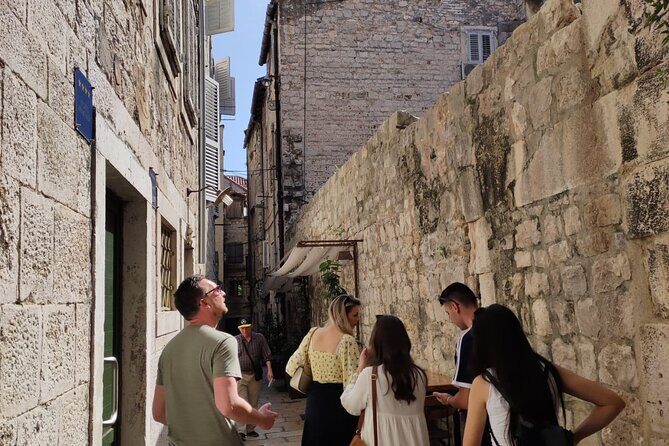
After the palace, you shift to the city’s public rhythm. The next stop is Obala Hrvatskog narodnog preporoda, the waterfront promenade where daily life gathers. It’s a traditional Mediterranean riva, but the guide uses the setting to explain how important events played out in open public view.
You’ll then move to Trg Braće Radić, described as an old Venetian square. Here, the story turns turbulent. The guide connects Split’s frontier past—especially the period when the region fought the Ottomans—to how that era is perceived now. The key takeaway is that those older battles still shape local identity and politics, even today.
Then comes Narodni trg, another square, and this one gets more intense. Underfoot are human remains because the area once functioned as an ancient graveyard. Later on, the location held major events too—both amazing and infamous. It’s a stark reminder that cities don’t only “build over” history; they often carry it forward in ways people don’t always notice.
These square-and-waterfront stops are useful if you want context fast. You’re not hopping to random corners; you’re learning how Split organizes public space—and how people use those spaces to argue about the past.
Consideration: If you’re sensitive to heavier history topics, keep in mind this tour doesn’t avoid them. It treats them in a human way, not a sensational one.
Šperun ulica: Where the Neighborhood Story Gets Better Than the View
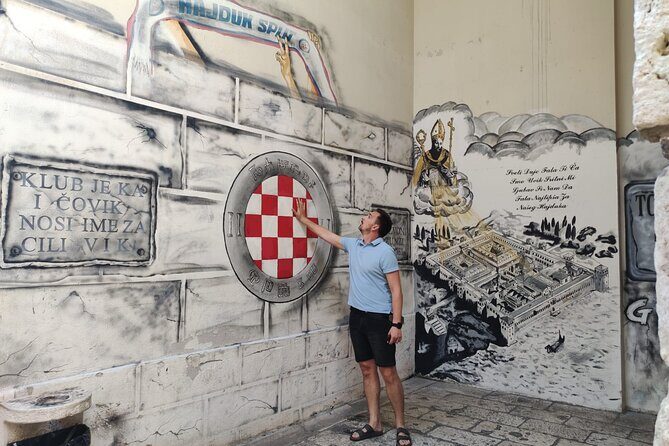
Šperun ulica is one of Split’s famous neighborhood streets. You’ll walk through it for about 15 minutes, and the guide’s job here is clever: you’ll learn what’s behind the place—rather than just admiring that it’s popular.
That matters because tourism can flatten neighborhoods. A street becomes a photo spot, then a checkmark. This stop gives you the social texture behind why people lived and moved the way they did, and how the neighborhood’s identity connects to broader Split stories.
It’s also a nice rhythm break. After heavy context at the squares, this stop feels more grounded. You’ll get a better sense of how local life fits into the bigger historical arguments the tour keeps raising.




Trg Franje Tuđmana: A Place Name That Still Divides
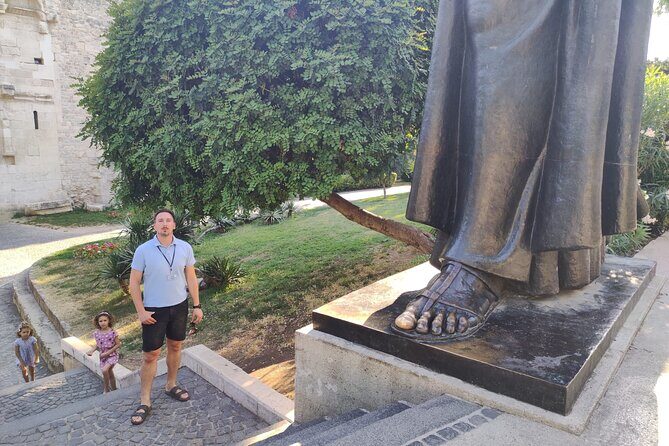
Next is Trg Franje Tuđmana, a square named after the first Croatian president. Here the story takes you to turbulent times at the end of the 20th century—an era that still shapes divisions in Croatian society.
This is where the tour earns its anthropological label. The guide isn’t only explaining what happened. You’ll hear how people interpret that period now, and why it still matters for local identity and politics. If you want to understand the emotional geography of a place, this stop is one of the clearest signals you’ll get.
You’ll be walking in an area where names and symbols have weight. And because Croatia’s modern history has real ongoing impact, the talk feels less like distant trivia and more like present-day context.
Matejuška and the Split View: Ending With the Modern City
The tour finishes at Matejuška, where you get the best part of the close: a view of Split and a final set of ideas about modern Split. Expect about 10 minutes here, with an admission ticket included.
This stop works because you see the city’s layout with your new context switched on. Earlier you learned how the past gets argued over. Now you look out and see how those layers still affect how people navigate the present.
It’s a satisfying wrap, especially if your goal is to understand Split beyond one day of walking around with a map app.
Price and Value: What $35 Buys in a 2-Hour Walk
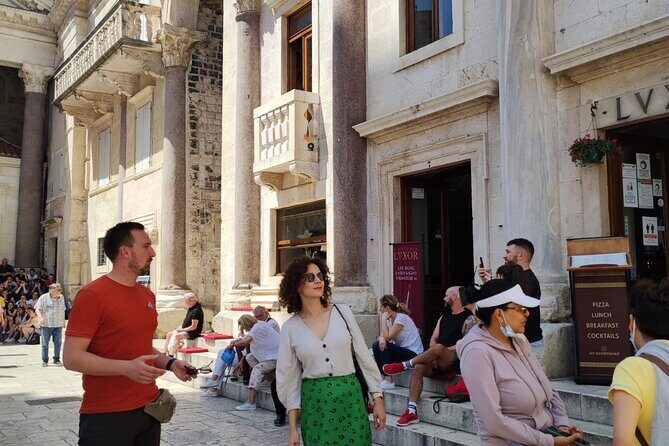
At $35 per person for roughly 2 hours, this tour is priced like a focused “understanding session,” not a long museum day. You’re paying for three things that matter in the real world:
- A guide who can connect the dots between sites and social identity
- A small group that keeps questions possible
- Two stops with admissions included (so the experience doesn’t stall when entry fees show up)
You also get structure. Even if you know Split’s big landmarks, you’ll likely miss the “why this place matters” layer on your own. That’s where the value hits hardest.
If you’re on a tight budget, $35 still sounds like a choice. But if your travel style is learning-oriented—history that connects to how people think right now—this is one of those times where the money buys understanding fast.
Who This Tour Suits Best (and Who Might Not Love It)
This tour is a great fit if you want more than a route. I’d especially recommend it to you if you’re curious about how places get claimed, reinterpreted, and argued over across time. The guide’s delivery style—warm, prepared, and able to handle questions—also makes it a strong choice for travelers who like to ask why.
You’ll also get a lot from it if you care about geography and context. One reviewer highlighted the guide’s ability to use maps and visuals on an iPad, which is useful when streets twist and your brain needs a clear frame.
It may not be ideal if you need a super seated experience. This is still a walking tour, and you may be standing at times while listening. If you’re traveling with mobility constraints, plan based on your comfort level and choose shoes you trust.
Should You Book This Anthropological Walk?
I think you should book it if your goal is to understand Split as a living conversation. You’ll leave with a sharper sense of why Diocletian’s Palace isn’t only ancient architecture, why waterfronts and squares carry political meaning, and why modern identity keeps dragging older history into today’s debates.
Skip it if you only want light sightseeing with minimal heavy context. This tour has humor, but it doesn’t avoid controversy. If that’s your kind of learning, it’s worth your time.
If you can, pick a tour time when the weather is stable and you’ll feel comfortable standing. Then come prepared to see the city as people do, not just as a collection of stones.
FAQ
How long is the tour?
It runs about 2 hours.
What language is the tour offered in?
The tour is offered in English.
How big is the group?
The tour has a maximum of 12 travelers.
Where do I meet the guide?
You meet at Ul. kralja Tomislava 12, 21000 Split.
Where does the tour end?
The tour ends at Trumbićeva obala 2, 21000 Split.
Are any admission tickets included?
Yes. Admission tickets are included for the Diocletian palace stop and the Matejuška stop. Other listed stops are free.
Is the ticket digital?
Yes, you receive a mobile ticket.
Is the tour suitable for most people?
Most travelers can participate.
What if the weather is bad?
The tour requires good weather. If it’s canceled due to poor weather, you’ll be offered a different date or a full refund.
Can I cancel for a full refund?
Yes. You can cancel up to 24 hours in advance for a full refund. If you cancel less than 24 hours before the start time, the amount paid will not be refunded.