REVIEW · FOOD & DRINK
Split/Trogir: Mostar and Medjugorje Tour with Wine Tasting
Book on GetYourGuide →Operated by www.south-tours.com · Bookable on GetYourGuide
Two worlds in one long day. You’ll hit Mostar with its iconic bridge and market streets, then roll on to Apparition Hill in Medjugorje for a visit that feels calm and human-scale. I especially like how the day mixes guided context with time to wander on your own, plus a stop to sample authentic Bosnian wine.
I also like the people side: the Mostar guide-led walk helps the city make sense fast, and the driving part isn’t just “sit and stare.” Many departures are run by friendly, funny drivers (names that show up in past groups include Tony, Nicola, Ivan, Antonio, and Ivo), so the long road doesn’t feel lonely. One consideration: this is a full-day schedule with real walking and uneven spots—on hot days, even the hill climb can push people to turn back.
In This Review
- Key Points Before You Go
- Split or Trogir Departure: The A/C Coach and Real Timing
- Mostar’s Old Bridge and Old Bazaar: What to See and How to Read the City
- The Guided Mostar Walk vs. Free Time: How to Use Your Pace
- Ancient House Museum Entry: A Small Stop That Helps Everything Click
- Wine Tasting in Mostar: Local Flavor Without the Tourist Trap
- Medjugorje Pilgrimage Center and the Church Area: A Different Kind of Atmosphere
- Apparition Hill Walk: The Reward and the Reality of Rocky Steps
- Budget and Value: Why $88 Makes Sense for This Route
- Comfort, Crowds, and the Small Friction Points to Plan Around
- Who This Tour Fits Best (and Who Might Skip It)
- Should You Book This Mostar and Medjugorje Wine Tour?
- FAQ
- How long is the tour?
- Where does the tour start?
- What are the main stops on the day?
- Is wine included?
- What’s included in the price?
- What is not included?
- Are there any extra fees at the border?
- Do I need to bring anything?
- Is there a guided component in both places?
- What is the cancellation policy?
Key Points Before You Go
- Mostar’s Old Bridge and Turkish-style bazaar streets give you the instantly recognizable postcard views, plus a guided route that explains what you’re seeing
- Medjugorje isn’t just a drive-by: you’ll visit the pilgrimage center, include time around the church area, and have a chance to reach Apparition Hill
- Wine tasting is built into the tour—usually a tasting pour you can follow up by buying a bottle
- You get a guided Mostar program plus free time to shop, snack, and breathe without a microphone glued to your face
- Wear real shoes: the bridge can be slippery and Apparition Hill has rocky, uneven footing
Split or Trogir Departure: The A/C Coach and Real Timing
This trip starts either from Split or Trogir, then follows a straightforward road plan: you travel to Mostar first, spend the bulk of your day there, and continue on to Medjugorje after. The ride is in an air-conditioned vehicle, which matters because the region can be scorching even when you think you’ll be fine in the morning.
Plan on a long day. The drive time listed is about 2.5 hours to Mostar, then another stretch to Medjugorje, and roughly 1.5 hours back after the last visit. Reviews also hint at the day sometimes stretching a bit depending on border timing, so I’d treat “10 hours” as the baseline, not a guaranteed clockwork sprint.
One more practical thing: you’ll want your passport or ID card ready. The tour includes a border-crossing fee listed as €5 per person, and it’s cash only at the meeting point. If you’re traveling with only card payments in mind, that’s the part that can surprise you.
You can also read our reviews of more food & drink experiences in Split
Mostar’s Old Bridge and Old Bazaar: What to See and How to Read the City
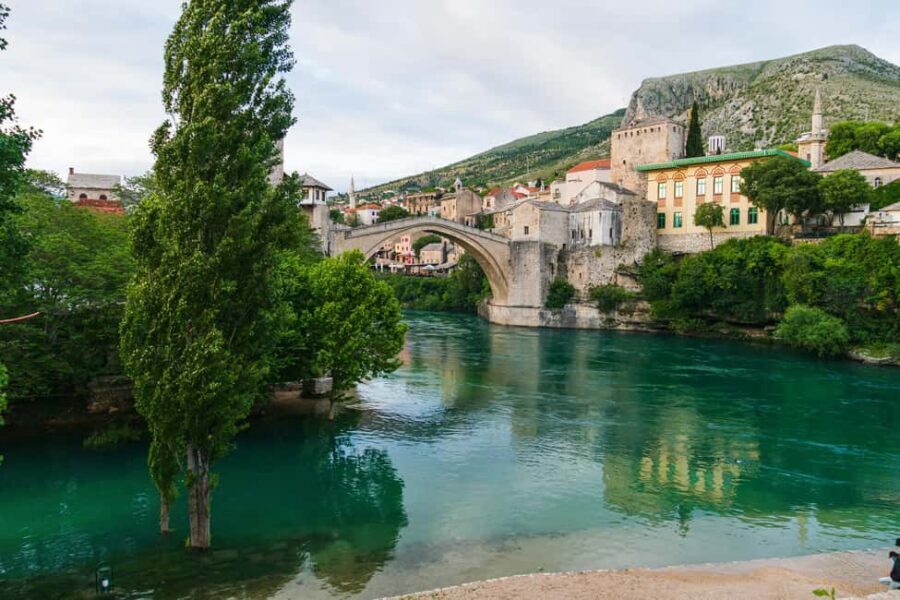
Mostar is the headline for a reason. You’ll get a guided walk through the old bazaar area, where shops and workshops line up in a way that feels like you’re stepping into another rhythm of the Balkans. The guide’s job here is to help you connect the dots: why the city is shaped the way it is, and how its layers of cultures show up in everyday streets.
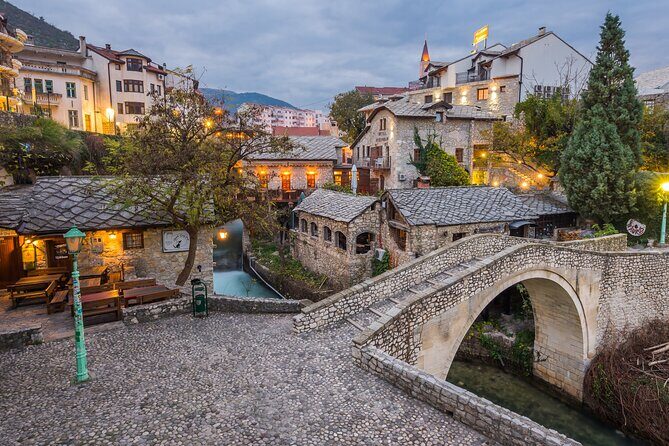
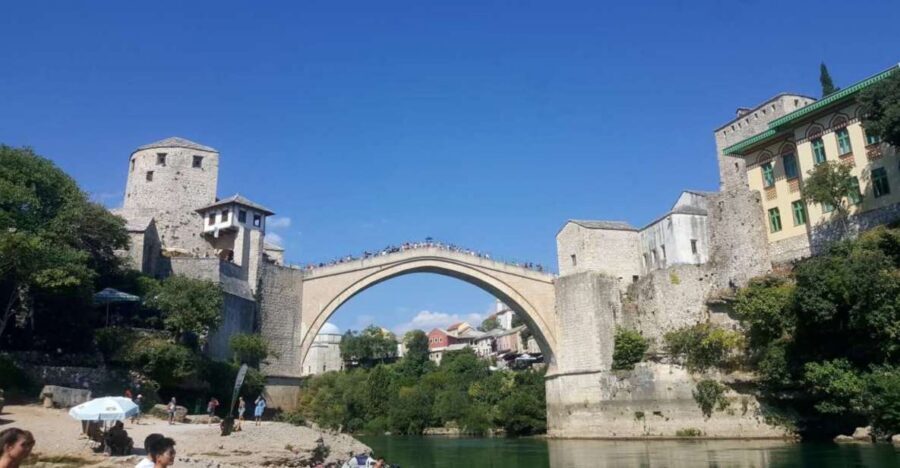
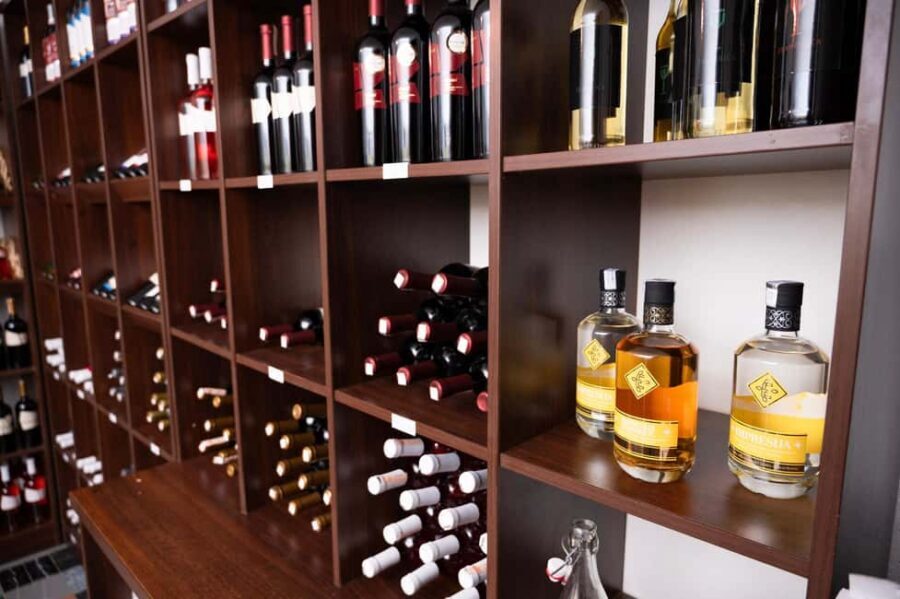
The big visual moment is the 16th-century Turkish bridge, the one that gave the city its name and remains its most famous symbol. Expect foot traffic and take it slow crossing—some surfaces can be tricky underfoot. One group tip that’s worth listening to: plan footwear that won’t slip on cobbles.
Before or during the Mostar sightseeing time, you’ll also visit the city’s main mosque, which helps balance the walking-tour “photo stops” with a sense of how the city lives now. If you like cities that feel worked-in rather than purely staged for tourists, Mostar scratches that itch fast.
The Guided Mostar Walk vs. Free Time: How to Use Your Pace
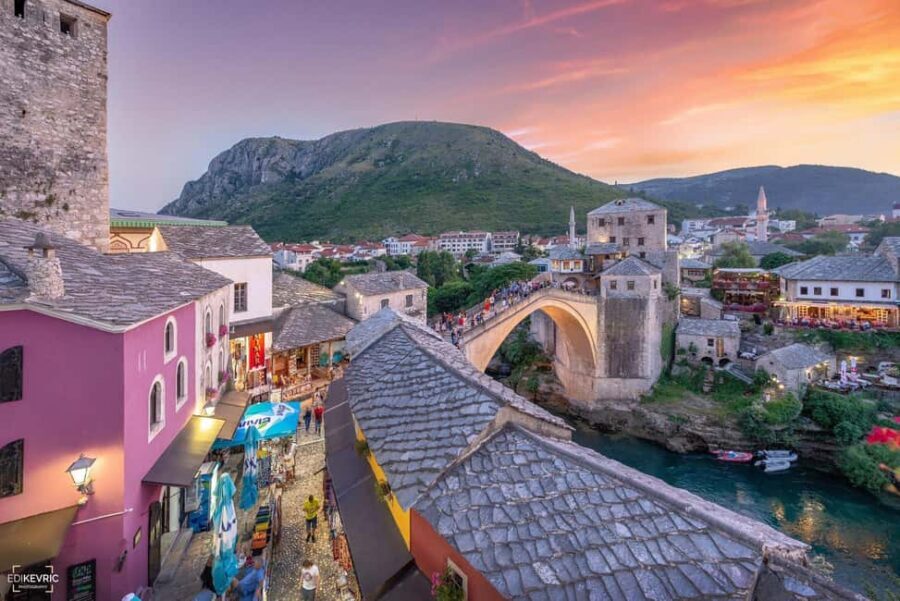
You’re not locked into a single pace all day. The Mostar portion includes a guided sightseeing segment, then you get free time to explore and shop.
This is where you can tailor the day:
- If you want photos and atmosphere, head back toward the bridge and bazaar lanes and move slowly.
- If you want less crowd stress, use the free time for a calmer loop and come back for the “bridge moment” when the flow shifts.
A nice touch is that the tour aims to give you enough context during the guided portion, so you’re not left guessing. In past departures, the Mostar guides named in group feedback include Ana, Ana-like local guiding teams, Leila, and Ivo, and the common thread is that the walking portion tends to be full of “how this place got this way” storytelling. That’s what makes the old streets feel more real.
Also: be ready for crowds. Mostar is popular, and during peak periods you’ll share narrow spaces with other tour groups. If you’re the type who likes quieter travel windows, go at your own pace during free time instead of trying to force the perfect shot every second.
Ancient House Museum Entry: A Small Stop That Helps Everything Click
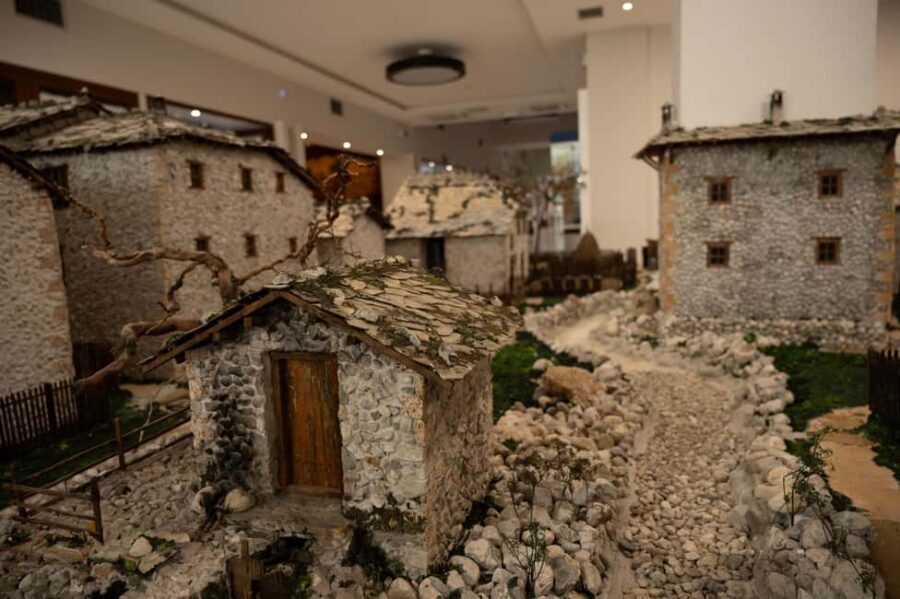
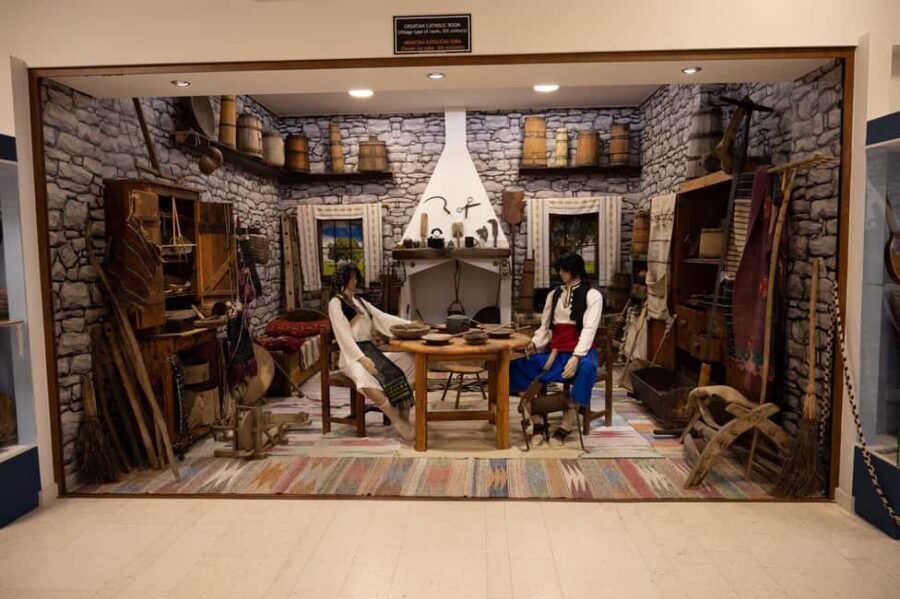
One included entry is the Ancient House Museum in the Mostar program. It’s not a giant museum day. Think of it as a short cultural “anchor” that gives the day a clearer sense of local life and architecture.
This matters because Mostar’s best visuals—bridge views, bazaar streets, mosque visits—can feel like separate scenes if you never get a basic sense of the home-and-life context underneath. A museum stop like this helps you understand why the streets and buildings look the way they do, even if you’re only there for a short window.
Don’t over-plan your museum time. Treat it like a reset: step inside, get oriented, then return to the street with better questions in your head.
Wine Tasting in Mostar: Local Flavor Without the Tourist Trap
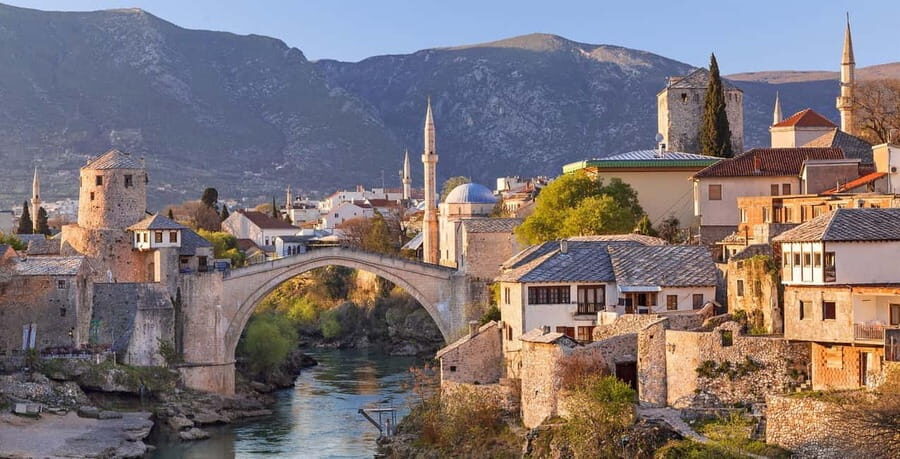
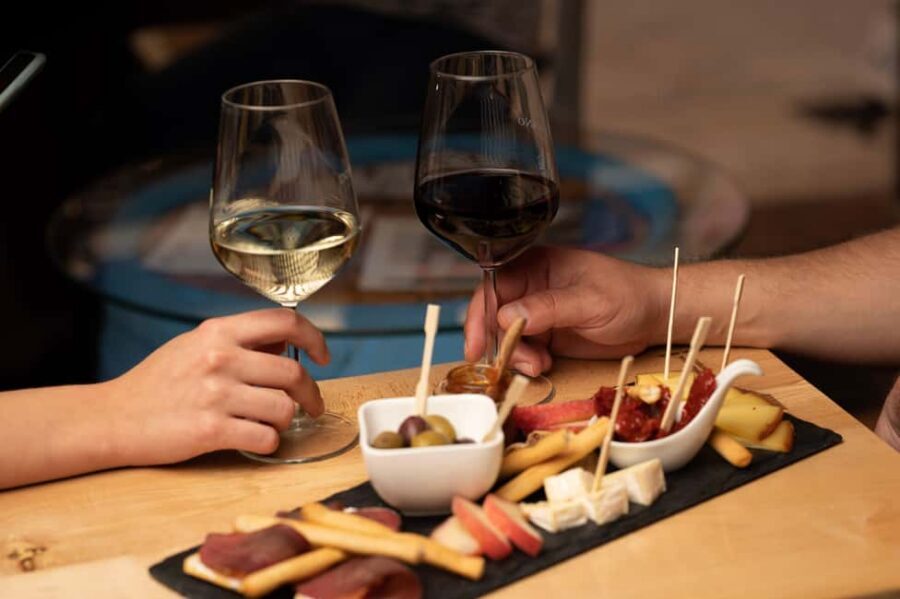
This tour includes a wine tasting, and it’s one of the easiest ways to bring the day home with you. The tasting is built around authentic Bosnian wine, and it’s usually described as a short, structured experience rather than a long, wine-tour marathon.
How it tends to work in practice: you’ll be invited to taste during or right after the guided Mostar portion. Group feedback points to a tasting amount like a glass or a small pour, and the host often explains what you’re drinking. Some groups also note you can purchase a bottle if you find something you really like.
This is good value for two reasons:
- You avoid the “find a place, read reviews, hope it’s good” part.
- You get local context, not just a product label.
If you’re a non-drinker, don’t panic. Wine tastings still function as cultural stops, and you’ll have plenty of other things to do during the free time in both Mostar and Medjugorje.
You can also read our reviews of more wine tours in Split



Medjugorje Pilgrimage Center and the Church Area: A Different Kind of Atmosphere
After Mostar, you continue on to Medjugorje, a pilgrimage center tied to reported Marian apparitions. The tour includes a visit to the religious area and, for pilgrims and those wanting something more spiritual, it notes that a holy mass is held along with the overall visit.
This part of the day changes the mood. Mostar is lively and urban. Medjugorje can feel slower, more reflective, and geared toward prayer and quiet observation. If you’re traveling with friends who like spiritual travel, this stop is the reason many people book the whole day.
You also get time for sightseeing and a chance to grab a coffee or simply sit and take the atmosphere in. That’s not “wasted time.” It’s part of how you absorb a pilgrimage site without rushing through it like a checklist item.
Apparition Hill Walk: The Reward and the Reality of Rocky Steps
The most famous nearby walk is to Apparition Hill, where tradition says the Virgin Mary first appeared to children in the early 1980s. The tour experience highlights include both the idea of walking to the hill and the optionality depending on the group and conditions.
Here’s the practical reality: this is not an easy stroll on smooth paths. Expect uneven, rocky footing, and wear shoes that grip. One helpful warning that’s consistent with the tour experience: some people skip or can’t reach the top on extremely hot days, and the climb can feel challenging even if you’re generally fit.
If you want the full Medjugorje experience, plan your energy for the hill. If you’re traveling with limited mobility, or you just prefer less physical effort on vacation, prioritize the church area and keep the hill as your optional choice.
Budget and Value: Why $88 Makes Sense for This Route
At $88 per person for a full day, the value comes from what’s included rather than just the fact that it’s “cheap.” Here’s what you get built into the price:
- Air-conditioned transport with a driver
- Mostar sightseeing tour
- Entry tickets for the Ancient House Museum
- Wine tasting
- English-speaking guide
What isn’t included is also important. The tour lists meals and drinks as not included, so you’ll need to budget for lunch/snacks on your own. There’s also the border-crossing fee of €5 per person (cash), which you should handle at the meeting point.
So the value math works like this: you’re paying for transportation + guided context + two paid extras (museum + wine). If you tried to DIY both cities from Split or Trogir, you’d spend time coordinating transport and still need to cover museum entry and tasting costs. This is basically convenience bundled with a curated route.
Comfort, Crowds, and the Small Friction Points to Plan Around

No tour is perfect, and this one has a couple of real-life friction points to consider.
1) The day is long. Even with organized timing, you’ll spend hours on the road. If you’re prone to aches, pack a light layer and plan to stretch at stops.
2) The Mostar bridge crossing can be tricky. It’s iconic, but the surface can be slippery and crowded.
3) Apparition Hill has uneven footing. Bring shoes meant for rocky steps.
4) Seating can vary. Some groups have noted vehicles that felt tight or less comfortable for a long drive. If you’re tall or picky about legroom, it’s worth keeping expectations realistic.
On the positive side, the driver experience appears to be a big part of why people rate this so highly. Names that repeatedly show up include Tony, Nicola, Ivan, Antonio, and Želko—and the common theme is safe driving, friendly vibes, and practical help during the day.
Who This Tour Fits Best (and Who Might Skip It)
This is a good match if:
- You want Mostar and Medjugorje in one day without wrestling with bus transfers
- You like a mix of guided history + free exploration time
- You’re open to a short but real spiritual visit, not just a sightseeing photo stop
- You like tasting local products, and wine tasting is part of your travel style
It’s less ideal if:
- You hate long days or are very sensitive to walking on uneven surfaces
- You want deep, slow exploration time in just one place
- You only want the most famous spots and dislike guided structure (Mostar especially includes guided elements)
Should You Book This Mostar and Medjugorje Wine Tour?
If you want the highest return on time, I’d book it. Mostar gives you a strong “I’m really in the Balkans” feeling—the bridge, the bazaar lanes, the mosque visit, and the included museum help you understand the place beyond photos. Then Medjugorje offers a totally different pace and mood, with the option to walk to Apparition Hill if your shoes and energy are up for it. Add in a wine tasting and you’ve got a day that feels complete.
The only reason I’d hesitate is if you can’t handle a long day plus rocky walking, or if hot weather would stress you out. If that’s your situation, focus on the church area and skip the hill.
If you’re flexible, comfortable with walking, and you want one organized day to cover two major destinations, this is the kind of tour that makes sense.
FAQ
How long is the tour?
The duration is listed as 10 hours.
Where does the tour start?
You can choose starting options from South Tours Travel Agency locations in Trogir or Split. The exact meeting point may vary depending on your option.
What are the main stops on the day?
The tour takes you to Mostar (including a guided sightseeing program) and then to Medjugorje, including time at the pilgrimage center and a walk to Apparition Hill.
Is wine included?
Yes. The tour includes a wine tasting of Bosnian wine.
What’s included in the price?
Included items are an air-conditioned vehicle with driver, Mostar sightseeing tour, entry tickets for the Ancient House Museum, wine tasting, and an English-speaking guide.
What is not included?
Meals and drinks are not included, and personal expenses are not included either.
Are there any extra fees at the border?
Yes. Border crossing fees are listed as €5 per person, and it’s cash-only at the meeting point.
Do I need to bring anything?
Bring a passport or ID card and comfortable shoes. You may also want good footwear for uneven ground.
Is there a guided component in both places?
Mostar includes a sightseeing tour with an English-speaking guide. Medjugorje includes visits and sightseeing time; the hill walk can be done as part of the visit.
What is the cancellation policy?
The tour offers free cancellation up to 24 hours in advance for a full refund.