REVIEW · SPLIT
Small-Group Communist Tour of Split – Boutique group tour
Book on Viator →Operated by Pomalo tours · Bookable on Viator
Split has a second history layer.
This small-group Communist past tour turns Split into a story you can walk through, using WWII context, Yugoslavia-era planning, and on-the-ground explanations in English. I like that it’s guided by a local historian/history teacher type, and the max 8 travelers format keeps the discussion real, not rushed.
I also love how the stops focus on architecture you can actually see: Poljud Stadium for Yugoslavia’s design-and-sport ambition, plus later housing and daily-life projects. One drawback: it’s mostly outdoors and you’ll be moving between dispersed sites, so if weather is rough, you may not enjoy it as much, since the experience depends on good weather.
In This Review
- Key Points You Should Know
- A Communist-Split Tour That Feels Like a Walk With a Teacher
- Starting at Trg Franje Tuđmana: WWII Context Before the Buildings
- Poljud Stadium and the China Wall: Sport, Symbol, and Socialist Design
- Koteks Shopping Center: The Idea of Shopping Under Yugoslavia
- Split 3 and the Cruiser Neighborhood: Planning for Living, Work, and Control
- Kopilica Railway Station and the Armored Train: When the Story Turns Violent
- Price and Logistics: What $108.14 Buys You in Real Terms
- What I’d Bring and How to Prepare
- Who This Tour Is Best For (And Who Might Want a Different Day)
- Should You Book This Communist Tour of Split?
- FAQ
- How long is the Communist Tour of Split?
- What is the meeting point for the tour?
- What time does the tour start?
- What’s included in the tour price?
- Is the tour offered in English?
- How large is the group?
- Do I need to buy separate tickets at the stops?
- What weather conditions are required?
- What is the cancellation policy?
Key Points You Should Know
- Small group (max 8) means more Q and A and a calmer pace.
- Boris-style historical teaching: expect clear explanations from a guide who teaches as well as researches.
- Private vehicle transfers help you cover scattered locations without tiring city-hopping.
- Architecture-focused stops connect Communist-era ideas to buildings still standing in Split.
- A free-time chunk in Split 3 gives you a breather and a chance to explore on your own.
- Soft drink included: a typical Yugoslav-era soda/pop to match the theme.
A Communist-Split Tour That Feels Like a Walk With a Teacher
If your Split day usually means Diocletian’s Palace photos and a scramble for gelato, this tour is a smart detour. It’s a focused run through Communist-era Split—using WWII background, then moving into Yugoslavia’s built environment and day-to-day life. You’re not just looking at monuments. You’re learning why people built the city the way they did, and what those choices tried to solve.
At the heart of it is the guide: a local historian and history teacher style of storytelling. In one recent booking note, the guide is named Boris, and the tone is exactly what you want on a specialized topic—straight answers, good pacing, and explanations that make the buildings feel connected to real people.
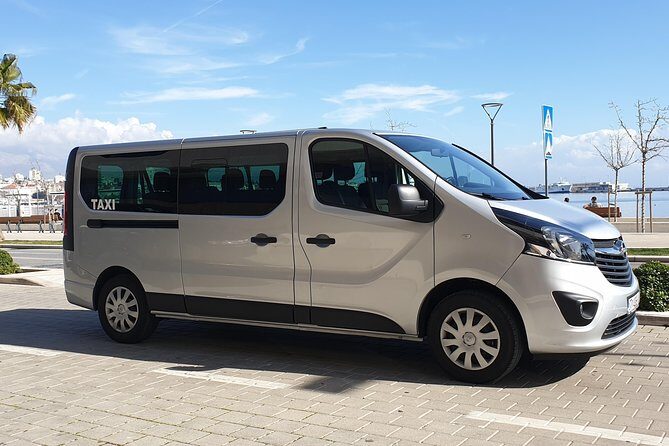
The other practical win is the private, air-conditioned vehicle. Split’s Communist-era sites aren’t all clustered like the old center. Driving you between stops keeps you from spending the whole tour in transit, and you can spend more time at the actual view points and façades.
You can also read our reviews of more tours and experiences in Split.

Starting at Trg Franje Tuđmana: WWII Context Before the Buildings
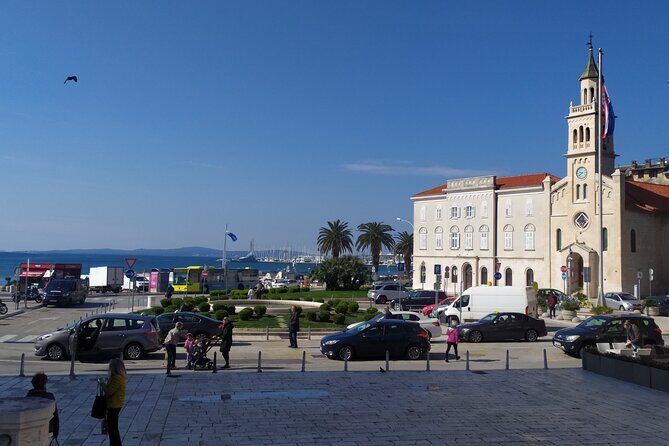
You begin at the bus stop area at Trg Franje Tuđmana (Square Franje Tuđmana) in Split. The meeting point is easy to get to and the tour starts at 9:00 am. Right away, the guide frames the tour’s purpose: how WWII events in Split and across Yugoslavia set the stage for the rise of the new Communist state.
This is where you get the payoff for the rest of the morning. Without that setup, places like a stadium or a housing project can look like random architecture. With the WWII context first, you start seeing them as part of a larger idea: reconstruction, ideology, and a plan for the future.
You’ll also see references to the damage done in Split during the war, including pictures shown during the introduction. That matters because it shifts the mood from sightseeing to understanding. Even if politics isn’t your favorite topic, this part helps you interpret why the later projects look the way they do and why certain spaces were designed for public life.
Poljud Stadium and the China Wall: Sport, Symbol, and Socialist Design
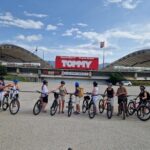
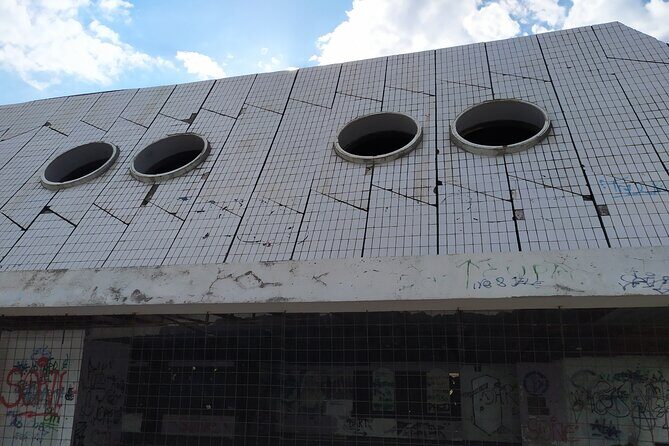
The next stop is at Poljud Stadium’s area. There’s a short panoramic moment built in, plus explanations that connect the stadium to Yugoslavia’s bigger story. Poljud was built to host major sport events—big enough that it’s remembered for hosting the Mediterranean Games. The guide also points out that this stadium was recognized beyond Yugoslavia, including being part of an architecture exhibition at MoMA in New York.
If you only know Split as a Roman and medieval stop, this is the shock of the day—in a good way. The stadium isn’t treated like a sports venue alone. It’s presented as a statement piece: a public structure designed to project modernity and confidence.
Then you get another standout nearby: the China Wall, described as one of the widest existing buildings in Split and tied to Yugoslav socialist architecture. The tour uses this pairing—stadium plus China Wall—to show how ideology expressed itself through both landmark and everyday-sized infrastructure.
A practical note: this is a short segment (about 10 minutes), so don’t expect a long lecture here. The point is to orient you and make you notice the details on your own.
Koteks Shopping Center: The Idea of Shopping Under Yugoslavia
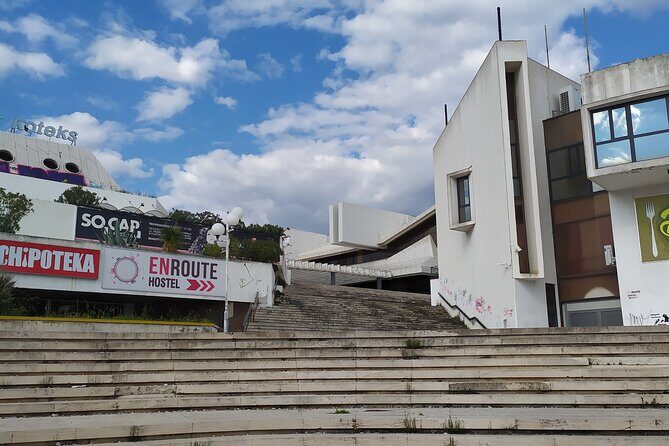
Next comes Prodajni centar Koteks, described as the first shopping mall idea in Yugoslavia. You’ll walk around the area with guidance focused on what modern shopping meant under a Communist system—and why that model didn’t stay popular forever.
This is the stop that often surprises people. It’s easy to assume Communist life meant only shortages and grey routines. The tour’s angle is more specific and more interesting: consumer life sat between an open West influence and a closed East reality, and people often had to be creative to find goods.
The guide also explains the rise-and-fall of Koteks’s popularity, including how the concept decayed over time. That’s useful context because it gives you a more grounded view of how policy and economics play out in real streets.
You’ll also get a clear sense of daily life themes—supply, access, and the small workarounds people used. Even if you’re not a political history person, this kind of explanation turns a building you might otherwise ignore into a window into everyday decisions.
This stop runs about 30 minutes, and it’s a good pacing break: you’re walking, listening, and then you’re ready for the bigger architecture stories ahead.
Split 3 and the Cruiser Neighborhood: Planning for Living, Work, and Control
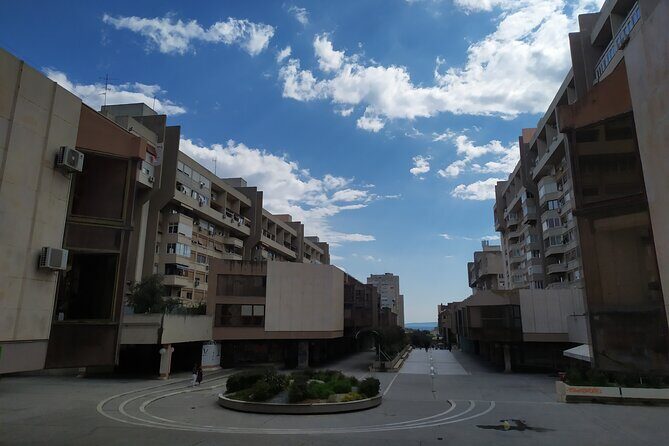
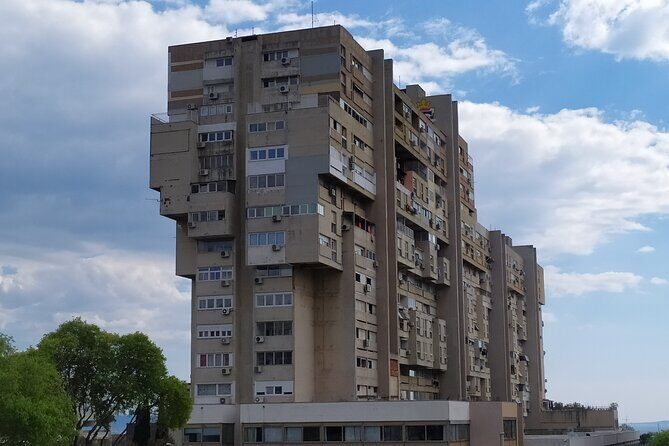
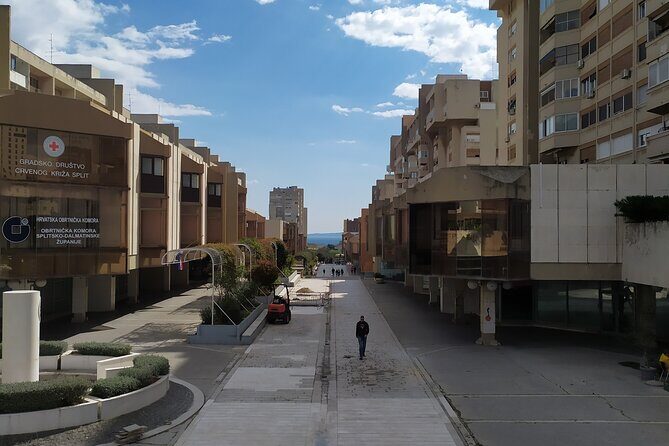
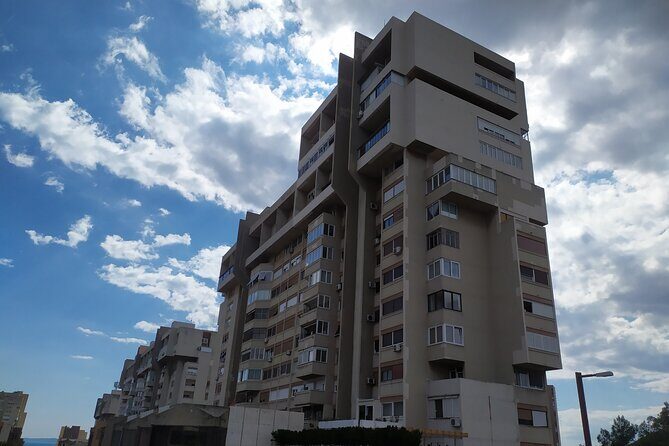
The biggest chunk of time comes at Krstarica, tied to Split 3, a modern Communist Yugoslavia neighborhood. The tour frames Split 3 as a purposely built project meant to support quality living—described as bringing together living, working, and resting in one designed area.
Here’s where the architecture becomes a teaching tool. You’ll walk around and check different architecture styles linked to local architects, including a building called Cruiser. The guide uses these examples to explain housing policy, plus how education, health systems, economy, and social life were envisioned.
And yes, there’s a direct political thread. The tour places emphasis on the dictatorship of Yugoslav leader Tito, mainly through how the system shaped daily life in the Split area. That means you’ll be looking at street layouts, building blocks, and the logic of neighborhoods—not just admiring shapes.
One of the most useful things about stopping here is how the tour makes the ideology feel concrete. Communist-era planning wasn’t only about where people slept. It was supposed to structure how life worked: who had access, how communities formed, and how a state could influence routines.
After the walking-and-explanations part, you also get free time here—about 1 hour 10 minutes. That’s a big deal. It lets you step out of listening mode and take in the area at your own speed, whether you want to wander nearby streets, grab a snack, or simply take photos without the group moving every few minutes.



Kopilica Railway Station and the Armored Train: When the Story Turns Violent
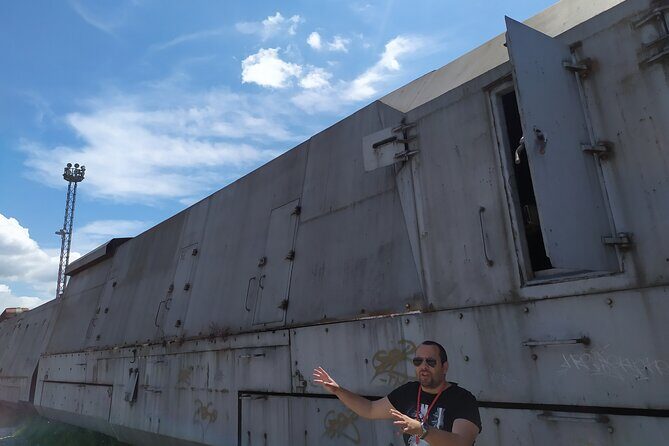
The tour ends at Split Predgrađe, at Kopilica railway station. This stop closes the emotional loop: it explains why Yugoslavia didn’t survive and why the end in the 1990s turned violent.
The main image here is an armored train displayed at the railway. The guide treats it as a symbol of the beginning of the violent end—something visible that connects broad political collapse to a specific, heavy object tied to conflict.
This final stop is about consequences. The tour links the end of Yugoslavia to shifts in relationships across southeastern Europe—especially around nations and religions—so you leave with more than local architecture facts. You leave with a sense of how a political system’s breakup can reshape society and identity across borders.
It’s about 30 minutes at this location, and it works well as a closing chapter after the earlier focus on planning, design, and everyday structure.
Price and Logistics: What $108.14 Buys You in Real Terms
At $108.14 per person for roughly 3 hours 30 minutes, you’re paying for more than walking commentary. You’re paying for:
- a small group size (max 8),
- a guide with the depth to handle a specialized topic,
- air-conditioned private transportation to cover dispersed stops,
- and free entry conditions at each listed stop (no separate admissions required).
That combo is the value story. If you tried to DIY this route, you’d likely spend a lot of your time figuring out where to go, how to connect the themes, and which buildings actually matter. Here, the theme is held together by the guide, and the transport removes friction.
The tour is offered in English, which you’ll appreciate if you want detail without translating in your head.
Timing-wise, the start at 9:00 am is also helpful. You get through the key outdoor stops before late-day crowds and before the city gets too hot.
What I’d Bring and How to Prepare
You won’t need fancy travel gear for this one, but a little prep helps:
- Wear comfortable shoes. You’ll be walking and moving between areas.
- If you’re sensitive to sun, consider sunscreen and water, since you’ll spend time outdoors.
- Bring your phone for the mobile ticket and for photos of the stadium, China Wall, and Split 3 architecture.
If your travel style is mainly old-town highlights, you might want to mentally switch tracks. This is a topic tour. The payoff comes when you let the buildings and streets explain the politics and daily life behind them.
Who This Tour Is Best For (And Who Might Want a Different Day)
This tour is a strong fit if you like:
- Yugoslavia-era architecture and planning,
- political history explained with real-world examples,
- and tours that go beyond the usual postcard path.
It’s also a great choice if you want Split to feel bigger than one famous landmark. You’ll see a side of the city that most visitors miss simply because they don’t know where to look.
If you prefer light, casual sightseeing with no political context, you might find the WWII setup and Tito-era focus a bit heavy. But if you’re curious, the guide’s teaching style is built for making complicated topics understandable.
And one more reason it’s worth considering: because the group is capped at 8, you can sometimes get a more personal rhythm. In a booking note, one run even ended up effectively one-on-one, which turned it into a truly tailored conversation.
Should You Book This Communist Tour of Split?
If you want the most value, book it when you’re ready to look past the obvious and spend a few hours learning how ideology shaped architecture and daily life in Split. For $108.14, the combination of small-group teaching and private transport is a fair trade, especially since the route covers dispersed locations efficiently.
I’d skip it only if you hate political history, hate walking, or need a purely entertainment-style outing. Otherwise, this is one of those rare Split experiences that gives you a new lens—and once you have it, you start noticing Communist-era choices even after the tour ends.
FAQ
How long is the Communist Tour of Split?
It lasts about 3 hours 30 minutes.
What is the meeting point for the tour?
You meet at Autobusno stajalište Sv. Frane, Trg Franje Tuđmana, 21000 Split, Croatia.
What time does the tour start?
The start time is 9:00 am.
What’s included in the tour price?
You get a typical soft local drink (soda/pop), air-conditioned vehicle transport, and private transportation.
Is the tour offered in English?
Yes, it’s offered in English.
How large is the group?
The tour has a maximum of 8 travelers.
Do I need to buy separate tickets at the stops?
The listed stops show admission ticket free.
What weather conditions are required?
The experience requires good weather. If it’s canceled due to poor weather, you’ll be offered a different date or a full refund.
What is the cancellation policy?
Free cancellation is available up to 24 hours before the experience starts for a full refund.