REVIEW · SPLIT
Visit Ancient Salona, Mighty Klis Fortress and Stella Croatica
Book on Viator →Operated by That´s it! · Bookable on Viator
Four stops, big ancient impact. This 4-hour Split excursion strings together Roman Dalmatia at Ancient Salona, medieval Klis Fortress, a working family farm at Stella Croatica, and underground wonders at Vranjača Cave—plus air-conditioned transport and Wi‑Fi on board so you can plan as you go.
I like the small-group pace (max 8) because the day doesn’t feel rushed like a big bus loop. I also like that the route mixes “look up at the world” sights (Klis) with hands-on stops you can shop at (Stella Croatica). One consideration: depending on how the group and guide situation works out that day, you may get more timed drop-offs than a fully guided, in-depth commentary at every stop.
In This Review
- Key things to know before you go
- Ancient sites and medieval views, all in one half-day
- Getting there comfortably from Split (pickup, Wi‑Fi, and timing)
- Stop 1: Ancient Salona’s Roman Dalmatia layers in Solin
- Stop 2: Klis Fortress above the village and Game of Thrones fame
- Stop 3: Stella Croatica’s family farm stop (olive oil, figs, and wine)
- Stop 4: Vranjača Cave and the stalactite-and-stream experience
- Price and logistics: what $133 really covers
- Who this tour suits best (and who may want a different plan)
- Smart tips to make your 8:30 am start worth it
- Should you book this tour?
- FAQ
- What time does the tour start?
- Where do I meet the group in Split?
- Is pickup from my hotel offered?
- How long is the experience?
- What’s included in the price?
- Are entrance fees included?
- Is the tour limited to a small group?
- Is it offered in English?
- Do I need lunch?
Key things to know before you go
- Ancient Salona (Solin) sets the Roman stage in about an hour, with ruins tied to Roman Dalmatia and Emperor Diocletian’s birthplace
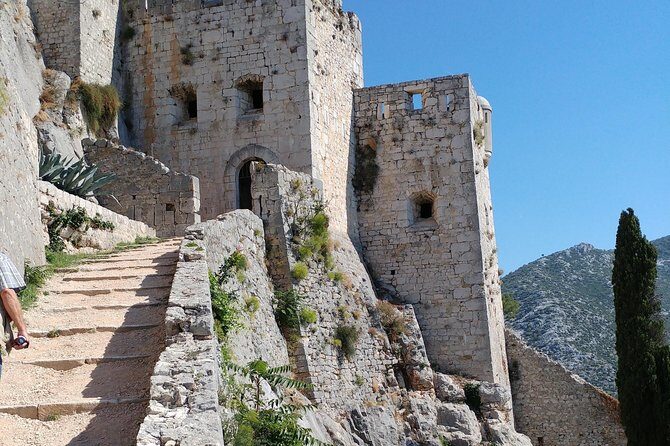
- Klis Fortress delivers dramatic views and a strong medieval story, plus Game of Thrones filming connections
- Stella Croatica is a family-run ethno agro park (Dabelić family), with olive groves, fig trees, vineyards, and tastable products
- Vranjača Cave (Spilja Vranjaca) features stalactites and stalagmites, and also an underground stream with small lakes
- Transport is included (private vehicle, bottled water, Wi‑Fi, air-conditioning), but entrance fees are extra
- Max 8 travelers helps keep the day calmer and easier to manage than a large tour
Ancient sites and medieval views, all in one half-day
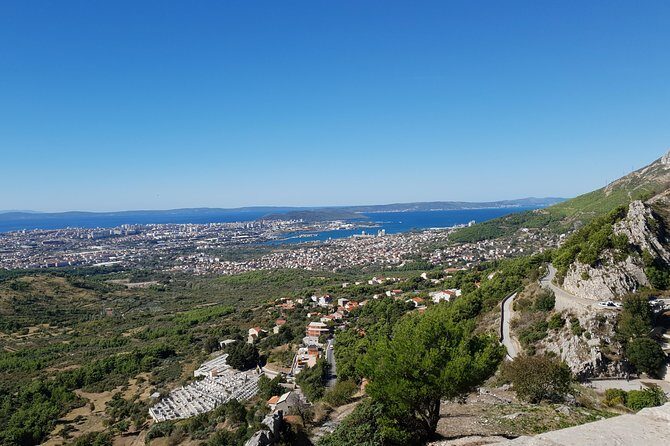
This is the kind of tour that works when you want “major hits” without giving up your whole day. You start near the center of Split and head out early, then you’re back at the meeting point at the end. Expect a tight schedule—each main stop is roughly an hour—so the value is in efficiency and variety.
What makes this route especially fun is the contrast. Salona gives you Roman scale. Klis gives you that cliffside fortress feeling and long sightlines. Stella Croatica shifts gears to working agriculture and local products you can actually bring home. Then Vranjača Cave changes the mood again with geology you can’t fake with photos.
If you’re the type who likes context, the best days include more than a basic “go in, come back.” When things click, you get the story behind what you’re seeing, not just the postcard locations. And when you just want the sights, the structure still does the job.
You can also read our reviews of more tours and experiences in Split.
Getting there comfortably from Split (pickup, Wi‑Fi, and timing)
You’ll meet at Trg Gaje Bulata 6, 21000 Split. Pickup is offered from your accommodation if the operator can park there; otherwise, you’ll start from the meeting point. The tour runs from 8:30 am, and it ends back where you started.
The ride matters here because you’ll be moving between spots around Split and Solin and then out toward the countryside. This trip includes air-conditioned private transportation and bottled water, which you’ll appreciate on warm days. You also get Wi‑Fi on board, which is handy if you want to quickly look up details while you’re en route—Roman facts for Salona, fortress context for Klis, or practical info for the cave visit.
Small-group size is capped at 8 travelers, which usually means less waiting and easier conversations if you have questions. Keep in mind that the schedule is “tight by design,” so late pickup calls or traffic can compress your time at the stops.
Stop 1: Ancient Salona’s Roman Dalmatia layers in Solin
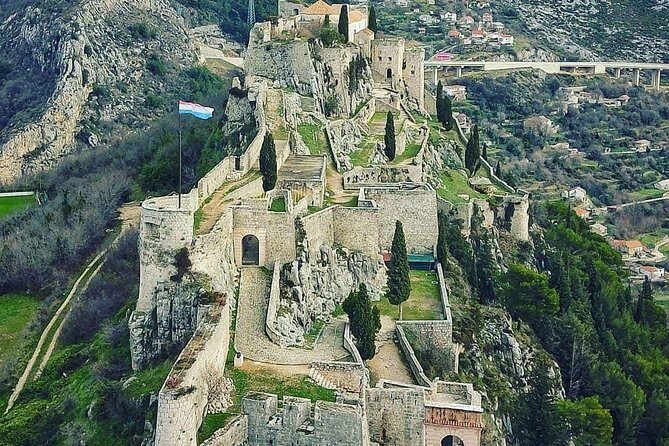
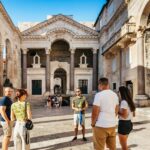
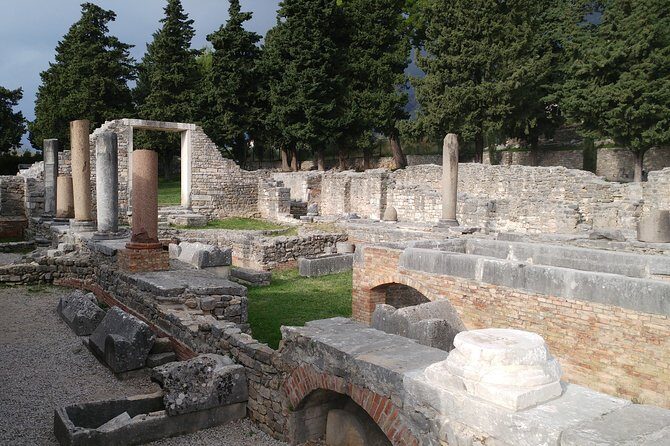
Your first major stop is Ancient Salona, now located within the modern town of Solin. This is one of those places where the ruins feel like they’re sitting in plain sight while still carrying serious importance.
Here’s the key idea to carry with you: Salona was the capital of the Roman province of Dalmatia. It also connects to the myth-and-history orbit around Emperor Diocletian, with Salona described as his birthplace. Even earlier than the Romans, the area was linked to the Dalmataeans, an ancient Illyrian tribe. So you’re not just seeing one era—you’re stepping into layers of rule and culture.
In about an hour, you’ll have time to walk the grounds, pick out big “Roman city” clues, and get oriented. If you’re visiting with someone who likes history facts, this is where you’ll want a little extra attention because Roman urban design can feel repetitive without context.
A practical tip: wear shoes you don’t mind for uneven ground. Ruins are usually not museum-smooth, and an hour can disappear fast if you’re watching your footing instead of looking around.
Stop 2: Klis Fortress above the village and Game of Thrones fame
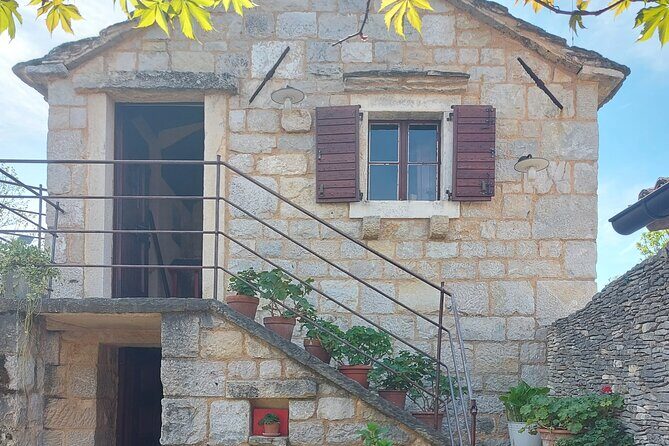
Next up is Klis Fortress, dramatically above the village of Klis. The setting alone is a reason to go: it’s a medieval stronghold positioned to defend Dalmatia, especially in the face of Ottoman invasions. You get the sense of why this location mattered—height, sightlines, and the ability to control movement.
And yes, there’s a pop-culture hook. If you’re a Game of Thrones fan, Klis has filming significance, which makes the fortress feel less like a random ruin and more like a place your brain already recognizes. That doesn’t replace the medieval story, but it adds an extra layer of excitement.
The time here is also about balancing viewpoints and walking. If you want photos, you’ll likely find yourself stopping often. One of the best benefits of a small group is that you’re less likely to feel stuck behind a slow flow of tour groups. In quieter seasons, Klis can feel almost like you have it to yourself, which makes the climb and views more relaxing.
Entrance isn’t included in the tour price. The fortress fee is listed separately, so plan on paying that on the day.
Stop 3: Stella Croatica’s family farm stop (olive oil, figs, and wine)
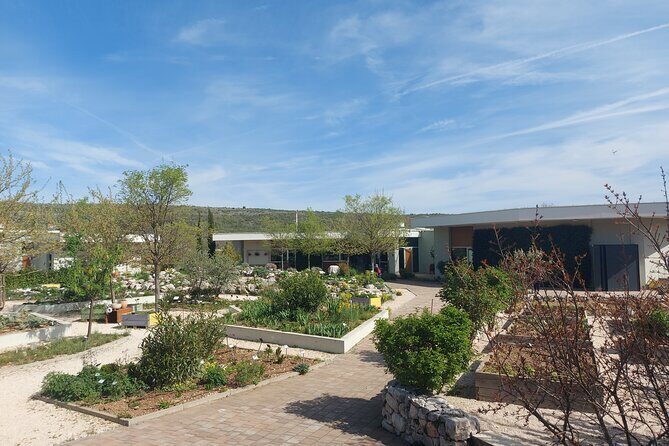
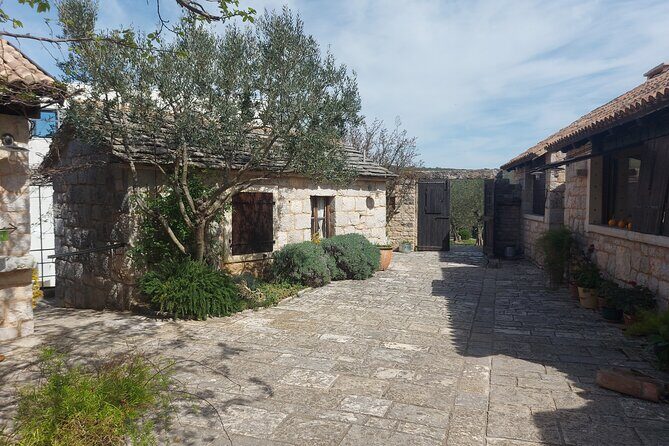
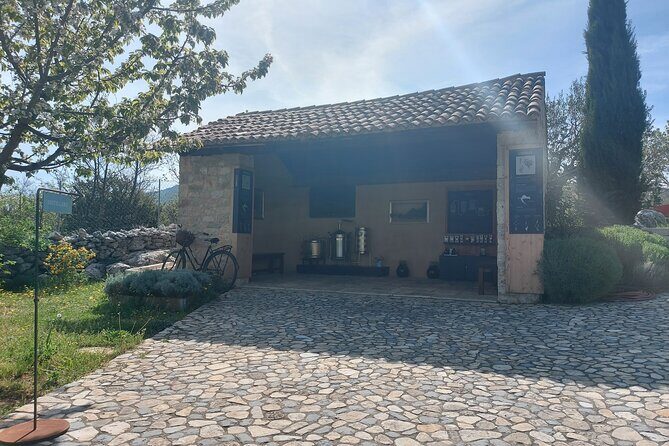
Then the tour heads into Ethno Agro Park Stella Croatica, a family-owned spot run by the Dabelić family for generations. This is not just a scenic break—it’s an agriculture-and-culture stop where you can connect with what the region produces today.
What you’ll see is practical and sensory: olive groves, fig trees, vineyards, and the production of olive oil, wine, and traditional delicacies. There’s also mention of a botanical garden where you can slow down and enjoy the planting and layout, rather than focusing on stone walls and military strategy.
This stop is a great value for two reasons. First, it gives you a “local life” perspective that you don’t always get on Roman-and-medieval tours. Second, it’s one of the few stops where you can buy products to take home, which can make the cost feel more tangible.
In an ideal visit, you’re not rushing through. Use the hour to ask basic questions and walk the garden paths at an unhurried pace. If you like food memories, this is the place that helps you remember Croatia beyond photos.
Entrance for Stella Croatica is listed separately and should be budgeted.

Stop 4: Vranjača Cave and the stalactite-and-stream experience
The final stop is Vranjača Cave (Spilja Vranjaca), near the village of Kotlenice. This one shifts the tour from human-made structures to geology.
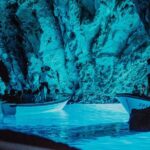
The highlights to look for are clear: stalactites and stalagmites shaped over thousands of years, plus underground passages with mineral deposits that create different colors and forms. The cave also includes an underground stream and small lakes, which adds movement and atmosphere even when everything is quiet.
Caves tend to change how you look at time. An hour can feel long if the paths are slow and the features are frequent, and it can feel short if you try to rush through just to “get it done.” A good strategy is to spend the first part getting your bearings, then slow down for the most visually interesting formations.
Entrance is not included. The cave fee is listed as €10 per person, so build that into your total planning.
If you’re sensitive to damp environments or want more comfort, consider bringing a light layer. Nothing about clothing requirements is stated here, but caves often run cooler and can feel humid.
Price and logistics: what $133 really covers
The tour price is listed as $133.38 per person, for about 4 hours. The big value item is that transportation is included: bottled water, air-conditioned vehicle, Wi‑Fi on board, and private transport.
Entrance fees are the main extra cost, and they add up. Based on the listed fees:
- Cave Vranjaca: €10
- Klis Fortress and Stella Croatica: €12
- Ancient Salona: €8
So you’re looking at around €30 total in entrance fees per person. Add that to the base tour price to judge whether it feels like a deal for you.
Here’s the balanced take: this tour is sometimes described as more “pickup and drop-off with timed access” than “lecture-style guiding everywhere.” That doesn’t automatically make it bad. If you like moving at your own pace and just want someone to handle the route, it can be a smart setup. But if you’re expecting a lot of on-the-ground explanation at each stop, you should consider that the experience can vary.
To get the most value for your money, go in with a plan for what you’ll focus on at each site. If you show up ready to look and ask a couple of targeted questions, you’ll feel like you’re getting your visit “for” something—not just “at” something.
Who this tour suits best (and who may want a different plan)
This tour fits best if you want a concentrated mix of:
- Roman ruins without booking separate transport
- a fortress viewpoint day built around Klis
- a family-run food and product stop at Stella Croatica
- a cave experience with formations and underground water
It’s also a nice match for couples, small groups of friends, and travelers who don’t want to drive. The meeting point is central, pickup may be available depending on parking, and the group stays under 8.
It may not be ideal if you’re the kind of traveler who needs a detailed guided walkthrough at every stop. Some days seem to run with a lot of “go here, buy your tickets, be back” energy, and the quality of interpretation can depend on who’s available that day. If you’re a “tell me what to look at” person, bring your own quick background reading or come ready with questions.
Language-wise, it’s offered in English. That’s important for making sure you can follow the story while you’re on the move.
Smart tips to make your 8:30 am start worth it
Because the stops are scheduled in about one-hour blocks, the “small stuff” matters.
- Have your ticket payments ready: entrance fees aren’t included for Salona, Klis, Stella Croatica, and Vranjača Cave, and you’ll want to avoid delays when you reach each place.
- Use the Wi‑Fi on board for quick planning: look up what the site is famous for before you arrive, so you’re not trying to learn on the spot.
- Bring light layers for the cave: even if you’re warm outside, the cave can feel cooler.
- Wear steady shoes for ruins and uneven cave paths.
- If you want more guiding, ask questions early: start with one or two focused questions on the vehicle or at the first stop, then carry that curiosity into the next site.
One more tip: if you’ve got flexibility in your travel dates, mornings in Split can feel calmer. Starting at 8:30 am helps you avoid some peak crowds that build later in the day.
Should you book this tour?
Book it if you want an efficient half-day that hits Salona + Klis + Stella Croatica + Vranjača Cave without you handling transport. The inclusion of private, air-conditioned transportation, bottled water, and Wi‑Fi makes it easier to say yes, especially if you’d rather not plan multiple independent trips.
I would think twice if you’re expecting a very guided, narrated experience at every stop. If you’re more independent and you enjoy exploring with your own eye, you’ll likely be happiest. If you want a lecturer’s voice all day, you should confirm what the day’s guiding will feel like.
If you’re on a first visit to the Split area and want the Roman-to-medieval-to-nature mix in one go, this tour is a strong way to pack a lot of Croatia into a short window—just go in with realistic expectations about how the day is delivered.
FAQ
What time does the tour start?
It starts at 8:30 am and returns back to the meeting point.
Where do I meet the group in Split?
The meeting point is Trg Gaje Bulata 6, 21000 Split, Croatia.
Is pickup from my hotel offered?
Pickup is offered if your accommodation has a place for the car or van to park. Otherwise, you’ll meet at the meeting point.
How long is the experience?
The duration is about 4 hours (approx.).
What’s included in the price?
Bottled water, an air-conditioned vehicle, Wi‑Fi on board, and private transportation are included.
Are entrance fees included?
No. Entrance fees are not included for Ancient Salona (€8), Klis Fortress and Stella Croatica (€12), and Cave Vranjaca (€10 per person).
Is the tour limited to a small group?
Yes. The tour has a maximum of 8 travelers.
Is it offered in English?
Yes, the experience is offered in English.
Do I need lunch?
Lunch (and coffee and/or tea) are not included, so plan to eat separately.