REVIEW · TROGIR TOURS
Split and Trogir Half Day Guided tour
Book on Viator →Operated by Redono d.o.o. · Bookable on Viator
Two old towns, one well-timed day. This Split and Trogir tour strings together the most memorable parts of both historic centers, from Diocletian’s Palace to Trogir’s waterfront streets, with guided walking and an English-speaking local guide.
I love the way the route snaps into place without drama: you get a structured tour of Split’s palace core and old-town highlights, then you’re sent to Trogir for more wandering time. I also like the small-group feel that lets guides such as Antonia, Ante, Mia, Ivana, Frane, and Antoinette steer the conversation with local stories you’ll actually remember.
One thing to consider: you’ll do a lot of walking in historic streets, and summer crowds can make the day feel busy. If you’re slower on your feet, you’ll want to plan for pacing and breaks.
In This Review
- Key highlights at a glance
- Split and Trogir in one half-day: the smart route
- Meeting at the Golden Gate and how the day flows
- Diocletian Palace substructures: the basements and the show connection
- Peristyle and Vestibulum: turning palace ruins into a mental map
- The Golden Gate as a navigation anchor
- Riva Harbor and Fruit Square: Split’s everyday postcard moments
- Trogir transfer and free time in old town
- Trogir City Hall and Central Square: the structure of the town
- St Lawrence’s Cathedral and St Sebastian: what’s worth paying for
- Kula Karmelengo: fortress time if you want the extra ticket
- What the small-group style really means in practice
- Price and value: when $60.49 makes sense
- Weather, crowds, and timing: your best tactics
- Who this tour suits best
- Should you book this Split and Trogir guided tour?
- FAQ
- How long is the Split and Trogir half-day guided tour?
- Where does the tour start and end?
- What language is the tour offered in?
- What’s included in the price?
- Are entrance fees included?
- How many people are in the group?
- Is the tour running in bad weather?
Key highlights at a glance
- Diocletian’s Palace substructures to Peristyle: the “basements” through the palace’s main square, all in one flow
- Game of Thrones filming spot: the palace substructures are tied to the show, so it’s fun even if you’re not a superfan
- Split’s signature promenade stops: quick hits at Riva Harbor and Fruit Square keep the day from feeling like one long museum
- Trogir old town with real free time: you get time to wander Central Square and the cathedral area on your terms
- Mostly no-entry-fee stops: many sights on the route are listed as free, with a couple of paid add-ons
- Air-conditioned transport: the van ride helps you move between towns without tiring out early
Split and Trogir in one half-day: the smart route
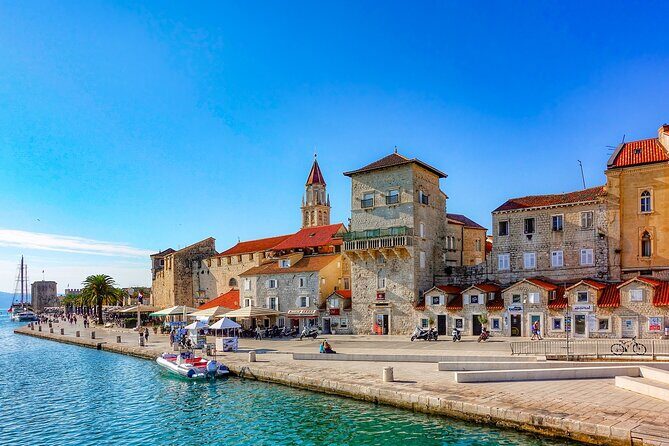
If you’ve got limited time in Croatia (or you just don’t want to choose between Split and Trogir), this tour is designed for efficiency. In about 5 to 6 hours, you can hit two old towns that look and feel different, yet still feel unmistakably Dalmatian.
Split gives you the dramatic scale of Diocletian’s Palace and the lived-in rhythm of old-town streets. Trogir is smaller, more compact, and easier to roam at street level, with photogenic squares and church fronts that act like anchors as you walk.
This is also a good first-tour option. You’ll leave with a mental map of where things are and how the city layout makes sense, which makes your next self-guided wander feel less random.
You can also read our reviews of more guided tours in Split


Meeting at the Golden Gate and how the day flows
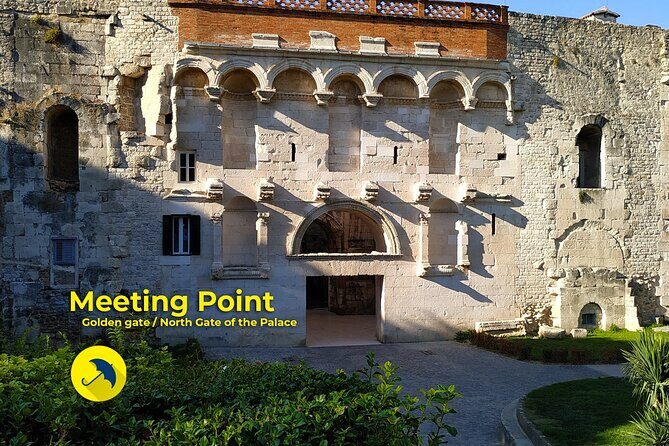
You start at the Golden Gate (Dioklecijanova 7, 21000, Split). That matters more than it sounds: it’s a landmark meeting point, and it reduces the chance of you losing time hunting down a bus stop or a random corner.
From there, the tour moves in a logical sequence through the palace area, then into Split’s main old-town pockets before heading to Trogir. Most of the route is built around short, guided “stop” moments, which makes it easier to keep up without feeling like you’re in a long lecture.
Also pay attention to the group size. The tour caps at 50 travelers, and in real life it often feels more intimate than that, with smaller walking clusters forming during the day. That’s one of the big reasons people report the experience feeling personal instead of rushed.
Diocletian Palace substructures: the basements and the show connection
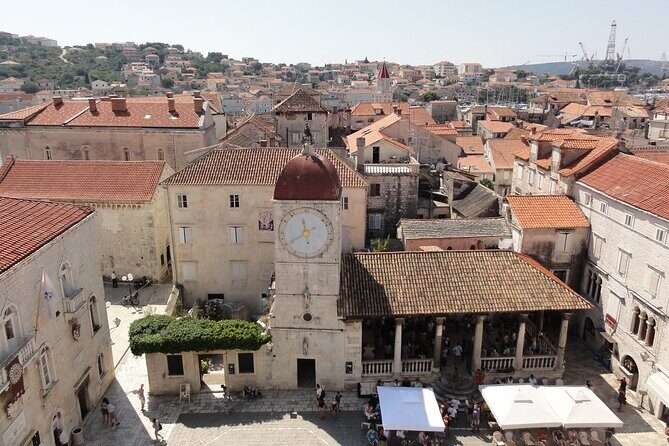
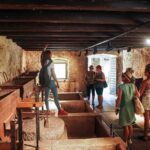
Your first major palace stop is the Diocletian Palace Substructures, sometimes called the basements. These are listed with free admission for this experience’s stop, so it’s a great way to start without immediately worrying about extra tickets.
What I like about this first stop is the “wow” factor. Even if you never watch TV, the idea of walking through old under-level spaces tied to the Game of Thrones filming connection adds a layer of pop culture recognition. It also helps you understand how the palace functioned beyond just the postcard facades.
Practical tip: because this is an early stop, you’ll usually be at your freshest. Take a moment to look at how the space feels, then listen for how the guide connects it to Diocletian’s residence.
Peristyle and Vestibulum: turning palace ruins into a mental map
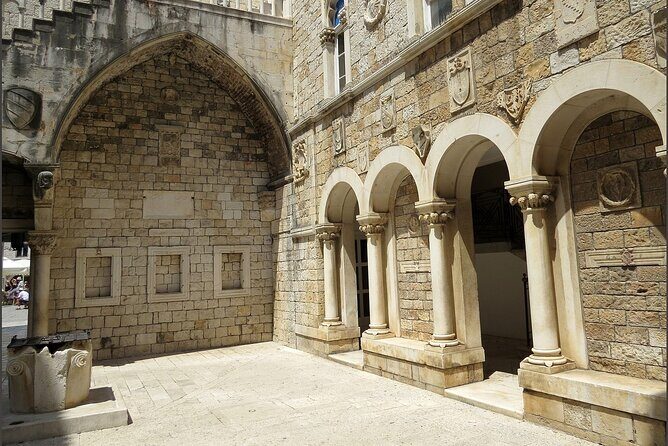
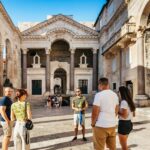
Next up are the Peristyle of Diocletian’s Palace and the Vestibulum. The Peristyle is the ancient main square of the palace, and it’s listed as free. This is where the scale of the palace becomes obvious fast: you get the sense of “this was a city within a city.”
The Vestibulum is the ancient entrance to Diocletian’s residence, also listed as free. Together, these stops help you connect the dots: entry points, central public space, and the way movement inside the palace would have worked.
If you’re the type who likes architecture, this is one of the best sections of the day. Short stops keep you engaged, and the layout makes it easier to remember what you saw when you return later to explore on your own.
The Golden Gate as a navigation anchor
The Golden Gate isn’t just your meeting point. It’s also one of the itinerary stops, described as the north entrance of Diocletian’s palace and the tour’s meeting point.
Why this helps you: when the same place shows up twice, it gives you a reference point. If you’re trying to learn the city quickly, repeated anchors let you rebuild your bearings without stress.
It also makes the pacing simpler. You can re-orient quickly before moving on to promenade-level streets and squares where the palace story becomes part of everyday city life.




Riva Harbor and Fruit Square: Split’s everyday postcard moments
After the palace core, you shift to street-level Split with stops at Riva Harbor and Fruit Square (Trg Brace Radic). These are listed as free, and they’re short (10 to 20 minutes each), which is exactly what you want after the palace.
Riva Harbor is where the day starts to feel like a holiday. You’ll walk the famous promenade stretch, and it’s the part of Split where views and atmosphere do more work than explanations. Even if you’re not a “sit and stare” person, you’ll enjoy the sense of place here.
Fruit Square is one of the more interesting squares in Split. It’s a smart stop because it shifts you from monumental history to lived culture: a square is where people meet, wait, and hang out. It’s also an easy place to notice how the old town still functions as a community.
Trogir transfer and free time in old town
A van takes you from Split over to Trogir. It’s air-conditioned, which is a big deal in summer heat, and it helps you preserve energy for walking once you arrive.
Then you get guided Trogir old town plus free time in Trogir. That free time is crucial. A guide can do a lot in a short window, but you still need moments to slow down, take photos, and step into whichever side street catches your eye.
In Trogir, there’s also a payoff to simply being there: the old town feels compact enough that you can make good use of your time without feeling like you’re sprinting from one “required stop” to another.
Trogir City Hall and Central Square: the structure of the town
The first Trogir stops include the Ayuntamiento Trogir (city hall area) and then the Central Square. The Ayuntamiento stop is listed as free and Central Square is also free.
Central Square is a strong choice because it’s the main gathering area, which means you naturally pick up the town’s rhythm. If you want to understand Trogir quickly, start here and let the square guide your next steps.
Also, small squares like these make it easy to pause. You can grab a drink or simply reposition yourself to catch the best angles of church fronts and stone facades.
St Lawrence’s Cathedral and St Sebastian: what’s worth paying for
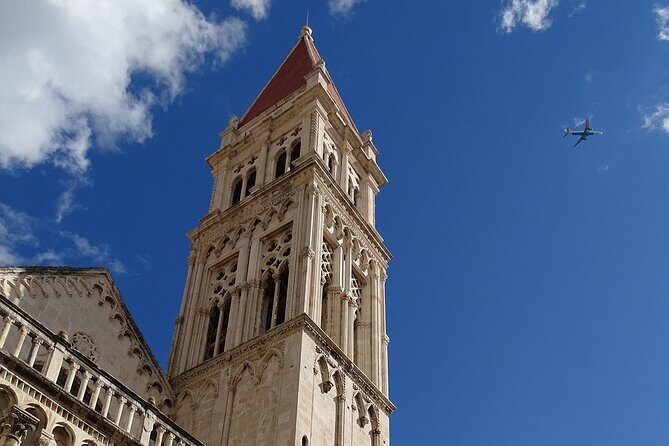
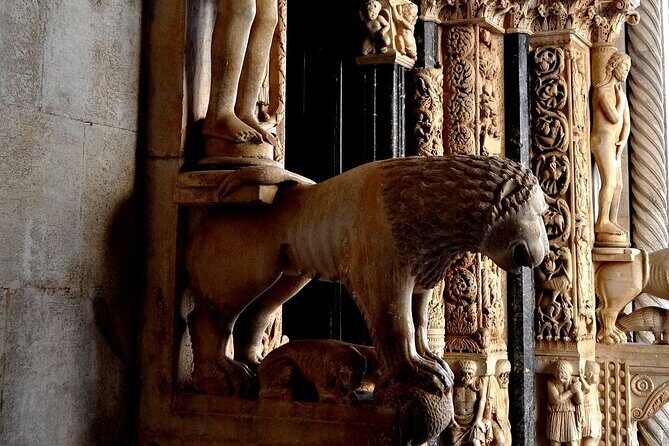
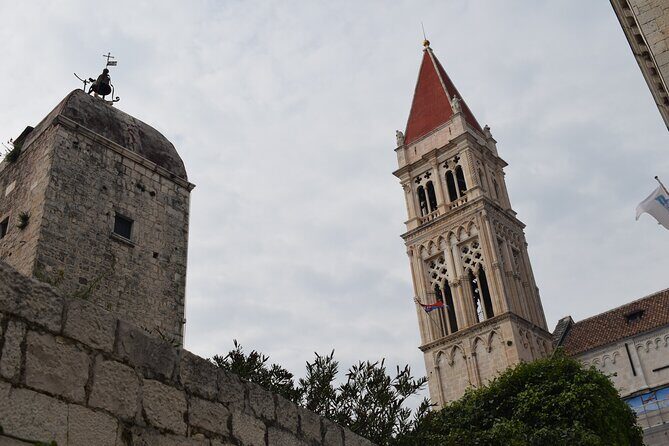
In Trogir, the tour includes a stop at Saint Lawrence’s Cathedral. This one is not included for admission, so you’ll likely need to budget extra if you want to go in. The cathedral is dedicated to the patron of the city, which gives it real local meaning beyond just architecture.
Right after, you’ll hit St. Sebastian, described as once a church and today a memorial place. This stop is listed as free, so you can balance your day: if you choose to pay for the cathedral, St. Sebastian offers an additional sight without additional ticket cost.
Practical tip: if you’re trying to manage time, decide early whether you’ll want to enter the cathedral. The outside views and the surrounding streets are already impressive, but entering can take longer.
Kula Karmelengo: fortress time if you want the extra ticket
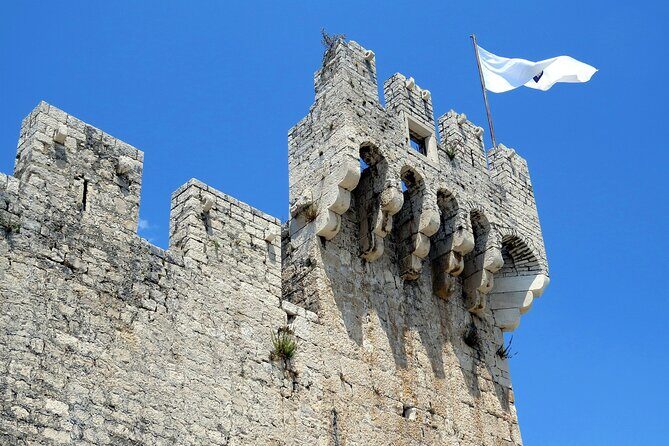
The final major sight on the route is Kula Karmelengo, a fortress built by the Venetians. Like the cathedral, admission here is not included.
This stop is the “bonus history” segment. If you enjoy fortifications or want a stronger sense of how power and defense shaped the region, this is a good add-on. If you prefer to keep the day simple and move on to strolling, you might treat it as optional depending on your energy level and time.
Either way, it closes the story nicely: Diocletian’s palace shows Roman-era dominance in stone, and Kula Karmelengo shows later Venetian influence in a different style and with a different purpose.
What the small-group style really means in practice
The tour runs in English, and the biggest praise centers on how guides bring the places to life. Names like Antonia, Ante, Mia, Ivana, Frane, and Antoinette come up again and again because the experience feels like more than a checklist.
What stands out is the guide’s ability to connect palace details to what you can see right now. People also mention that the tone stays energetic and that you’re pointed toward specific features, not just broad facts.
There’s also a pattern: the tour keeps moving, but it doesn’t feel like you’re being dragged. Stops are short enough that you can reset your attention, and you get free time in Trogir so you’re not stuck only listening.
One practical reality: there is a lot of walking. Even when it’s not described as “uphill,” it’s still historic-street walking with inevitable uneven surfaces and crowd moments. If you’re bringing someone with mobility concerns, I’d treat this as a “plan carefully” day.
Price and value: when $60.49 makes sense
At $60.49 per person, this tour isn’t trying to be the cheapest way to see Split and Trogir. Instead, it’s priced for convenience and guidance.
Here’s the value equation:
- You’re paying for a professional guide plus guided walking time in both towns.
- You also get air-conditioned transport between Split and Trogir, which saves time and stress compared with figuring out buses or arranging your own route.
- Many of the listed stops are marked free admission, which helps you avoid ticket stack-ups during the guided portion.
What’s not included is also important for your budget. Food and drinks are on you, and entrance tickets to historical monuments aren’t included. That matters most for places like Saint Lawrence’s Cathedral and Kula Karmelengo, which are specifically noted as not included.
If you’re traveling solo or as a small group and you want someone else handling the timing and route, this price starts to look very fair. If you’re the type who prefers slow independent exploration with no structured stops, you may find better value building your own day, but you’ll lose the “fast map + context” advantage.
Weather, crowds, and timing: your best tactics
This tour operates in all weather conditions, so you should dress for rain or heat and not assume perfect skies. That’s generally a positive, because one cloudy morning doesn’t cancel your plan. You’ll just need to come ready with layers and comfortable shoes.
Crowds are the other reality. Split’s old town can be packed, especially when cruise crowds hit. You may feel it most around the palace area and the most popular streets.
Timing is usually smooth, but pay attention to the start time. One downside that can happen on busy days is late starts due to group coordination or cruise schedules, which can squeeze free time in Trogir. If you’re visiting on a day with heavy ship traffic, I’d be flexible and treat the free time as “enough to enjoy,” not “enough to do everything.”
Who this tour suits best
This tour is a strong match if:
- you’re visiting Split for the first time and want the palace core explained clearly
- you want to add Trogir without planning transport and sequencing on your own
- you like architecture, old stone streets, and short guided stops with room to roam
- you want English guidance and air-conditioned transit in one package
It’s less ideal if:
- you have limited stamina for walking in historic streets
- you want a long, slow afternoon in Trogir to go deep on one site
- you’re mostly interested in beach time and would rather spend the half day relaxing
Should you book this Split and Trogir guided tour?
I’d book it if you want a time-smart day that hits the headline sights in both towns, with guidance that helps the streets make sense. The best reason to go is simple: you get palace context in Split and then you’re set up to enjoy Trogir with free time, instead of rushing through both on your own.
Book it especially if you’re the kind of traveler who likes to understand what you’re looking at, even when you’re just walking. Choose comfortable shoes, carry water, and plan to spend a little extra for St Lawrence’s Cathedral and Kula Karmelengo if those matter to you.
FAQ
How long is the Split and Trogir half-day guided tour?
It runs about 5 to 6 hours.
Where does the tour start and end?
The tour starts at the Golden Gate in Split and ends back at the same meeting point.
What language is the tour offered in?
The tour is offered in English.
What’s included in the price?
You get a professional guide, guided tours of Diocletian’s Palace and Split old town, air-conditioned vehicle transportation, guided Trogir old town, and free time in Trogir.
Are entrance fees included?
Entrance tickets are not included for historical monuments. Some stops are marked as free for this tour, but places like Saint Lawrence’s Cathedral and Kula Karmelengo are marked as not included.
How many people are in the group?
The maximum group size is 50 travelers.
Is the tour running in bad weather?
Yes, it operates in all weather conditions, so you should dress appropriately.