REVIEW · AUDIO TOURS
Sightseeing Split’s Roman Ruins: A Self-Guided Audio Tour
Book on Viator →Operated by VoiceMap Audio Tours · Bookable on Viator
Split’s Roman ruins are right on your route. A self-led audio tour through Diocletian’s Palace makes the whole area feel easier to read, and you can set your own pace instead of matching a group. I also like the lifetime access angle—you’re not locked into a one-and-done visit.
Two things that really work for me: the tour is built for freedom, with GPS guidance so you can keep moving, and the audio segments help you notice details you’d probably miss on your own. One thing to consider first: you’ll need your own smartphone and headphones, and if the GPS nudges you off for a moment at the start, you’ll want to correct quickly and get back on track.
In This Review
- Key Points You’ll Care About
- A Self-Guided Walk Through Split’s Roman Heart
- Price and Value: What $14.99 Gets You
- Meeting Point on the Riva: Getting Started Fast
- Diocletian’s Palace Highlights: Cellars, Mosaics, and the Triclinium
- Beyond the Palace Walls: Gates, Cathedral, and Synagogue Streets
- From Fish Market to Fruit Square: The Route’s Ending Feel
- How to Use VoiceMap So It Feels Like a Guide
- Who This Audio Tour Is Best For
- Should You Book This Audio Tour?
- FAQ
- How long is the Split Roman Ruins audio tour?
- Where does the tour start and end?
- Does the price include museum or attraction tickets?
- Do I need an internet connection during the tour?
- What do I need to bring?
- Is this a guided group tour?
Key Points You’ll Care About
- GPS-backed route through Diocletian’s Palace so you don’t wander in circles
- Offline audio + offline maps/geodata, handy in Croatia where signal can vary
- Lifetime access in English, so you can reuse it on repeat trips
- A brief stop-at-each-spot pace that keeps your walk moving without rushing you
- Great value for $14.99 when you compare it to a traditional guided tour
A Self-Guided Walk Through Split’s Roman Heart
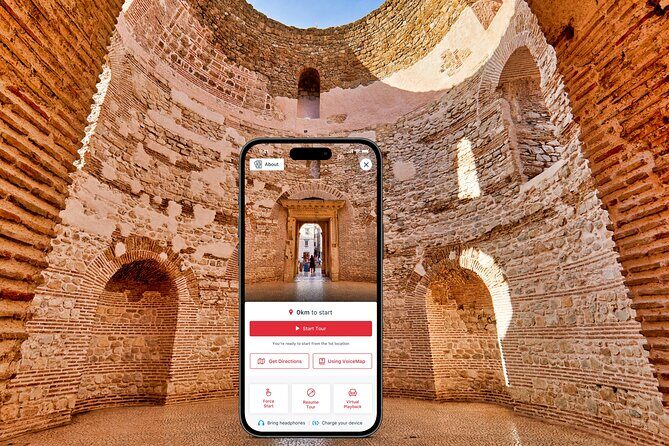
Split is one of those cities where the past isn’t in a museum behind glass. It’s built into the streets, layered under apartments, and folded into everyday life. This self-guided audio tour is designed for that reality. Instead of trying to “figure it out” while you walk, you get a guided-feeling soundtrack timed to what you’re seeing in front of you.
You start near the historical core, then move through Diocletian’s Palace and along the surrounding old-town route. That structure matters because you’re not just looking at one site—you’re seeing how Roman-era spaces connect to what’s been added (and reused) over time.
The best part is the rhythm. The audio doesn’t demand your full attention like a bus tour sometimes does. You can pause when you want photos, step aside when you want to read what’s in the stone, then press play again and keep going.
You can also read our reviews of more guided tours in Split


Price and Value: What $14.99 Gets You

At $14.99 per person, this is one of the cleaner ways to “pay for understanding” in Split. You’re not paying for transportation or a guide’s time. Instead, you’re buying a route plus the explanations—then you can use it whenever you’re back in town.
Here’s where the value gets real:
- Lifetime access means the cost spreads out over multiple visits. If you return to Split later, you don’t pay again.
- Offline access (audio, maps, geodata) can save your day if your phone struggles with data.
- The stops are brief at each point, so you’re not stuck waiting for a schedule. That makes it easier to fit into a half-day.
The one trade-off is you should plan for the fact that the tour doesn’t include museum or attraction tickets. When you reach a museum stop on the route, the audio can point you toward what’s there, but you’ll still need separate tickets if you want to go inside.
So if you’re trying to minimize extra spending while still getting context, this is a smart spend. If you’re hoping for a package that includes entrances, you’ll want to plan those separately.
Meeting Point on the Riva: Getting Started Fast
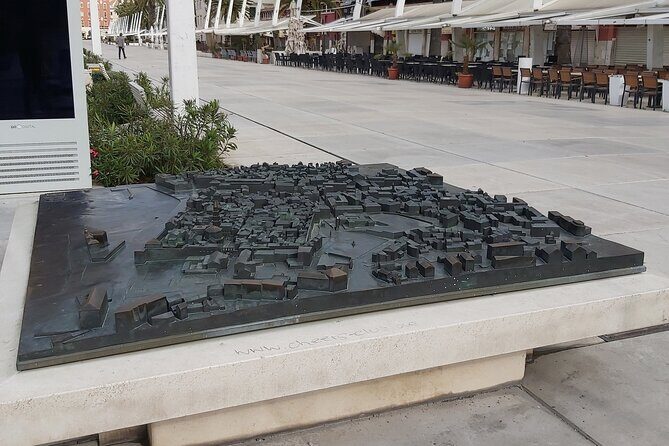
The tour begins at the Model of the historical core of the city of Split on Obala Hrvatskog narodnog preporoda 23. It ends at Radić Brothers Square, also called Fruit Square.
The schedule is flexible. It’s offered daily from 12:00 AM to 11:59 PM (within the listed operating dates), so you can pick a time that matches your walking mood—morning light, late-day shade, or an evening stroll when the streets cool down.
Your first job is simple: download the VoiceMap app after booking, then download the audio/maps for offline use before you start walking. The tour is built on a phone route with GPS, so if your battery is low or your phone can’t access the audio files offline, you’ll feel it right away.
There’s also a practical note from experience: at the start, GPS can sometimes place you slightly off. The fix is easy—stay calm, use the map view in the app to confirm where you are, then get aligned before you commit to the first segments.
Diocletian’s Palace Highlights: Cellars, Mosaics, and the Triclinium
Once you’re set, the tour takes you into Diocletian’s Palace, and this is where the audio helps you earn your “aha” moments. Even if you’ve walked through ruins before, Diocletian’s Palace can feel like a maze of corridors and rooms. Having timed explanations turns that confusion into something more like a story.
You’ll start with the palace walk and then hit a series of recognizable features. Expect a pattern: short audio beats, look around, then move on.
Here’s what the route does inside the palace area:
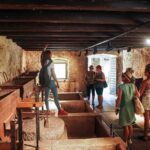
- Cellars (brief stop): You’ll pause for the story tied to the underground spaces. Even without lingering, it’s a helpful way to connect the palace to the everyday function of storing and using space.
- Mozaik Podrum (brief pass-by): You’ll glide past this spot and hear the audio cue that ties it to what you’re seeing. It’s the kind of moment where the explanation makes the building details feel intentional instead of random.
- Triclinium (pass-by): This is one of the key named rooms on the route. The audio framing helps you understand what kinds of activities these rooms were built for, which makes the scale and layout make more sense while you stand there.
- Museum (brief pass-by): You’ll get context tied to the area near the museum. If you want the full indoor experience, you’ll need to add tickets separately, because entrances aren’t included.
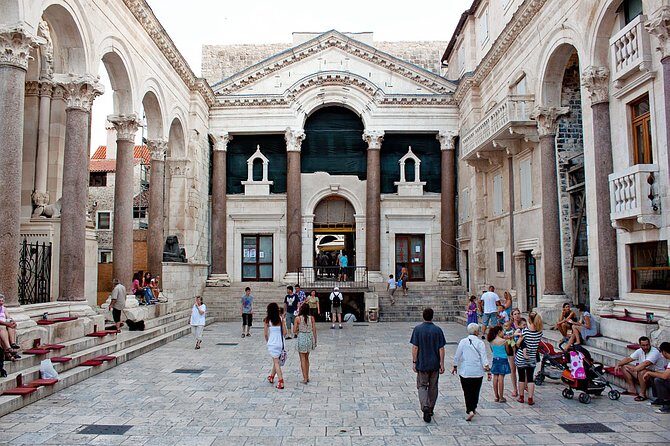
- Peristyle (brief stop): The audio stops here because this is the kind of space where your viewpoint really matters. When you hear the description, you’re more likely to look at proportions and sightlines, not just walls.
- Vestibulum (brief stop): Another short pause that helps you read the transition spaces—where people would enter, move through, and shift from one part of the palace to another.
- Jupiter’s Temple (brief stop): This is one of the standout named stops on the route. The audio gives you the context so you can connect the temple area to the larger palace complex, rather than treating it like an isolated sight.
I like this approach because it avoids the common problem of self-guided walking: you stop every five minutes because you’re trying to remember what you’re looking at. Here, the stops are paced. You get enough information to guide your attention, then you keep moving.
Beyond the Palace Walls: Gates, Cathedral, and Synagogue Streets

After the palace sequence, the tour keeps you in the old-city rhythm, passing key landmarks that help you see Split as more than just Roman remains.
This is the section where the audio acts like a map for meaning. You’re moving through a layered city, and hearing what each spot represents helps you notice how religious and civic life coexisted with older structures.
You’ll pass by:
- Palaca Cindro
- Silver Gate
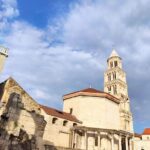
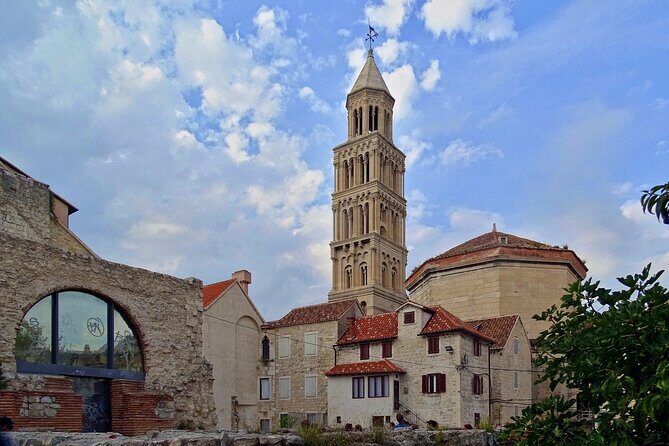
- Cathedral
- Split City Museum (pass-by)
- Golden Gate
- A statue stop (brief)
- Synagogue (pass-by)
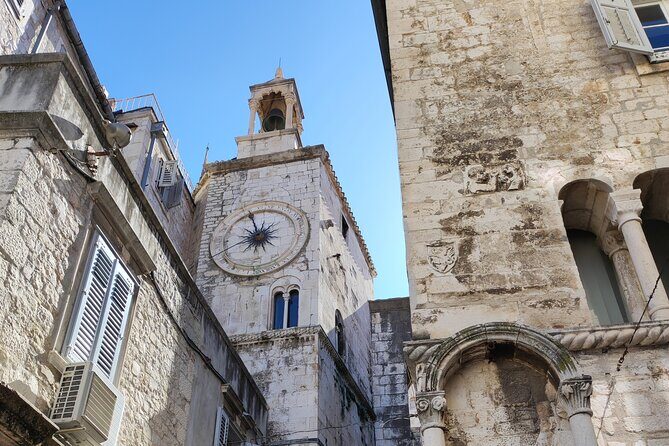
- Old city hall
- Standarac
- Chapel
And then it flows into the more everyday side of town.
A practical payoff here: if you’re the kind of person who hates seeing a big list of monuments with no connective tissue, this route gives you that glue. It’s not just Roman sites in a row. You also see the city’s later identity, which is part of why Split feels so lived-in.
You can also read our reviews of more tours and experiences in Split



From Fish Market to Fruit Square: The Route’s Ending Feel

The later part of the walk heads toward places where locals and visitors naturally mingle. You’ll pass:
- Fish market
- then move through the surrounding square area
- and finish at Fruit Square (Radić Brothers Square)
This ending is handy because Fruit Square is a logical “wrap-up” point. If you want coffee, a quick bite, or a place to regroup after a walk, you’ll be in an easy spot to do it.
Also, that route choice helps with pacing. You’re not exhausted after the palace’s density; you transition into a more open, street-level atmosphere where your brain has time to breathe.
If you’re timing your day, I’d treat the tour as a core walking plan, then leave room at the end for wandering. The tour gets you oriented. You can let the rest of the city surprise you after.
How to Use VoiceMap So It Feels Like a Guide
This experience runs through the VoiceMap app for Android and iOS, and the audio is available in English with lifetime access. The app also includes offline maps and geodata, plus offline audio—so you’re not stuck hunting for a signal.
Here’s how I’d do it so it stays smooth:
- Download the content before you start walking.
- Keep your phone at a comfortable viewing height (not too low). You want to track the GPS line and your position.
- When you hear a “brief stop,” actually stop. Those short segments are quick by design, but they work best when you let your eyes rest on the spot for a few seconds.
- If GPS jumps at the beginning, recover fast. Use the map screen and get aligned before you move deeper into the palace area.
The audio is also forgiving. The overall structure is easy to follow, and one review experience described it as easy to listen to and fun—exactly what you want from a self-led guide.
Who This Audio Tour Is Best For
This is a great fit if you:
- want freedom and flexibility instead of a fixed group schedule
- like learning as you walk, at your own pace
- want a low-commitment way to understand Diocletian’s Palace before you try any museum visits
- are traveling with friends or family and prefer not to coordinate timing with a guide
It may be less ideal if:
- you hate using apps while traveling
- you only have limited phone battery and don’t want to manage offline downloads
- you’re hoping for a tour that includes museum entrances or transportation
If you’re someone who likes to understand what you’re seeing, this route helps you build that mental picture without turning your vacation into homework.
Should You Book This Audio Tour?
Book this if you want the best value option for learning Split’s Roman core at your own speed. The GPS + offline setup makes it practical, and the route structure keeps you moving while still giving you context at the important named stops.
Skip it if your priority is visiting multiple indoor museums with included tickets, or if you’d rather follow a live guide for every question that pops into your head. For everything else—orientation, pacing, and turning stone into a story—this is a solid choice for Split.
FAQ
How long is the Split Roman Ruins audio tour?
The duration is about 1 hour to 1 hour 15 minutes, depending on how long you pause at each stop.
Where does the tour start and end?
It starts at the Model of the historical core of the city of Split on Obala Hrvatskog narodnog preporoda 23 and ends at Radić Brothers Square (Fruit Square) on Trg Braće Radić 5.
Does the price include museum or attraction tickets?
No. Tickets or entrance fees for museums or attractions along the route are not included.
Do I need an internet connection during the tour?
The tour includes offline access to audio, maps, and geodata, so you can use it without relying on mobile data.
What do I need to bring?
You’ll need your own smartphone and (ideally) headphones to listen to the audio.
Is this a guided group tour?
No. It’s a self-led smartphone audio walking tour. Only your group participates.