REVIEW · SPLIT
Secret Split: Socialist Architecture & brutalism – Urban Utopia
Book on Viator →Operated by Walking tours with The Storyteller Croatia · Bookable on Viator
One sentence can change how you read a city. Split 3 takes over the story of Split after World War II, using concrete and clear geometry for daily life. What I like most is that it’s a real walk into a residential zone most visitors never reach, and it connects the ideas of socialist urbanism to how people live today. One thing to consider: if you came for classic Roman sights, this experience is firmly 20th-century and modernist—so it won’t feel like a typical old-town tour.
I especially enjoyed hearing the Split 3 story through the lens of design and planning, not nostalgia. Seeing how the project was shaped to serve children, community, and pedestrian routines makes the architecture easier to understand. A second highlight for me was the human layer: the tour includes a meeting with local artists/activists, and my guide, Mirjana, was clearly passionate and sharp on details about her city.
The main drawback is simple—this is a walking tour in an urban neighborhood, so comfortable shoes and a little patience for street-level exploring matter. Also, since it’s not long (about 1–3 hours), you’ll want to keep your curiosity switched on from minute one.
In This Review
- Key things to know before you walk Split 3
- Why this tour feels different from the usual Split route
- Price and logistics: what you’re paying for at $113.90
- Stop 1 on Papandopulova ulica: Split 3 through MoMA’s lens
- Stop 2: Split-Dalmatia County and the urbanism behind the plan
- Stop 3 in Split: Art activism and critical communication in the city
- Brutalism with care: what the tour teaches you to look for
- Who this tour suits best (and who should choose differently)
- Tips for getting more out of the walk
- Should you book Secret Split Socialist Architecture & brutalism?
- FAQ
- How long is the Secret Split walking tour?
- Where does the tour start and end?
- Is this tour private?
- What’s included in the tour price?
- Are tickets mobile?
- Is it suitable for most travelers?
- What’s the cancellation policy?
Key things to know before you walk Split 3
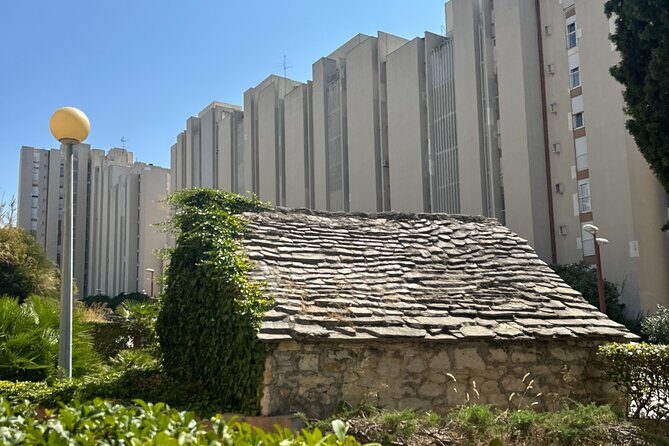
- MoMA relevance: Split 3 was featured in New York’s Toward a Concrete Utopia (2018), and you’ll see why that matters.
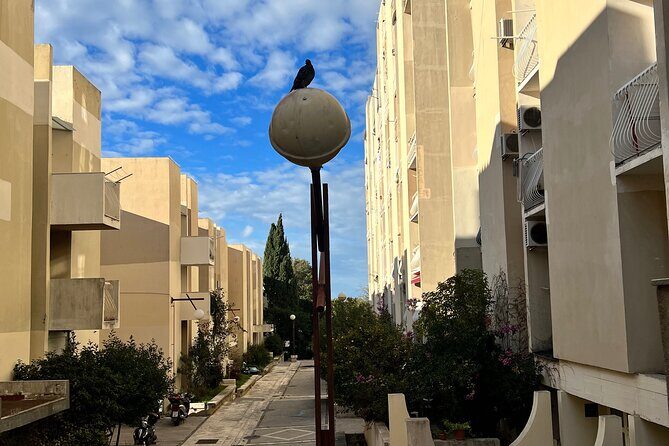
- A city inside a city: expect a fully pedestrian zone built for daily routines and community use.
- Brutalism with a point: you’ll hear brutalism explained as care for public life, not just rough concrete.
- Post-war socialist planning: the tour focuses on rapid demographic growth and a new vision for space and society.
- Local voices: you’ll meet artists/activists and talk about how beliefs still shape today’s living patterns.
- Tight guide team: you get a licensed tourist guide plus a certified heritage interpreter.
Why this tour feels different from the usual Split route
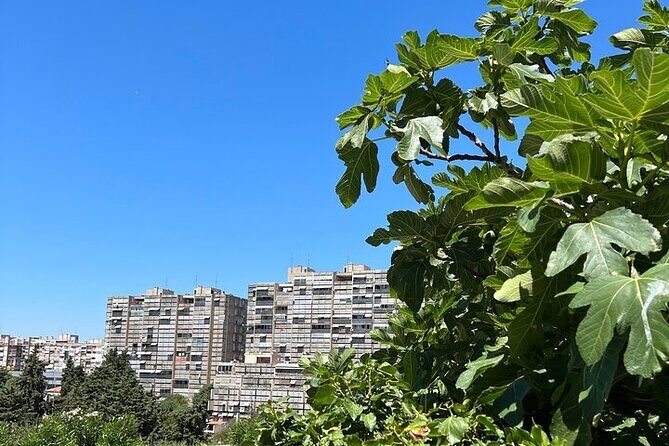
Most tours in Split start with the Roman era. This one flips the script. You’ll step into the 20th century, where architecture wasn’t only about buildings—it was about organizing everyday life.
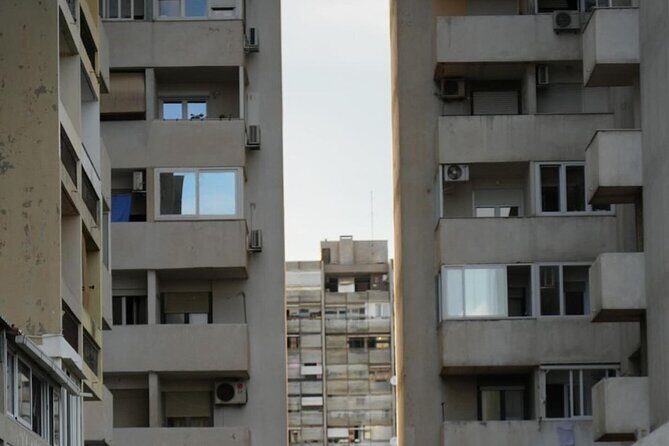
That shift changes what you notice. Instead of card-cataloging ancient columns, you start reading circulation: where people walk, where they pause, how public space works for families, and how design can encourage community contact. The tone is also practical. It isn’t a sentimental look back. You’ll see raw buildings, clean lines, and open spaces, and you’ll learn how the original utopian thinking ran into real-world limitations.
If you like modern architecture, planning history, or the question of who cities are built for, you’re in the right place. And if your photo style leans toward geometry and texture, brutalism can be surprisingly satisfying.
You can also read our reviews of more tours and experiences in Split.


Price and logistics: what you’re paying for at $113.90
At $113.90 per person, this isn’t the cheapest way to see Split, but it’s also not priced like a museum ticket plus extras. You’re paying for a guided, themed deep look at an area most people don’t naturally stumble into.
Three value points make sense here:
- Expert interpretation. You’re not just getting directions—you’re getting a licensed guide and a certified heritage interpreter.
- Residential access. The focus is on a residential area and a “city within a city” concept, which is harder to explore on your own without the story.
- Local meet-and-talk. The tour includes meeting local artists/activists, which turns architecture into living culture.
Time-wise, you’re looking at 1 to 3 hours. That range matters: you’ll likely spend enough time to understand the plan, but you won’t be trapped for half a day. Also, this tends to get booked fairly ahead of time (around 12 days), so if you want a specific slot, don’t wait until the last minute.
Practical notes: it’s a private tour/activity, so it’s only your group. There’s a mobile ticket, and the meeting point is Ul. Šime Ljubića 3, 21000 Split, with the walk ending back at the same spot. Service animals are allowed, and it’s near public transportation.
Stop 1 on Papandopulova ulica: Split 3 through MoMA’s lens
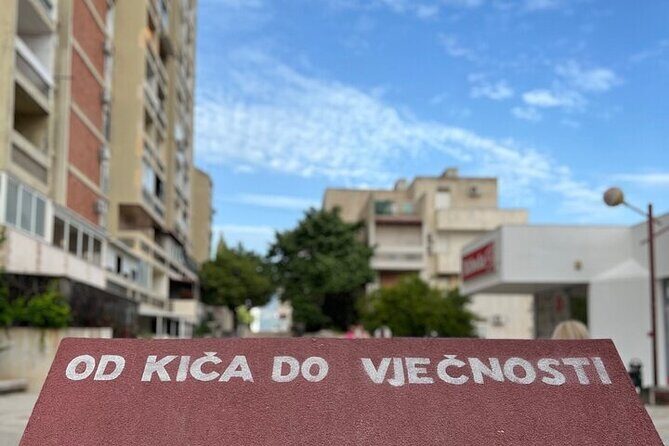
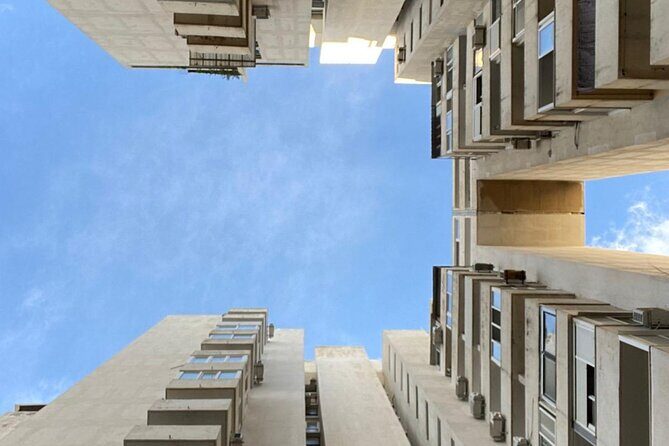
Your first stop is Papandopulova ulica, where the tour connects local buildings to an international spotlight. This is where you’ll hear that Split 3 was featured in MoMA’s Toward a Concrete Utopia exhibition (New York, 2018).
Why does that matter to you as a visitor? Because it reframes what “brutalism” means. A lot of people treat it like a style label: rough concrete, heavy shapes, opinions about taste. Here, you’re asked to consider intent. The brutalist look ties back to a period when planners believed the built environment could actively improve social life.
What to expect on the ground:
- You’ll look at the architecture as part of a larger system, not just as individual facades.
- You’ll hear how the 1970s era plan fit into Split’s expansion story.
- You’ll start noticing pedestrian logic—how spaces are set up for movement and gathering.
Timing is listed at about 38 minutes. That’s long enough to get beyond “this is a building” and start thinking “this is a daily-life machine.”
Possible drawback: if you’re hoping for classic landmark stops where you can instantly recognize everything from postcards, the interest here is more interpretive. You’ll need to listen to get the full payoff.
Stop 2: Split-Dalmatia County and the urbanism behind the plan
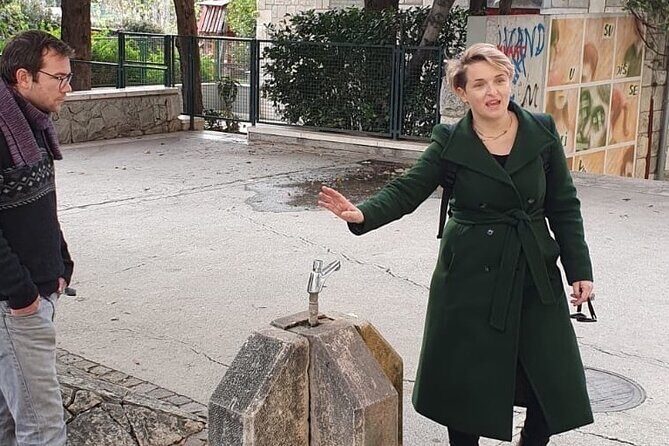
Next comes the story of the project itself—why Split 3 existed and what it was trying to solve. At this stop, you’ll connect the plan to rapid demographic growth and a socialist vision for urban space.
A key idea you’ll carry from this part is that Split 3 is treated as a major chapter in 20th-century urbanism and architecture. Even though it was never fully realized, the work still made it into the history books for how planners approached expansion and community design.
In practical terms, this is where the tour becomes more than architecture sightseeing. You start seeing the relationship between:
- density and daily routines
- public space and social goals
- design principles and real outcomes
That’s also why the tour works for people who don’t call themselves architecture nerds. If you’ve ever wondered why some cities feel friendly and some feel like they’re only built for cars, you’ll recognize the planning questions underneath.
The listed time here is about 25 minutes. Short, but focused—enough to give you the mental map so the next section feels like continuation, not a new topic.
Stop 3 in Split: Art activism and critical communication in the city
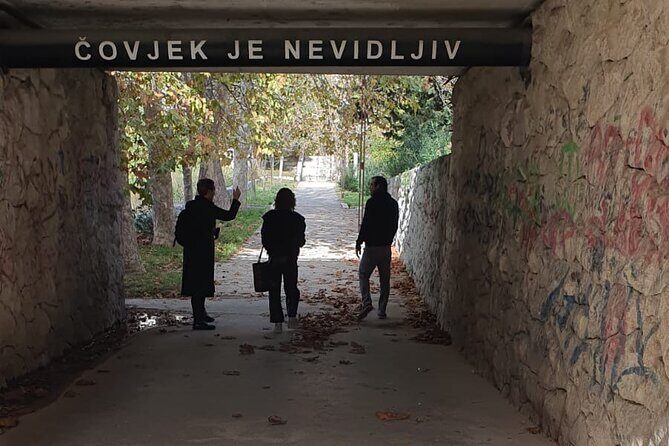
The final stop shifts from planning theory into cultural response. You’ll hear about art activism and critical communication in Split. The tour frames it as part of how ideas circulate after the original plan era—how people respond when a city’s ideals meet lived reality.
This is the part of the tour that kept the walk from feeling like a lecture. Once you understand the built plan, the activism angle shows how residents and creative voices interact with the space: questioning it, using it, shaping meaning around it.
You’ll likely also benefit from the tour’s built-in human contact—because meeting local artists/activists is part of the included experience. Even when the conversation stays focused on architecture, the tone becomes more grounded. Concrete isn’t just a material anymore; it’s the stage where social life happens, and where social critique can happen too.
The duration for this stop is listed at about 35 minutes. It’s long enough to connect the dots between the original utopian thinking and today’s interpretation.




Brutalism with care: what the tour teaches you to look for
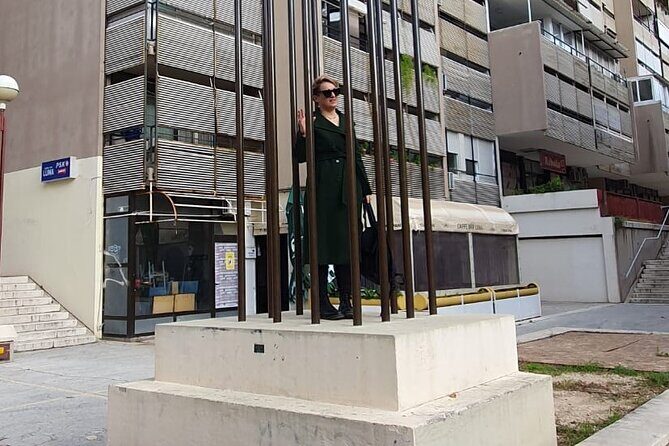
Here’s the biggest takeaway I think you should be ready for: brutalism isn’t explained as a style trend. It’s framed as an approach to public life.
When the tour says brutalism is about care, it’s pushing you to look for practical design values:
- clear pedestrian-friendly space
- open areas that support daily use
- geometry that organizes movement
- communal planning that assumes people share space
This is why I like this tour even if you aren’t 100% sold on brutalist aesthetics. The guiding lens helps you see function first. And once you do, the “raw” look starts to feel purposeful instead of harsh.
Also, the route is designed around staying with the theme. You’re not bouncing around random photo spots. You’re walking through a coherent neighborhood concept—city planning as an everyday experience.
Who this tour suits best (and who should choose differently)
This experience is best for you if:
- you love architecture, urban planning, or design history
- you’re curious about how political ideas shape cities
- you like to hear from local creatives and understand how neighborhoods work
- you want Split beyond the Roman-era focus
It may be less satisfying if:
- you only want top classic monuments and postcard moments
- you prefer casual sightseeing with minimal listening
- you’re uncomfortable walking around a residential zone
Group size is “only your group,” which usually helps. It means you can ask questions without feeling like you’re competing with a crowd.
Tips for getting more out of the walk
A few practical habits will improve your experience fast:
- Bring a curious mindset. This is interpretive architecture, not just photo stops.
- Keep your eyes moving from street level to open space. The plan makes sense when you see how people move.
- If you can, ask your guide what the original planners wanted versus what happened in reality. The tour leans into that tension.
- Wear comfortable shoes. It’s a walk through neighborhood streets and open areas.
And if you’re lucky enough to have Mirjana, you’ll get the kind of guiding that turns a neighborhood into a story you can actually follow.
Should you book Secret Split Socialist Architecture & brutalism?
If you’re the kind of traveler who wants more than highlights, I think this is a strong choice. The value isn’t in ticking a box. It’s in understanding how a specific post-war vision took shape in concrete, why it ended up studied internationally, and how everyday residents continue to interpret it.
Book it if:
- you want Split beyond the ancient core
- you’re interested in modern architecture and urban planning
- you like guided context plus a local meet-and-talk
Skip it if:
- you’re mainly chasing Roman sights and big landmark views
- you’d rather do shorter, lighter tours with no planning focus
FAQ
How long is the Secret Split walking tour?
The tour duration is listed as about 1 to 3 hours.
Where does the tour start and end?
It starts at Ul. Šime Ljubića 3, 21000 Split, Croatia, and ends back at the same meeting point.
Is this tour private?
Yes. It’s listed as a private tour/activity, meaning only your group participates.
What’s included in the tour price?
Included are a tour with a licensed tourist guide and a certified heritage interpreter, visiting the residential area of Split, and meeting local artists/activists.
Are tickets mobile?
Yes. The experience uses a mobile ticket.
Is it suitable for most travelers?
The listing says most travelers can participate.
What’s the cancellation policy?
Free cancellation is available up to 24 hours in advance for a full refund. If you cancel less than 24 hours before the start time, the amount paid is not refunded.