REVIEW · DIOCLETIAN'S PALACE
Essential Diocletian’s Palace Tour for First-Time Visitors
Book on GetYourGuide →Operated by KUKUVIA, Vl. Jelena Tanjić · Bookable on GetYourGuide
Diocletian’s Palace, made easy and fun. This small-group tour is built for first-timers, so you get a clear path through the palace and the parts of Split that make it feel like a living city, not a museum. You’ll cover the Diocletian’s Palace highlights in a relaxed way, with stops that help you understand what you’re seeing as you go.
I especially liked the storytelling approach and the way Jelena Tanjić (from Bosnia and Herzegovina, long-time Split resident) connects the palace story to day-to-day life now. The Vestibule Dome Selfie is a fun little moment that turns all that walking into an actual memory.
One consideration: this tour focuses on the main palace circuit and does not include access to the Substructures or the Bell Tower, so plan something else if those are must-sees for you.
In This Review
- Key moments you’ll care about
- Starting at Gregory of Nin and getting oriented in Split fast
- Golden Gate to Peristil: the palace circuit that actually makes sense
- Sacred stops: Jupiter’s Temple and the Cathedral of Saint Domnius
- People’s Square, Pjaca, and the real city feeling of Split
- Vestibul Dome selfie and Diocletian’s Cellars: where the tour slows down
- The finish on Split Riva: turning the tour into a plan
- Price and value: why $17 can feel like a good deal here
- What you’ll take away (and how to get the most from it)
- Is this the right fit for you?
- Should you book this Diocletian’s Palace tour?
- FAQ
- How long is the Diocletian’s Palace tour?
- What’s the price per person?
- What language is the tour guide using?
- How many people are in the group?
- What’s included in the tour?
- Is it wheelchair accessible?
Key moments you’ll care about
- Meeting at Gregory of Nin with a black umbrella so you spot the group fast and start on time
- A guided path through the palace core, from the Golden Gate through Peristil
- Stops that mix sacred spaces and street-level culture, including the Cathedral of Saint Domnius and Jupiter’s Temple
- A proper photo moment in the Vestibul, plus a look at Diocletian’s Cellars
- Voucher access and a handy recommendations list for where to eat and what to do after the tour
- Up to 10 people, which keeps the pace human and leaves room for questions
Starting at Gregory of Nin and getting oriented in Split fast
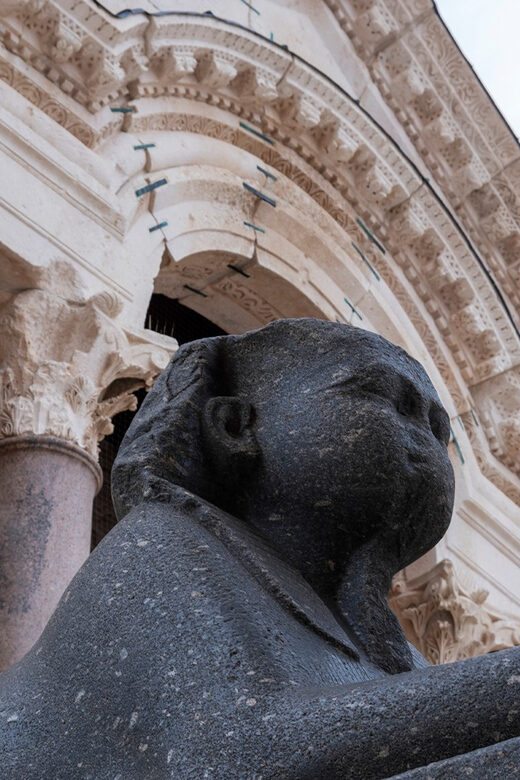
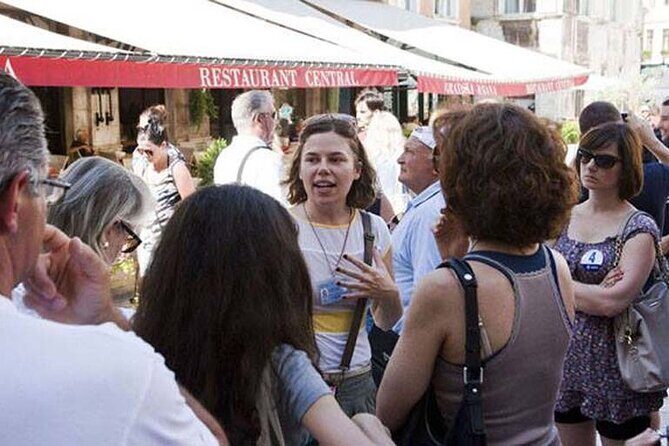
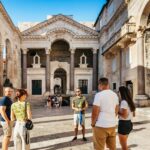
Your tour begins in a very practical spot: in front of the big statue of bishop Gregory of Nin, near the north entrance to the palace called the Golden Gate. The meeting point comes with an easy visual cue too. Look for the guide holding a black umbrella, since the instruction is basically to follow the umbrella and you’ll be there.
From the first minutes, the tone is: calm, clear, and useful. This matters in Split because the old palace area can feel like a maze if you wander without a plan. Instead of trying to memorize place names on your own, you’re guided step by step through the key areas you’d want to hit anyway—so you leave with a mental map, not just photos.
Jelena Tanjić brings an extra layer that I found helpful: she’s originally from Bosnia and Herzegovina and has lived in Split for many years. That regional perspective gives you context beyond the palace walls, which is a nice change from tours that only stick to dates and big names.
You can also read our reviews of more tours and experiences in Split.


Golden Gate to Peristil: the palace circuit that actually makes sense

The first big inside hit is the Golden Gate, the entrance that sets the stage for how the palace works as a space. You’re not just walking in. You’re getting an easy walkthrough of what each area is, what it was for, and how to read the layout while you’re still there.
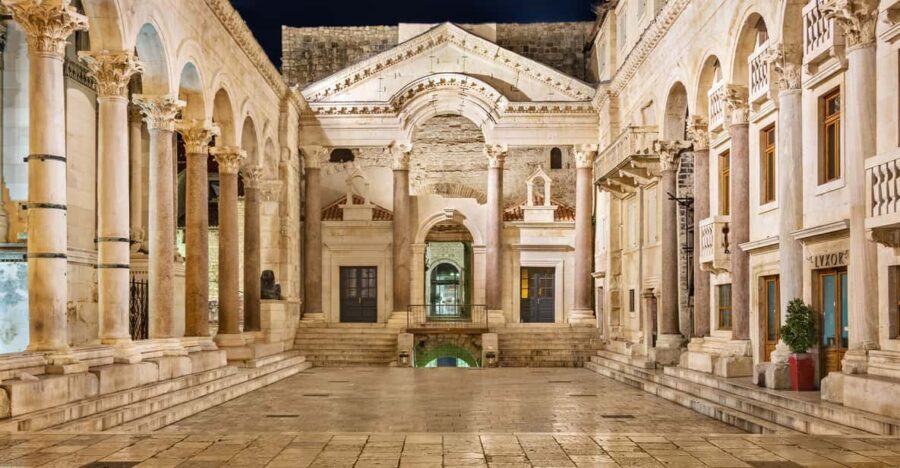
Next you move toward the palace’s central spaces, including Jupiter’s Temple and the Peristil. Even if you don’t consider yourself a history person, this section works because the guide’s job is basically translation. She points out what to notice and ties it to the bigger story of the palace and the city of Split.
The Peristil stop is one of those moments where you can slow down just enough to take it in. It’s a key palace landmark, and it’s also the kind of place where people often wish they knew where they were in the grand plan. This tour helps you get that clarity quickly, so later—when you’re walking on your own—you’re not thinking, wait, which square is this again?
A small-group format helps here. With a group limited to 10 participants, you can ask questions and actually hear the answers. That turns the tour from a one-way lecture into a conversation.
Sacred stops: Jupiter’s Temple and the Cathedral of Saint Domnius
Two stops—Jupiter’s Temple and the Cathedral of Saint Domnius—give you a strong mix of architecture and meaning. What I like about this setup is that it breaks the route into different types of spaces, so your brain doesn’t just glaze over after the first few segments.
Jupiter’s Temple is approached as an essential landmark within the palace zone, with the guide explaining what you’re looking at and why it matters within the palace story. Then the Cathedral of Saint Domnius shifts the focus to a religious site, still anchored in the broader palace-city relationship you’ve been building in your head.
This pairing is smart for first-timers. Instead of treating the palace as one uniform block of stone, you experience it as a set of areas with different purposes. That makes the whole complex feel more human, even when the scale is huge.
People’s Square, Pjaca, and the real city feeling of Split
At some point, you want your tour to connect to the street-level city experience, not just the palace interior. That’s where the stops like People’s Square (and the main-square area called Pjaca) are useful.
These are areas that help you understand daily life in Split—because the palace isn’t isolated. It sits in the same urban world as the promenade and the squares where people actually spend time. Jelena’s style includes more than old stones. She offers context about living in Split today, so you can see how the past sits alongside current routines.
Even in 1.5 hours, this city connection matters. It’s the difference between leaving with a list of monuments versus leaving with an understanding of how Split moves day to day.
Vestibul Dome selfie and Diocletian’s Cellars: where the tour slows down
If you like photo moments that don’t feel awkward, you’ll like the Vestibul stop. The tour includes a dedicated Vestibule Dome Selfie time in the Vestibule area. It’s not just for show. It gives you a clean checkpoint in the tour so you can capture the experience while everything is fresh.
After that, you’ll head to Diocletian’s Cellars. This is an important part of the route because it helps you connect the palace story to what’s underneath and around the more visible areas. Think of it as the tour’s way of balancing the big landmark stops with a sense of depth—literal and historical—inside the complex.
One more practical point: this is also where you’ll start feeling that you’ve walked a real path, not just hopped between photo angles. That helps you later when you’re exploring on your own, because your feet and your brain remember the order.
Also worth knowing: the tour’s main circuit focuses on the highlights, so it does not include Substructures or the Bell Tower. If those are at the top of your wishlist, you’ll want to plan an extra visit time slot elsewhere.



The finish on Split Riva: turning the tour into a plan
The tour ends back at the meeting area after your walk through the key palace highlights, with the endpoint tied to the Split Riva area. That matters because it drops you right where you can keep enjoying the city immediately—before you lose momentum or waste time figuring out what comes next.
This is where the tour’s value goes beyond the walk. You don’t just get sightseeing. You get a picked set of recommendations from your guide—where to eat, what to see, and local experiences to try. It’s the kind of guidance that helps you avoid the classic first-day problem: you’re tired, hungry, and the only advice you can find is generic.
Price and value: why $17 can feel like a good deal here
At $17 per person for about 1.5 hours, this is the kind of tour that can be a smart buy if you’re short on time and want real orientation. You’re paying for more than access to famous spots. The price supports a guided storytelling experience with an English-speaking licensed guide, a small group capped at 10, and a structured route that hits major landmarks.
What really boosts value is what happens after the walk:
- You get voucher access that lets you try local food and drinks at discounted prices in some of Split’s renomed restaurants and bars.
- You get a curated-by-practice list of recommendations, personalized after the tour.
That combination can easily offset the cost if you plan to eat out the same day or the next. Even if you don’t use every voucher, the advice alone can save you time and second-guessing.
What you’ll take away (and how to get the most from it)
This tour is designed for first-time visitors, which shows in how the route is paced and how the story is told. You’re guided through the essentials:
- Golden Gate
- Peristil
- Jupiter’s Temple
- Cathedral of Saint Domnius
- Vestibul (with selfie time)
- Diocletian’s Cellars
Plus key public-city touchpoints like People’s Square / Pjaca and the Split Riva finish.
The big takeaway is simple: you’ll understand where you are, what each place represents, and how the palace shaped the city around it. That’s what makes later self-guided exploring feel easier. Instead of feeling like you’re guessing, you’ll have a working sense of the palace layout and the main open spaces.
To get the most from it, arrive a bit early so you’re not rushed at the start. Bring a phone or camera for the selfie moment. And come with at least one question about what you’ve noticed so far—so you can turn the small-group format into something interactive.
Is this the right fit for you?
This is a strong match if you:
- Want a fast, clear introduction to Diocletian’s Palace and Split
- Like guided storytelling that includes present-day context
- Prefer small groups (10 max) over crowded tours
- Plan to eat and drink in town soon after your walking tour, since voucher access is part of the package
- Travel solo, with friends, or as a family, as long as you’re comfortable with walking
It’s not the best fit if you:
- Specifically want the Substructures or the Bell Tower (this tour does not include them)
- Need wheelchair accessibility (the tour is noted as not suitable for wheelchair users)
If you want your first day in Split to feel organized and rewarding, this is the kind of tour that gives you momentum fast.
Should you book this Diocletian’s Palace tour?
I’d book it if you’re trying to make the most of a limited time window and you want a guided route through the key palace areas, with practical recommendations you can use immediately. The mix of structured landmarks, Jelena Tanjić’s story-and-tips style, and the voucher access is a very practical combo for value.
If your priority is going beyond the main palace circuit into the Substructures or climbing up to the Bell Tower, treat this as the orientation layer and plan a separate add-on.
FAQ
How long is the Diocletian’s Palace tour?
The tour lasts about 1.5 hours.
What’s the price per person?
The price is $17 per person.
What language is the tour guide using?
The live tour guide is available in English.
How many people are in the group?
The group is small, limited to 10 participants.
What’s included in the tour?
You get an interactive storytelling experience from a licensed guide, extensive history knowledge, and Vestibule Dome selfie time. The tour also includes voucher access and a recommendations list.
Is it wheelchair accessible?
No. This activity is not suitable for wheelchair users.