REVIEW · DIOCLETIAN'S PALACE
Private Split: Visit Diocletian Palace & Taste Food at the Market
Book on Viator →Operated by Intrepid Urban Adventures - Croatia · Bookable on Viator
Diocletian’s Palace has a secret food trail. This private, English-guided walk in Split pairs UNESCO-listed palace streets with market stops, so the city feels like one connected story. Guides like Maja or Lindis help you connect the Roman layout to what locals do today.
I love that the tour doesn’t treat food like an afterthought. You’ll taste seasonal Dalmatian market bites and sip local wine, with options like pršut, sheep’s milk cheese, octopus salad, anchovies, olives, and more depending on what’s fresh. You also leave with ideas on where to go next, based on your guide’s real knowledge of Split.
One thing to plan for: this focuses on the palace highlights and market atmosphere, but it doesn’t include paid add-ons like the cathedral, underground areas, the bell tower, museums, or the Temple of Jupiter. If those are high on your list, you’ll want extra time after the tour.
In This Review
- Key highlights worth showing up for
- First step: meeting on Split’s Riva
- Entering Diocletian’s Palace: Peristil, Vestibule, and Golden Gates
- A small practical note on pace
- Walking where Roman power meets everyday Split
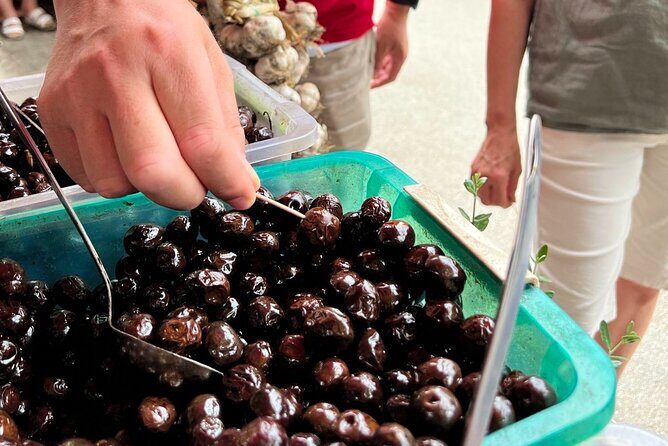
- Green Market tasting: what you’ll actually eat
- What the tasting can include
- What I’d watch for
- Peskarija atmosphere: the fish market edge
- The snack finish: a Dalmatian’s heart is through the stomach
- What’s included, and what’s not (so you don’t get surprised)
- Price and value: is $148.72 worth it?
- Who this tour suits best (and who should consider skipping)
- Should you book it? My straight answer
- FAQ
- How long is the tour?
- Where do I meet the guide?
- Where does the tour end?
- Is the tour offered in English?
- What food is included?
- Does the tour include palace entrance fees for everything?
- Is this tour suitable for children?
- Can I cancel for a refund?
Key highlights worth showing up for
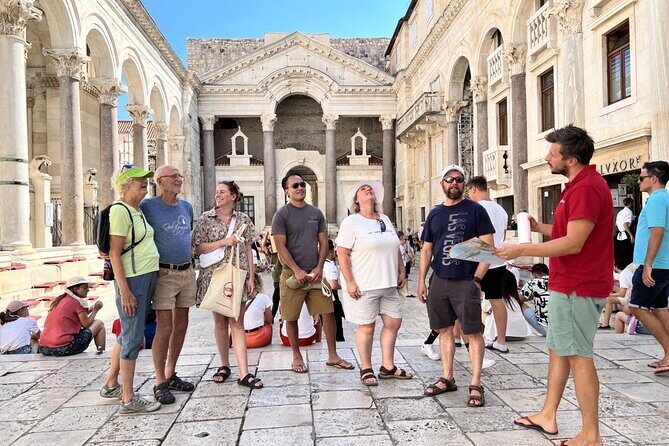
- A private-format palace walk through the parts of the complex that matter most for first-timers
- Peristil and the Golden Gates in the UNESCO heart of the site
- Green Market tasting with seasonal variety guided by locals who shop that way every day
- Peskarija fish-market atmosphere right by the coast, with a real sense of the day’s catch
- Dalmatian snack + local wine at the end, not just a quick sample
- B Corp, carbon-neutral operations as part of how this tour is run
First step: meeting on Split’s Riva
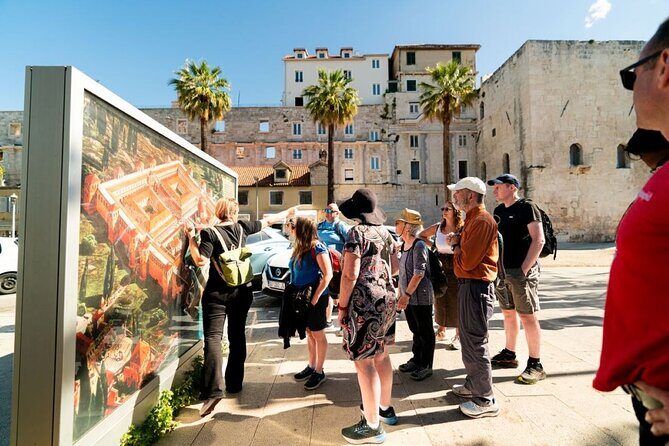
Your tour starts at the Riva promenade area (Split’s main waterfront walkway). The meeting address is Obala Hrvatskog narodnog preporoda 23, and you’ll finish back along the Riva as well. This is a smart choice because you’re already in the part of town where most sightseeing funnels together.
The tour is English-speaking, and it caps at a maximum of 12 travelers. Even if it isn’t a huge group, the private format is the real perk: you get a guide who can slow down, answer questions, and keep the pace matched to your group.
Another detail I appreciate: it’s carbon neutral and operated by a B Corp certified company committed to using travel as a force for good. It’s not a marketing gimmick here—it’s simply part of the way the tour is packaged.
You can also read our reviews of more food & drink experiences in Split

Entering Diocletian’s Palace: Peristil, Vestibule, and Golden Gates
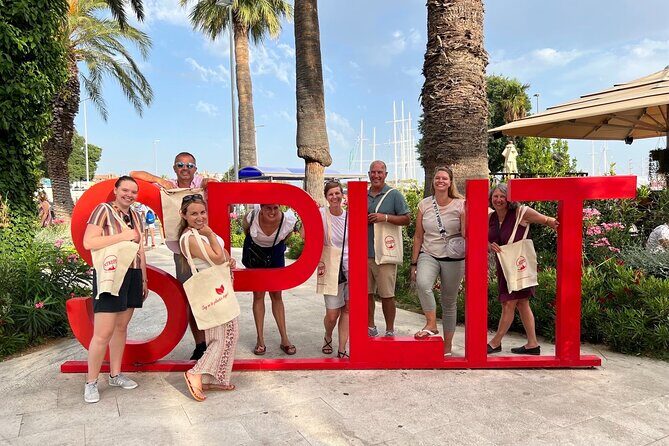
Diocletian’s Palace is often described as a ruin you wander through. This tour helps you see it as something more interesting: a working neighborhood that has been reused for centuries.
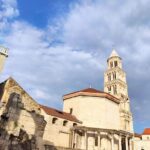
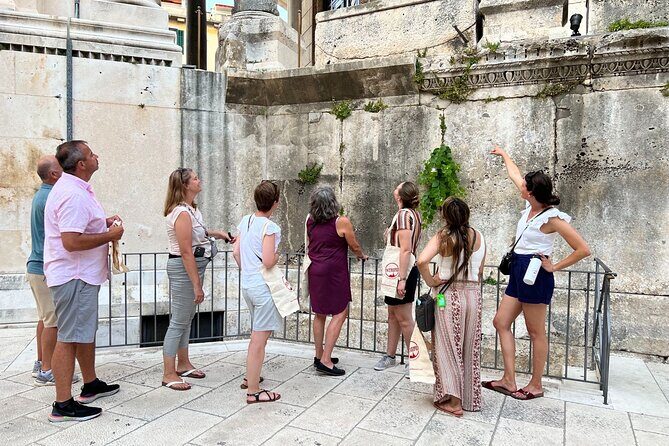
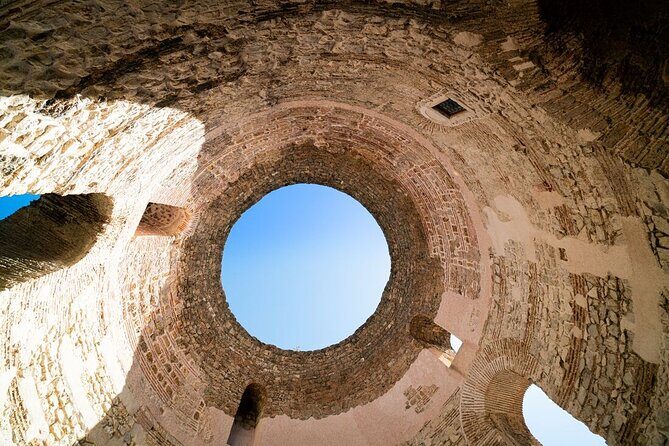
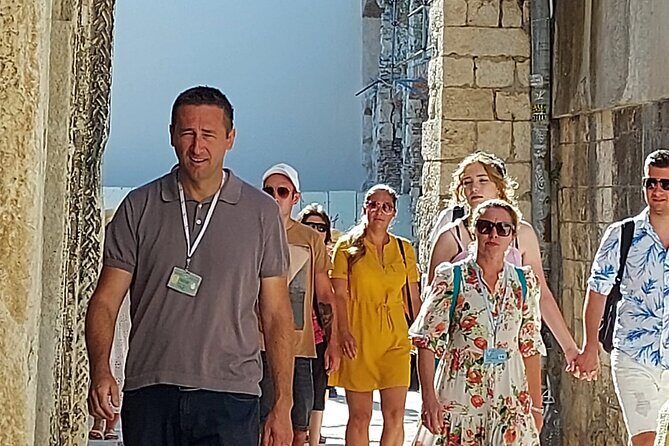
You start with the UNESCO core, including the main square inside the palace walls (Peristil). From there, you’ll also see the Golden Gates and visit the private section of the palace and the Vestibule. Those are the kinds of stops that make the whole complex click—because they show you the layout and power structure behind the stones.
A big part of the value here is how the guide explains the layers. The palace began in the 4th century as the setting for Emperor Diocletian, then over time it became home to shops, merchants, and everyday city life. You’re not just looking at architecture; you’re learning why the city grew where it did, and how the palace turned into part of local routines.
If you like connections to pop culture, you’ll get them too. The tour points out locations people often link to Game of Thrones, without making the entire experience depend on that. I find that balance helps: you can enjoy the references and still come away understanding what the Roman design was doing.
A small practical note on pace
It’s called a 2-hour tour, but real-world timing can shift depending on group questions and how the guide builds food context into the history. Some schedules stretch longer, especially if the guide takes time to answer questions at key points. Plan your day with a little flexibility so you don’t feel rushed afterward.
Walking where Roman power meets everyday Split
This is the part of the tour I think you’ll remember on your own later.
You’ll move through streets where locals live with the palace’s structure as the backdrop. That blend matters because Split didn’t freeze in time. It absorbed the palace and rebuilt around it, and you can still spot that mix in what you see on the ground.
One of the most praised elements of the experience is the guide quality. In multiple cases, guides have strong backgrounds—one named Maja is described as having archaeology experience and having worked on uncovering or restoration of sites connected to what you’re seeing. Even when your guide isn’t an archaeologist, the consistent theme is clear: you get detail tied to real places, not generic facts.
You’ll learn what to look for as you walk: the palace layout, how different parts were used, and why Peristil functions as such a central meeting point. The tour also gives you context on the people of Split—how their ancestors have shaped the area over many generations—so you understand why the site still feels like it belongs to the city.
Green Market tasting: what you’ll actually eat
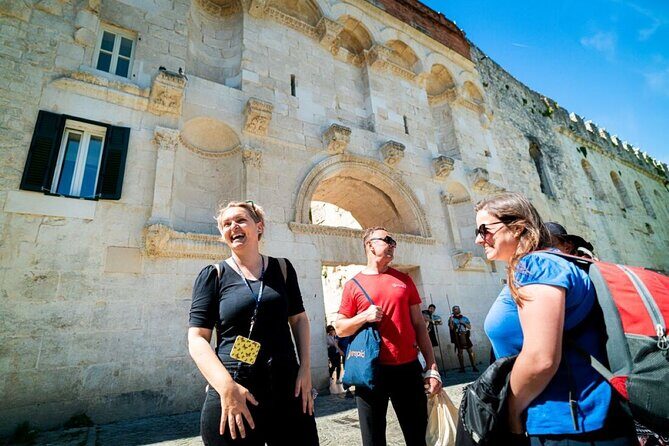
After the palace, your tour shifts from stone to smell and sound.
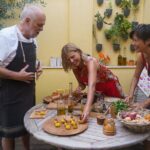
You’ll head to the Green Market of Split, where local vendors sell seasonal produce and specialties. This isn’t a food tour that sends you to a random tasting counter. You’ll meet vendors, watch how locals buy, and get a guide who explains the food culture in plain terms.
There’s also a fun moment tied to Split lore: you can make a wish at the golden toe of Gregory of Nin (Grgur Ninski). It’s quick, but it’s the kind of detail that makes your market stop feel like a real day in Split—not a stop on a checklist.
You can also read our reviews of more tours and experiences in Split


What the tasting can include
The market tasting can vary by season, but the tour includes local items such as:
- fruits
- olive oil
- rakija
- cheese
- dry figs
Then, if you’re thinking Dalmatian classics, expect a menu-style snack later that may include pršut (local prosciutto), sheep’s milk cheese, octopus salad, anchovies, and olives. Local wine is also part of the experience, tied to what’s available.
This is one of the best values of the tour: you get multiple flavors and textures in a short window, guided by someone who can tell you what you’re tasting and why it matters.
What I’d watch for
This tasting is included, but additional food and drinks aren’t. So if you’re a big eater or you want extra glasses of wine, you’ll likely pay more on your own. The upside is that the tour helps you taste a smart spread first, so you’re not guessing.
Peskarija atmosphere: the fish market edge
You’ll continue toward Peskarija, Split’s local fish market area close to the coast. The point isn’t that you’ll leave with a seafood meal to cook later. It’s the atmosphere: fishmongers calling out the daily catch, the sense of what arrived that morning, and the way locals shop in real time.
Even if you’re not planning to buy much, I like this step because it balances the tour. The palace gives you the long historical view; Peskarija brings you back to today’s rhythm.
And because you’ve already built context with the palace history, you’ll likely notice something: how Split’s identity ties together water, food, and the reuse of space. It feels like one city, not two separate attractions.
The snack finish: a Dalmatian’s heart is through the stomach
If the tour feels like it’s moving quickly, that’s usually because the guide is connecting history to food at the right moments—and then finishing with a proper local snack.
You’ll get a traditional Dalmatian spread (menu changes by season), with the kinds of items mentioned above. You’ll also have local wine as part of the experience. This isn’t a giant sit-down lunch, but it’s enough to feel like you actually ate like a local, not just tasted a few bites.
One more reason this works: it gives you a mental landing pad. After walking through the palace, it’s good to sit for a bit, and it’s even better when your guide uses that time to fill in history gaps.
Then you’re back on the Riva, where your guide can suggest what to do next—or you can wander toward coffee or something sweet on your own.
What’s included, and what’s not (so you don’t get surprised)
Here’s the practical difference between this tour and a more expensive “see everything” plan.
Included:
- the palace highlights inside the walls, including Peristil
- the private section and Vestibule
- Golden Gates
- a market tasting with items like olive oil, rakija, cheese, dry figs, and fruits
- a guide with local context and tips on where to go next
- the included snack with seasonal specialties and local wine
Not included:
- extra food and drinks beyond what’s part of the tasting/snack
- tips and gratuities
- entrance fees for additional palace-related areas like the cathedral, underground spaces, bell tower, museums, and the Temple of Jupiter
That last point matters. If you want those specific add-ons, treat this tour as your “core orientation” to the palace. After it ends, you’ll be better equipped to decide what’s worth paying for next.
Price and value: is $148.72 worth it?
At $148.72 per person, you’re paying for three things at once: a private-style guided walk, market access with local tastings, and time in the palace’s most important spaces.
If you try to replicate it yourself, you’d likely spend money on:
- guided time (because palace context is hard to assemble alone)
- multiple tastings (because you’ll end up buying at least a few items)
- your time and mental energy figuring out what to prioritize
So the value here isn’t just “cheaper than doing it yourself.” It’s that the guide helps you see the palace correctly and taste the market intelligently, which makes the rest of your Split day more enjoyable.
Also, the guide experience seems to be consistently strong—names like Lindis, Linda, Maja, Maya, and VJ show up in the guide descriptions. More importantly, guides are often noted as connecting details to what you’re standing next to. That’s the kind of payoff that makes the price feel justified.
Who this tour suits best (and who should consider skipping)
You’ll probably love this if:
- you want a first solid orientation to Split’s Old Town
- you enjoy history, but you want it explained with real street-level context
- you care about food culture and want to taste it with guidance
- you want a manageable time commitment (about 2 hours, with some schedule variation)
You might choose something else if:
- you already know the palace well and want paid add-ons only (underground, cathedral, bell tower, museums)
- you’re hoping for a long, full meal rather than a snack + wine finish
- you want a very wide buffet of sites inside the complex with no walking focus
Should you book it? My straight answer
Book it if you want a smart, compact way to connect Diocletian’s Palace to Split’s modern life through food. The best part is how the guide ties the palace layout to everyday culture—then rewards you with real market tasting and a Dalmatian snack with local wine.
Skip it only if your priority is the paid underground/cathedral/bell tower/museum areas and you don’t care much about market food. For most people visiting Split for the first time, this is a strong use of time.
FAQ
How long is the tour?
It’s about 2 hours (approx.). Timing can vary a bit based on pace and how long the guide spends at key spots.
Where do I meet the guide?
You meet at Obala Hrvatskog narodnog preporoda 23, 21000, Split, Croatia, near the waterfront area.
Where does the tour end?
The tour ends back at Split Riva.
Is the tour offered in English?
Yes, the tour is offered in English.
What food is included?
You’ll taste local food at the Green Market, such as fruits, olive oil, rakija, cheese, and dry figs, plus a traditional Dalmatian snack with seasonal items. The menu can change depending on what’s in season.
Does the tour include palace entrance fees for everything?
No. Entrance fees for the cathedral, underground areas, Bell Tower, museums, and the Temple of Jupiter are not included.
Is this tour suitable for children?
It’s child-friendly, and children under age 6 can join free of charge. You’ll need to inform the provider if you’re bringing a child under 6.
Can I cancel for a refund?
Yes. You can cancel up to 24 hours in advance for a full refund.